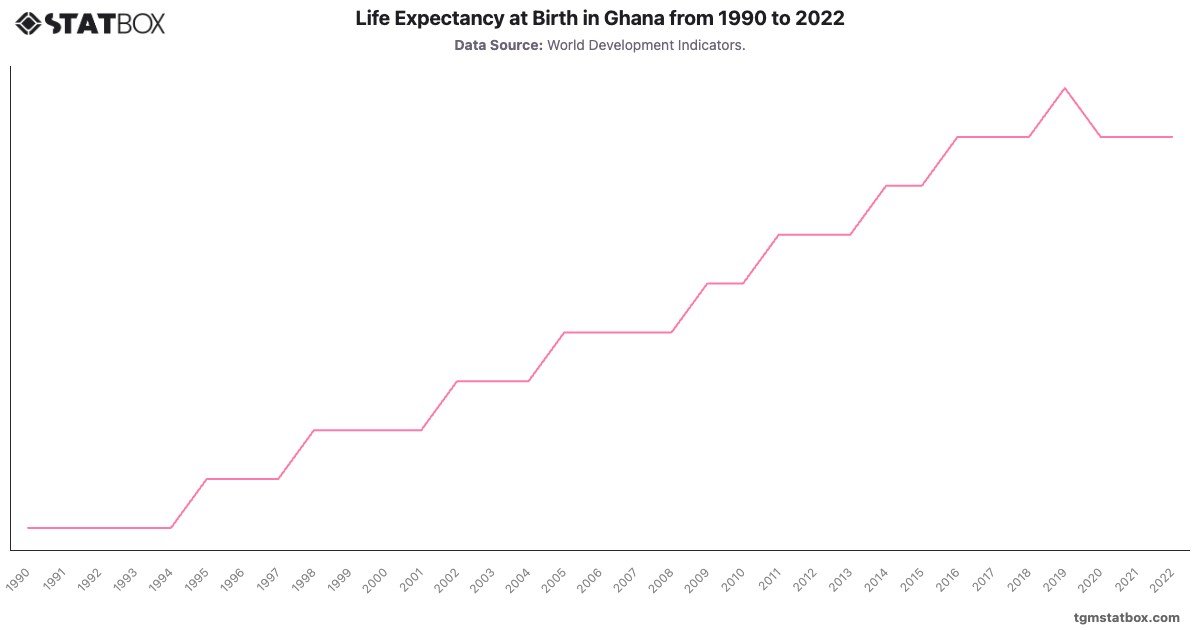
Ghana’s life expectancy grew from 56 years in 1990 to 64 years by 2022, driven by improvements in healthcare access, vaccination programs, and efforts to combat infectious diseases like malaria. The gradual increase during the 1990s and early 2000s reflects the country’s focus on maternal and child health and international support for public health initiatives. Recent stabilization at 64 years indicates the need to address healthcare infrastructure and non-communicable diseases to sustain progress.
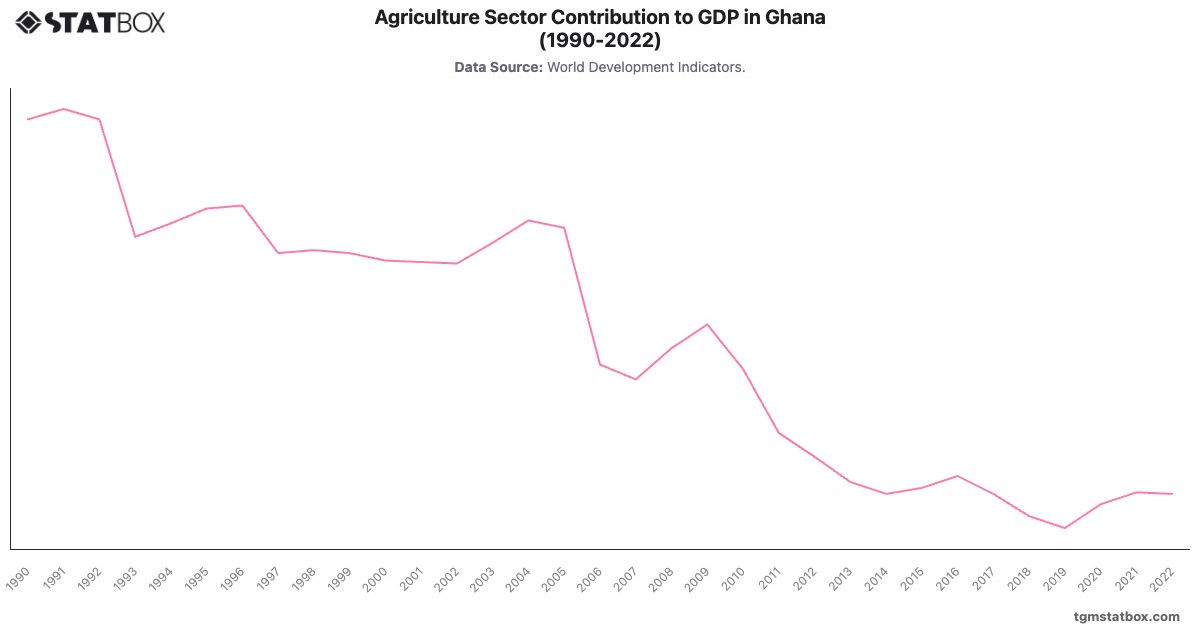
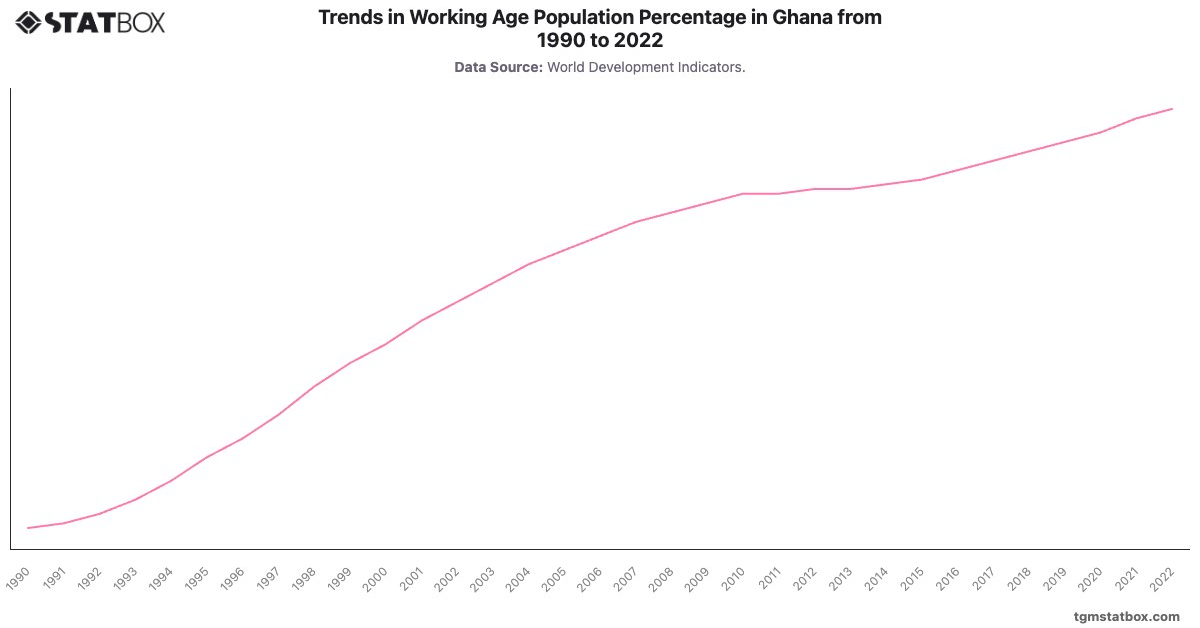
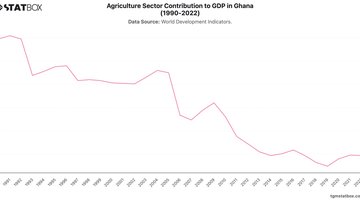
For a deeper dive into the topic, explore agriculture sector’s GDP share in Ghana, Ghana’s working-age demographic share, Ghana’s urbanization rate.