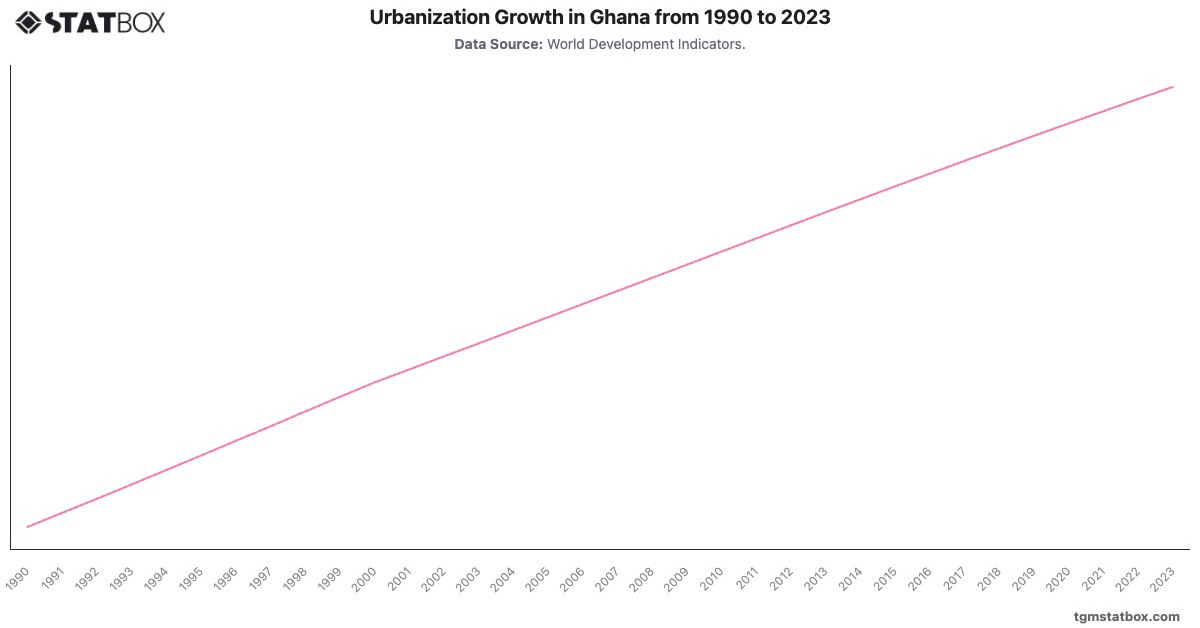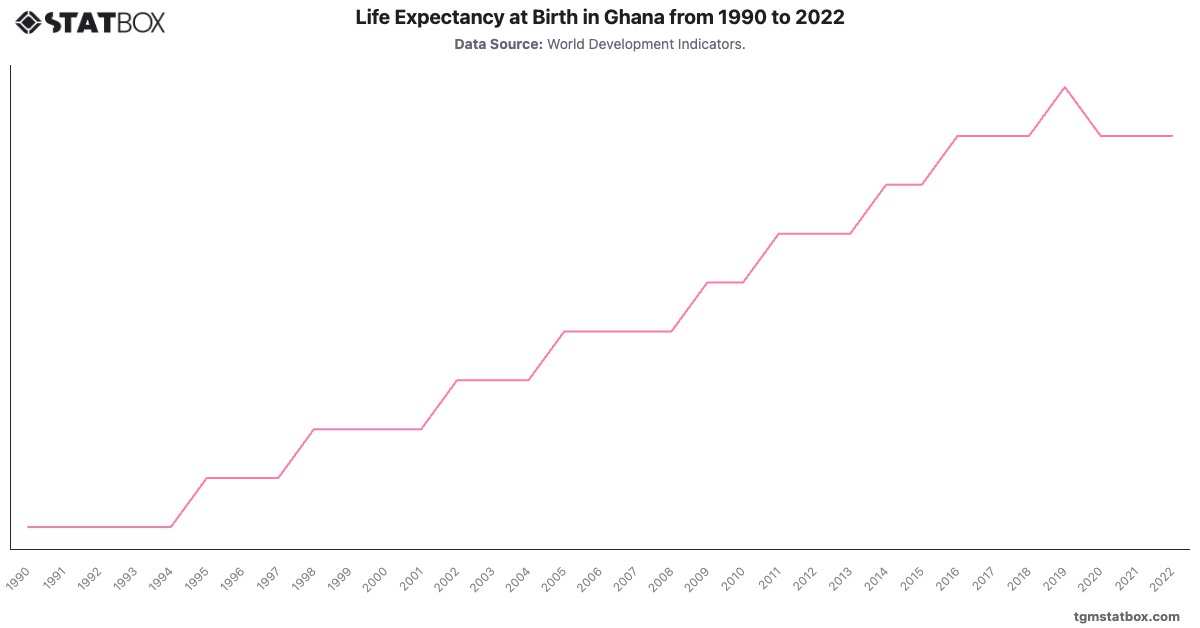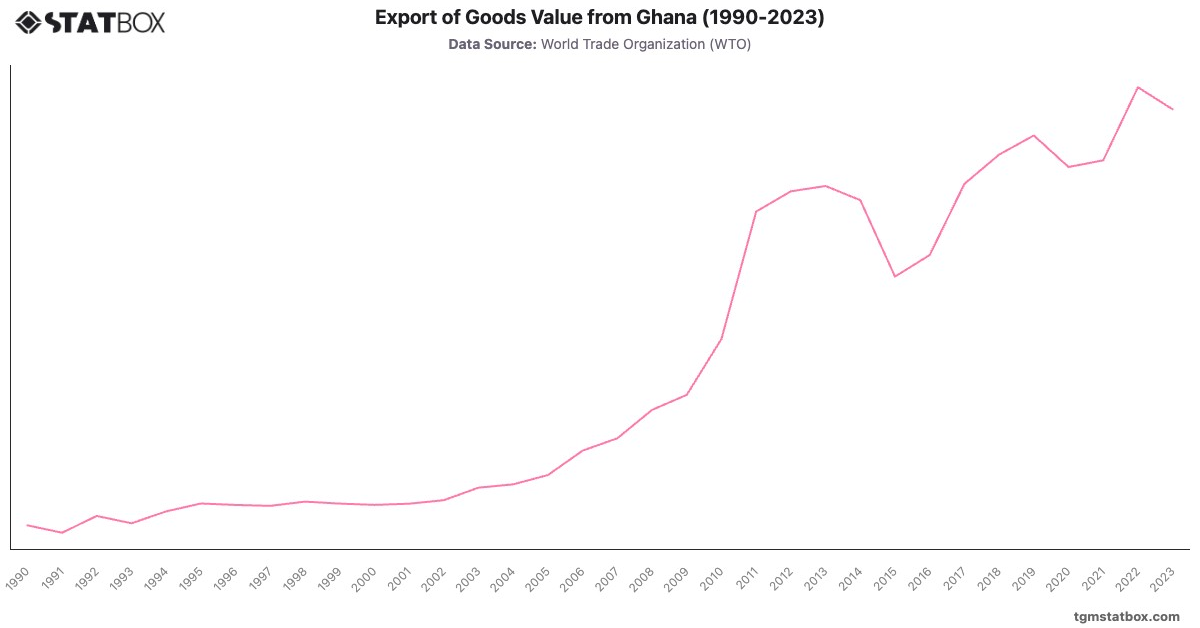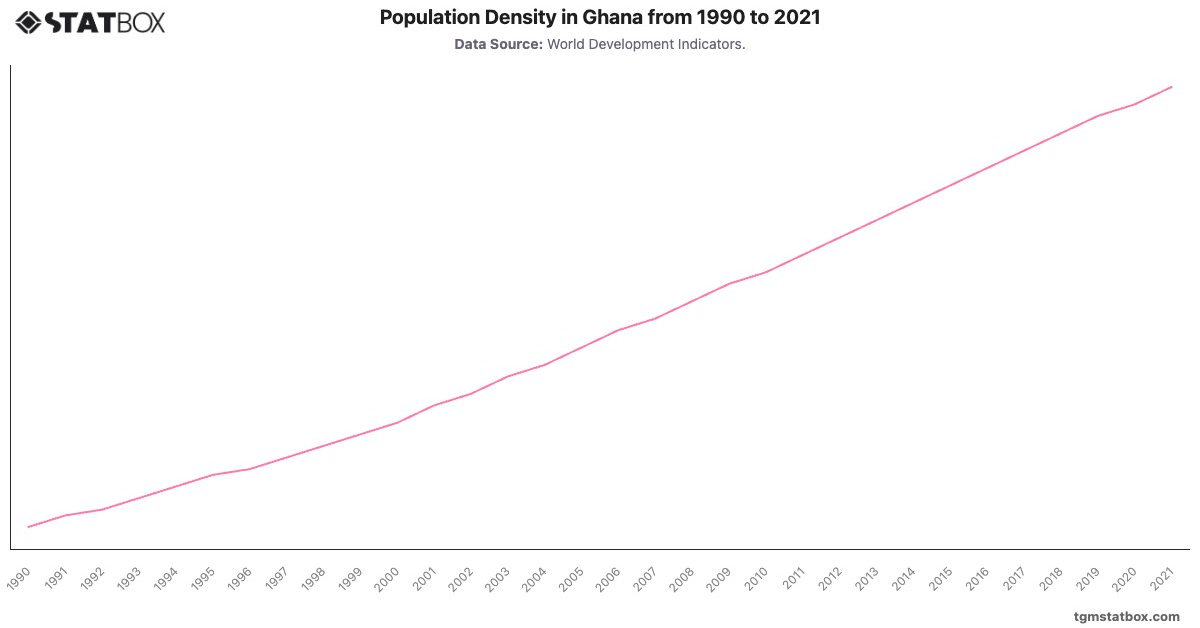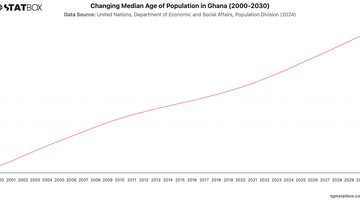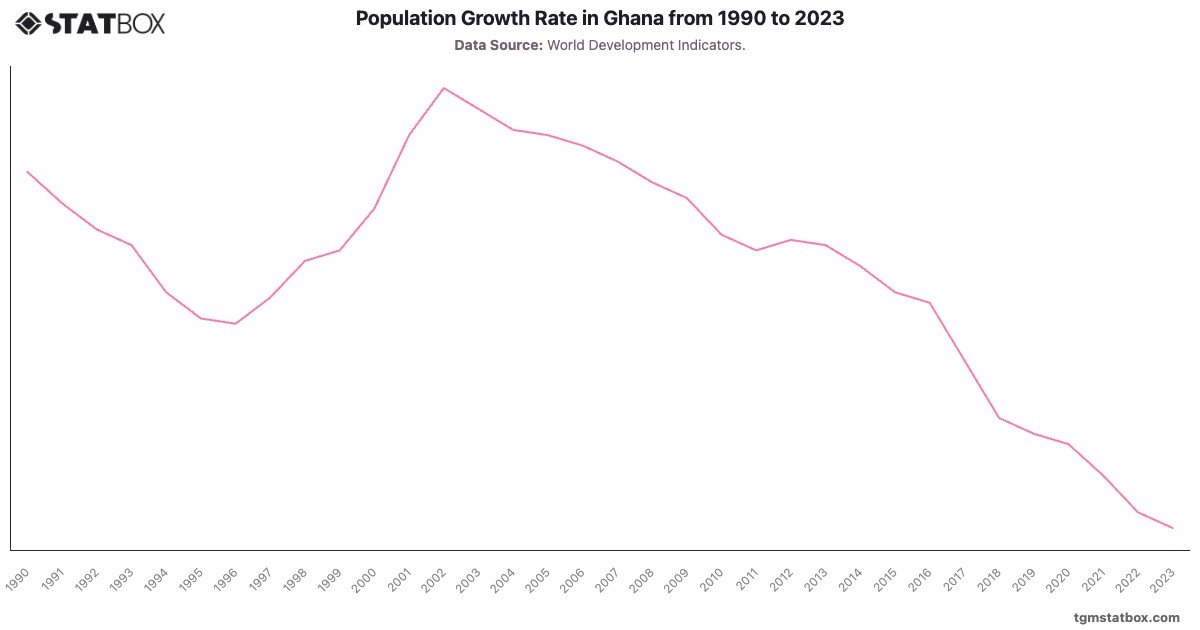
The chart reflects a gradual decline in growth rates over the years, indicative of Ghana’s demographic transition. In 1990, Ghana’s population grew at a rate of , which gradually decreased in the early 1990s as urbanization, access to education, and family planning initiatives took effect. The rate held steady around during the early 2000s, coinciding with a period of economic growth that improved healthcare and reduced infant mortality.
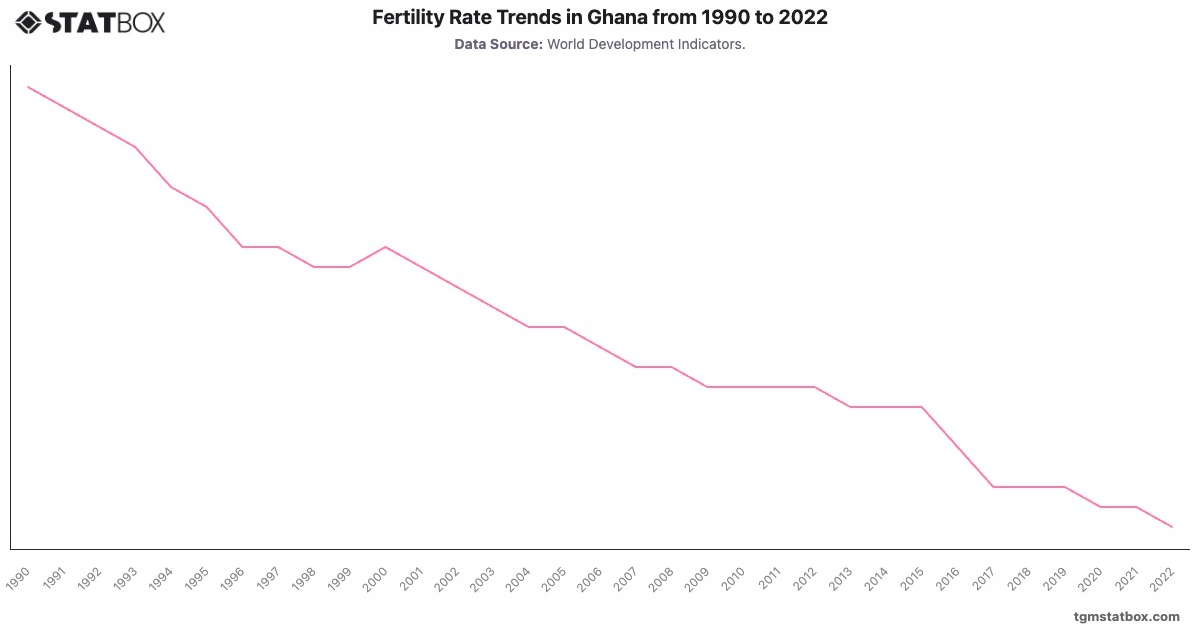
From 2010 onward, the growth rate began a more pronounced decline, reaching in 2023. This recent decrease is driven by lower fertility rates, increased urban migration, and evolving social norms around family size. Ghana’s steady shift to a lower growth rate mirrors many developing economies moving toward slower population growth, suggesting long-term impacts on labor markets, education demands, and resource allocation as the country prepares for a maturing population structure.
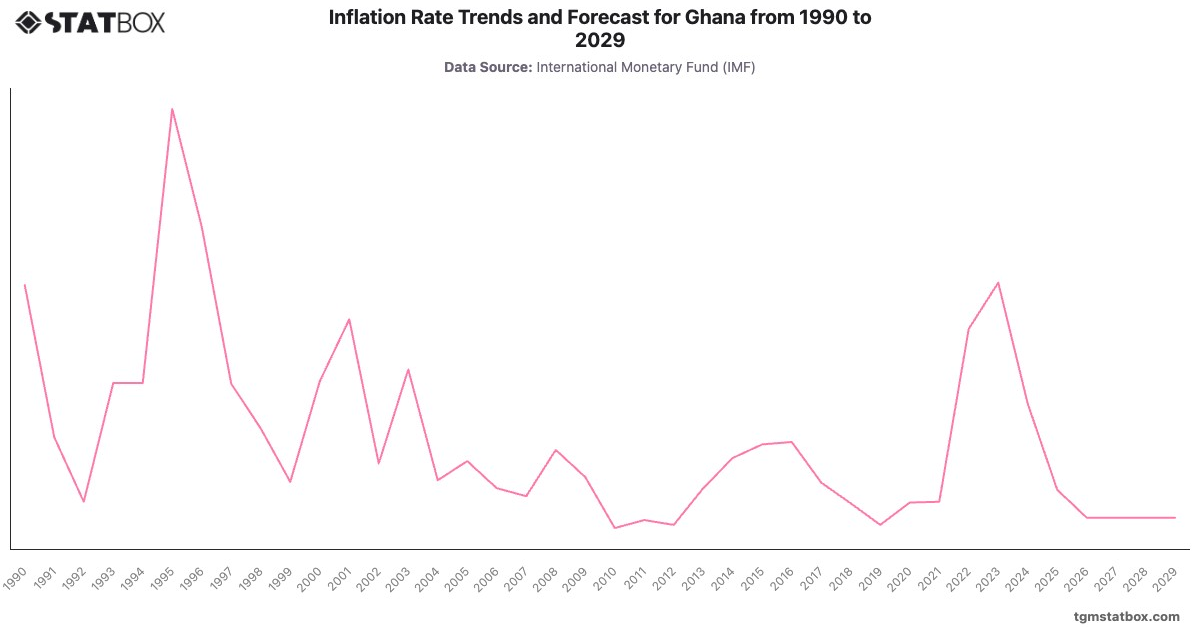
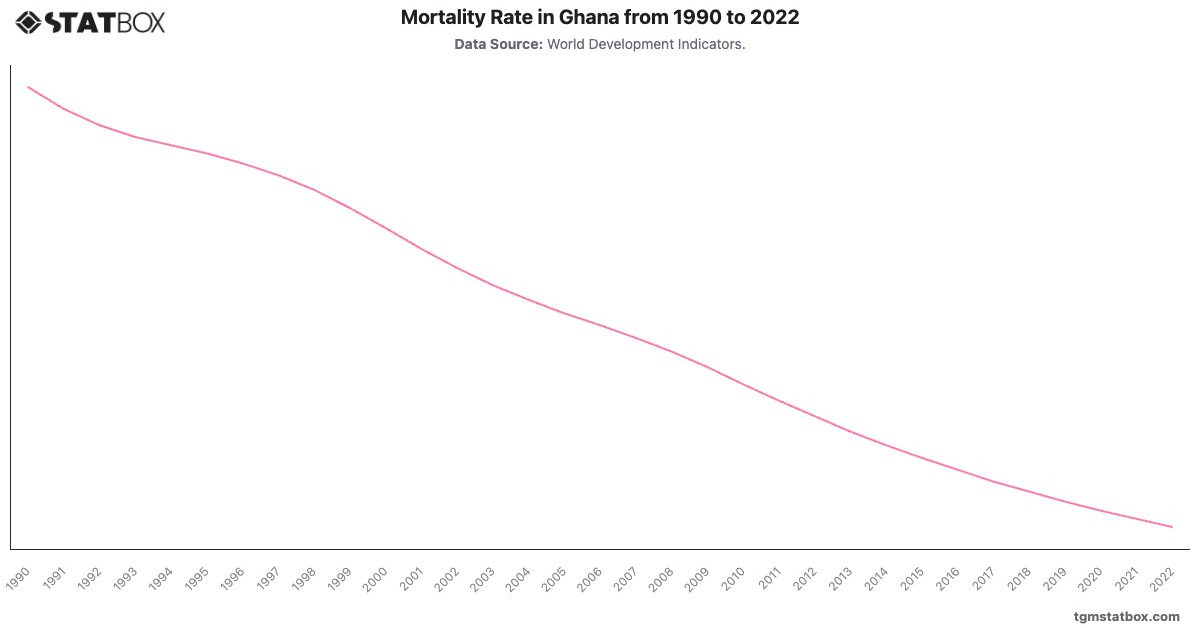
For a broader context, visit other statistics on Ghana’s inflation trends, Ghana’s mortality trend, Ghana’s urbanization rate.