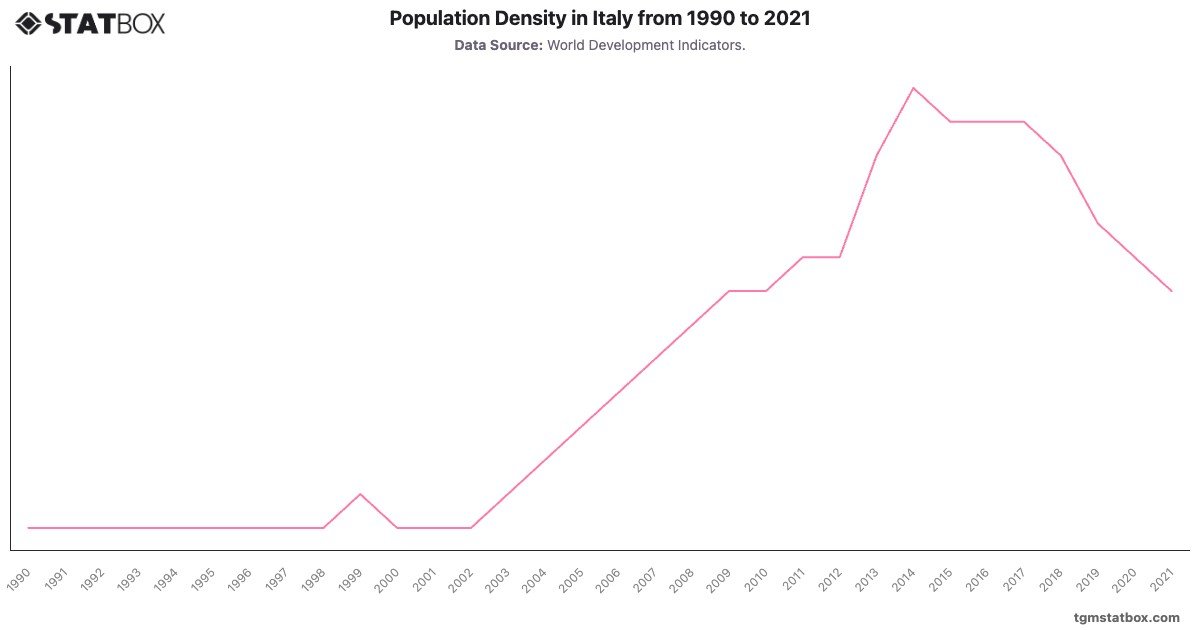
Italy’s population density saw a moderate increase from 193 people per square kilometer in 1990 to 200 in 2021. Urban centers like Rome, Milan, and Naples experienced gradual growth in the 1990s and 2000s as economic opportunities in these areas attracted more people. However, Italy’s overall population growth rate has remained relatively low compared to other European countries, reflecting slower density increases.
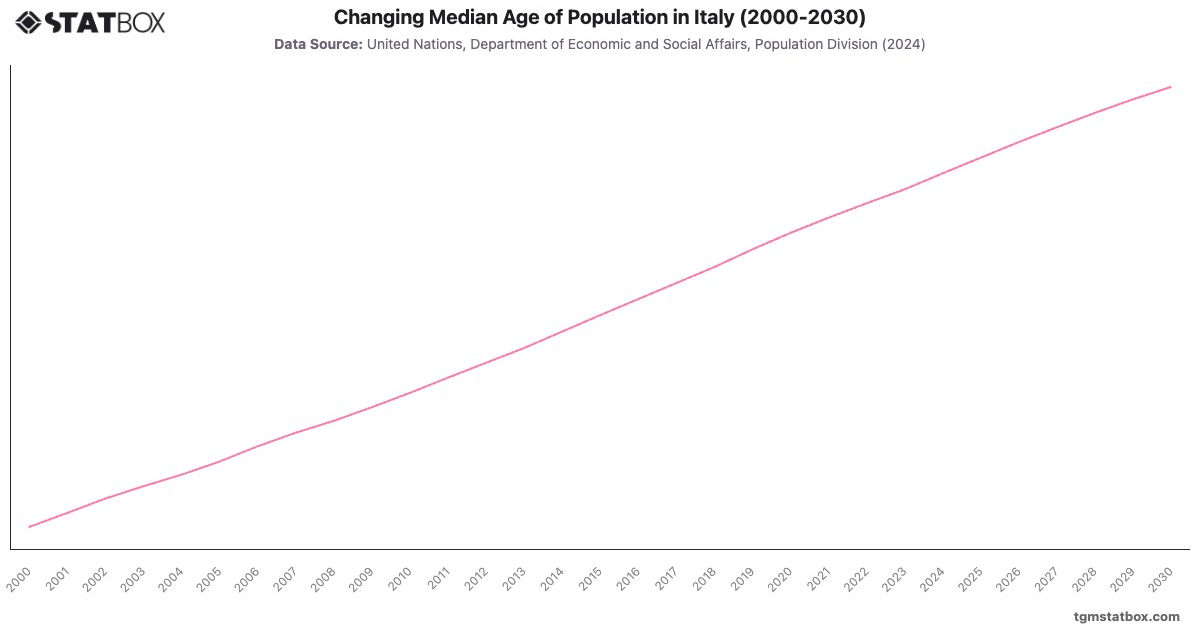
From the 2010s onward, Italy’s density stabilized, reaching around 200 people per square kilometer by 2021. Factors such as an aging population, low birth rate, and emigration have contributed to slower density growth. Major cities continue to house higher densities, but Italy’s rural areas remain relatively sparse, balancing the national average. This trend reflects Italy’s demographic challenges, with density largely concentrated in urban regions but tempered by declining growth rates.
From the 2010s onward, Italy’s density stabilized, reaching around 200 people per square kilometer by 2021. Factors such as an aging population, low birth rate, and emigration have contributed to slower density growth. Major cities continue to house higher densities, but Italy’s rural areas remain relatively sparse, balancing the national average. This trend reflects Italy’s demographic challenges, with density largely concentrated in urban regions but tempered by declining growth rates.
Explore related charts to gain a better understanding of rise in Italy’s urbanization, Italy’s population growth rate, Italy’s annual GDP growth rate.