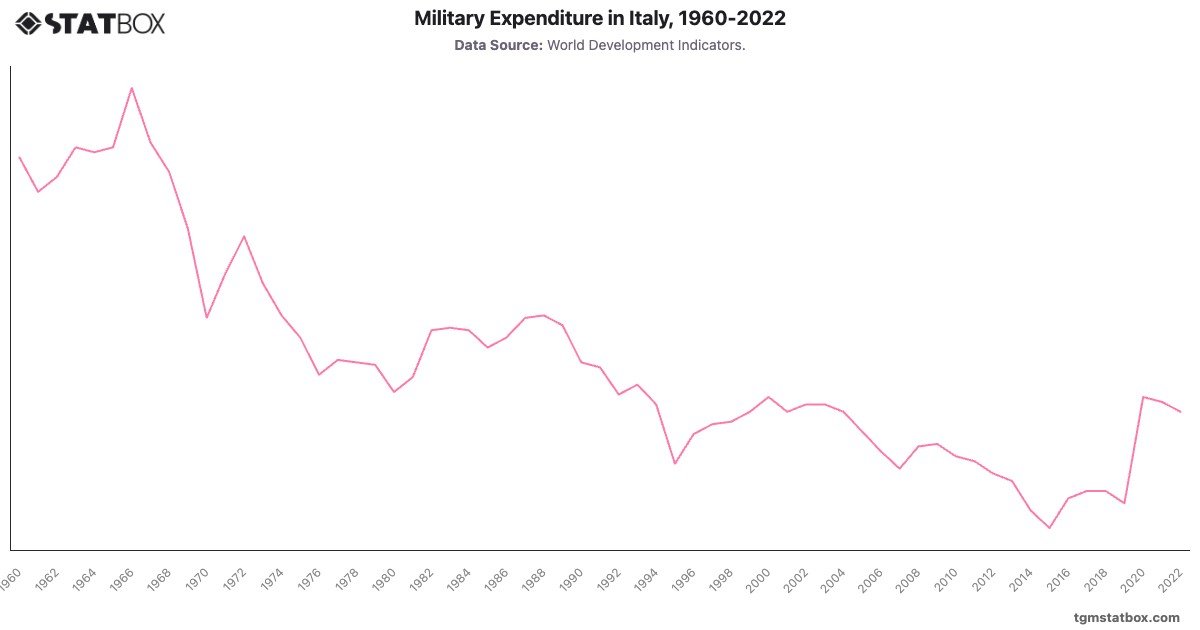
Italy's military expenditure showed distinct trends from 1960 to 2022, reflecting its geopolitical and economic context. During the Cold War, spending hovered around 2.6– of GDP, peaking at in 1966 as NATO strengthened its presence in Europe. The decline to by 1970 coincided with détente and Italy’s focus on economic recovery. The 1980s saw modest fluctuations, stabilizing at 1.9–, supported by the country's NATO commitments despite domestic fiscal pressures.
Post-Cold War, Italy's defense spending steadily decreased, reaching in 2013 amid austerity measures and shifting priorities towards welfare and economic reforms. However, a modest rebound to by 2020 was driven by modernizing military capabilities and addressing new security challenges, such as regional instability and NATO’s increased emphasis on burden-sharing.
Post-Cold War, Italy's defense spending steadily decreased, reaching in 2013 amid austerity measures and shifting priorities towards welfare and economic reforms. However, a modest rebound to by 2020 was driven by modernizing military capabilities and addressing new security challenges, such as regional instability and NATO’s increased emphasis on burden-sharing.
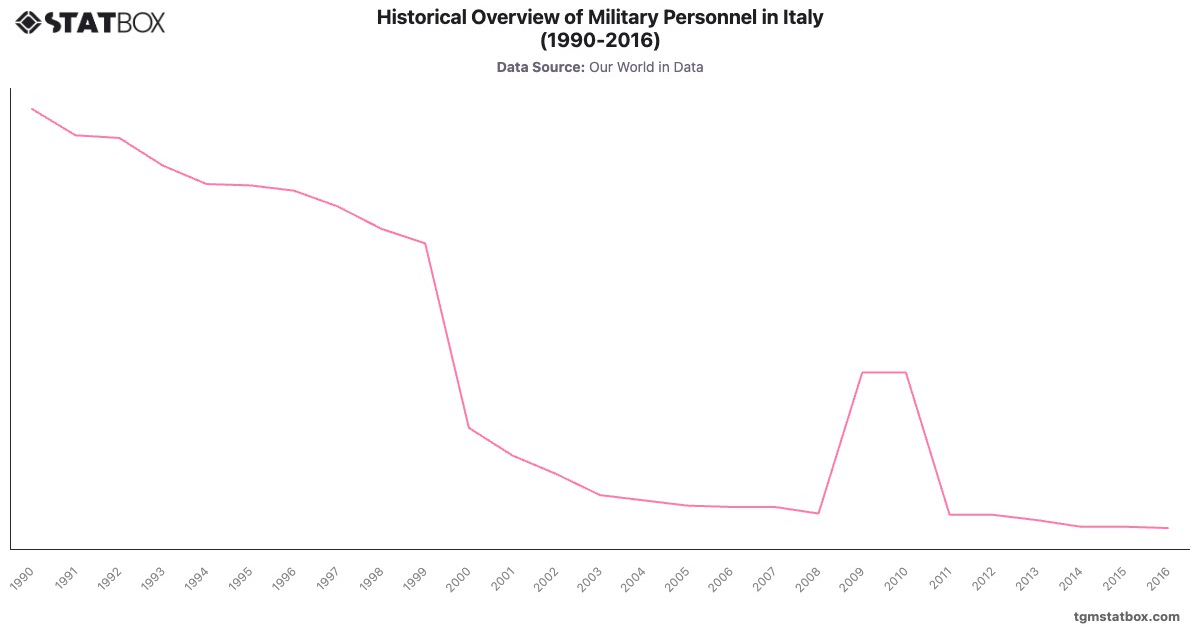
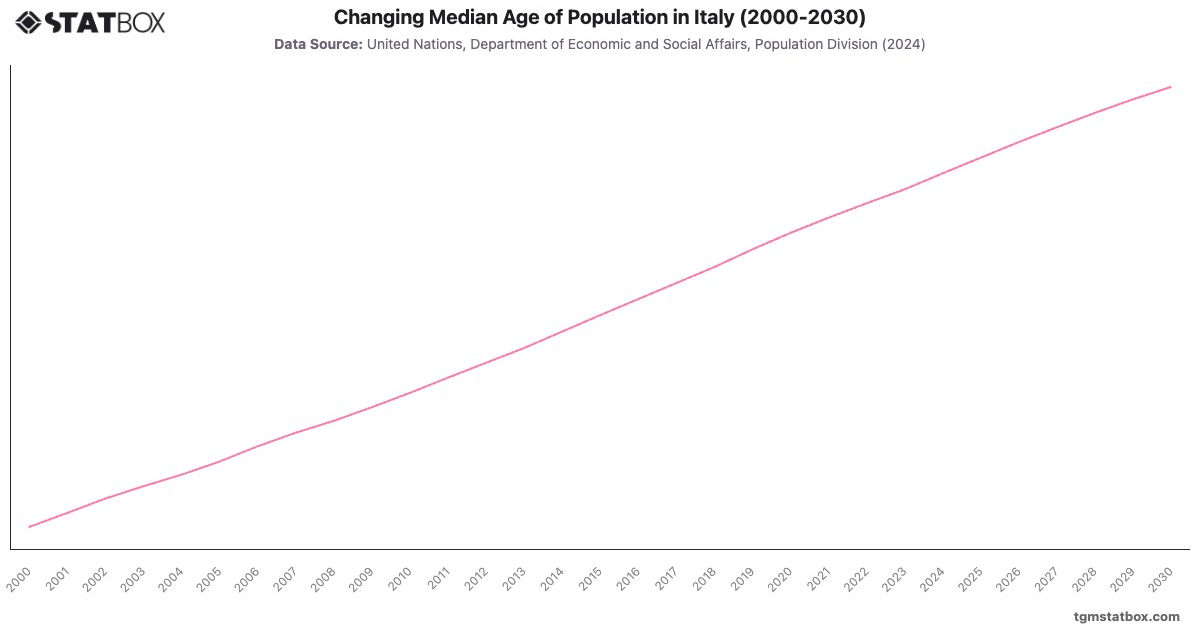
For a deeper dive into the topic, explore Italy’s goods export value, Italy’s military personnel overview, Italy’s changing median age.