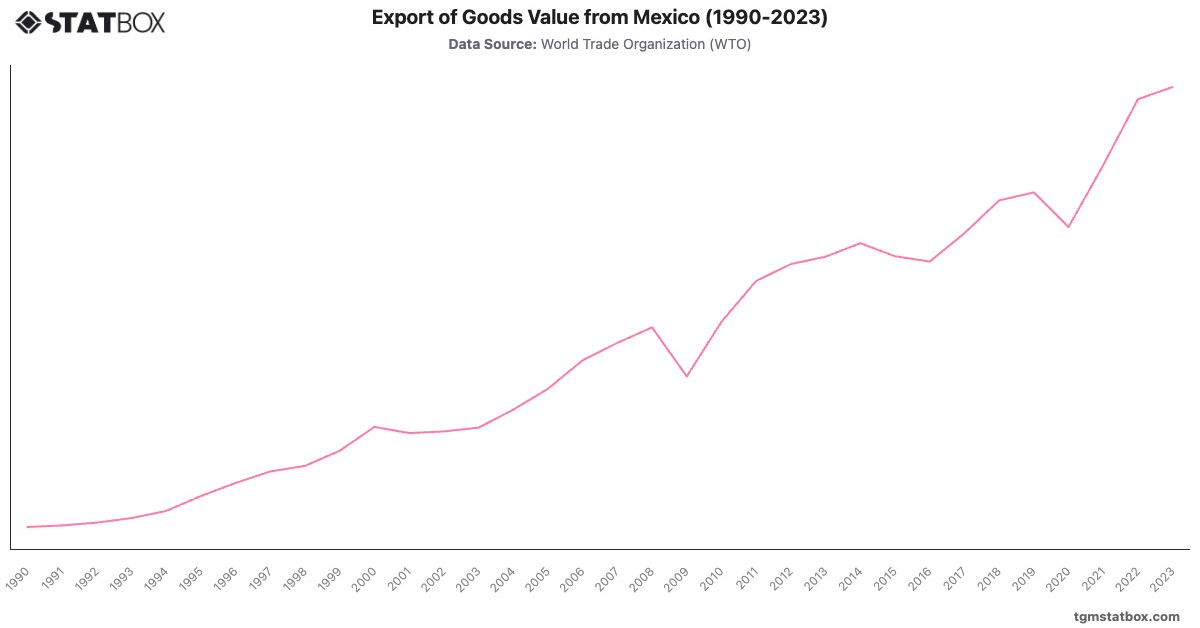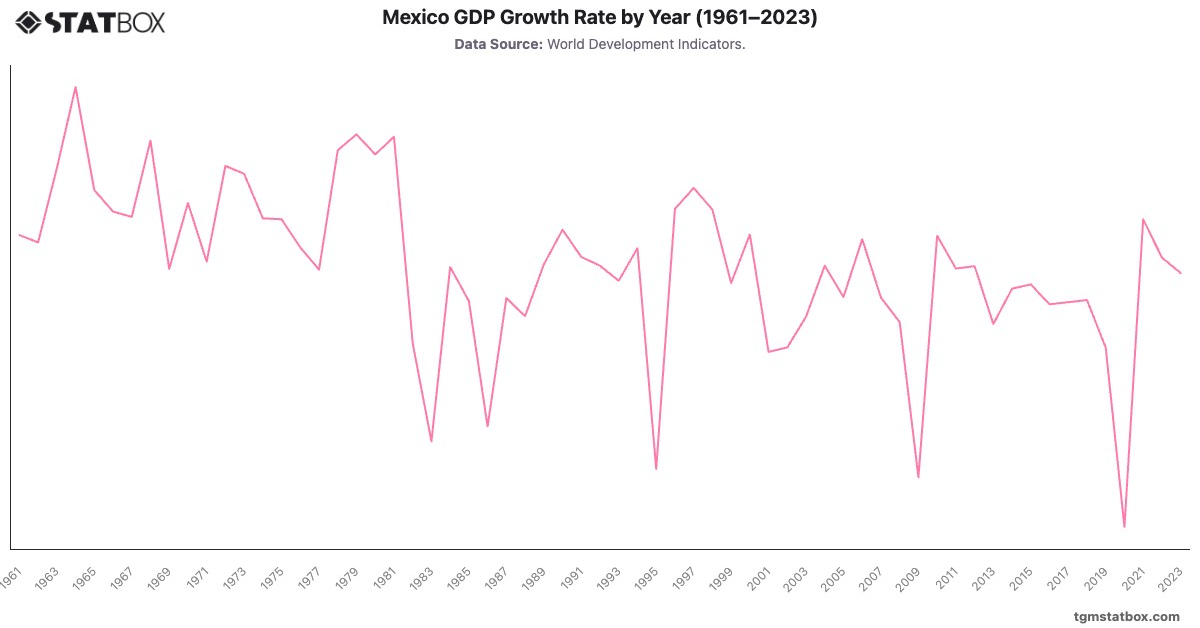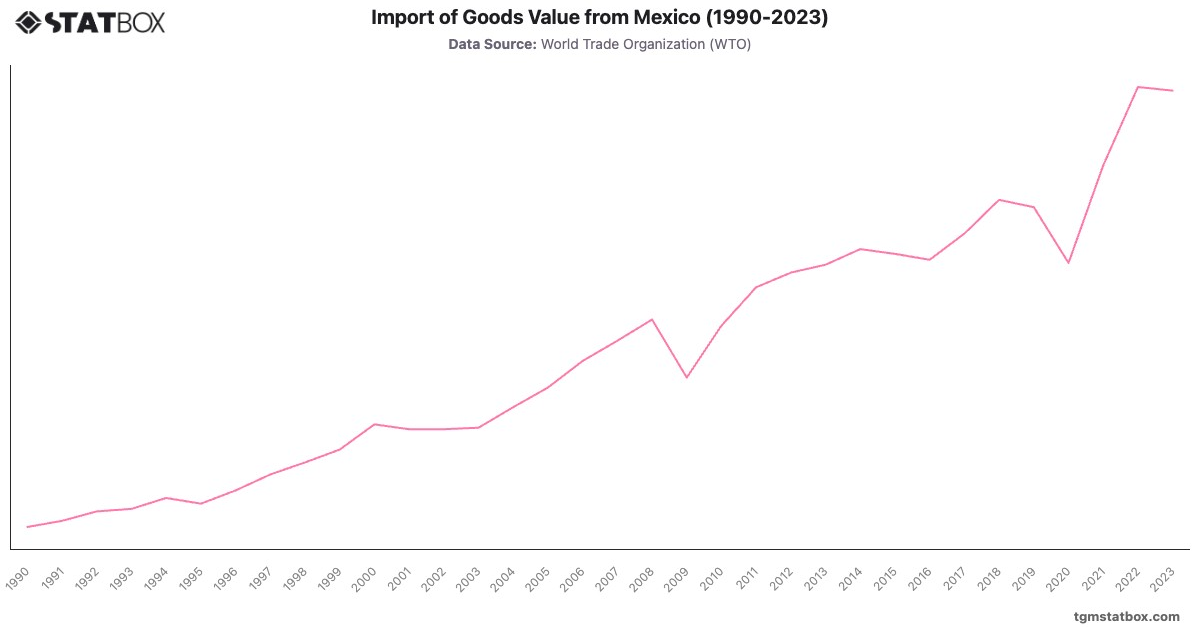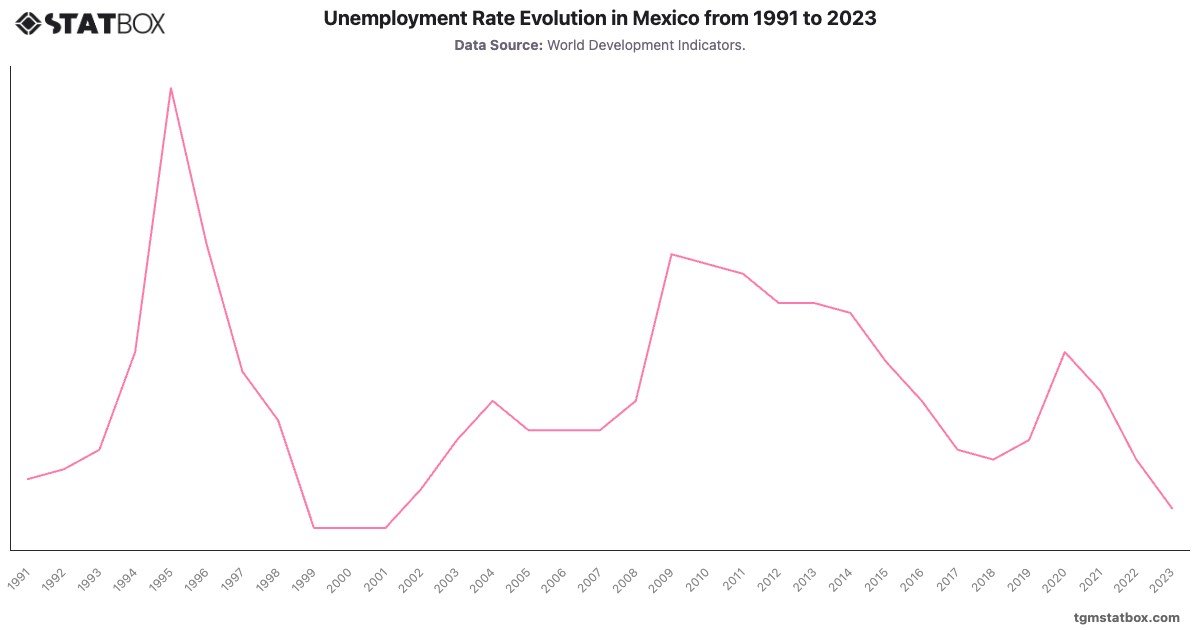
Mexico’s unemployment rate rose markedly during the 1990s due to economic turmoil, including the Peso Crisis in 1994, which saw the rate peak at in 1995. Recovery was swift, and by 2000, unemployment returned to a low , spurred by trade liberalization and increased manufacturing through NAFTA, which boosted job creation. The rate fluctuated slightly but remained low until the 2009 global financial crisis, which caused it to rise to .
A gradual recovery followed, and by 2023, unemployment stood at , reflecting Mexico's economic resilience, especially in the face of external shocks. This pattern demonstrates the effects of Mexico's trade-focused economic strategy and the expansion of manufacturing, although challenges remain in achieving long-term economic stability and inclusive growth.
A gradual recovery followed, and by 2023, unemployment stood at , reflecting Mexico's economic resilience, especially in the face of external shocks. This pattern demonstrates the effects of Mexico's trade-focused economic strategy and the expansion of manufacturing, although challenges remain in achieving long-term economic stability and inclusive growth.
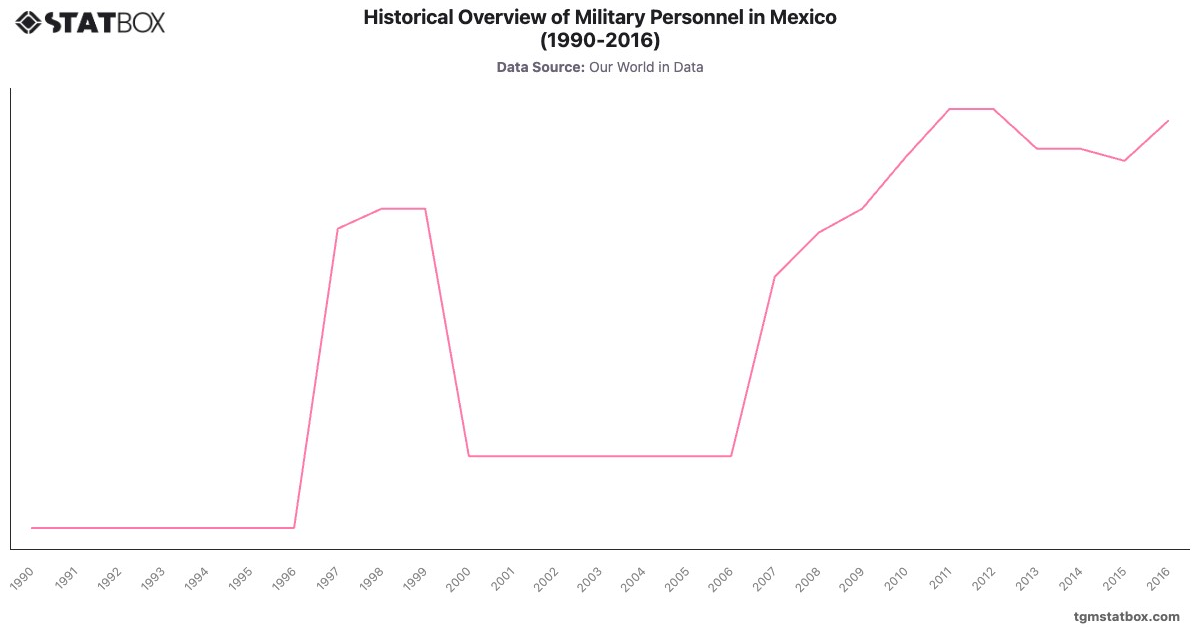
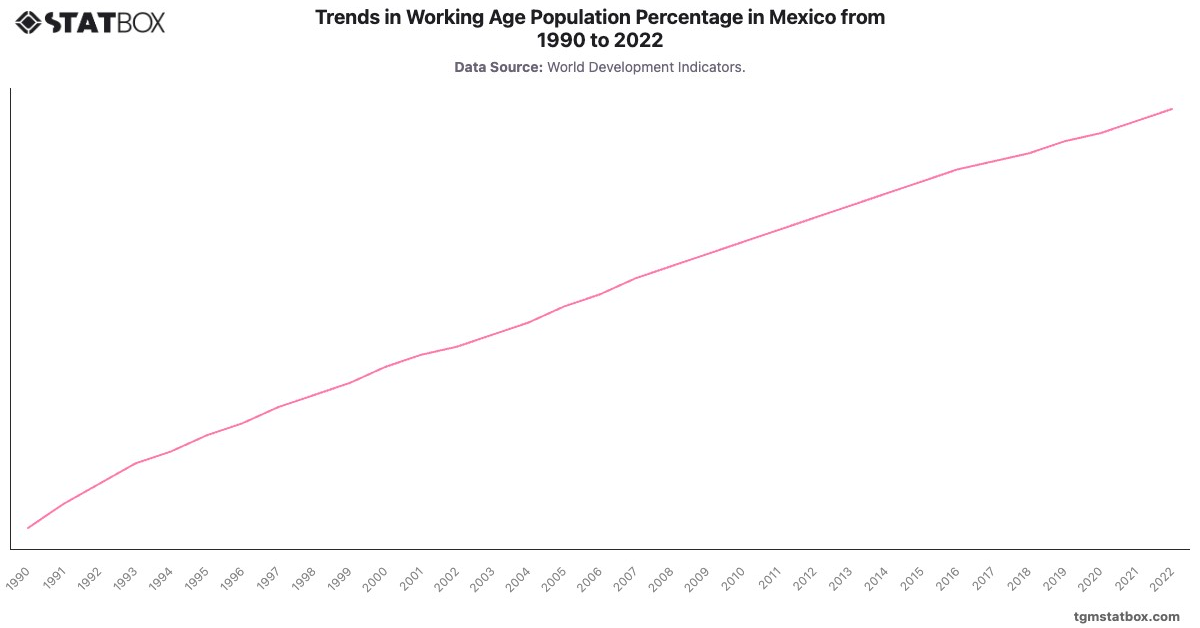
Find out more through related statistics on Mexico’s population growth rate, Mexico’s military personnel proportion, Mexico’s working-age population percentage.