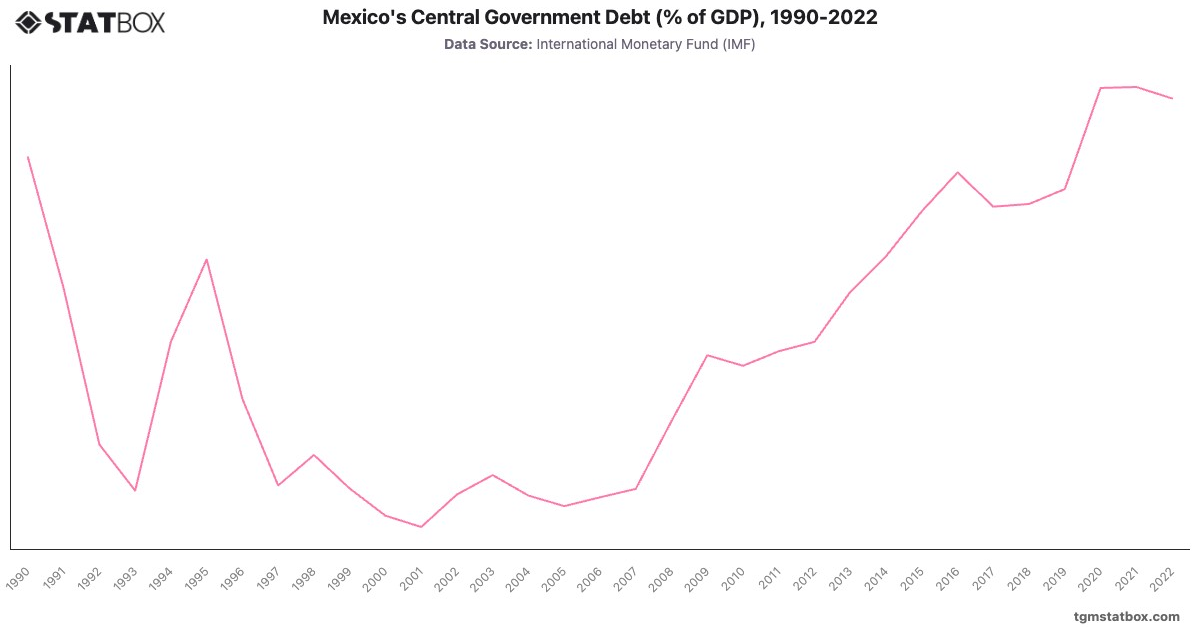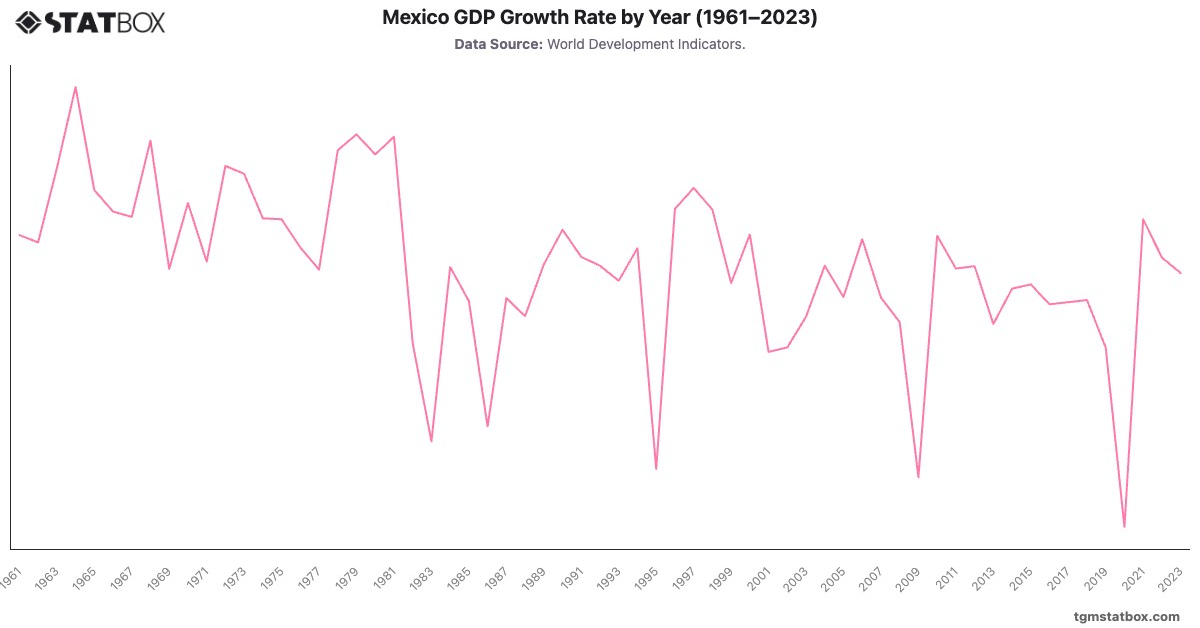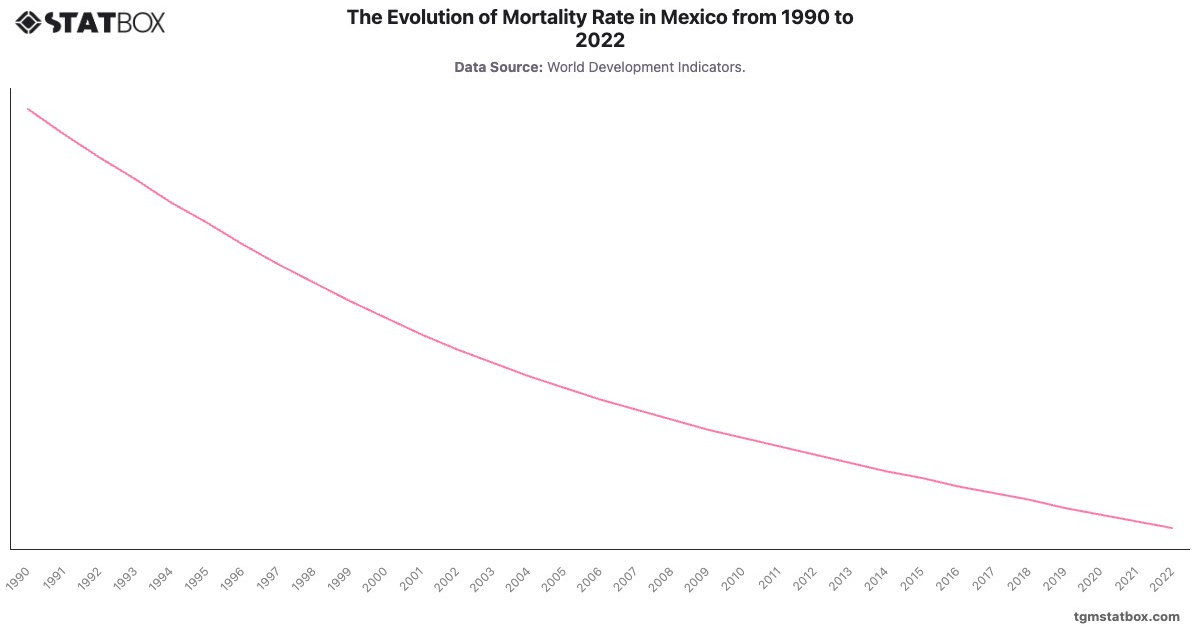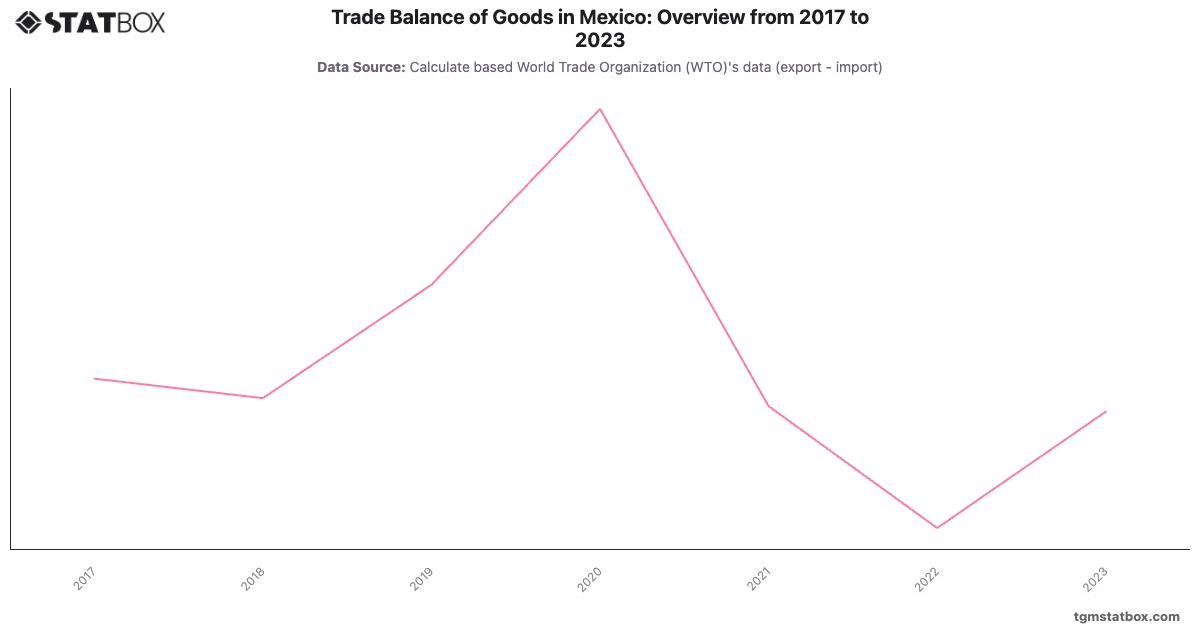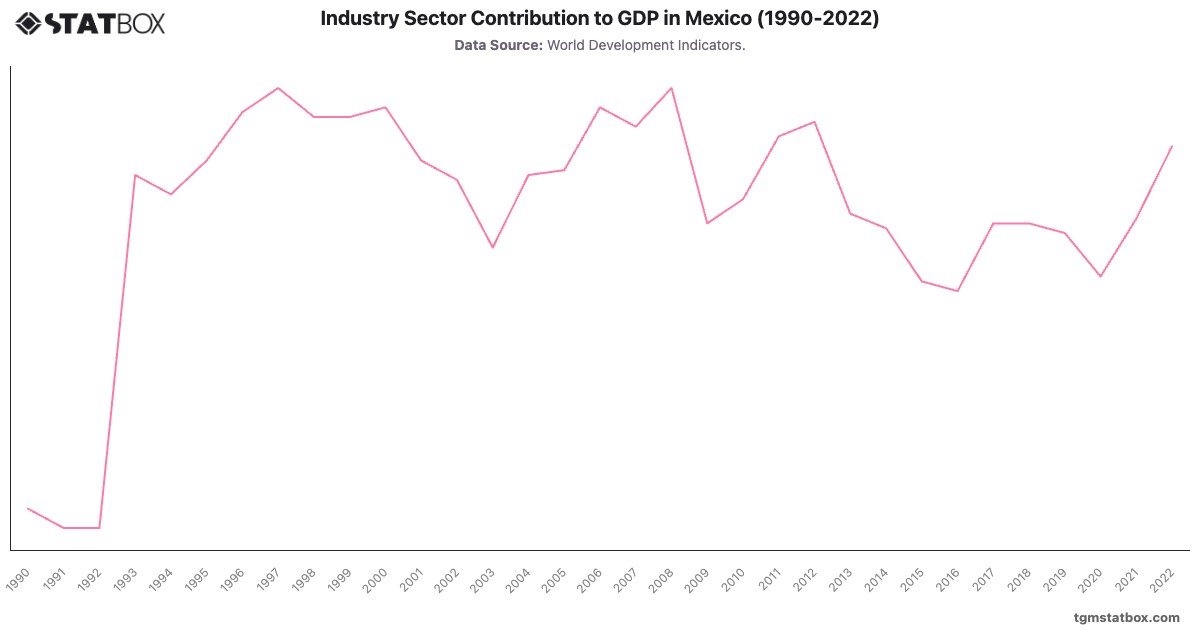
Mexico's industry sector contribution to GDP showed notable volatility from 1990 through 2022, with highs and lows influenced by both domestic policies and international trade dynamics. From in 1990, the sector surged to a peak of in 1997, spurred by the North American Free Trade Agreement (NAFTA), which significantly boosted Mexico’s manufacturing and export industries. A consistent share around 33- persisted into the early 2000s, reflecting strong performance in automobile and electronics manufacturing.
However, the global financial crisis in 2008 led to a contraction, with the contribution dropping to in 2009. The 2010s saw some stabilization around 31-, though industrial challenges, including declining oil production and increased competition, impacted the growth trajectory. In recent years, the industrial sector has rebounded, with a 2022 figure of , driven by nearshoring trends and investments in manufacturing, which have strengthened Mexico's industrial base as a key player in North American supply chains.
However, the global financial crisis in 2008 led to a contraction, with the contribution dropping to in 2009. The 2010s saw some stabilization around 31-, though industrial challenges, including declining oil production and increased competition, impacted the growth trajectory. In recent years, the industrial sector has rebounded, with a 2022 figure of , driven by nearshoring trends and investments in manufacturing, which have strengthened Mexico's industrial base as a key player in North American supply chains.
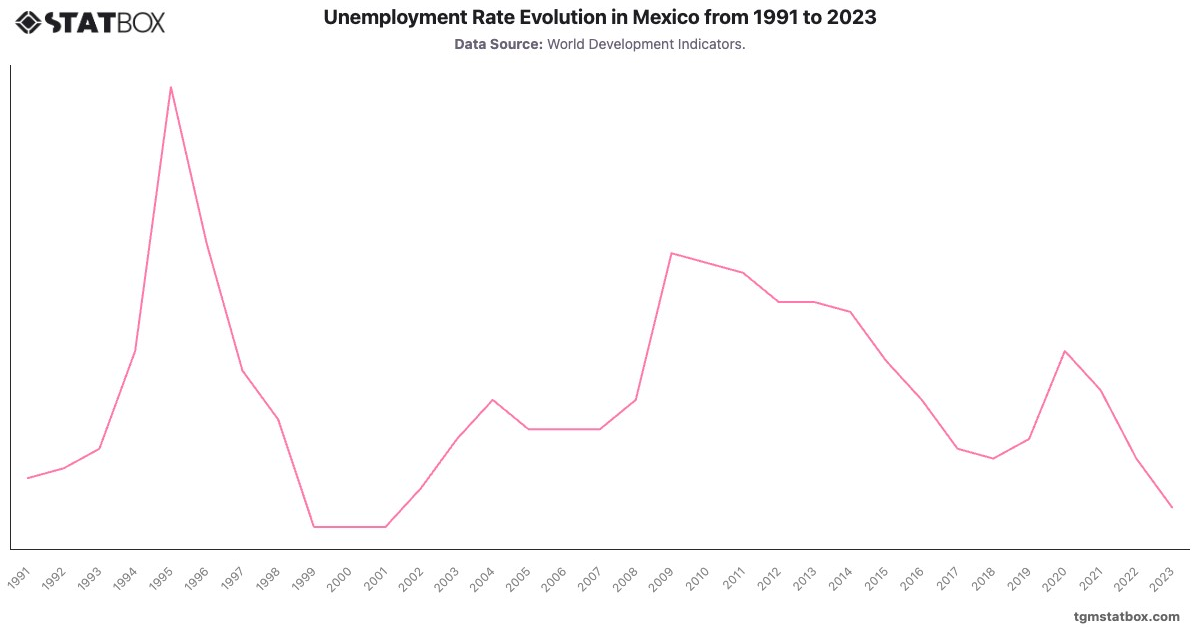
Gain a broader perspective by reviewing Mexico’s population density, Mexico’s services sector share in GDP, Mexico’s unemployment rate trends.