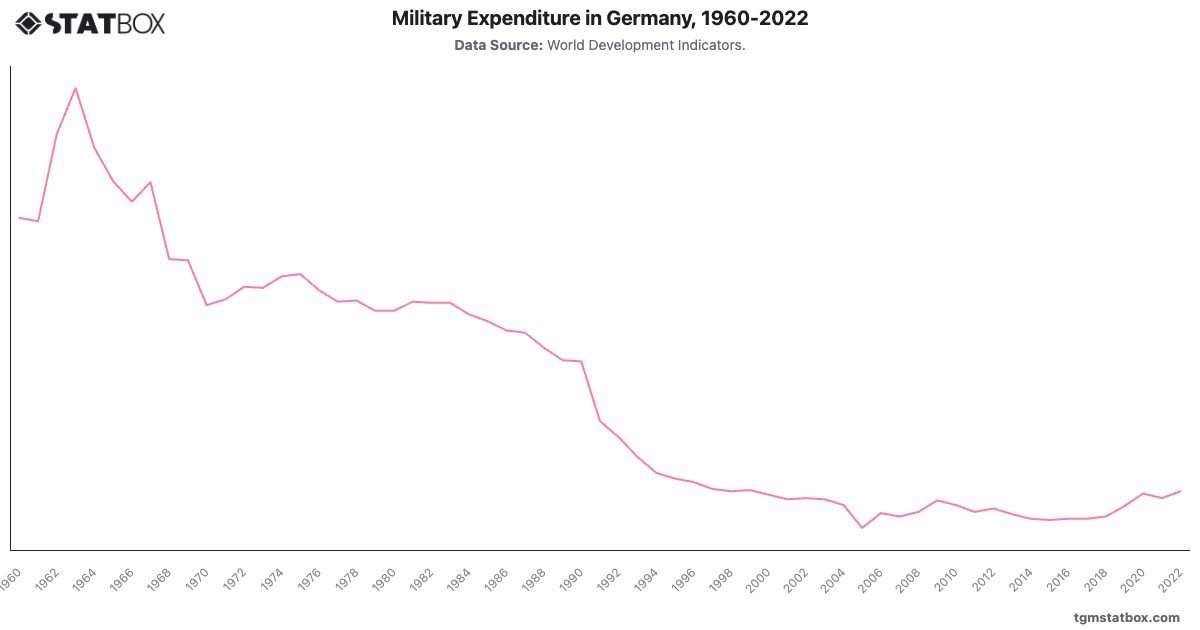
Germany's military expenditure as a percentage of GDP exhibited significant fluctuations over the decades, reflecting the country's evolving geopolitical landscape and economic priorities. During the early 1960s, military spending ranged between and , peaking in 1963. This increase aligned with Cold War tensions and the establishment of NATO's defense posture in Europe. However, expenditures steadily declined in the 1970s, stabilizing around by the late 1970s as détente between the East and West reduced immediate military threats.
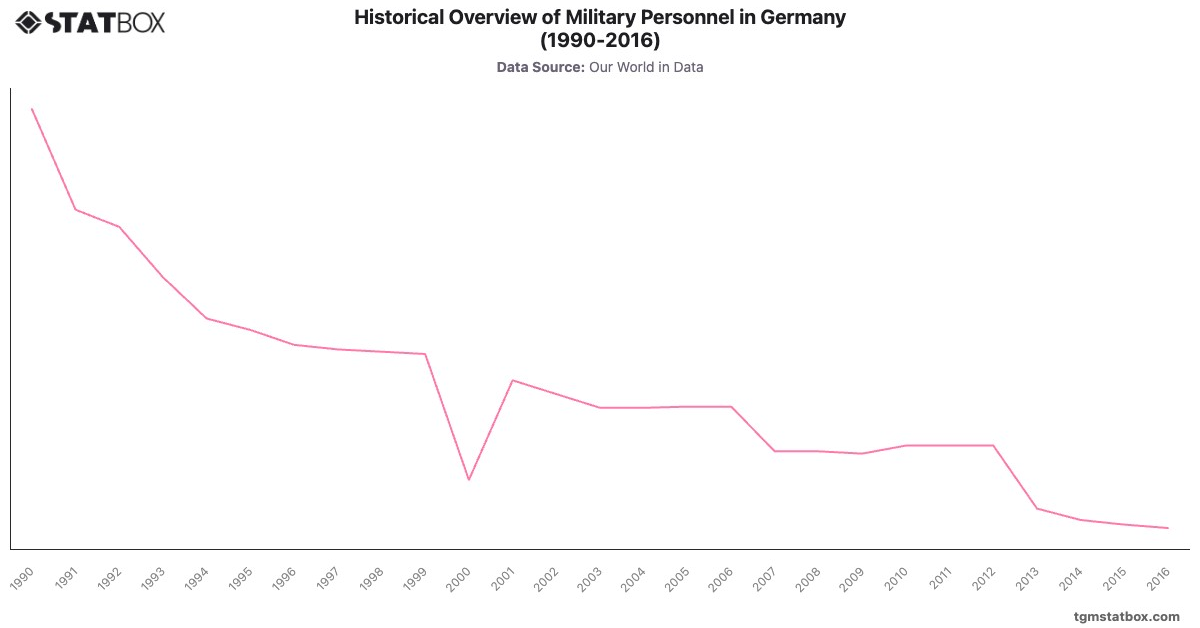
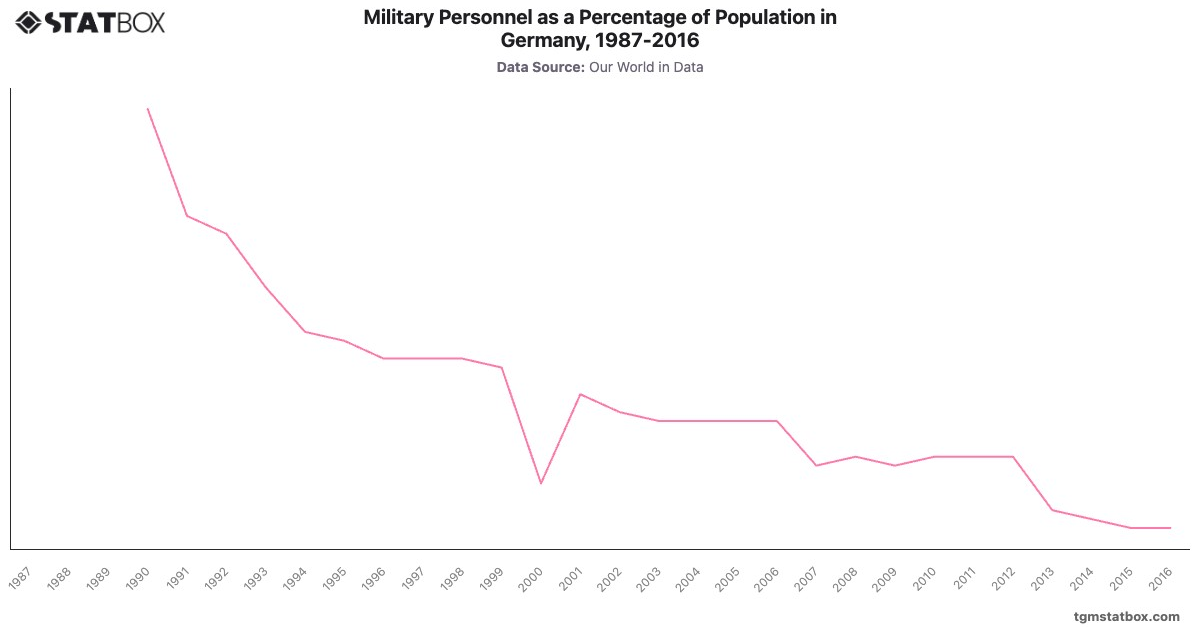
The post-Cold War era marked a significant reduction in spending, with expenditures dropping from of GDP in 1990 to by the early 2000s. This shift reflects Germany's focus on reunification and economic restructuring. Recent years, however, have seen a modest uptick in military investment, reaching in 2020 and 2022, influenced by NATO commitments and rising global security concerns.
The post-Cold War era marked a significant reduction in spending, with expenditures dropping from of GDP in 1990 to by the early 2000s. This shift reflects Germany's focus on reunification and economic restructuring. Recent years, however, have seen a modest uptick in military investment, reaching in 2020 and 2022, influenced by NATO commitments and rising global security concerns.
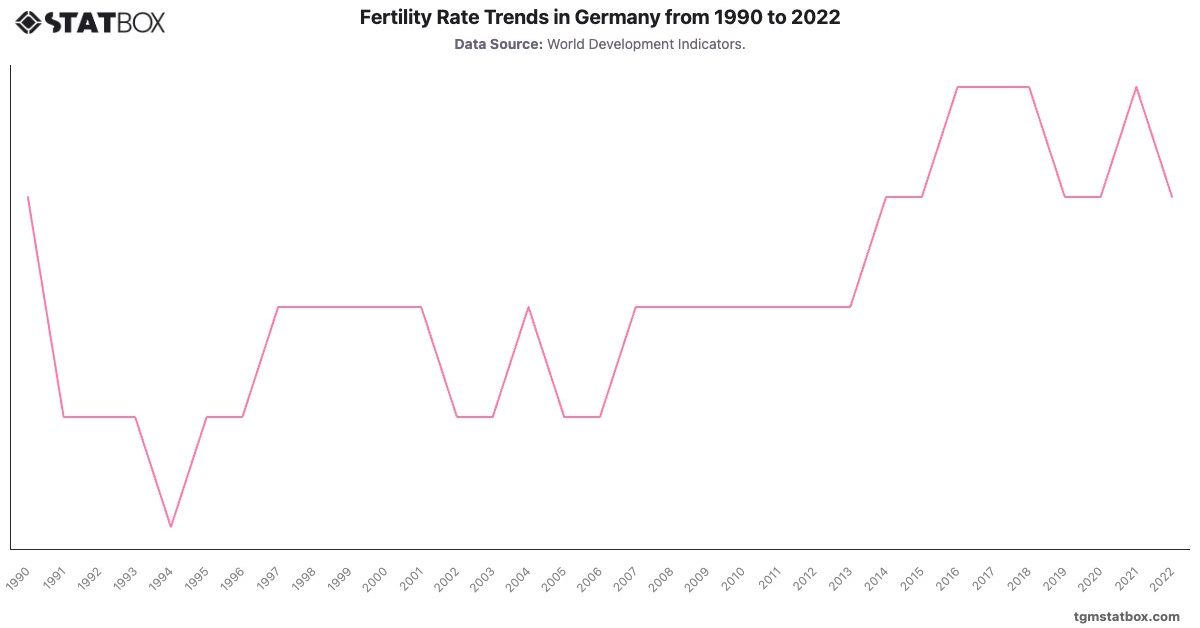
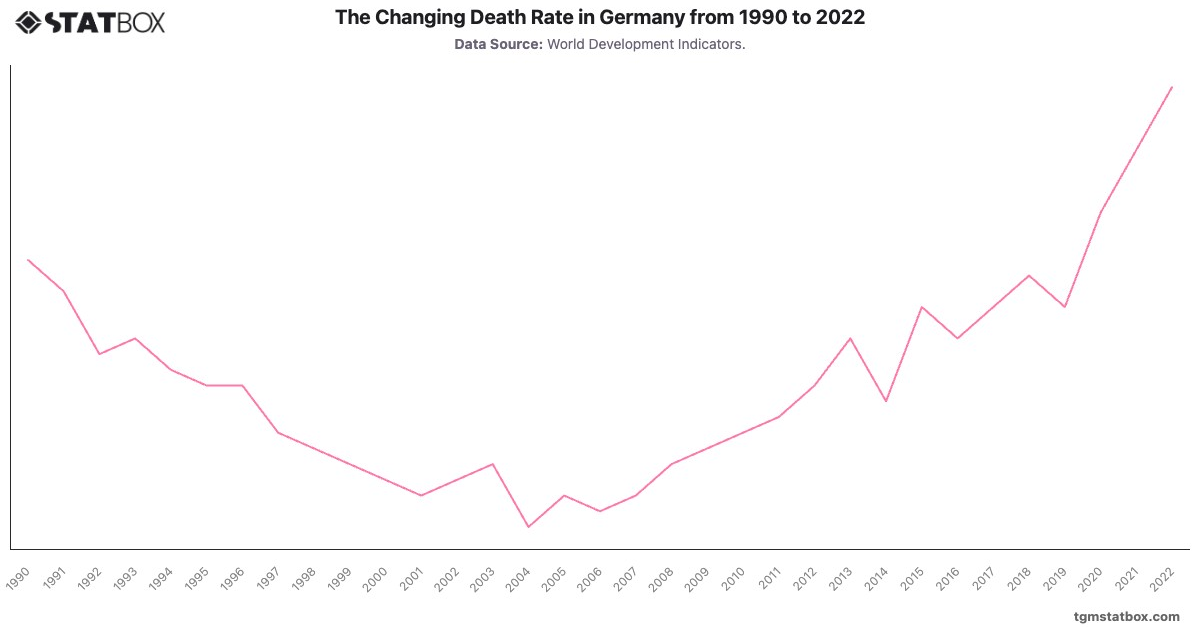
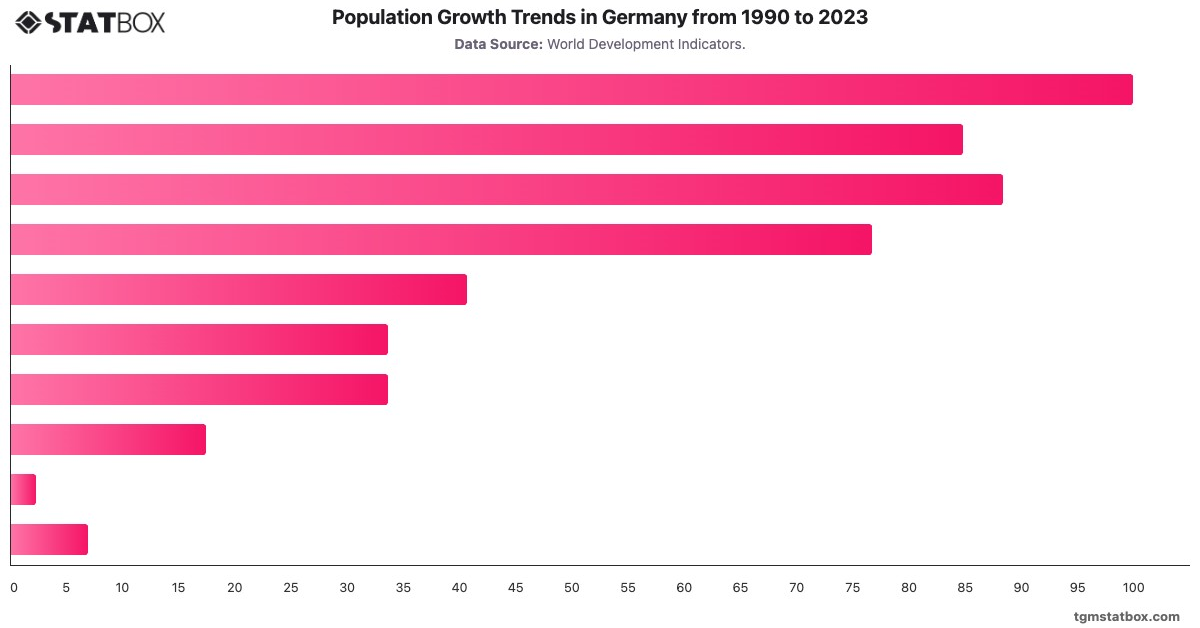
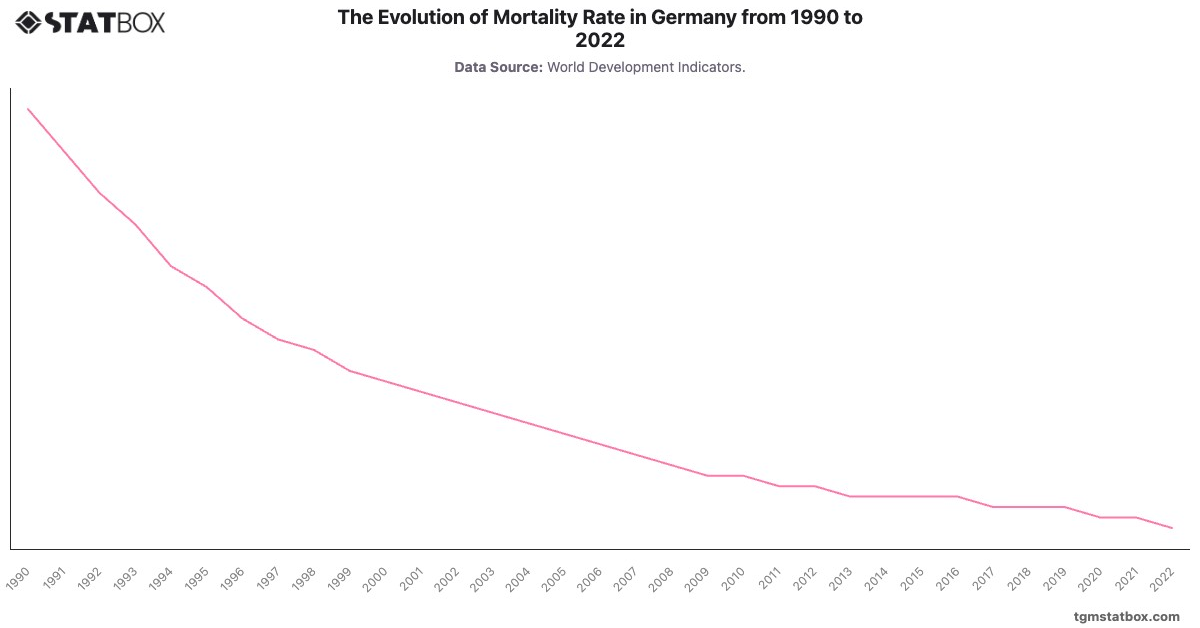
Gain a broader perspective by reviewing Germany’s population growth, Germany’s mortality rate trends, Germany’s fertility rate.