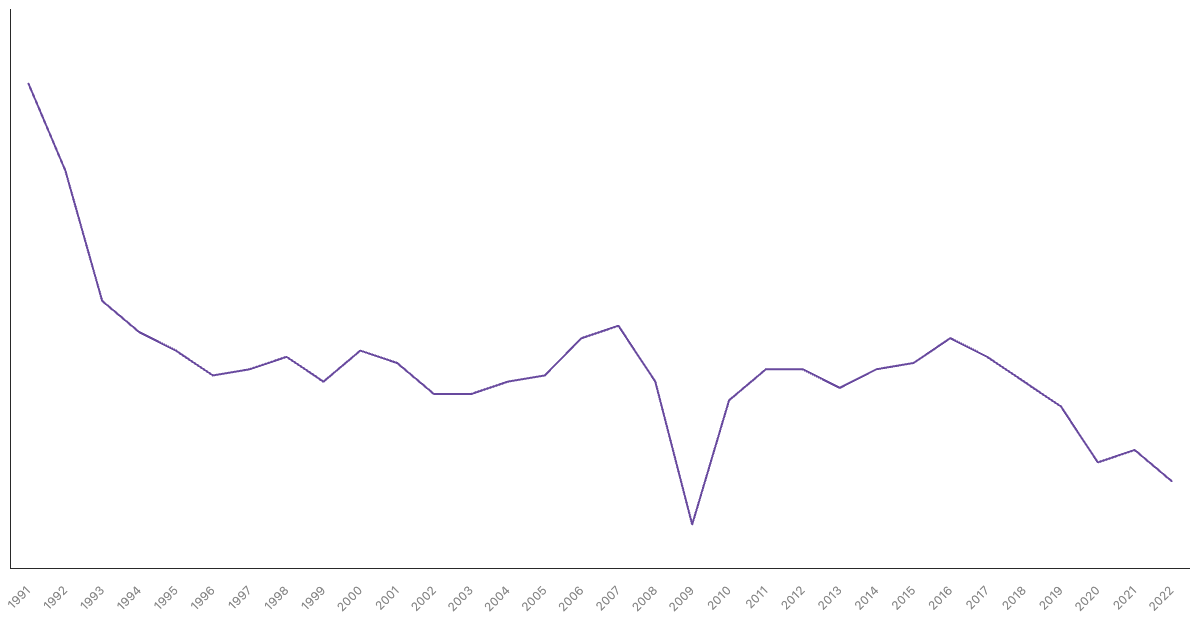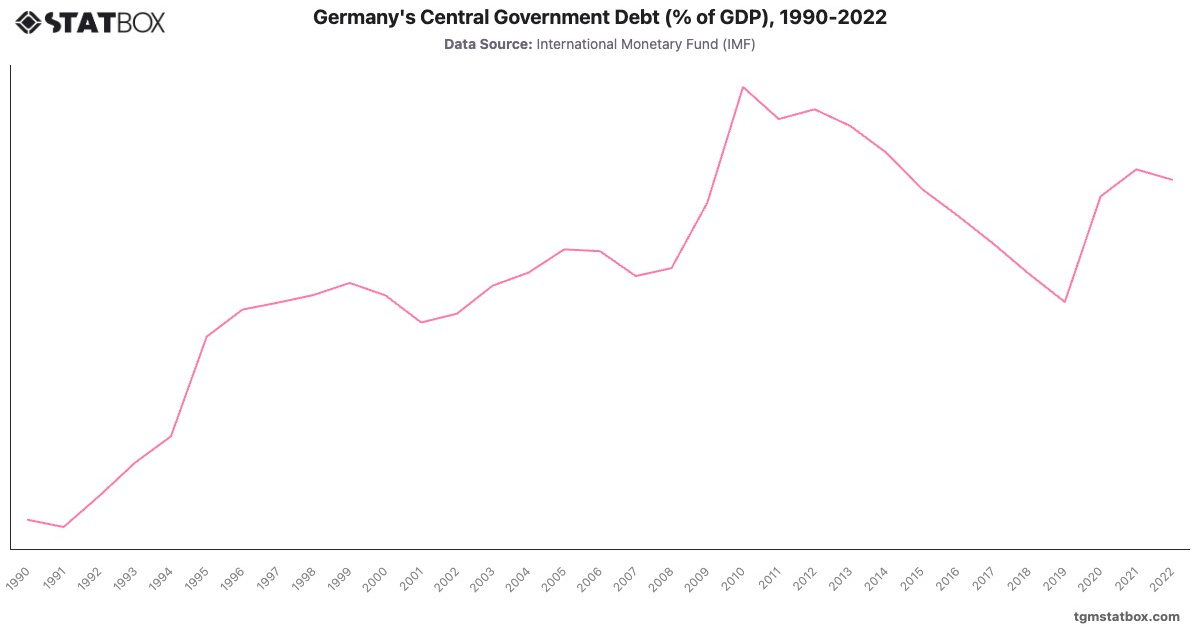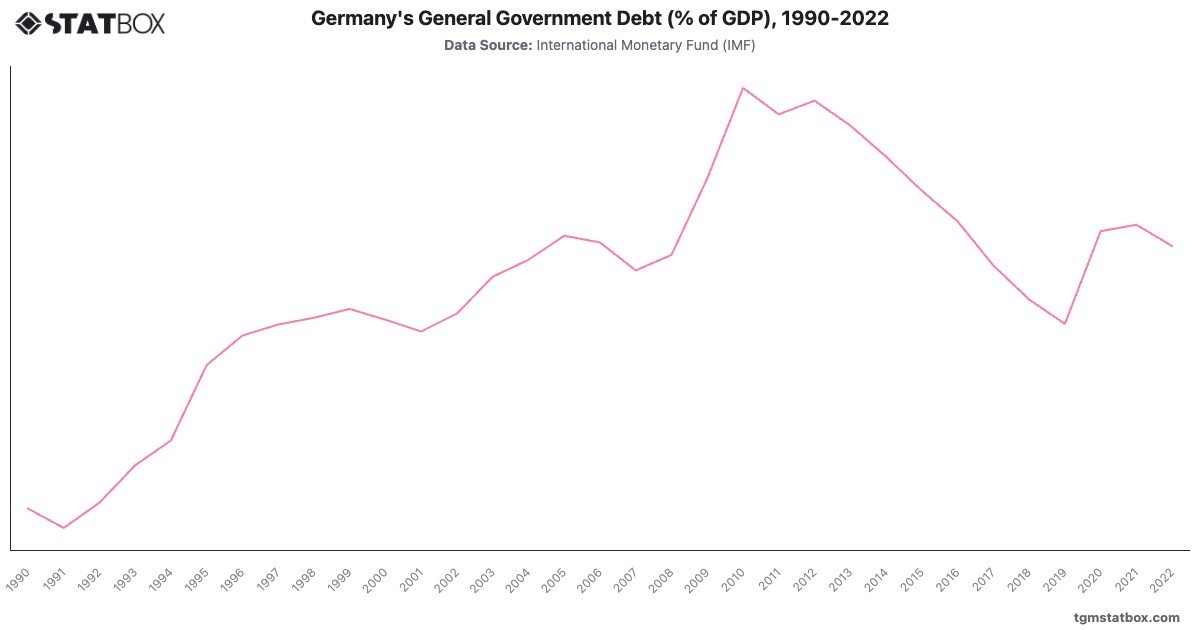
Germany's government debt saw significant changes from 1990 onward, starting with a stable period in the early 1990s, with debt at around in 1990. Debt levels increased gradually through the early 2000s, reaching by 2005 due to reunification costs and welfare spending. The 2008 financial crisis prompted another rise, peaking at in 2010.
Post-crisis, Germany focused on fiscal consolidation, reducing debt to by 2019 through budget surpluses and a stable economy. However, the COVID-19 pandemic caused an increase to in 2020, with a slight decline to by 2022 as the economy began to recover.
Post-crisis, Germany focused on fiscal consolidation, reducing debt to by 2019 through budget surpluses and a stable economy. However, the COVID-19 pandemic caused an increase to in 2020, with a slight decline to by 2022 as the economy began to recover.
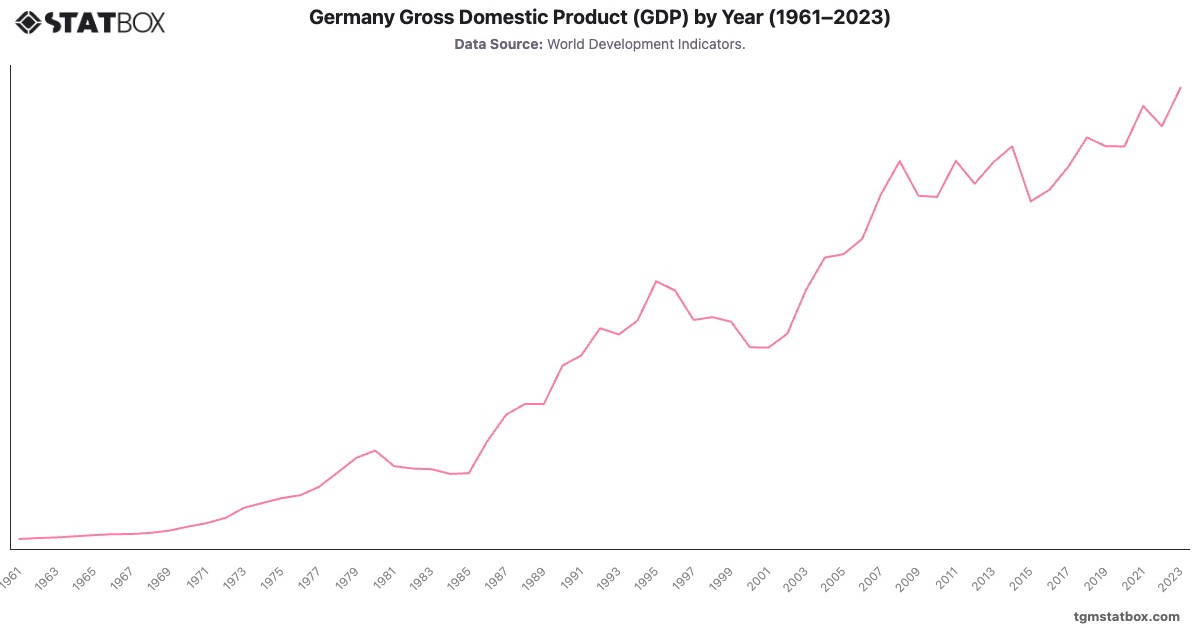
Find out more through related statistics on Germany’s population numbers, Germany’s industry sector’s GDP contribution, Germany’s national debt ratio.