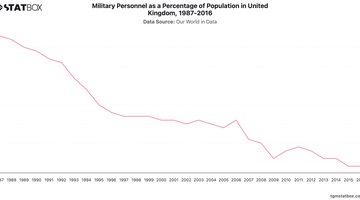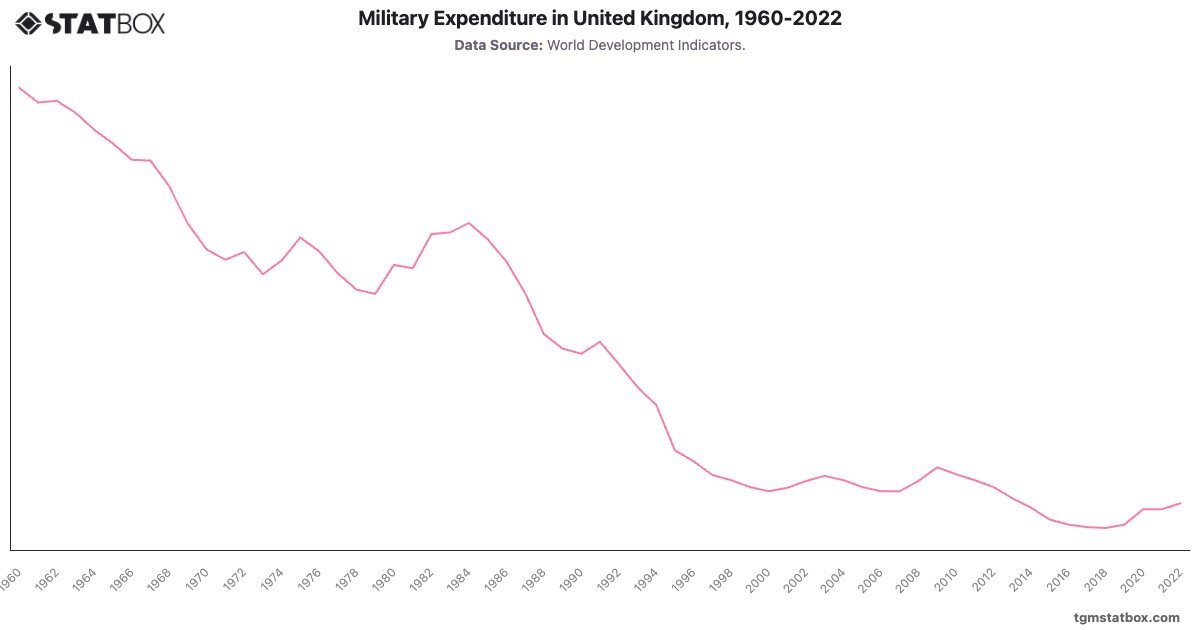
The UK's military expenditure started at a substantial of GDP in 1960, influenced by the Cold War and its status as a global power. Declines through the 1960s and 1970s, reaching in 1970, reflect economic pressures and a reassessment of the UK's global role following the decolonization process. Expenditure peaked again in the early 1980s, driven by the Falklands War and Margaret Thatcher’s defense policies, hovering around .
Post-Cold War reductions were sharp, with spending decreasing to by the late 1990s. This trend stabilized around during the 21st century, reflecting the UK's commitment to NATO while balancing domestic fiscal constraints. The slight rise to in 2020 indicates increased defense spending driven by global instability, including Brexit-related security concerns and emerging threats such as cyber warfare.
Post-Cold War reductions were sharp, with spending decreasing to by the late 1990s. This trend stabilized around during the 21st century, reflecting the UK's commitment to NATO while balancing domestic fiscal constraints. The slight rise to in 2020 indicates increased defense spending driven by global instability, including Brexit-related security concerns and emerging threats such as cyber warfare.
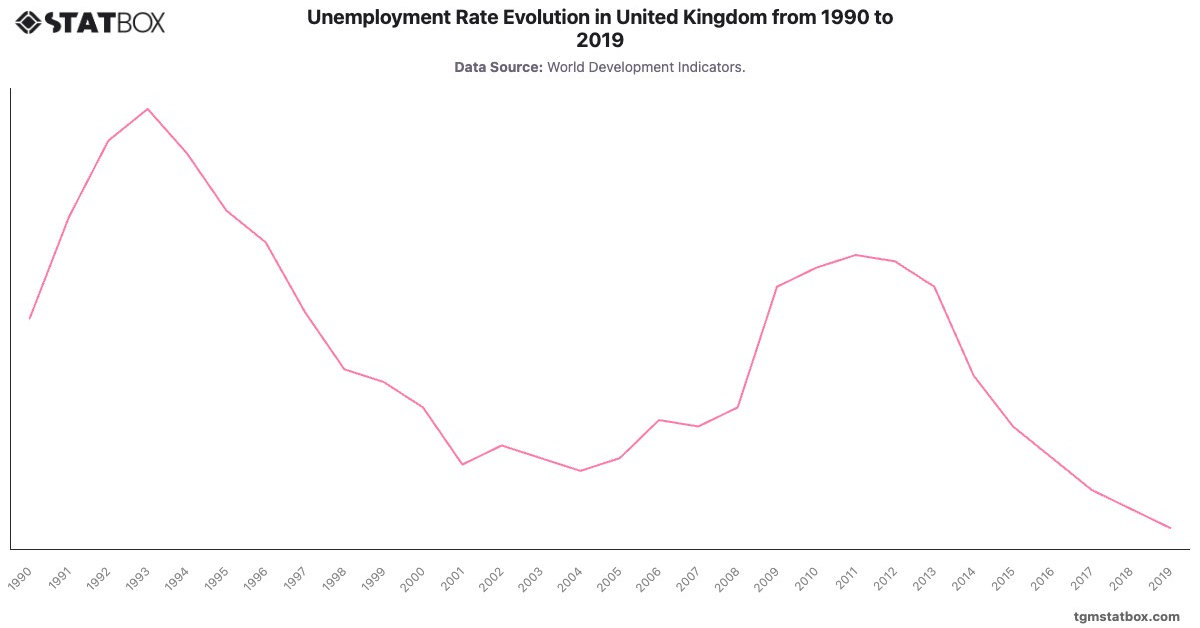
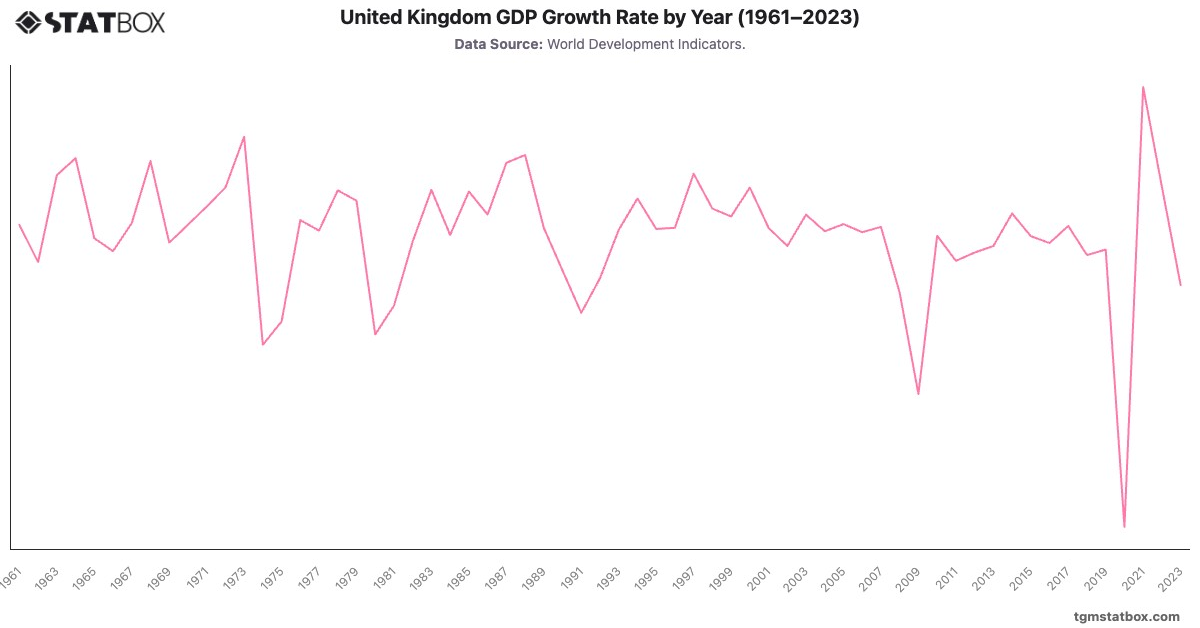
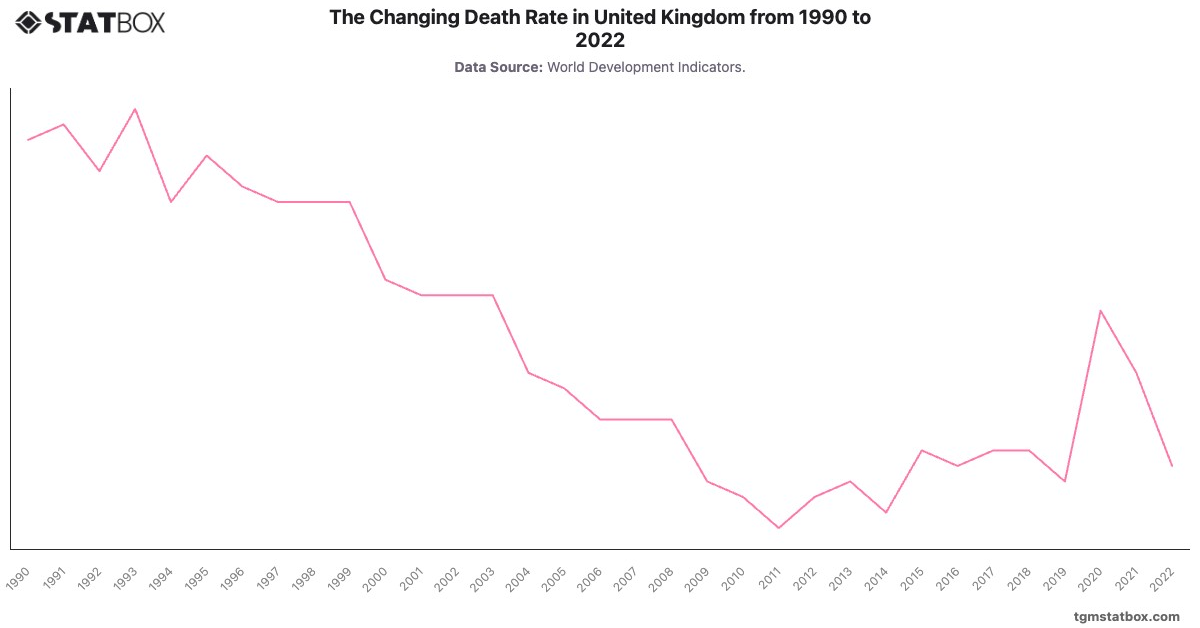
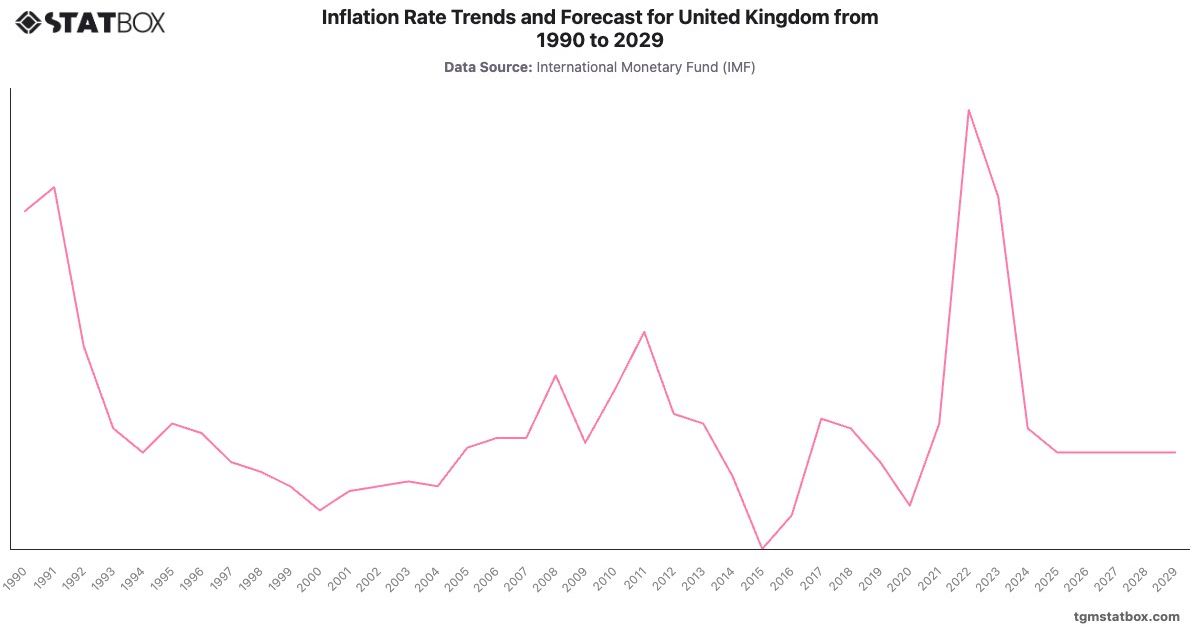
Gain a broader perspective by reviewing United Kingdom's unemployment rate changes, United Kingdom’s population, UK’s military presence estimate.