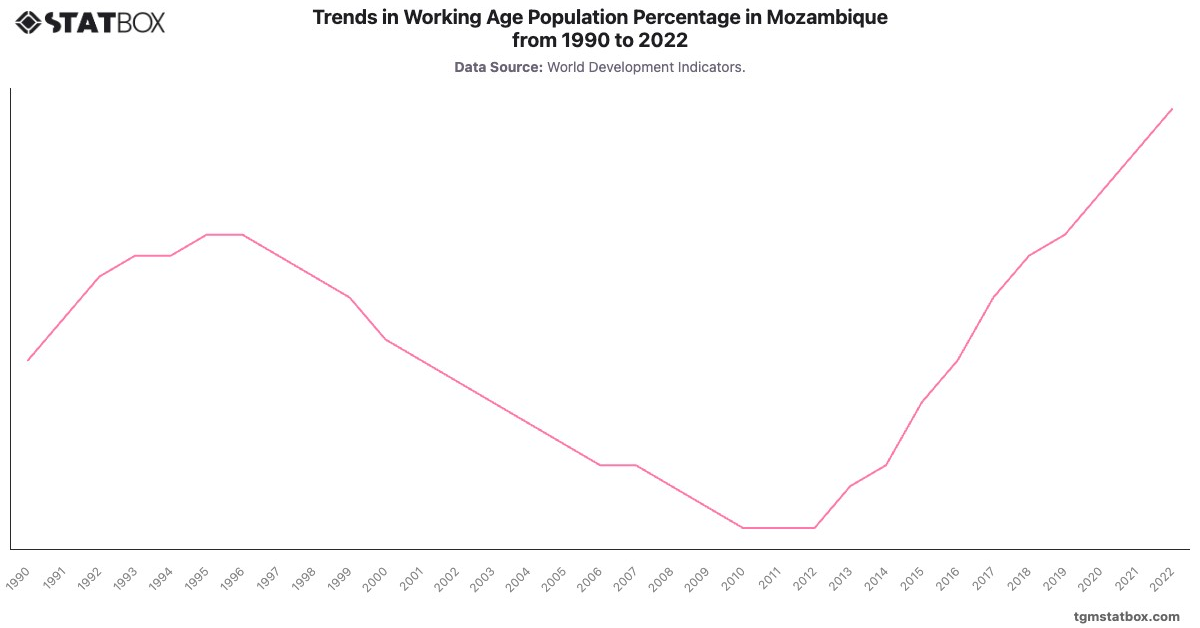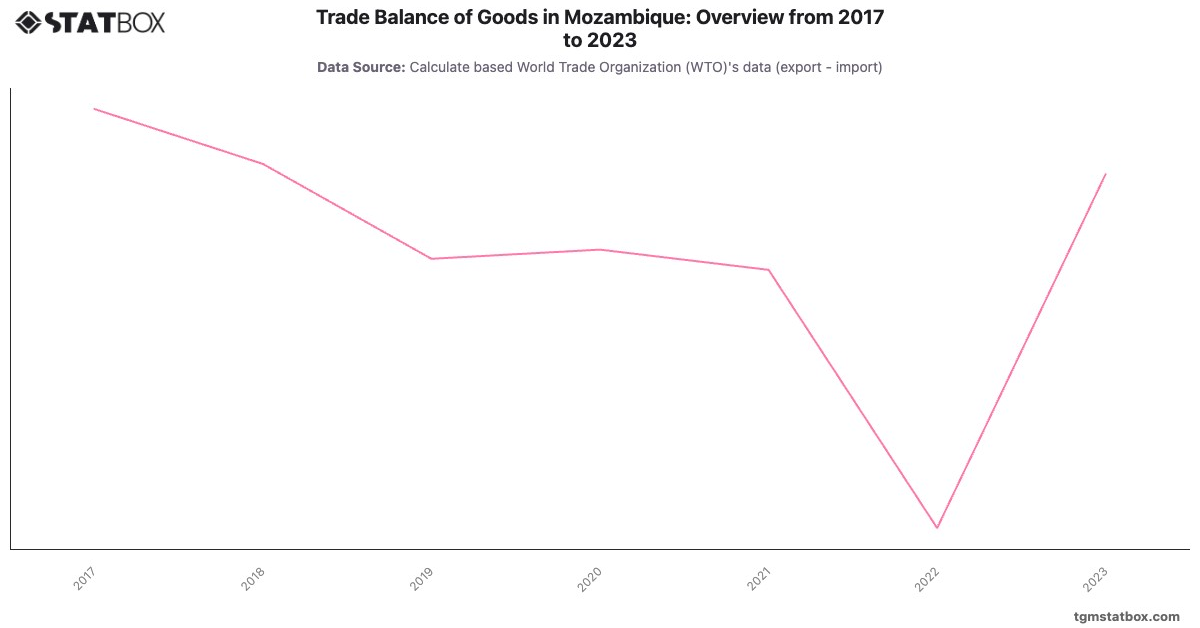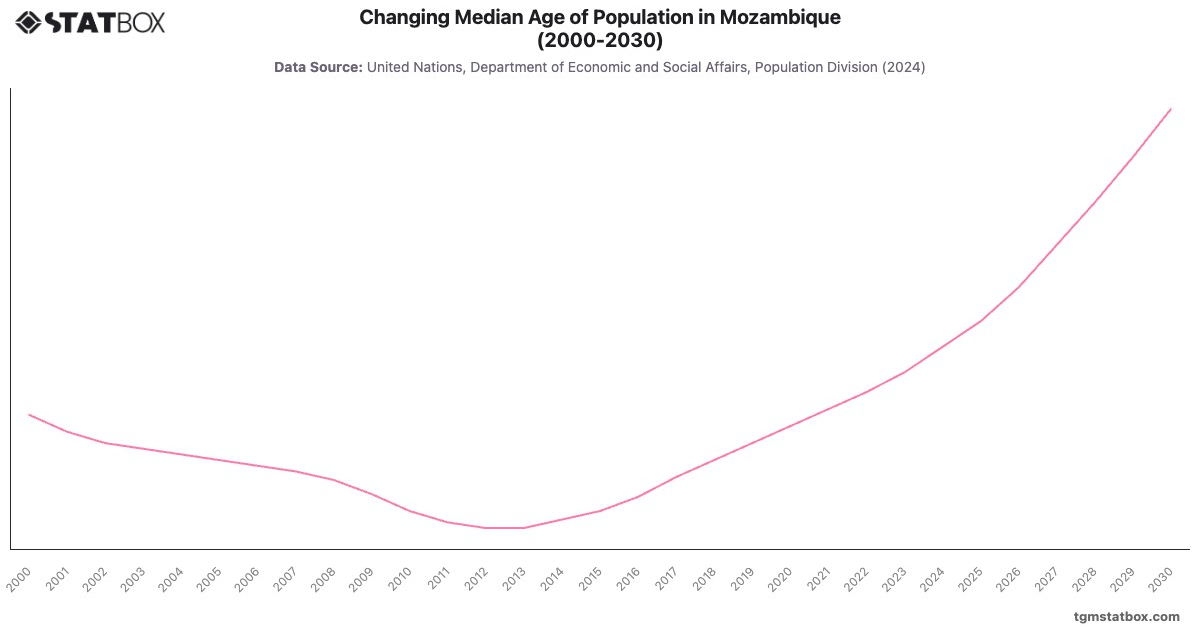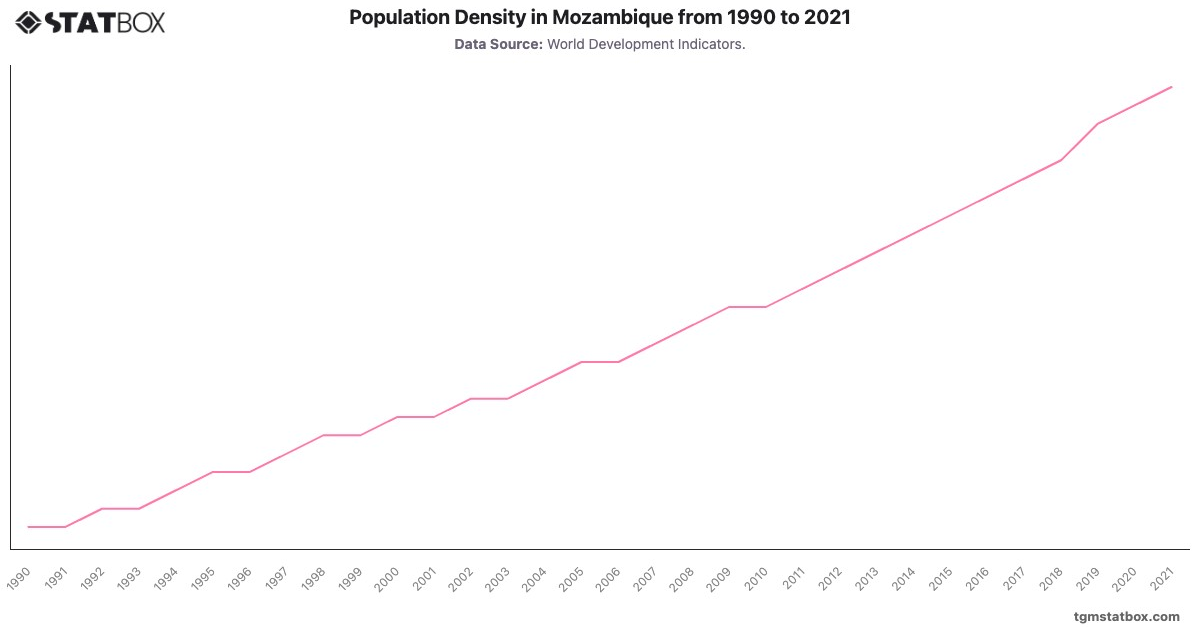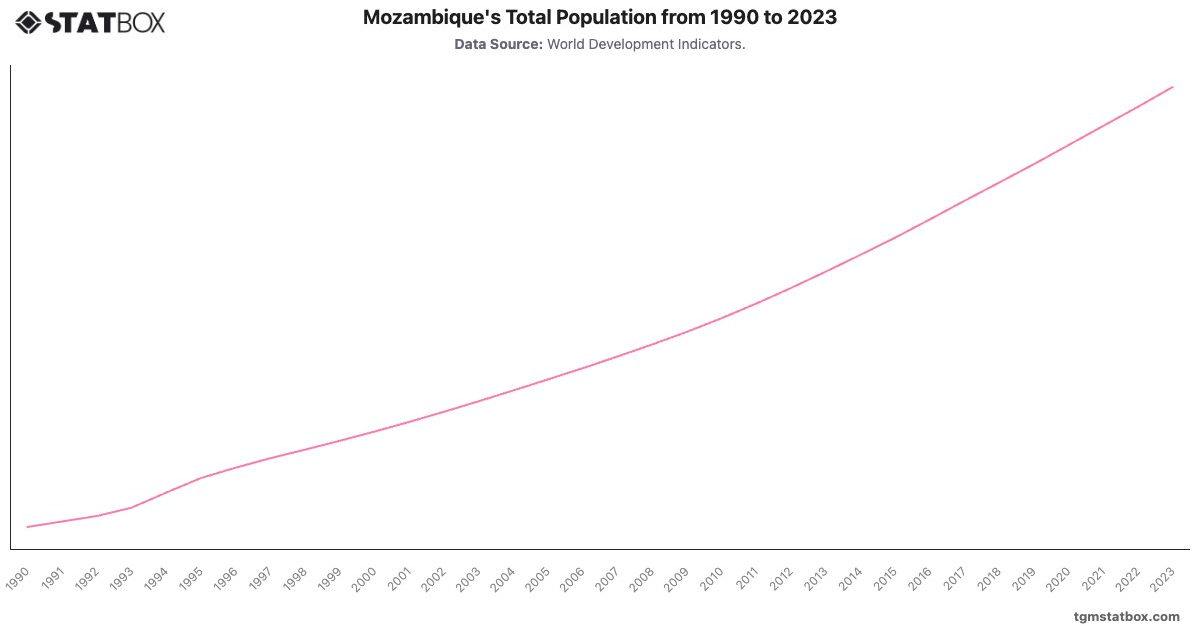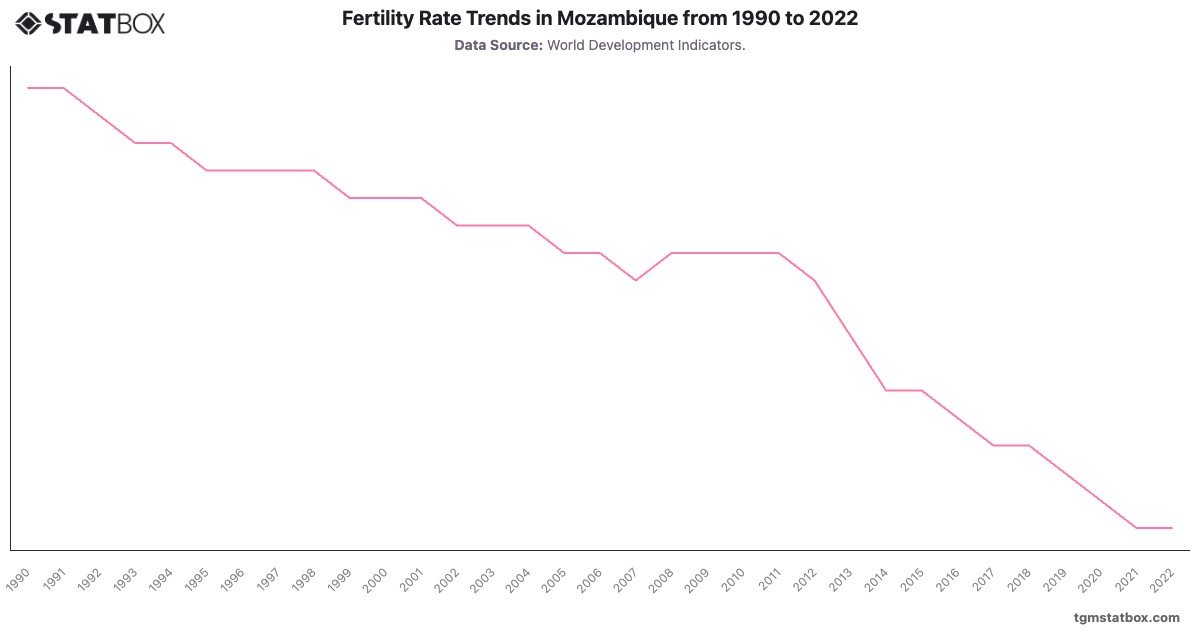
Mozambique's fertility rate experienced a gradual decline from 6.2 in 1990 to 4.6 by 2022. This steady decrease can be attributed to several factors, including improved access to education, especially for women, and enhanced healthcare services across the country. The early 1990s marked the end of the Mozambican Civil War (1977–1992), facilitating greater stability and the implementation of development programs aimed at family planning and maternal health.
The fertility rate plateaued around 5.8–5.7 during the early 2000s, reflecting a period where cultural norms and limited access to modern contraceptives posed challenges to reducing birth rates further. However, subsequent government initiatives and partnerships with international organizations to promote reproductive health awareness led to a more pronounced decline post-2010, reaching 4.6 in 2022. Despite these improvements, Mozambique's fertility rate remains higher than the global average, emphasizing the ongoing need for targeted interventions.
The fertility rate plateaued around 5.8–5.7 during the early 2000s, reflecting a period where cultural norms and limited access to modern contraceptives posed challenges to reducing birth rates further. However, subsequent government initiatives and partnerships with international organizations to promote reproductive health awareness led to a more pronounced decline post-2010, reaching 4.6 in 2022. Despite these improvements, Mozambique's fertility rate remains higher than the global average, emphasizing the ongoing need for targeted interventions.
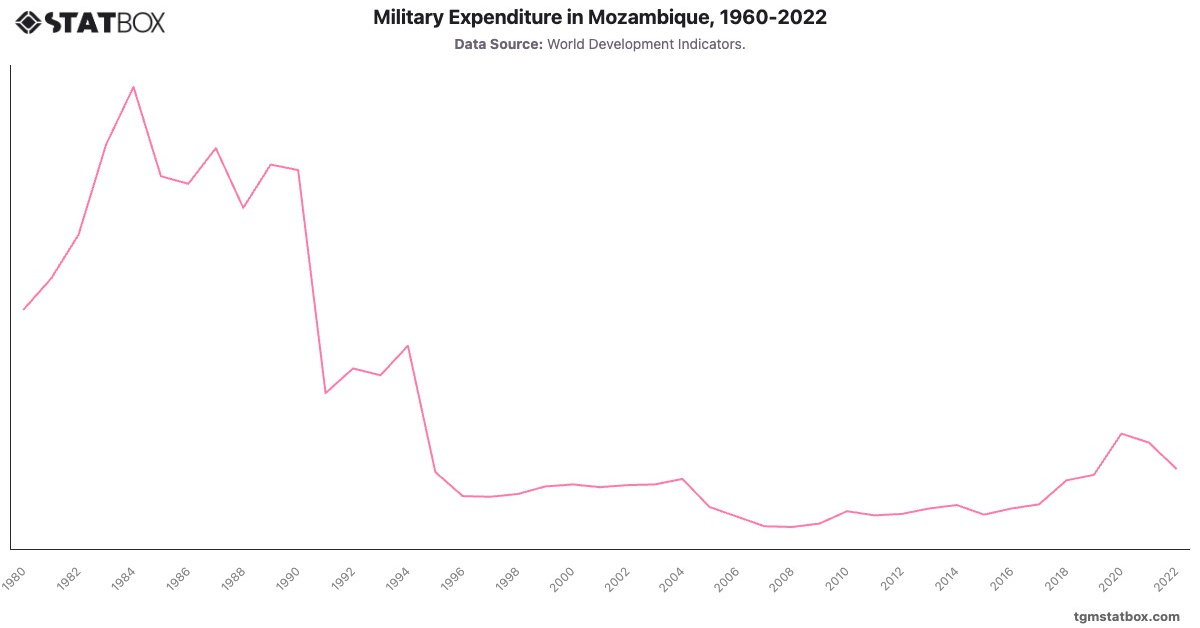
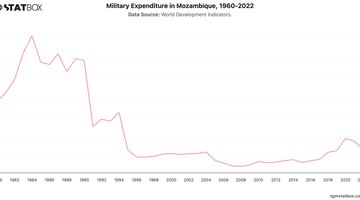
For a broader context, visit other statistics on agriculture share in Mozambique’s GDP, Mozambique’s mortality rate, Mozambique’s military spending.