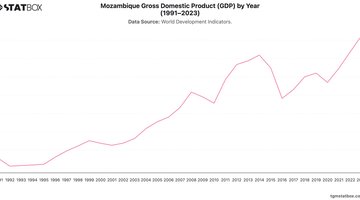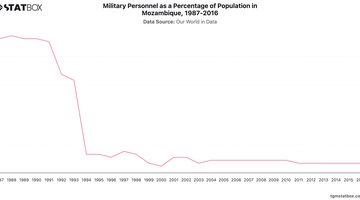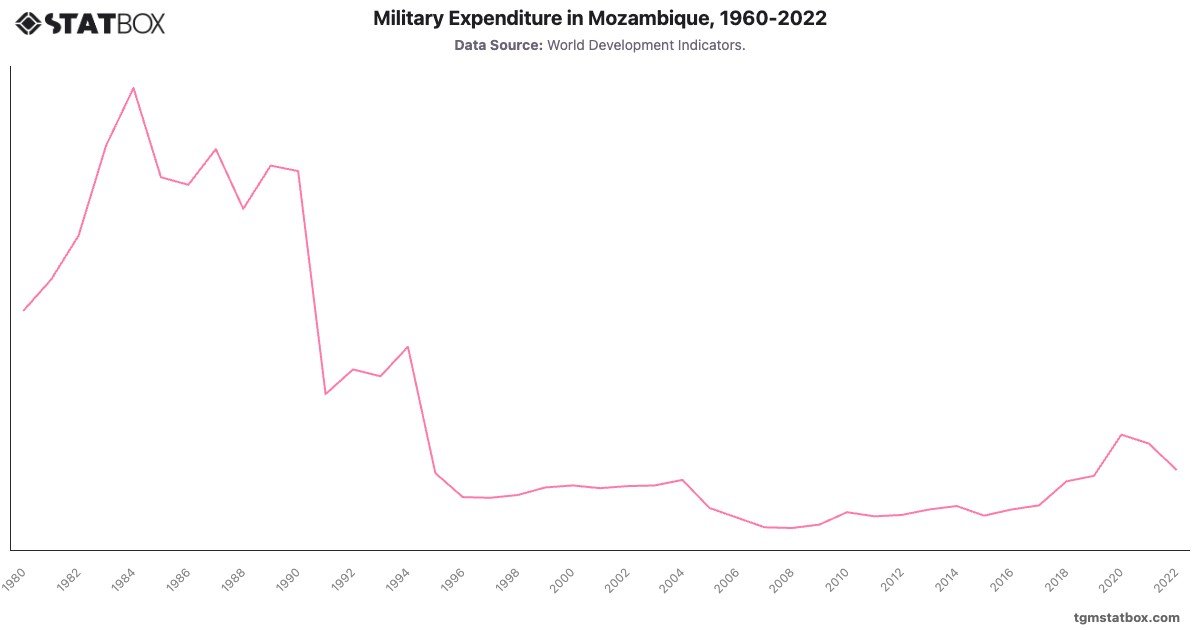
Mozambique's military spending as a percentage of GDP saw significant fluctuations from 1980 to 2022, reflecting the country's political and economic transitions. During the 1980s, military expenditure peaked at of GDP in 1984, coinciding with the height of the Mozambican Civil War (1977–1992). The war's demands for defense and security infrastructure led to elevated spending levels, which remained above of GDP until 1990. However, the signing of the General Peace Agreement in 1992 marked a turning point, with military spending dropping sharply to in 1991 and stabilizing at lower levels in subsequent years.
From the mid-1990s onward, Mozambique's focus shifted toward post-war reconstruction and economic development. Military expenditure fell to less than of GDP by 1995 and remained below for much of the 2000s, reflecting reduced conflict and increased prioritization of social and economic programs. However, the resurgence of security concerns, particularly with the rise of insurgent activity in northern Mozambique in the late 2010s, led to a modest increase in spending, reaching in 2020. This recent uptick underscores the ongoing challenges in balancing defense needs with development goals.
For a deeper dive into the topic, explore Mozambique’s fertility rate figures, Mozambique’s yearly GDP growth rate, Mozambique’s population growth.