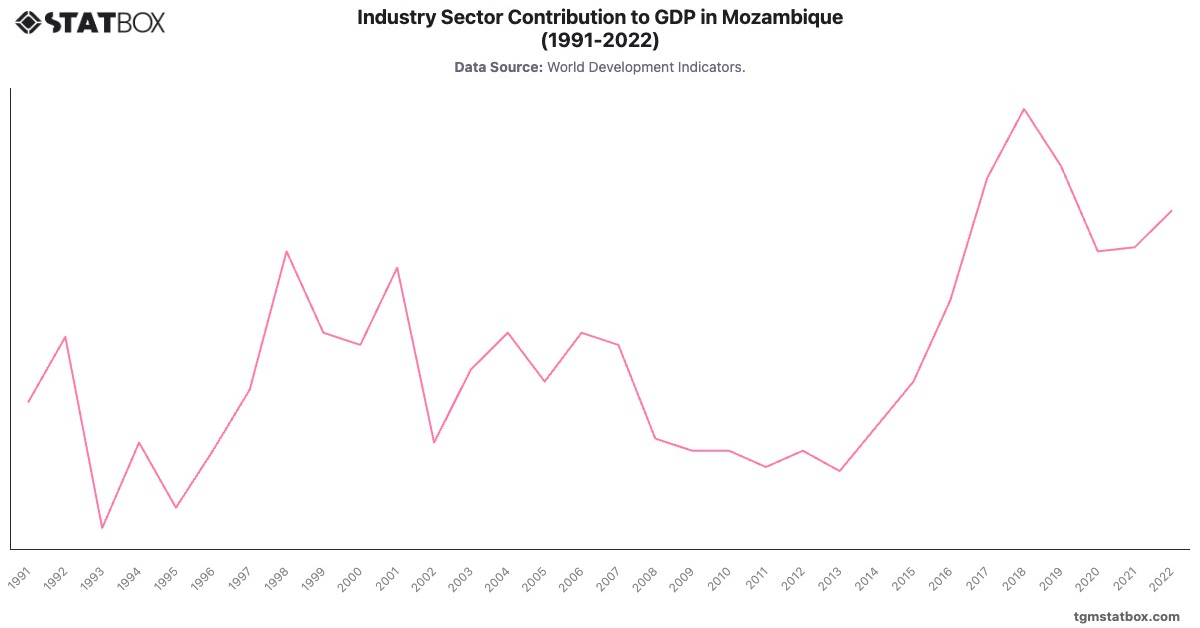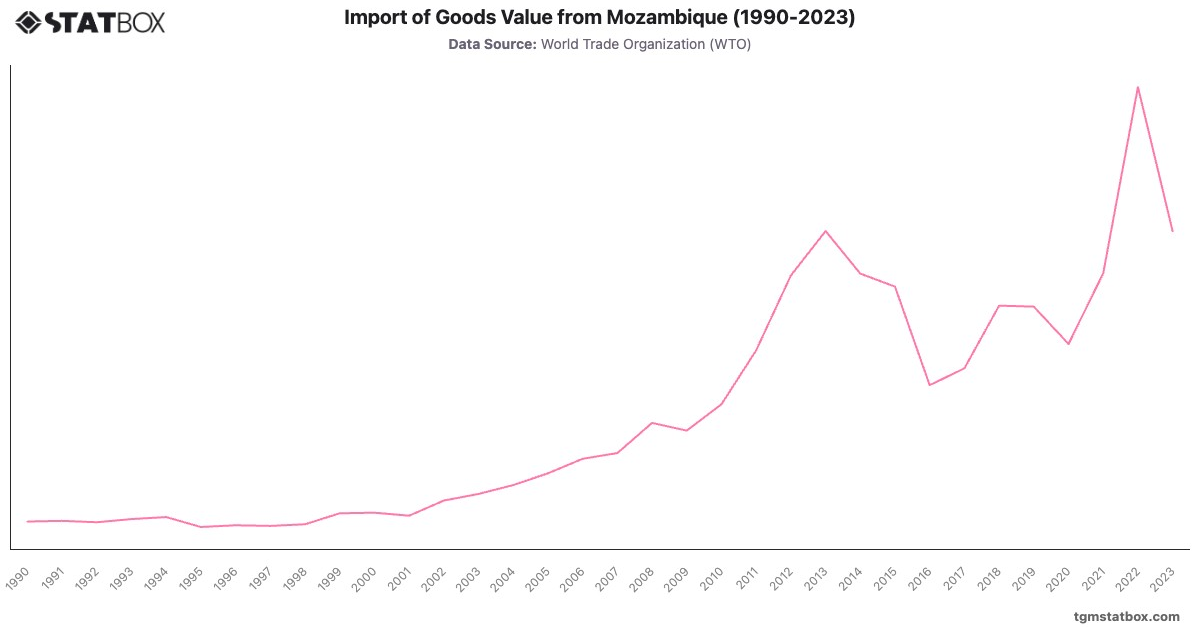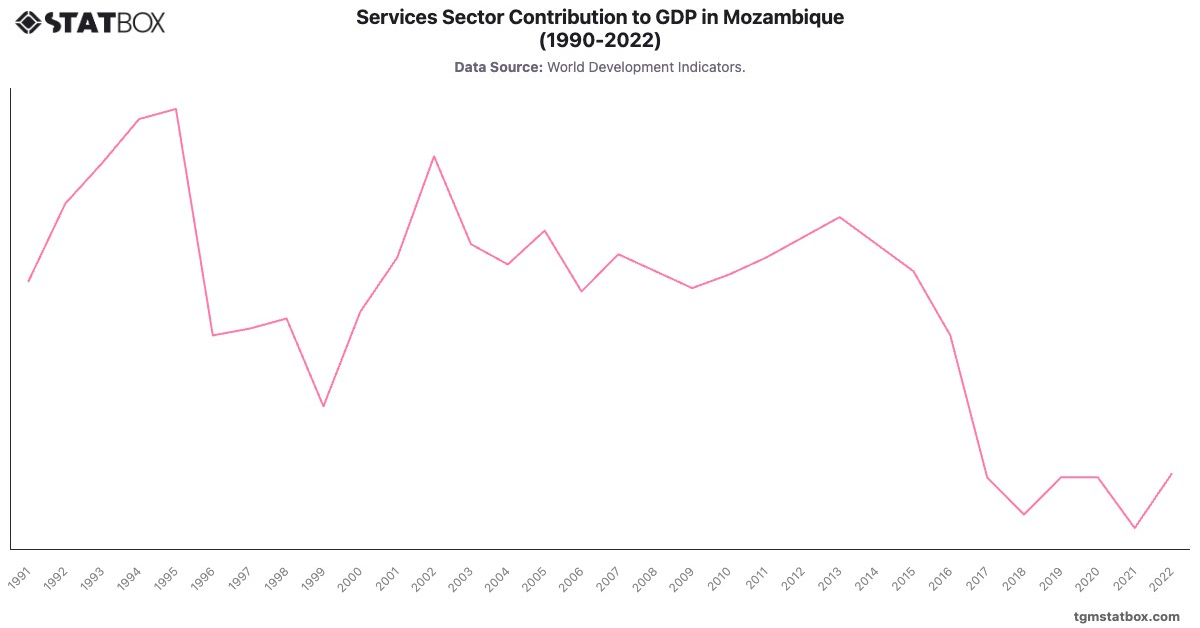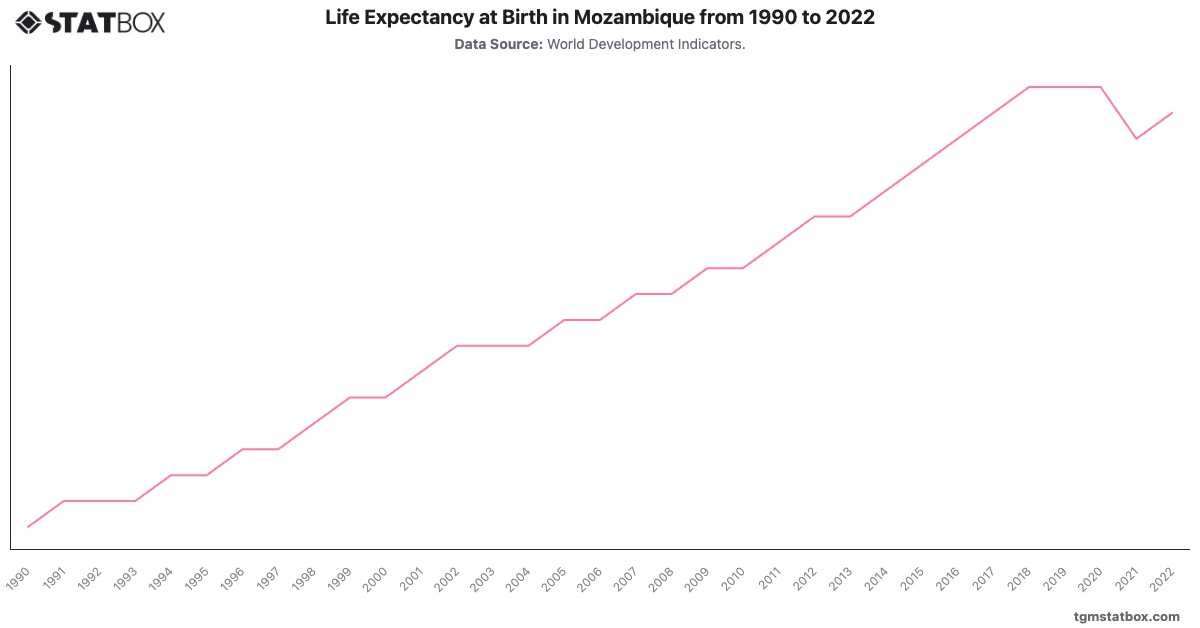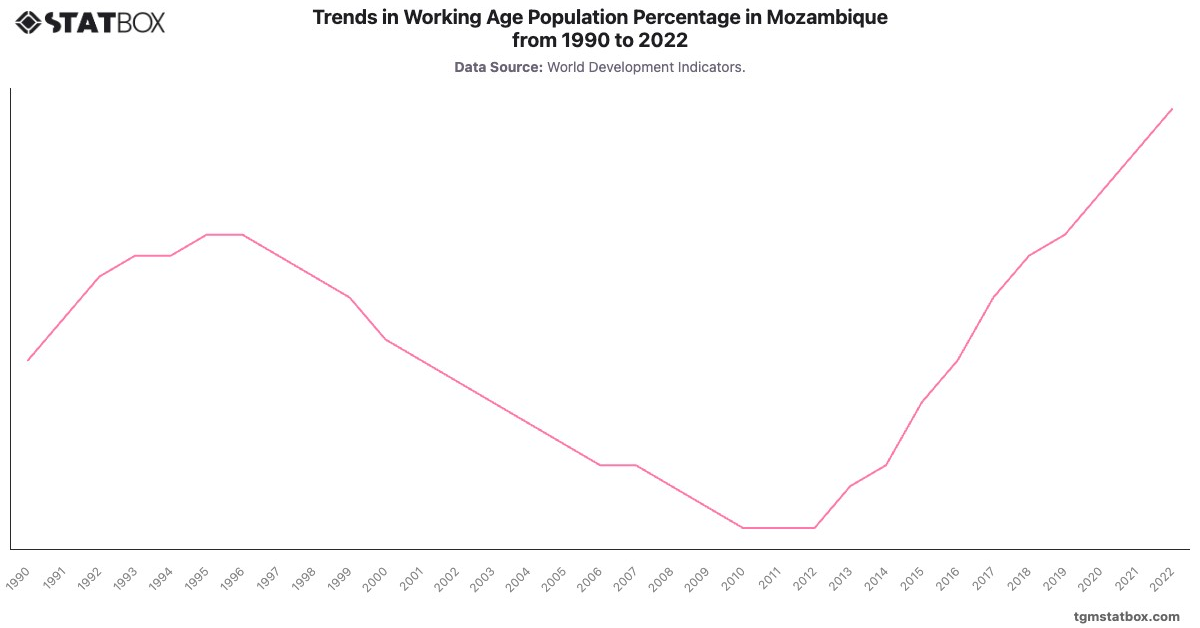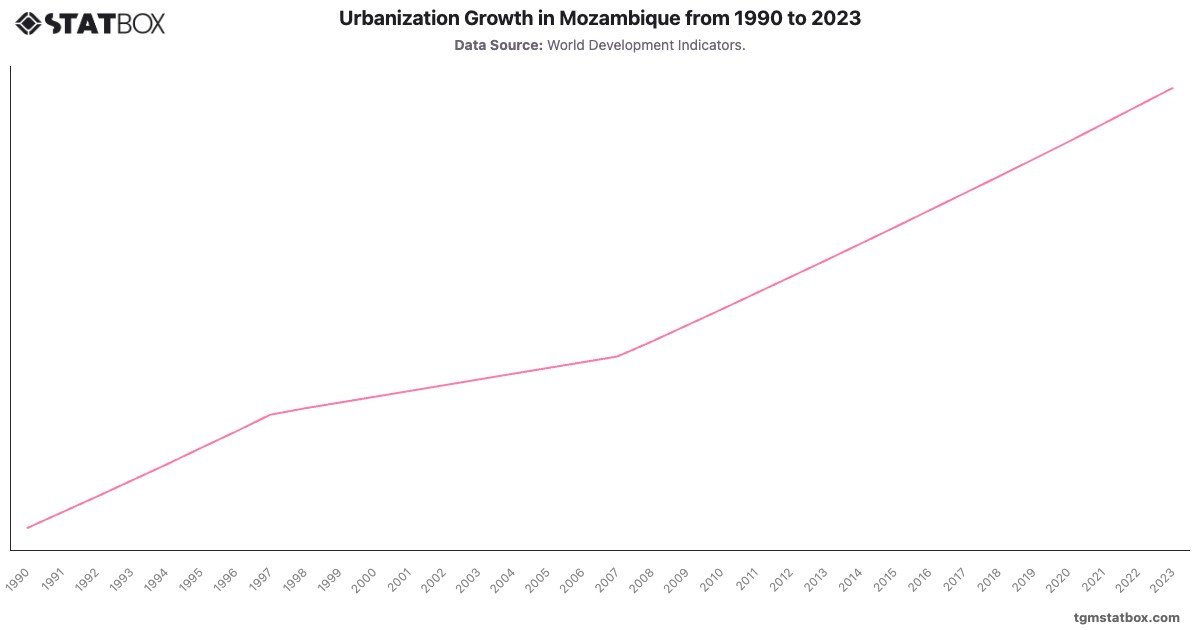
Mozambique’s urbanization increased from in 1990 to in 2023, showing a progressive trend towards urban living. Mozambique’s urban growth has been largely shaped by post-conflict reconstruction efforts, economic development, and industrialization, particularly around Maputo and Beira. The 1990s saw gradual urban growth as Mozambique rebuilt its economy and infrastructure after years of civil conflict. This trend accelerated in the 2000s, with urban centers expanding as the country invested in industrial and energy sectors. By 2023, nearly of the population lived in urban areas, reflecting the country’s shift towards urban economies. Mozambique faces challenges related to infrastructure, housing, and public services as urbanization rises, yet the trend is expected to continue as urban areas remain vital to the country’s economic development.
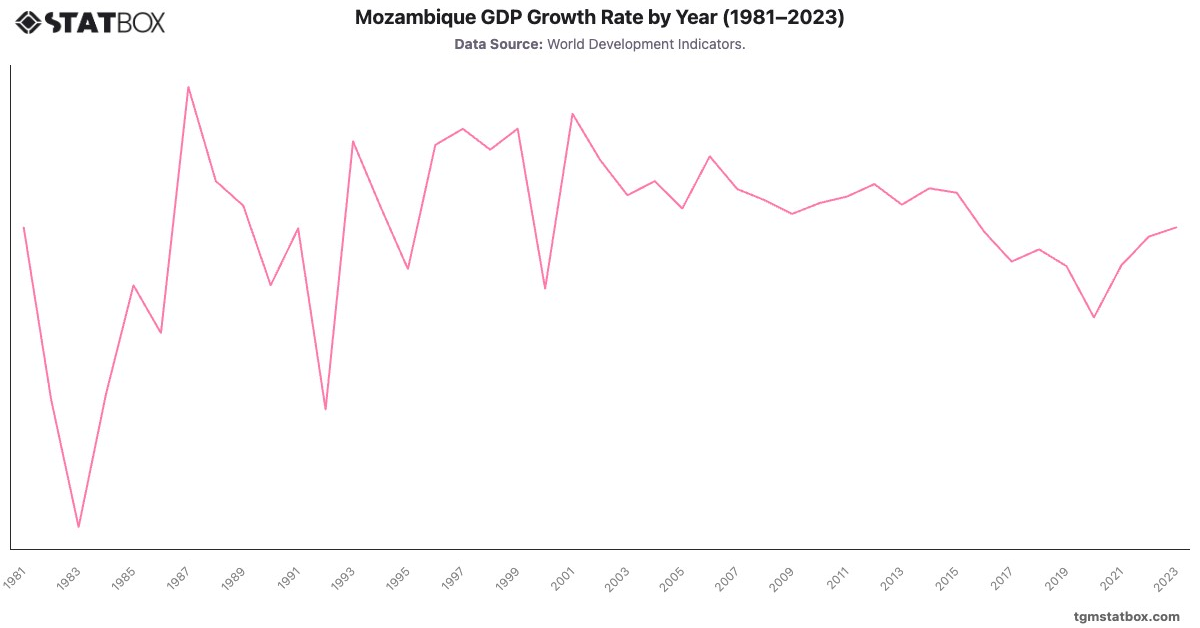
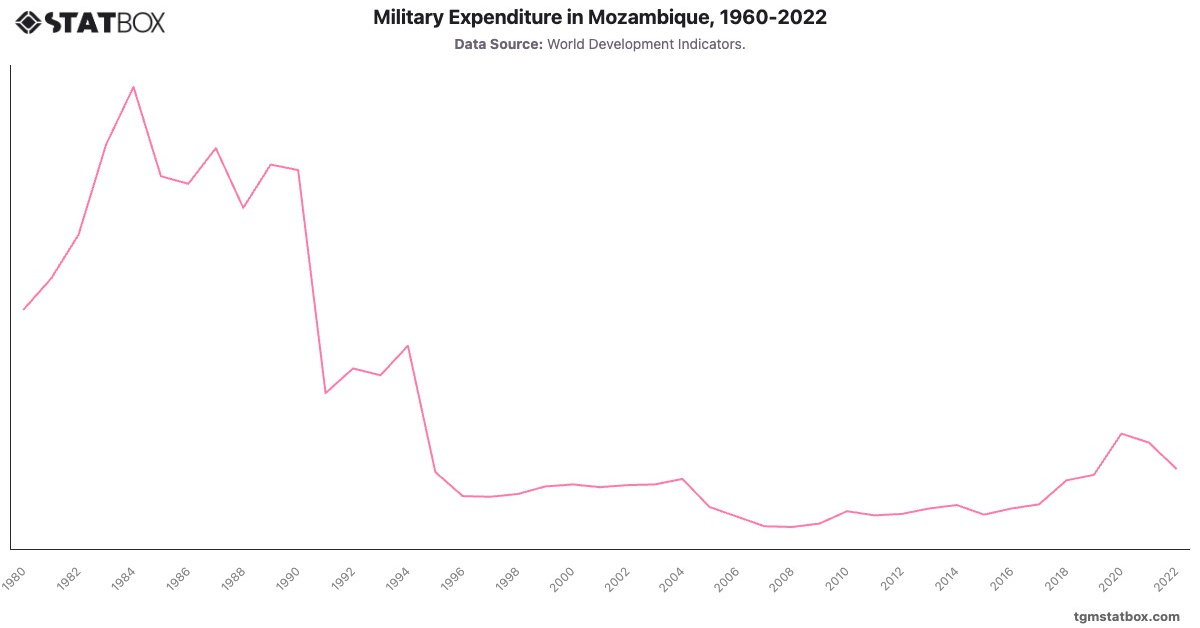
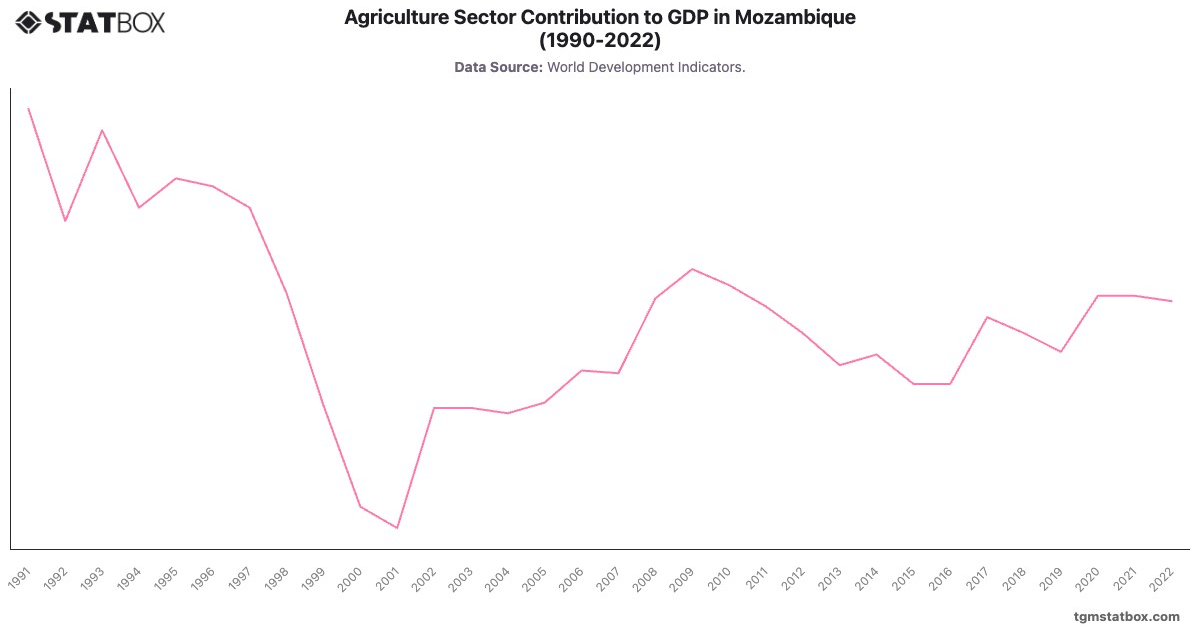
For a broader context, visit other statistics on Mozambique’s yearly GDP growth rate, Mozambique sector-wise GDP contribution, agriculture share in Mozambique’s GDP.