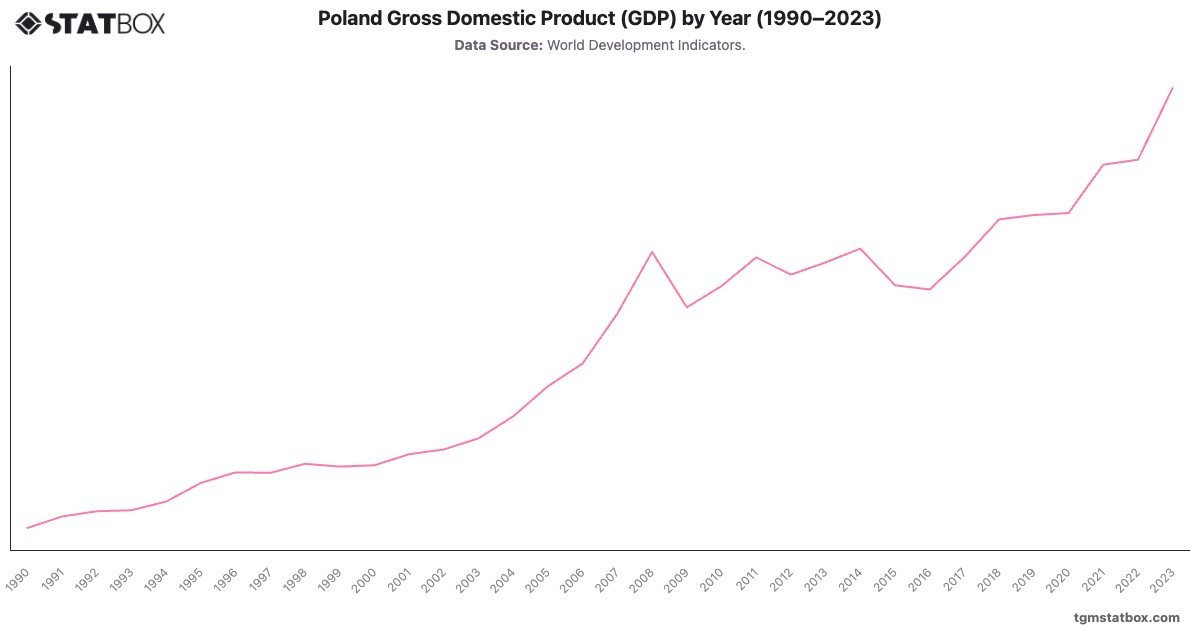
Poland's GDP illustrates a remarkable transition from a centrally planned economy to a robust market-based system. In 1990, GDP stood at $65.9 billion, but structural reforms and market liberalization in the early 1990s enabled consistent growth, reaching $142.2 billion by 1995. The country’s 2004 accession to the European Union marked a turning point, driving economic modernization and integration, with GDP climbing to $255.1 billion that year.
Poland was one of the few EU nations to avoid recession during the 2008 global financial crisis, demonstrating resilience as GDP grew from $439.7 billion in 2009 to $811.2 billion in 2023. Investments in infrastructure, technology, and exports, along with strong domestic consumption, have solidified Poland’s economic position in Europe.
Poland was one of the few EU nations to avoid recession during the 2008 global financial crisis, demonstrating resilience as GDP grew from $439.7 billion in 2009 to $811.2 billion in 2023. Investments in infrastructure, technology, and exports, along with strong domestic consumption, have solidified Poland’s economic position in Europe.
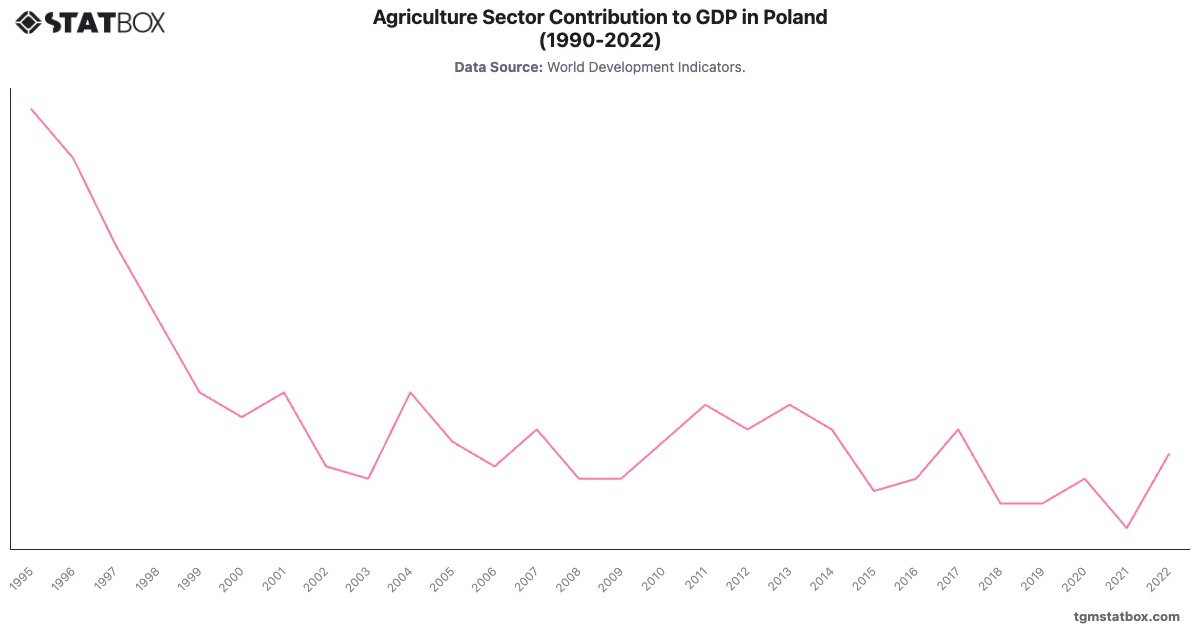
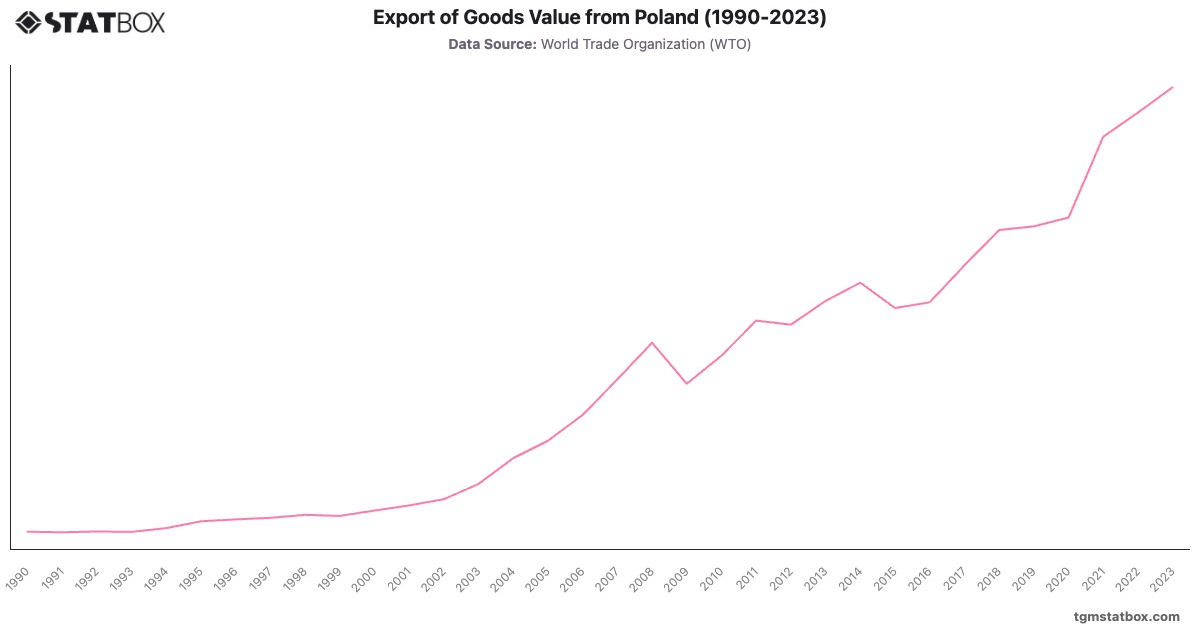
Gain a broader perspective by reviewing Poland’s goods export value, Poland’s inflation rate trends, Poland’s agriculture GDP share.