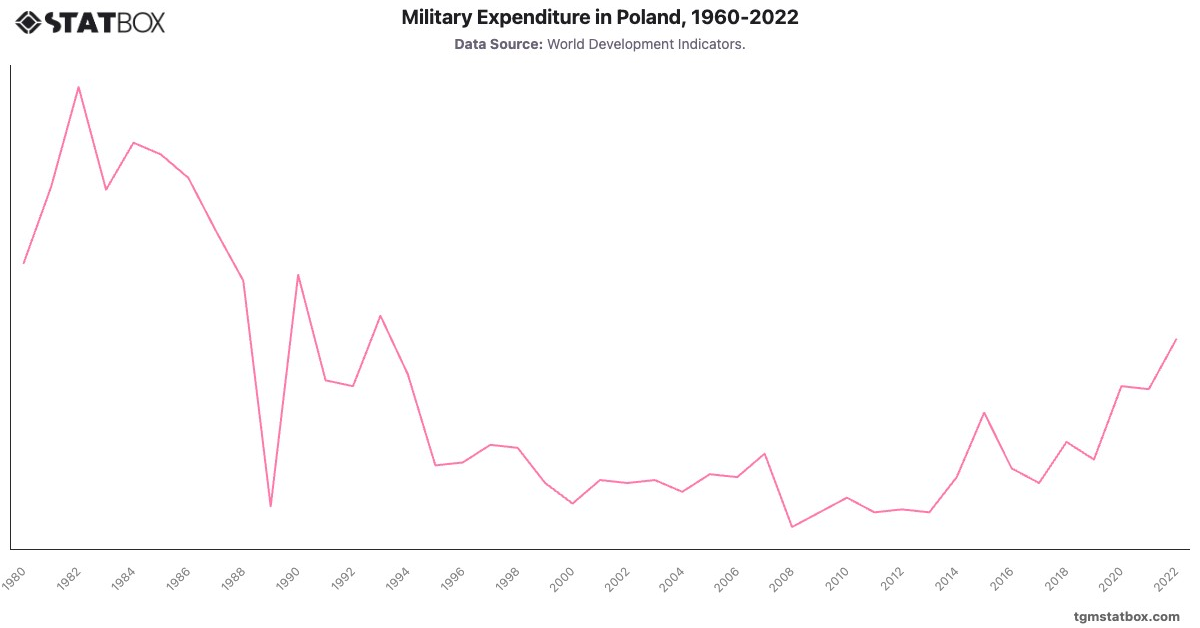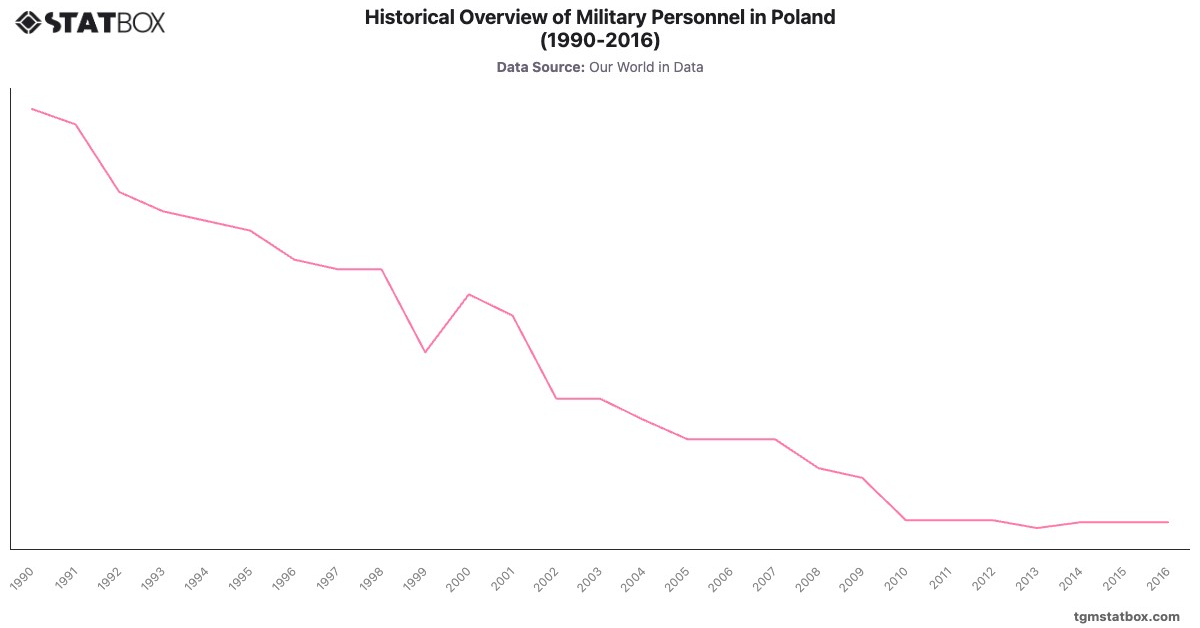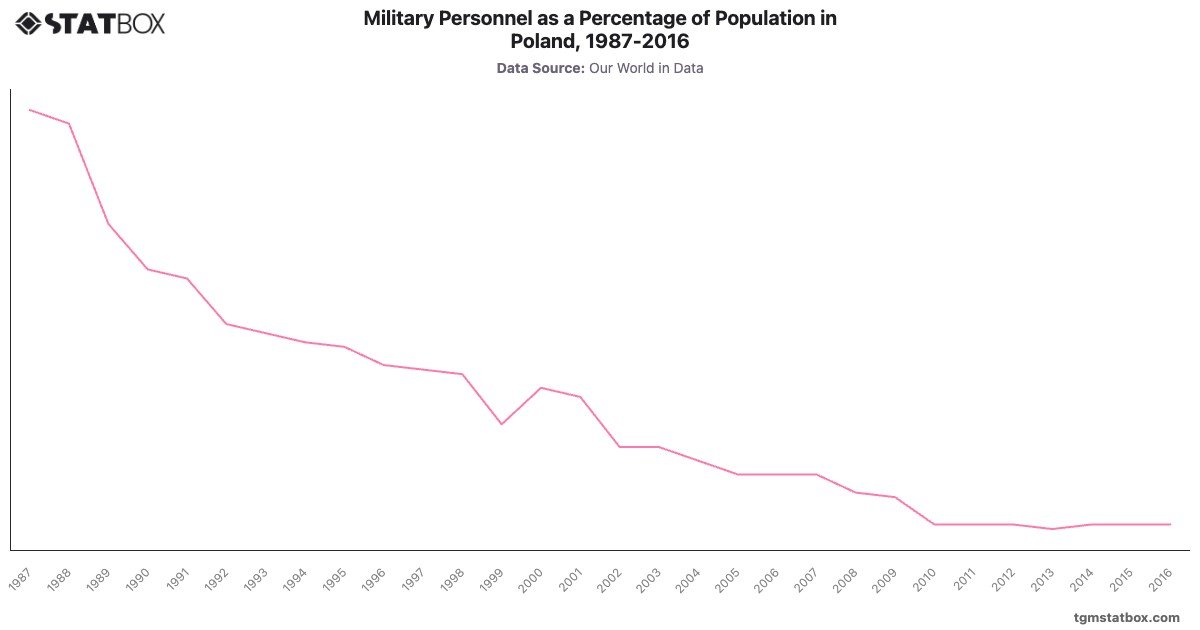
Poland experienced a substantial decline in military personnel as a percentage of its population, from in 1987 to by 2016. This trend mirrors Poland’s shift toward European integration and economic modernization post-1989. The transition to a market economy and membership in NATO in 1999 led to a modernization of its armed forces, reducing the need for a large standing army and aligning more closely with NATO standards.
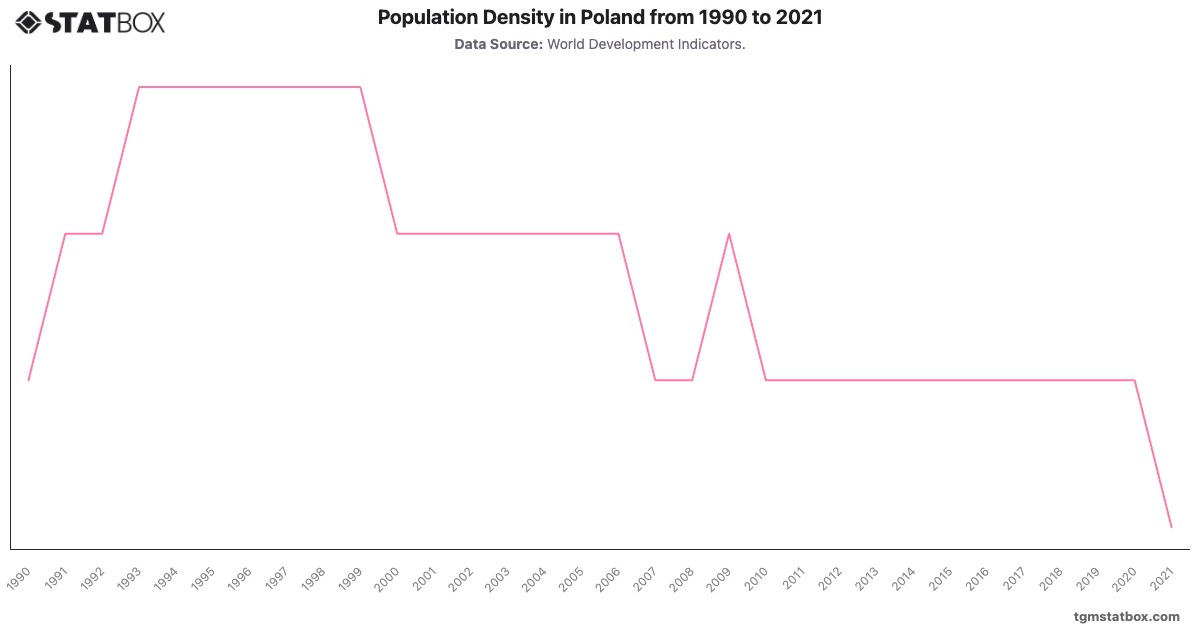
Increased urbanization also influenced this reduction, as Poland focused on developing urban infrastructure and other civilian sectors. The stable ratio of from 2008 onward represents Poland’s commitment to a modern, professional military that supports its strategic defense partnerships while allowing for resource distribution to support its growing urban population and economic objectives.
Increased urbanization also influenced this reduction, as Poland focused on developing urban infrastructure and other civilian sectors. The stable ratio of from 2008 onward represents Poland’s commitment to a modern, professional military that supports its strategic defense partnerships while allowing for resource distribution to support its growing urban population and economic objectives.
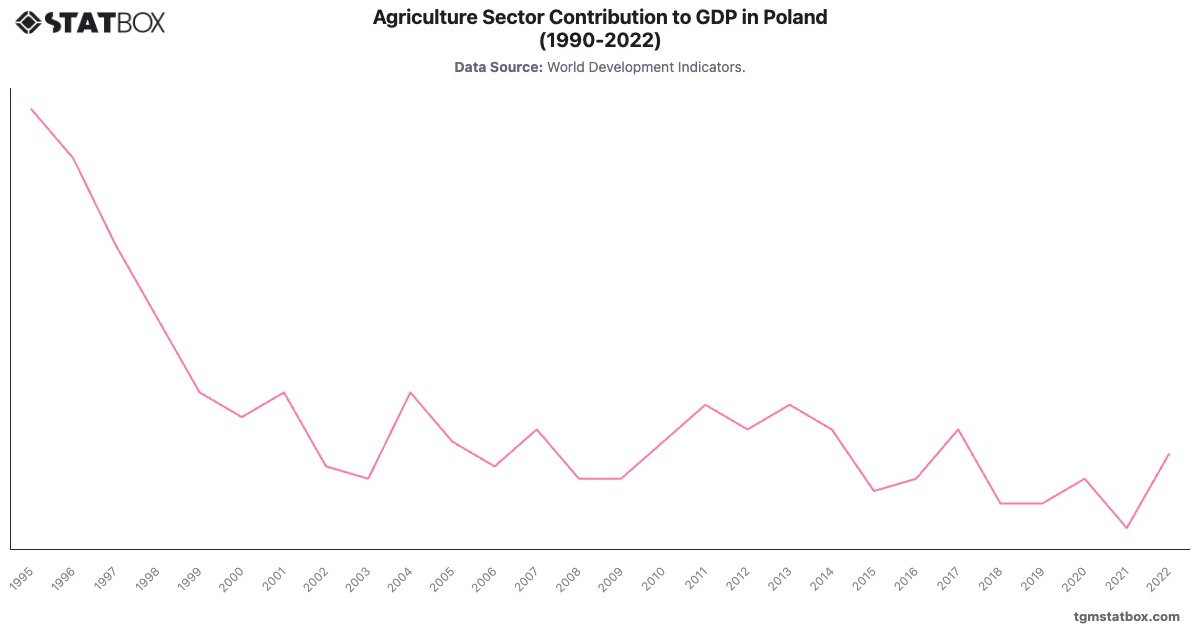
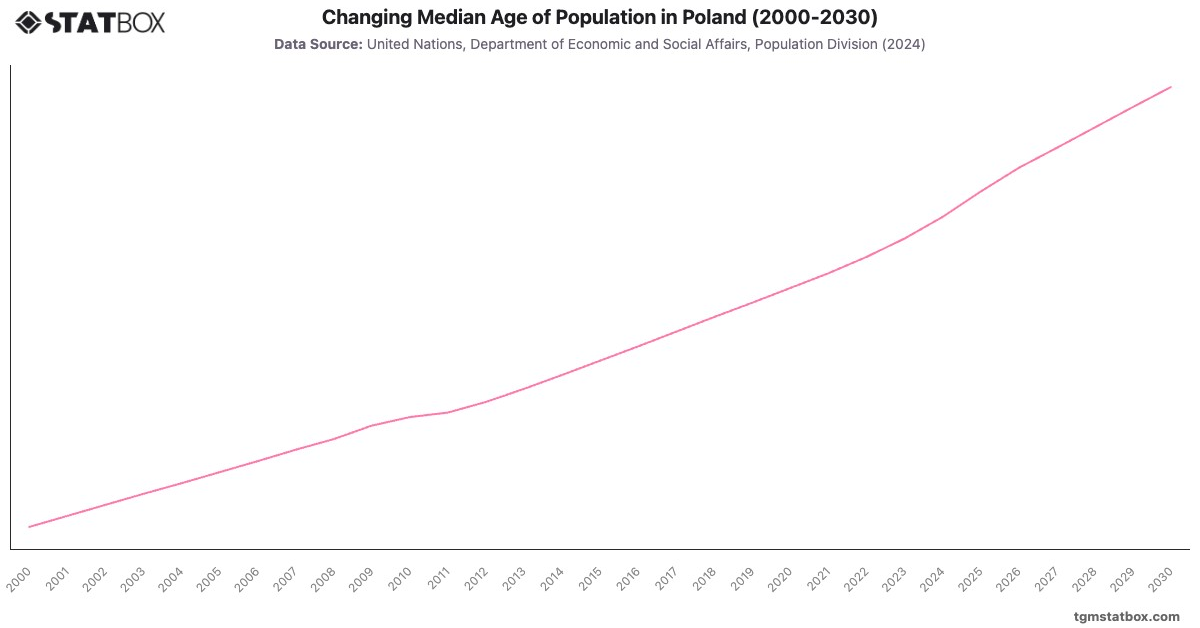
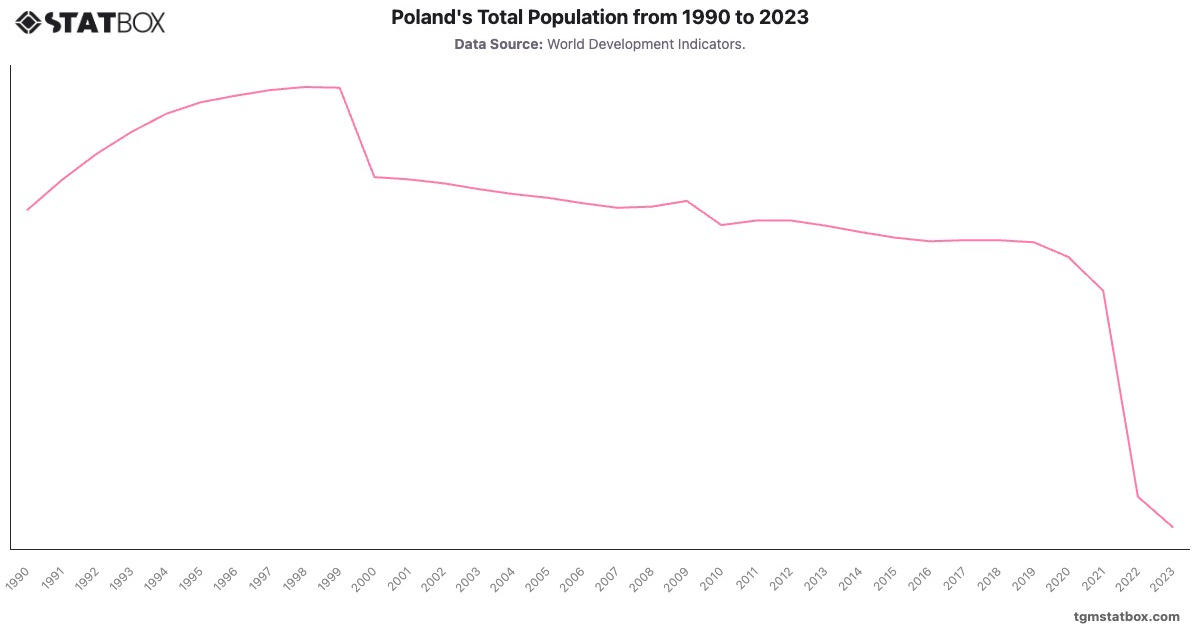
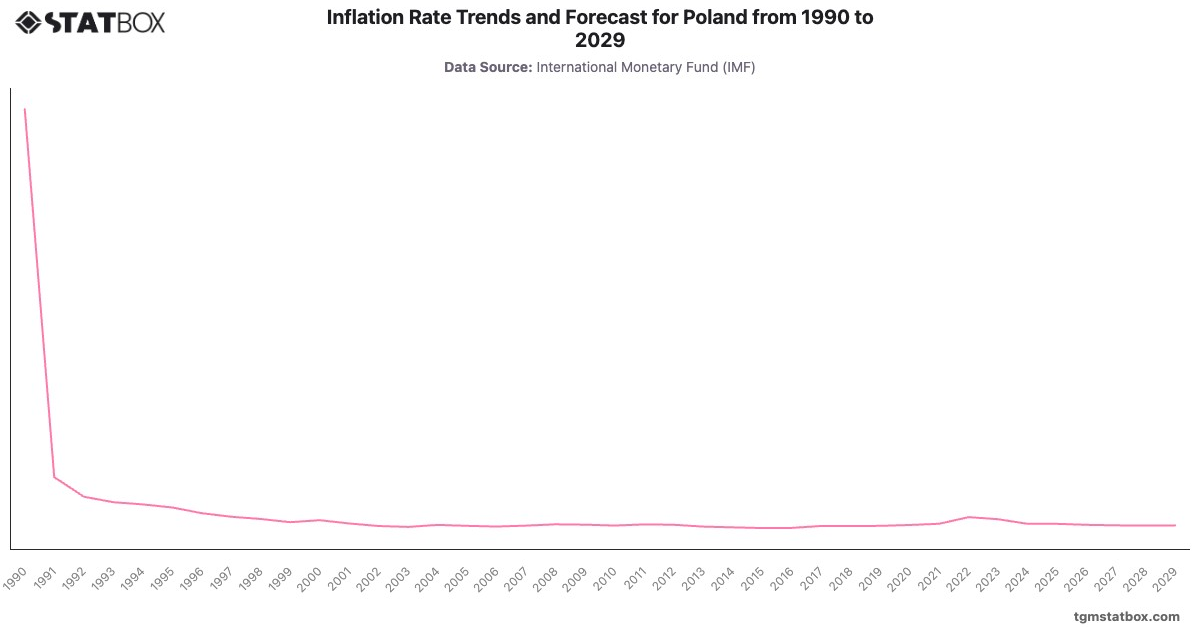
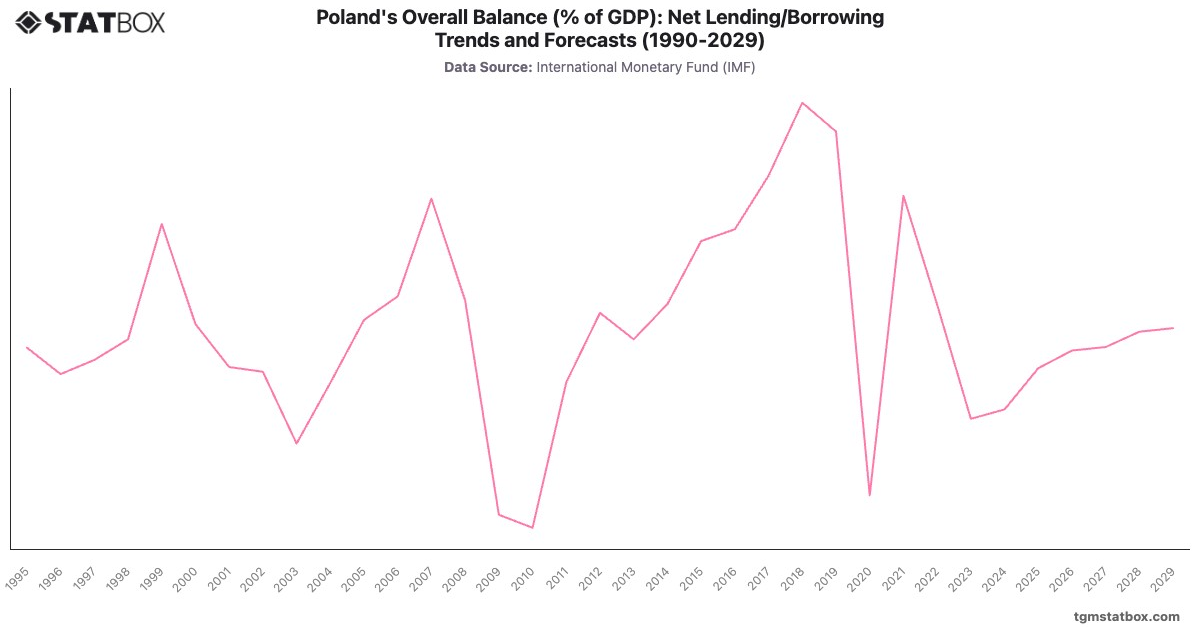
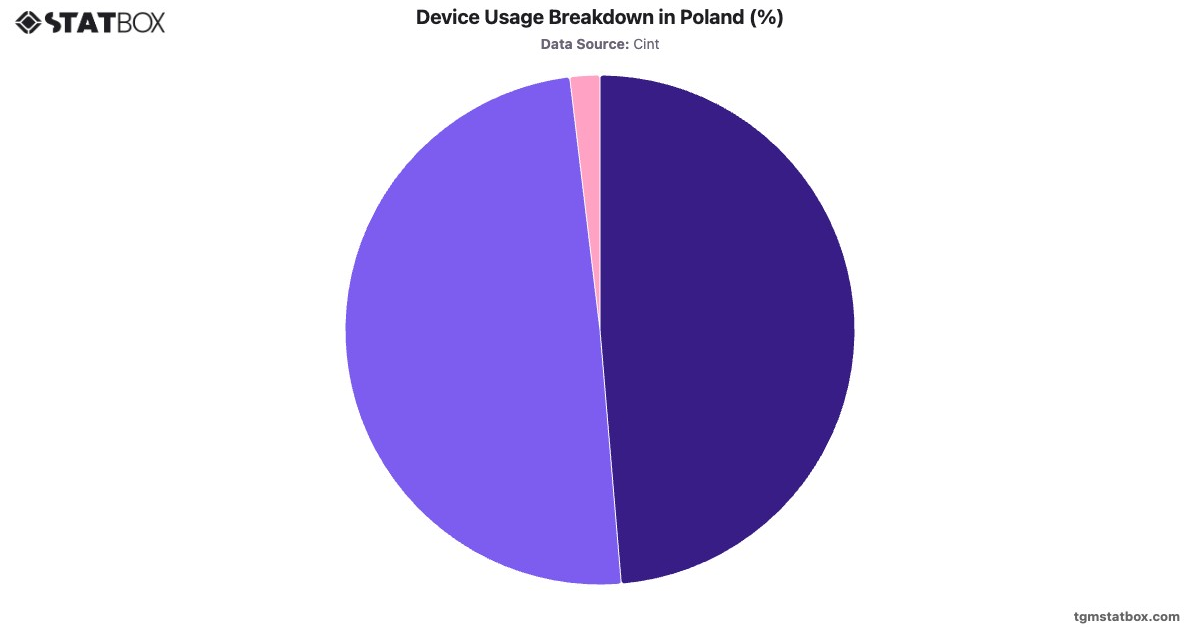
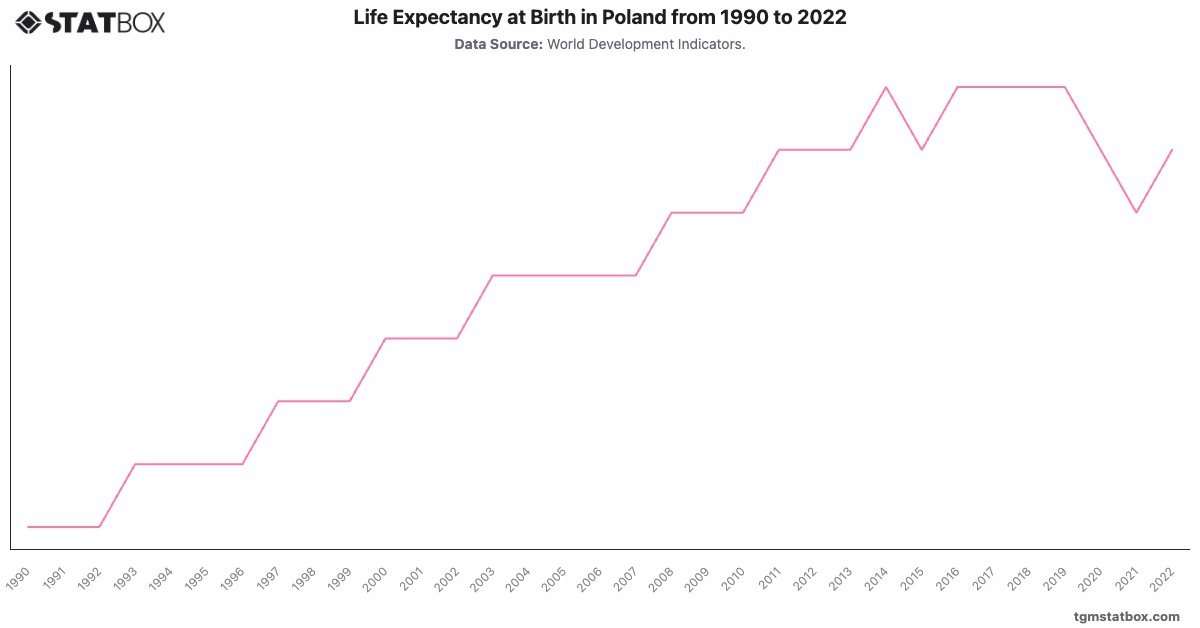
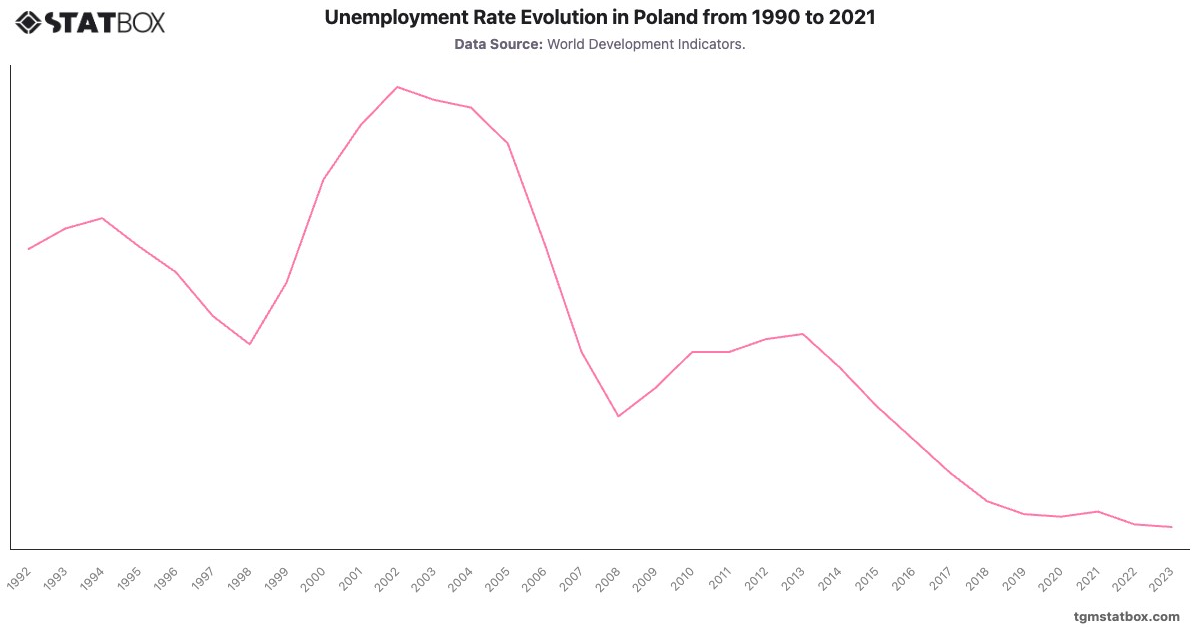
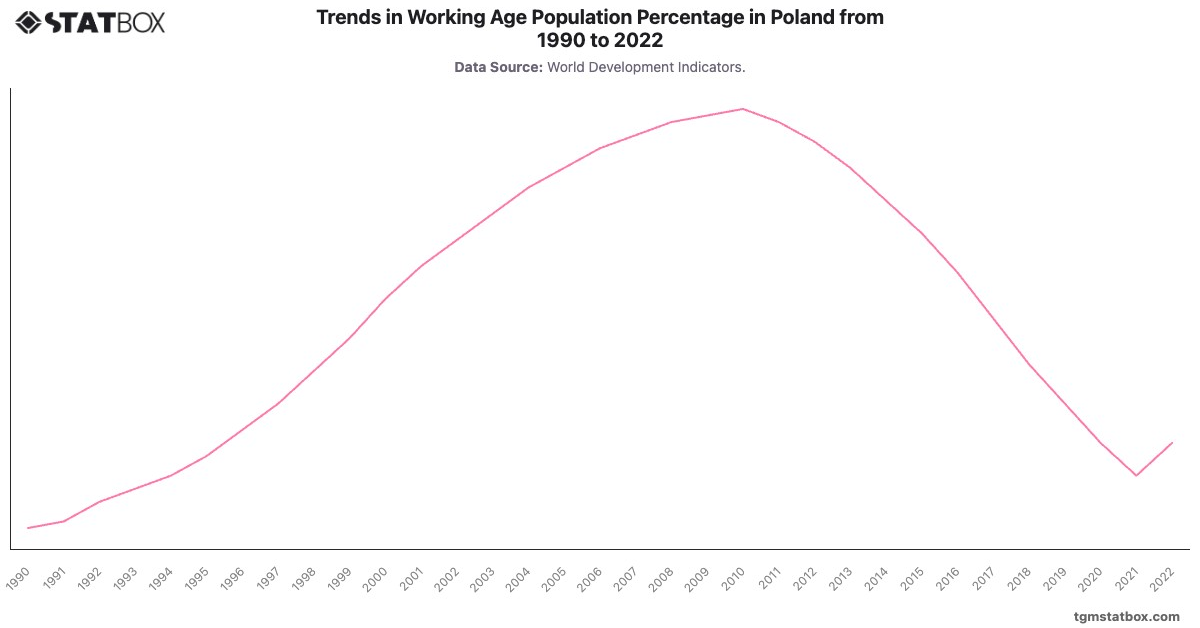
Explore related charts to gain a better understanding of Poland’s annual GDP growth rate, Poland’s shifting demographic age, Historical count of Poland’s military personnel.