Population Growth Trends in Poland (1990-2023)
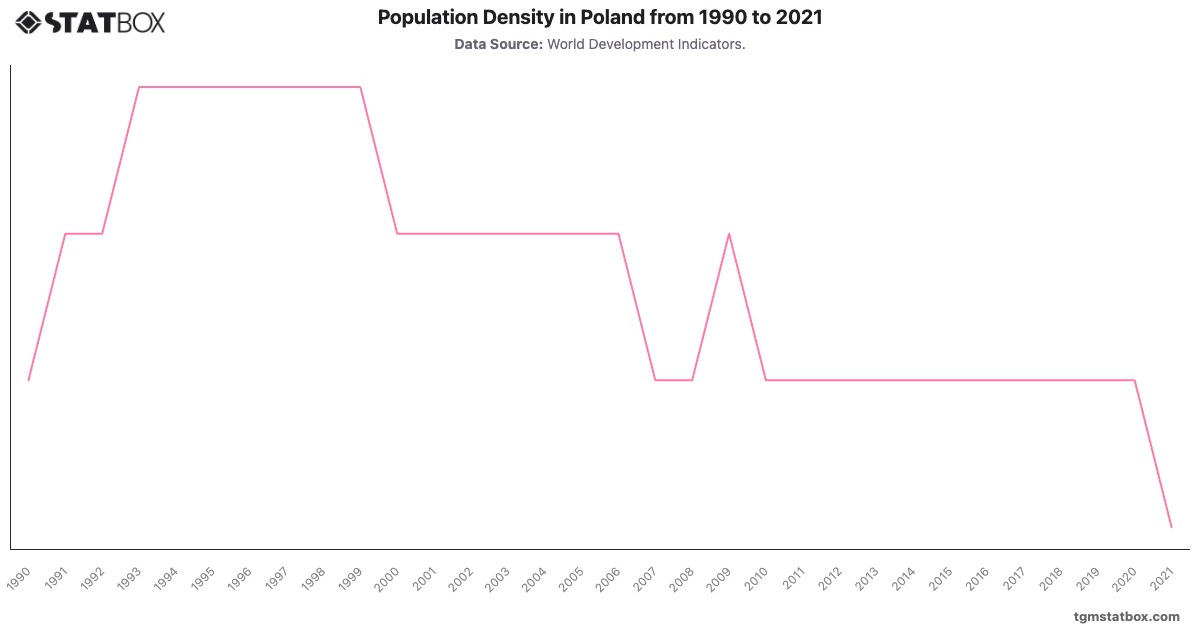
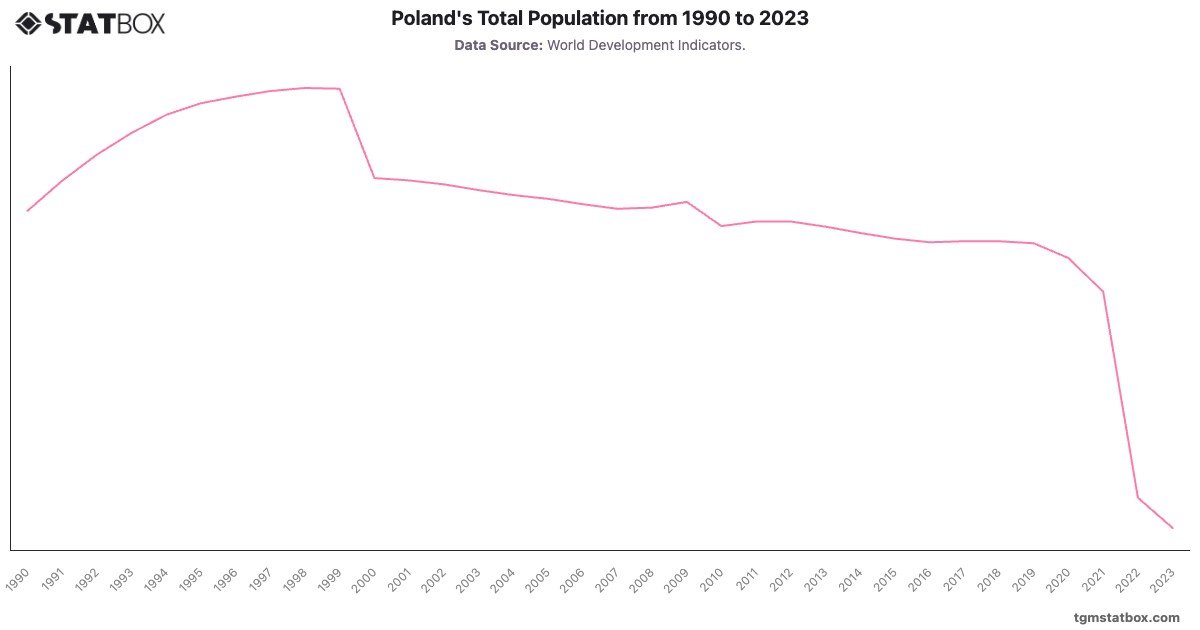
Poland’s population has shown limited growth, peaking in the 1990s with around 38 million and gradually declining to approximately 36.6 million by 2023. The post-1990s period saw a stable population until the early 2000s when emigration, especially to Western Europe, increased following EU accession. Low birth rates, high emigration rates, and an aging population have led to a decline since 2010. Recent policy initiatives to encourage family growth have had limited impact on reversing this trend, and Poland faces demographic challenges similar to other European nations with low birth rates and increasing dependency ratios.
Poland’s population has shown limited growth, peaking in the 1990s with around 38 million and gradually declining to approximately 36.6 million by 2023. The post-1990s period saw a stable population until the early 2000s when emigration, especially to Western Europe, increased following EU accession. Low birth rates, high emigration rates, and an aging population have led to a decline since 2010. Recent policy initiatives to encourage family growth have had limited impact on reversing this trend, and Poland faces demographic challenges similar to other European nations with low birth rates and increasing dependency ratios.
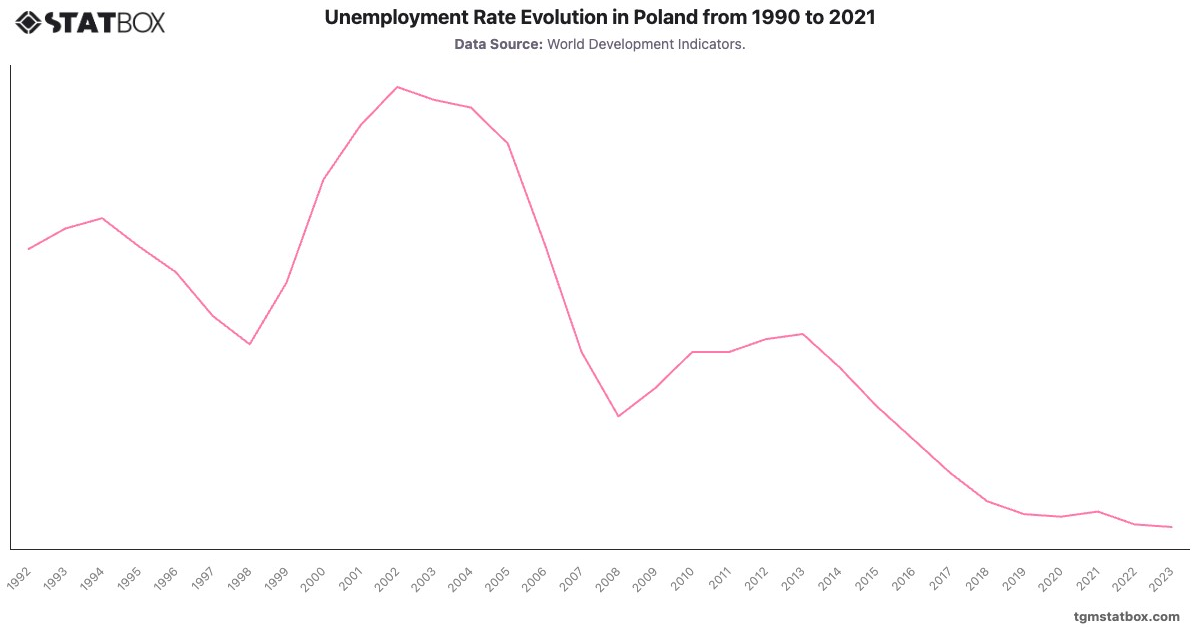
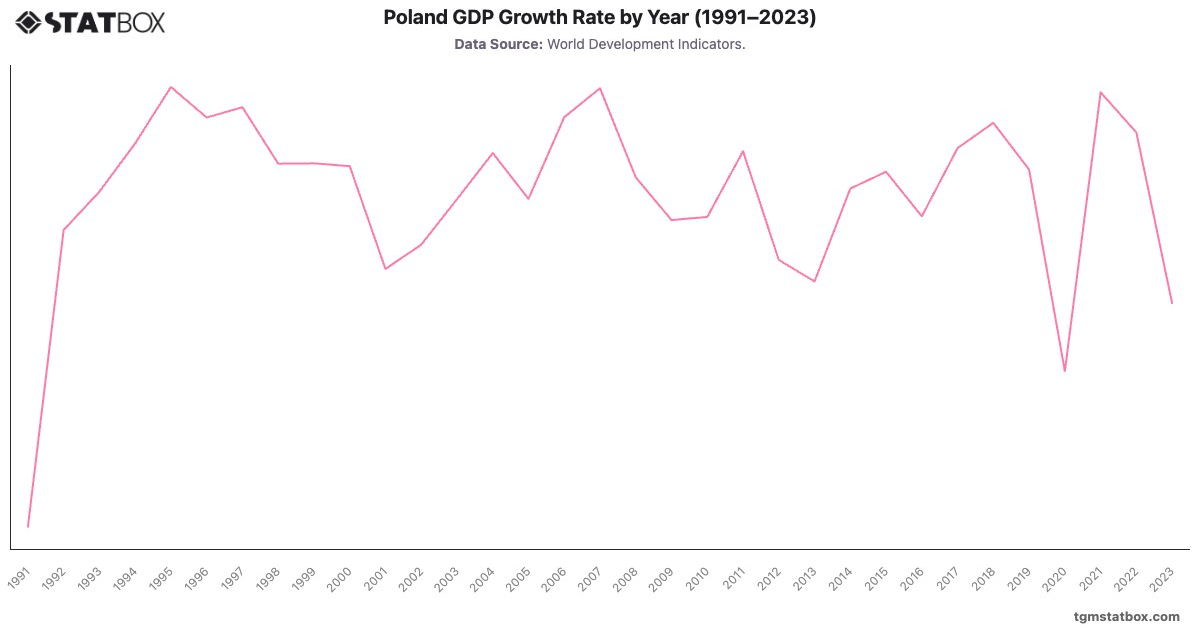
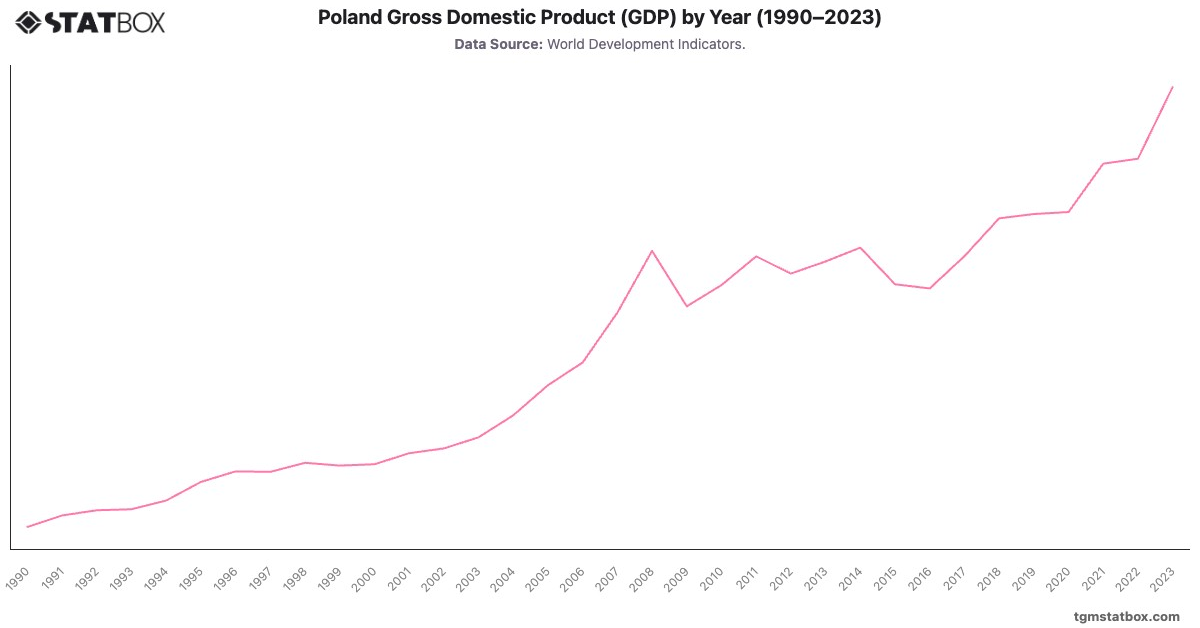
Explore related charts to gain a better understanding of Poland’s annual GDP growth rate, Poland’s population density, Poland’s unemployment rate trends.