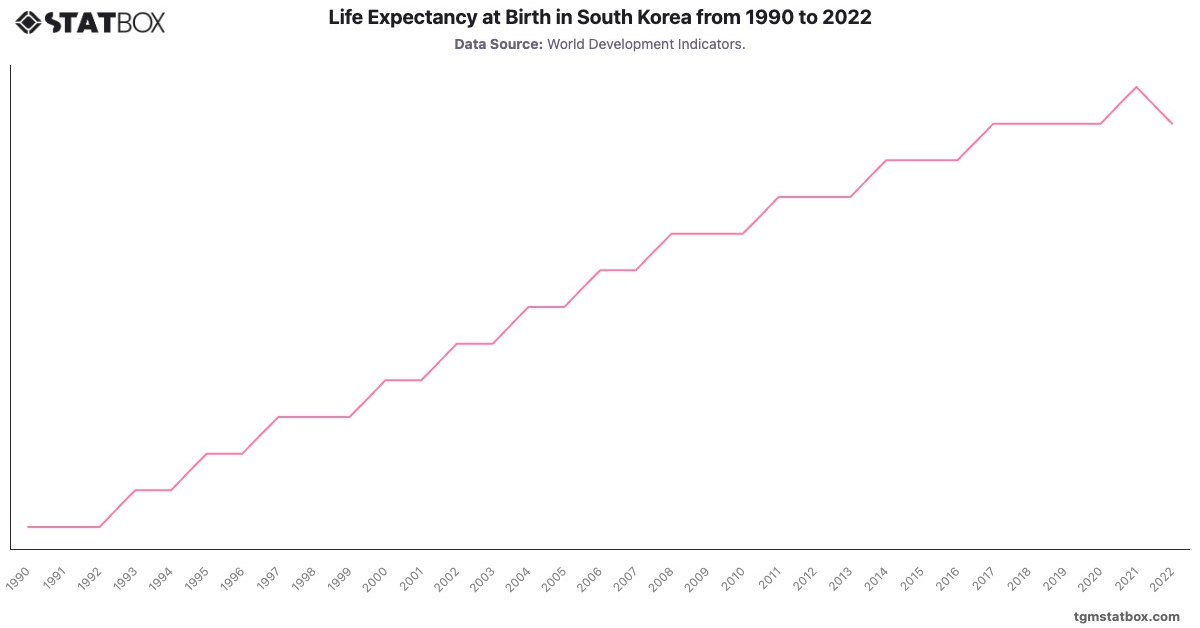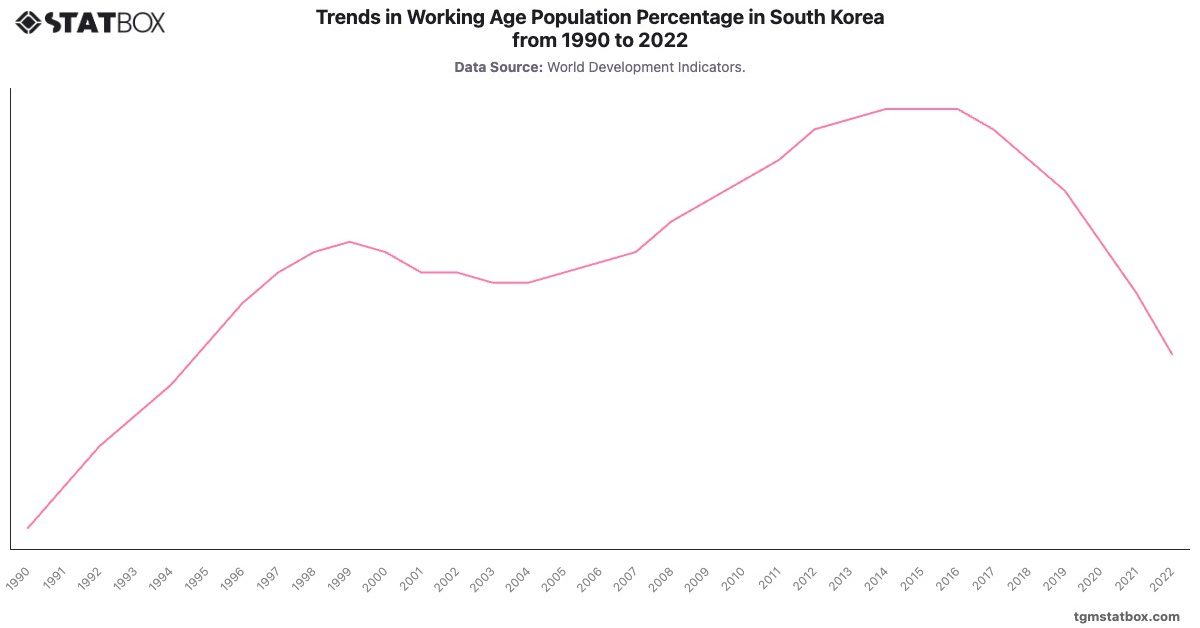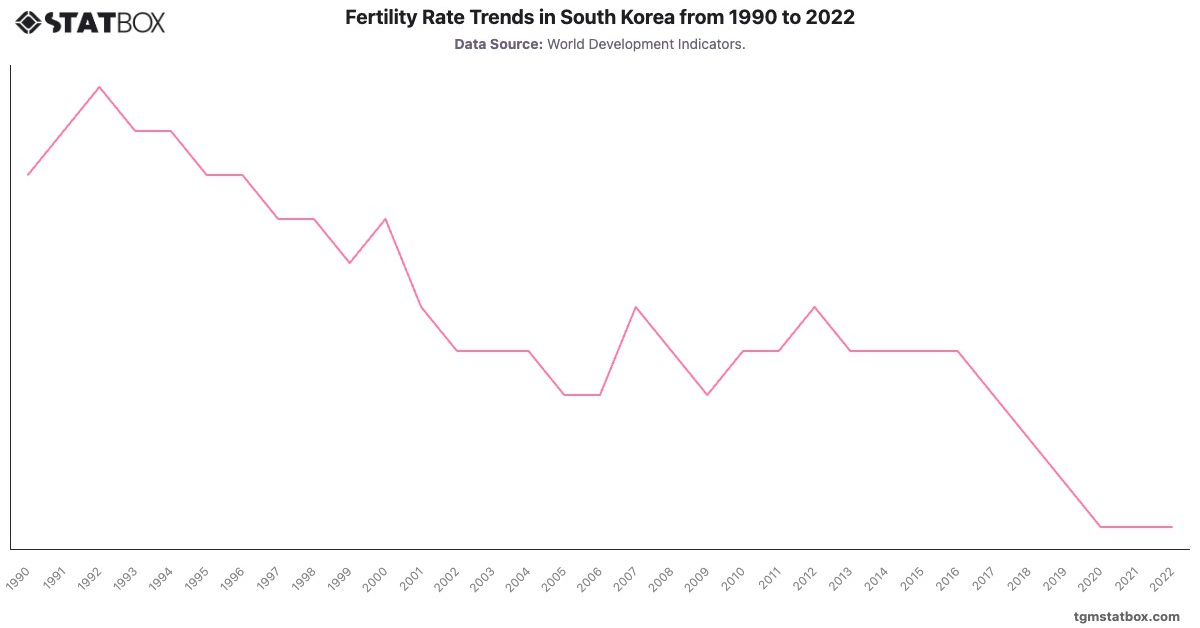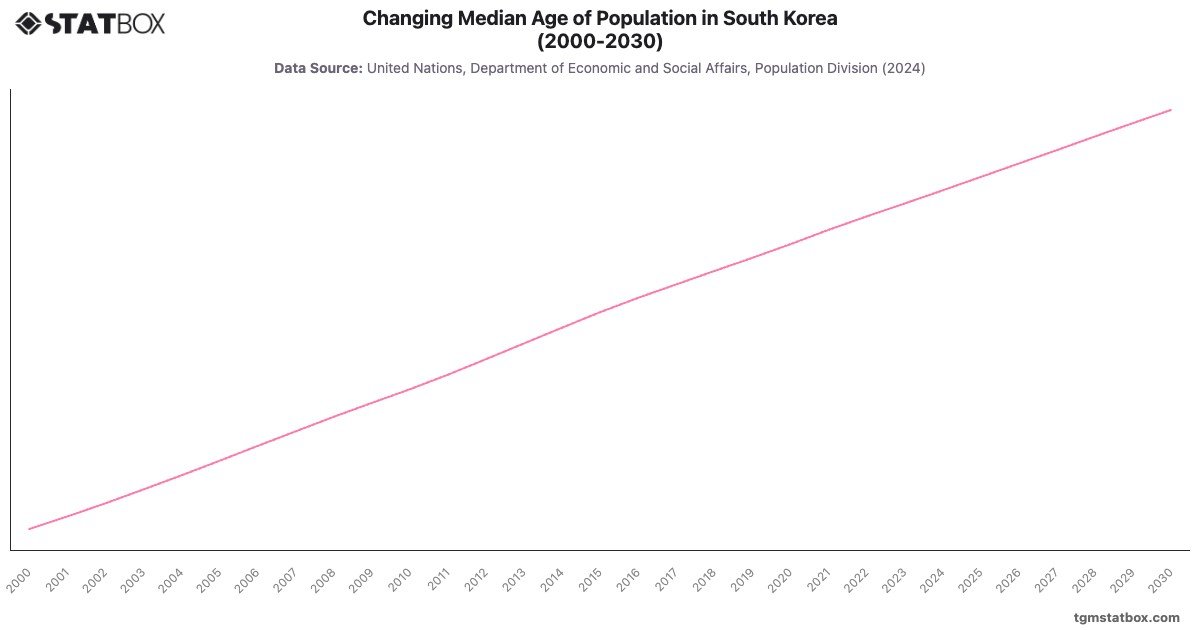
The Republic of Korea has experienced a steady rise in the median age of its population from 2000 to 2030, a reflection of both increasing life expectancy and declining birth rates. In 2000, the median age stood at 30.7, but with the rapid pace of urbanization and socioeconomic shifts, it has consistently climbed, reaching 36.6 by 2010. This period of growth aligns with the country's urban development boom and advancements in healthcare, which contributed to longer life spans. Additionally, lifestyle shifts due to urbanization have resulted in lower fertility rates, as younger Koreans increasingly delay marriage and childbearing in urban centers.
Moving into the 2020s, the median age continues its ascent, reaching 43.9 by 2022 and projected to reach 48.5 by 2030. The combination of an aging population and low birth rates creates significant demographic challenges, as fewer young people are available to support an expanding elderly population. By the late 2020s, the median age is expected to climb over 47, underscoring the long-term impacts of these trends. As South Korea continues to urbanize, these demographic shifts may intensify, emphasizing the need for policies that address both aging and the socio-economic support structures required for an aging urban society.
Moving into the 2020s, the median age continues its ascent, reaching 43.9 by 2022 and projected to reach 48.5 by 2030. The combination of an aging population and low birth rates creates significant demographic challenges, as fewer young people are available to support an expanding elderly population. By the late 2020s, the median age is expected to climb over 47, underscoring the long-term impacts of these trends. As South Korea continues to urbanize, these demographic shifts may intensify, emphasizing the need for policies that address both aging and the socio-economic support structures required for an aging urban society.
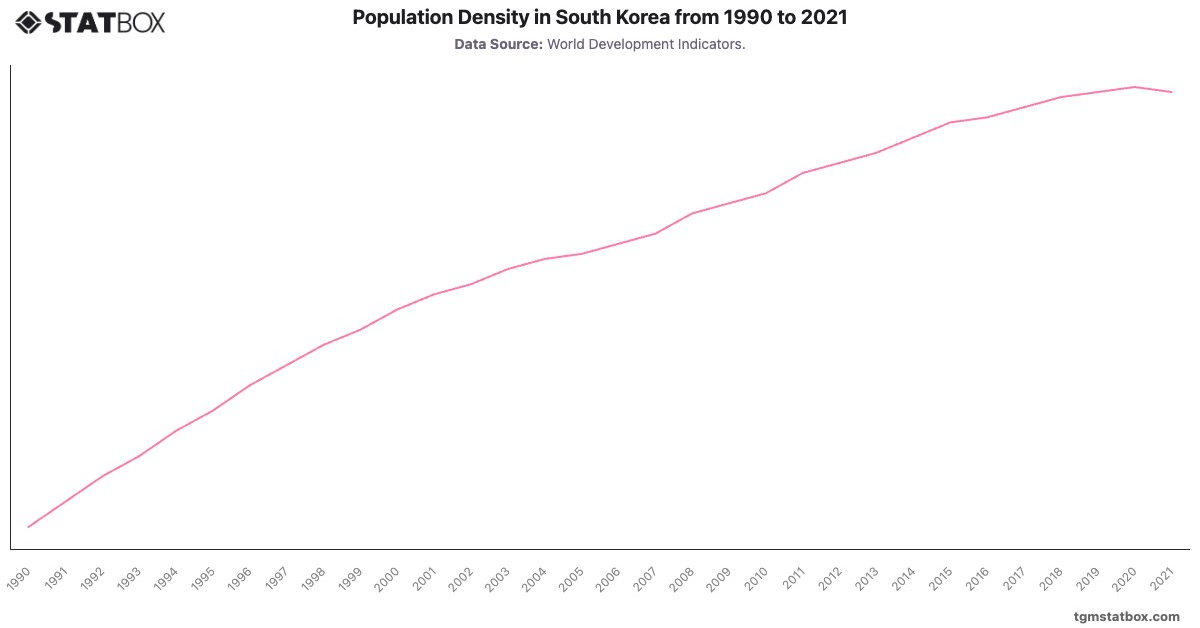
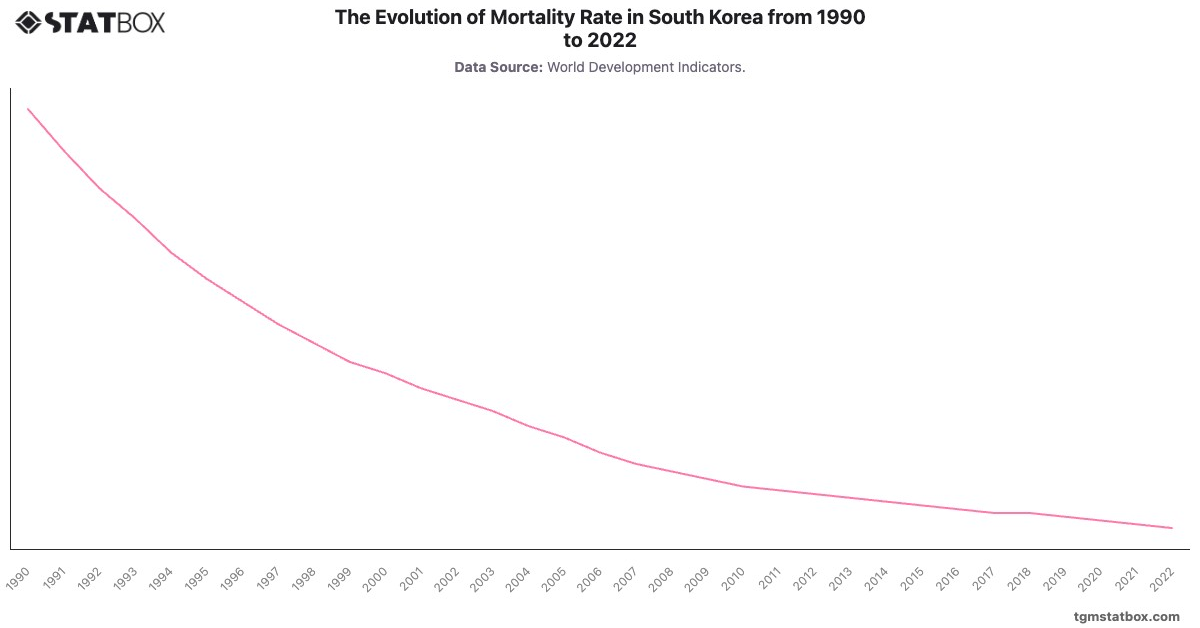
Gain a broader perspective by reviewing South Korea’s population density, South Korea’s mortality rate trends, South Korea’s birth life span.