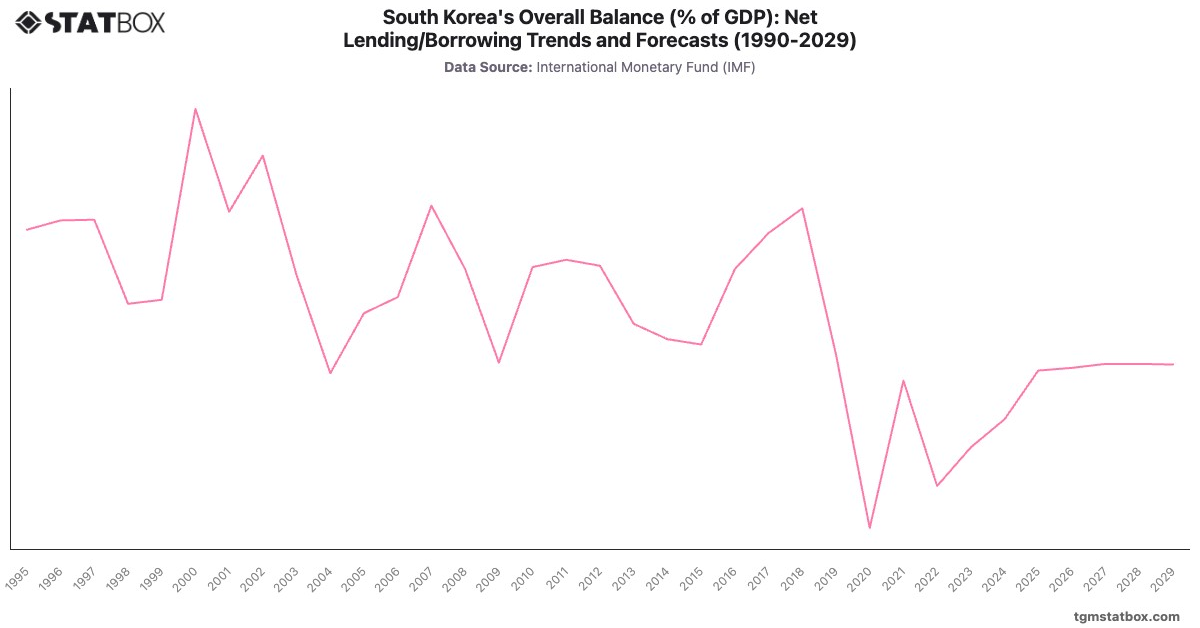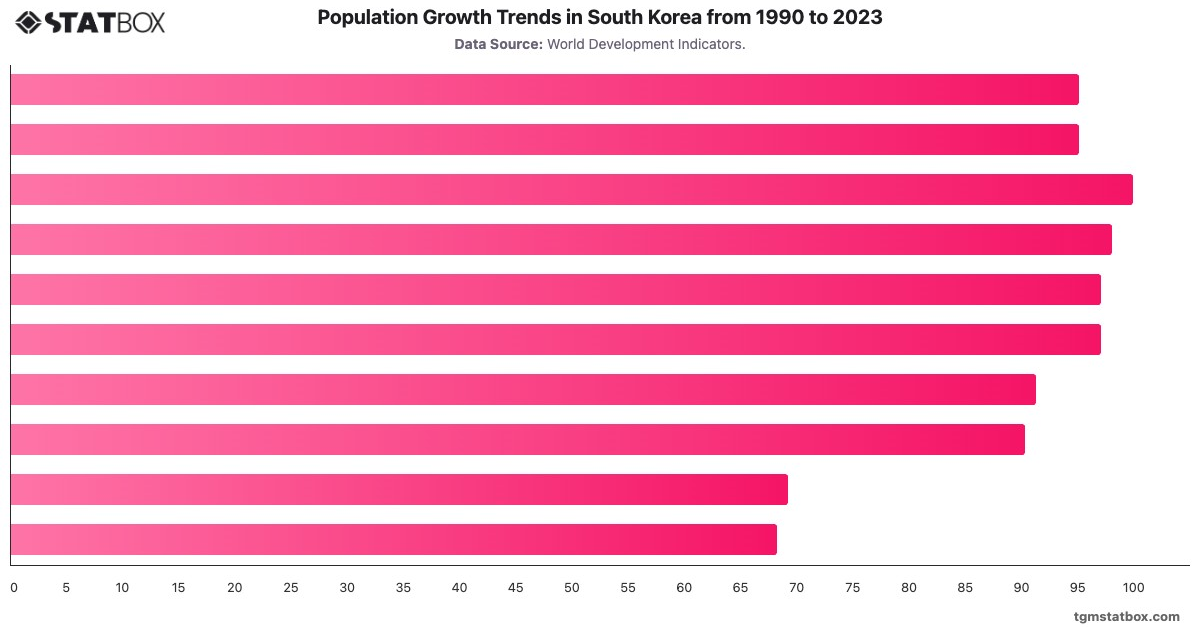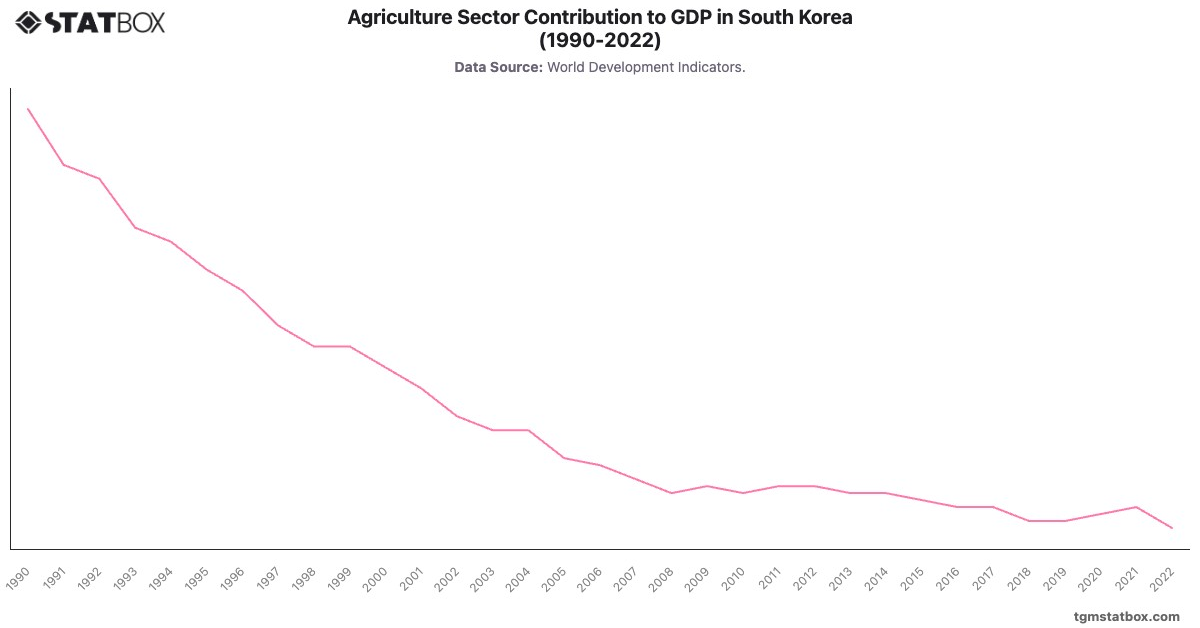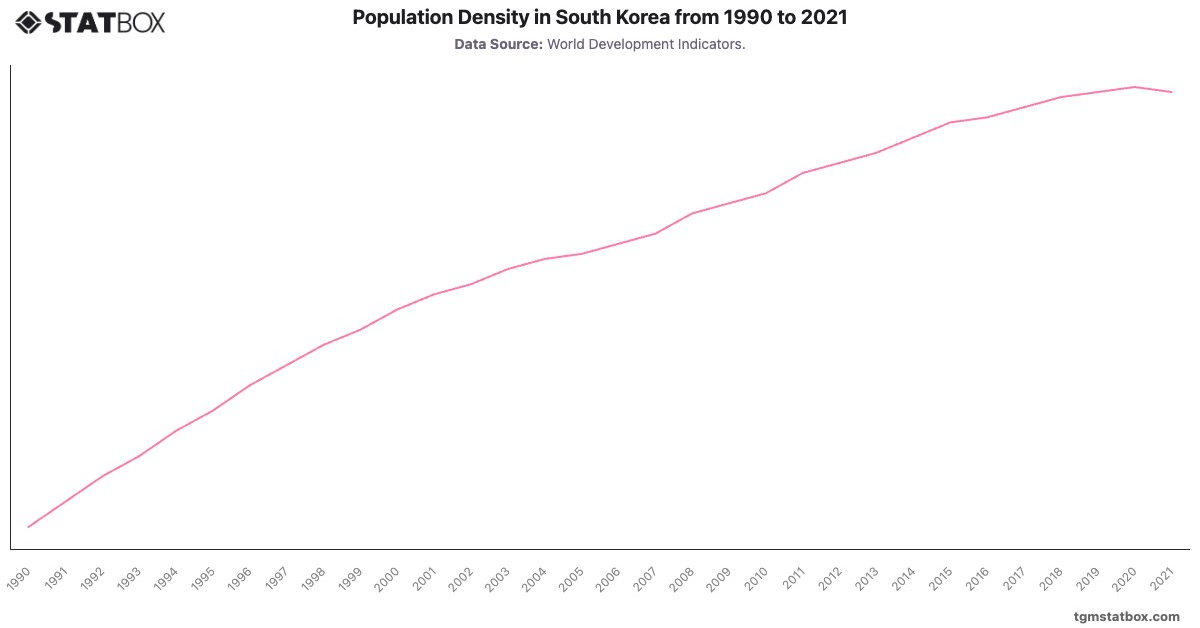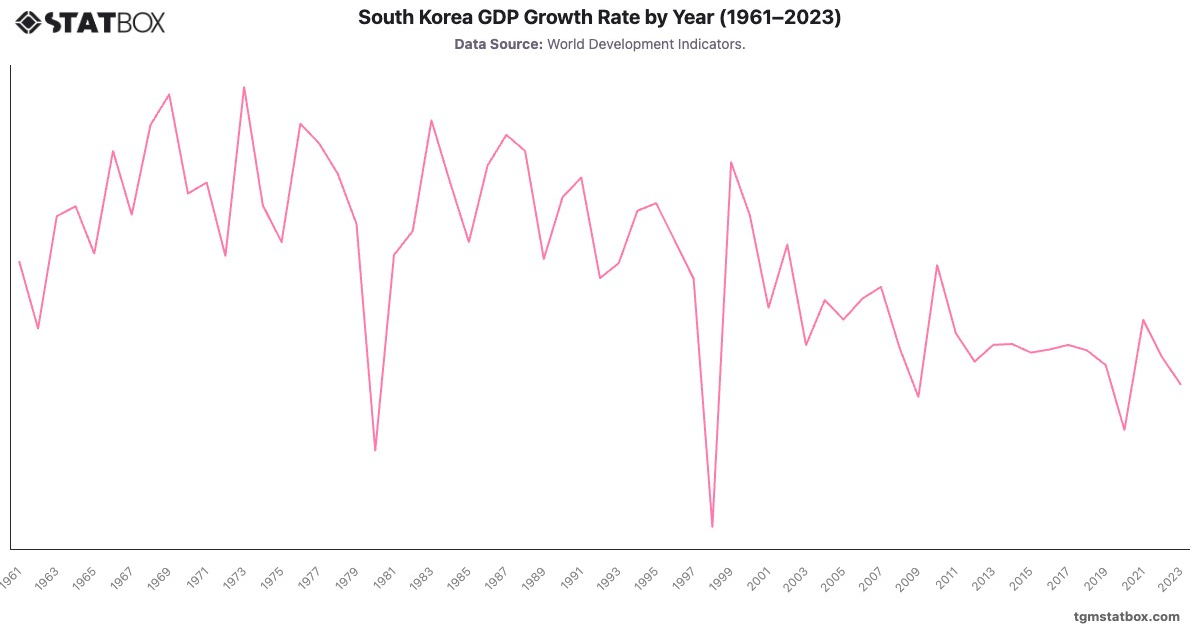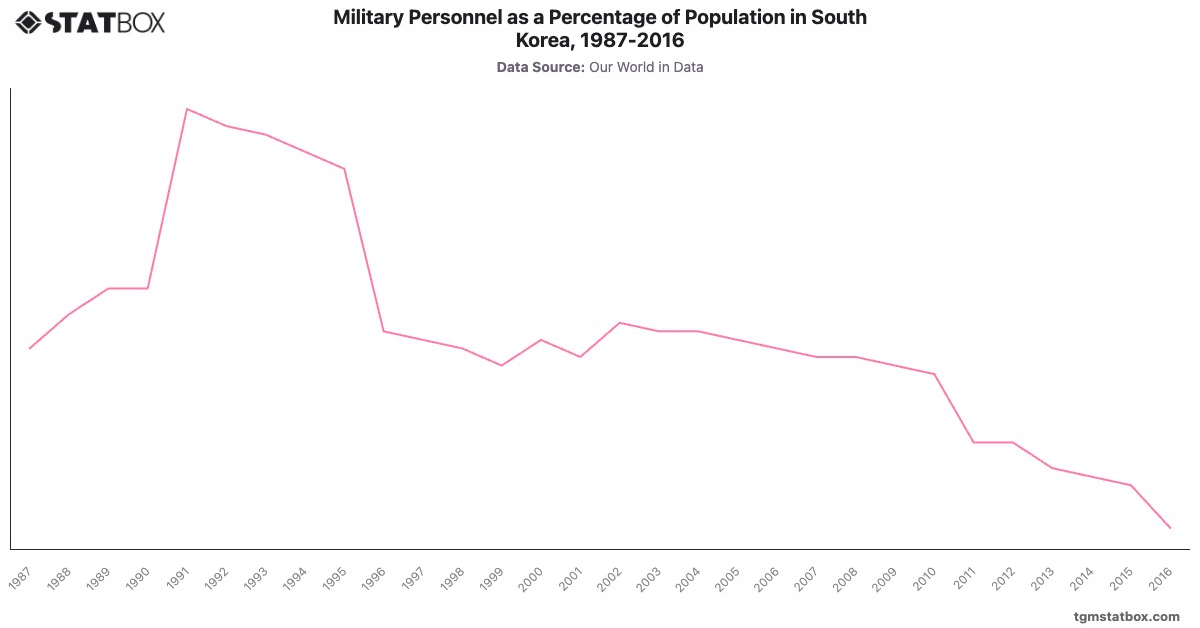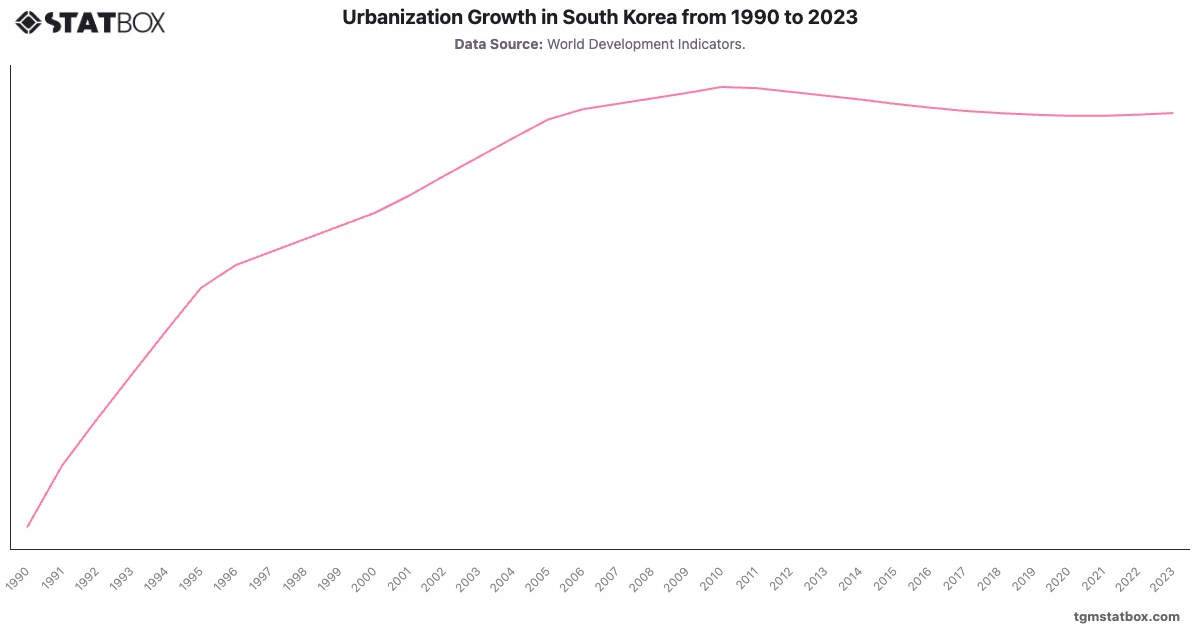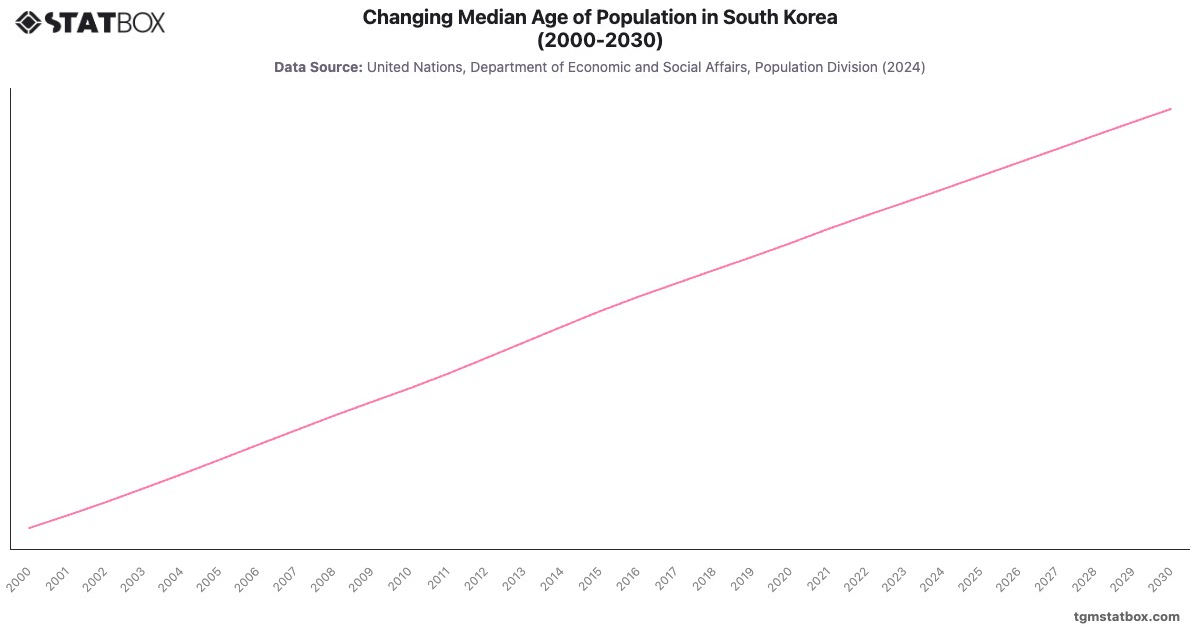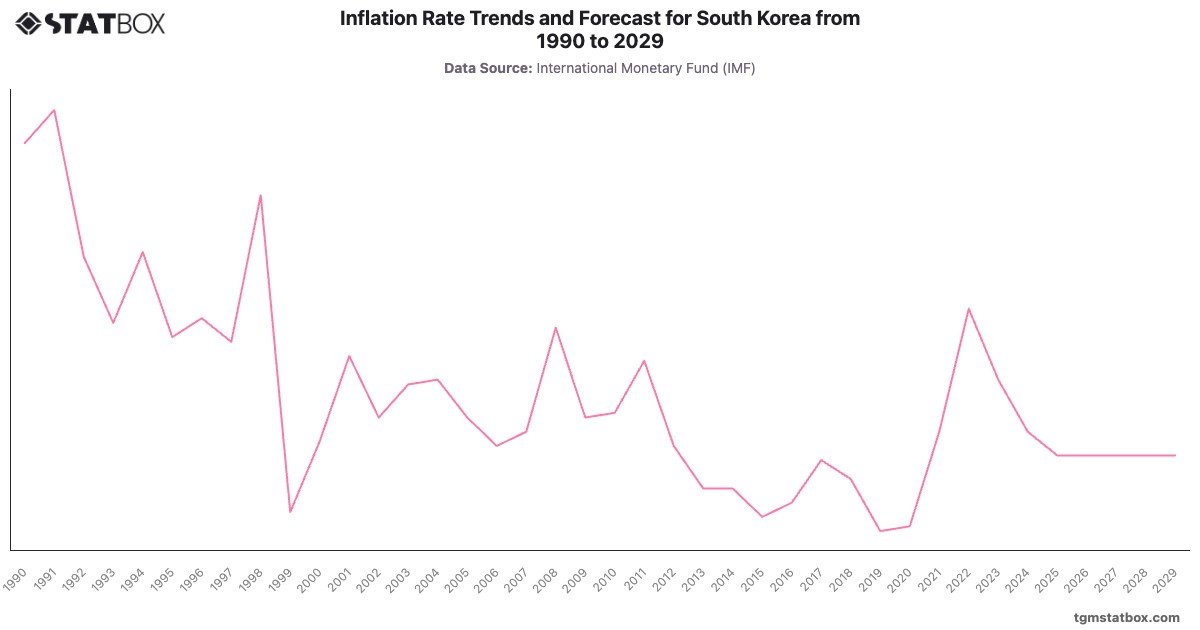
South Korea's inflation trends reflect its economic transformation and resilience against global economic fluctuations. Inflation was high in the early 1990s, peaking at in 1991 due to rapid industrialization and export growth. The Asian financial crisis in 1998 led to an inflation spike of , but recovery measures and monetary policy reduced inflation to by 1999.
In 2022, inflation reached , driven by global energy price increases and supply chain disruptions. Projections indicate a stabilization at from 2025 onwards, reflecting effective economic policies and South Korea’s robust position in the global market.
In 2022, inflation reached , driven by global energy price increases and supply chain disruptions. Projections indicate a stabilization at from 2025 onwards, reflecting effective economic policies and South Korea’s robust position in the global market.
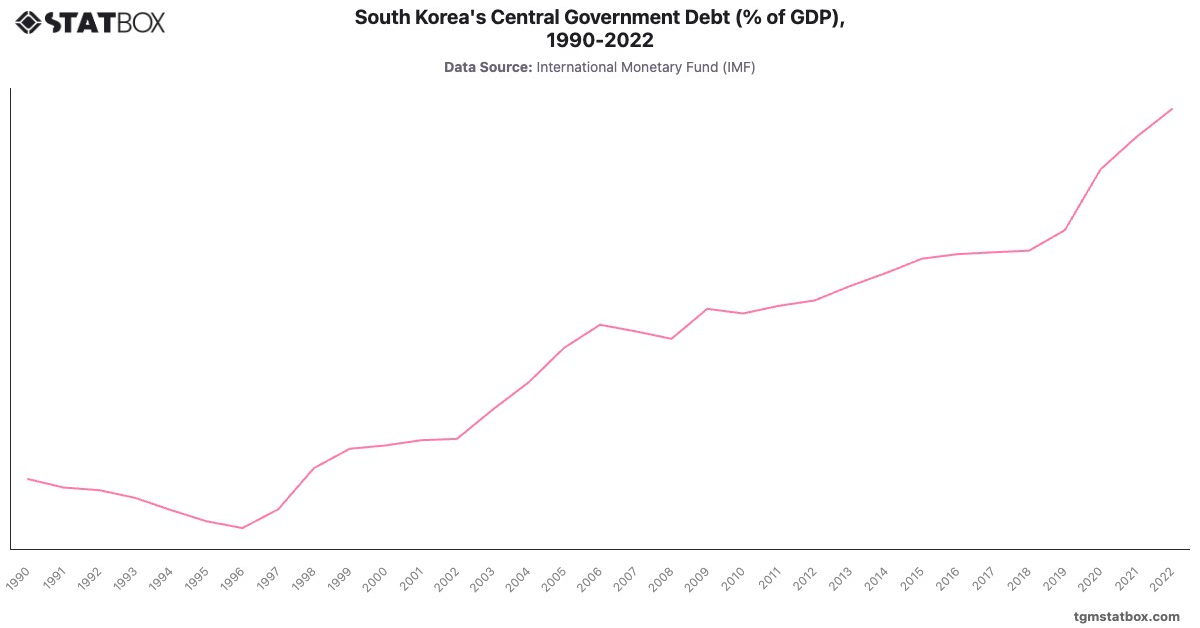
For a broader context, visit other statistics on South Korea’s government debt to GDP ratio, South Korea’s population density, South Korea’s annual GDP growth rate.