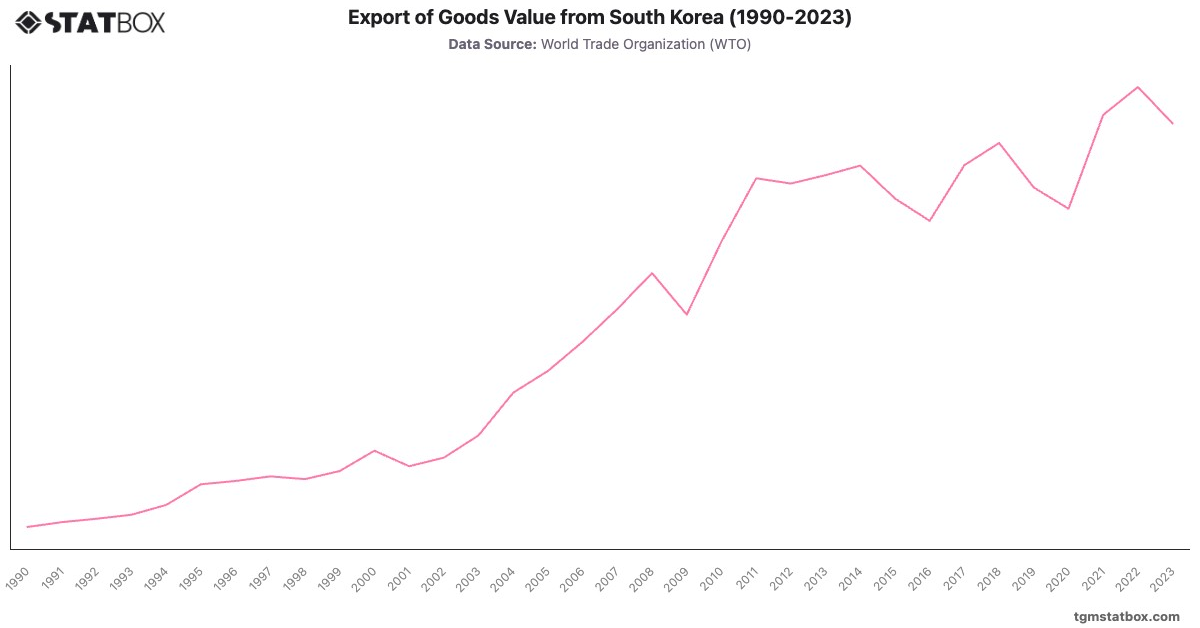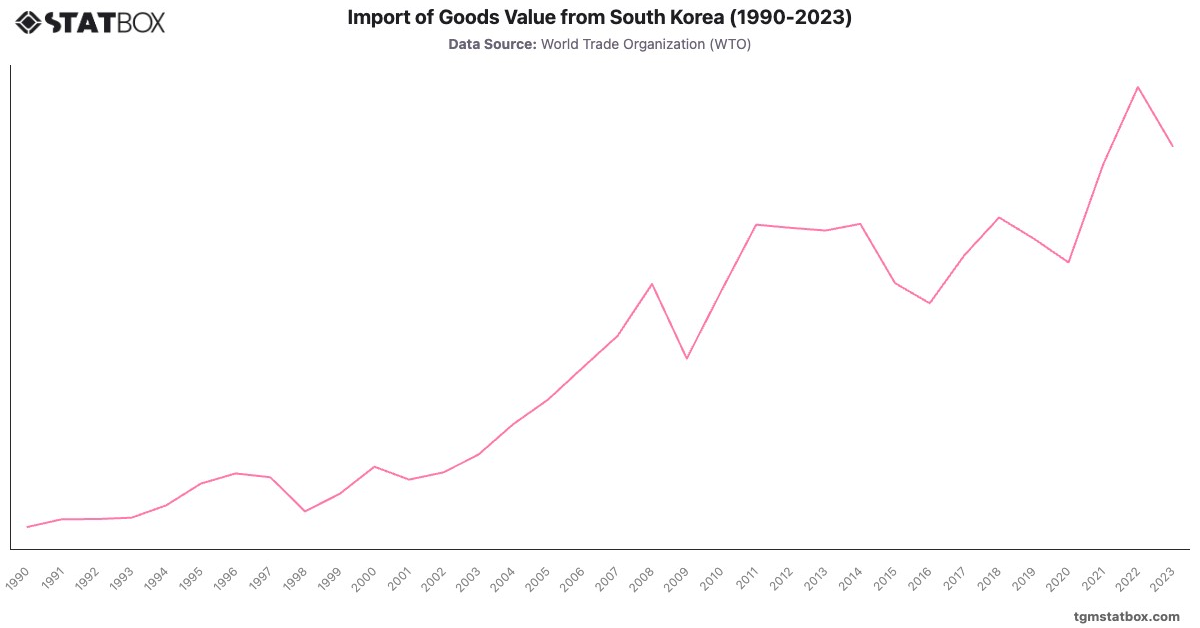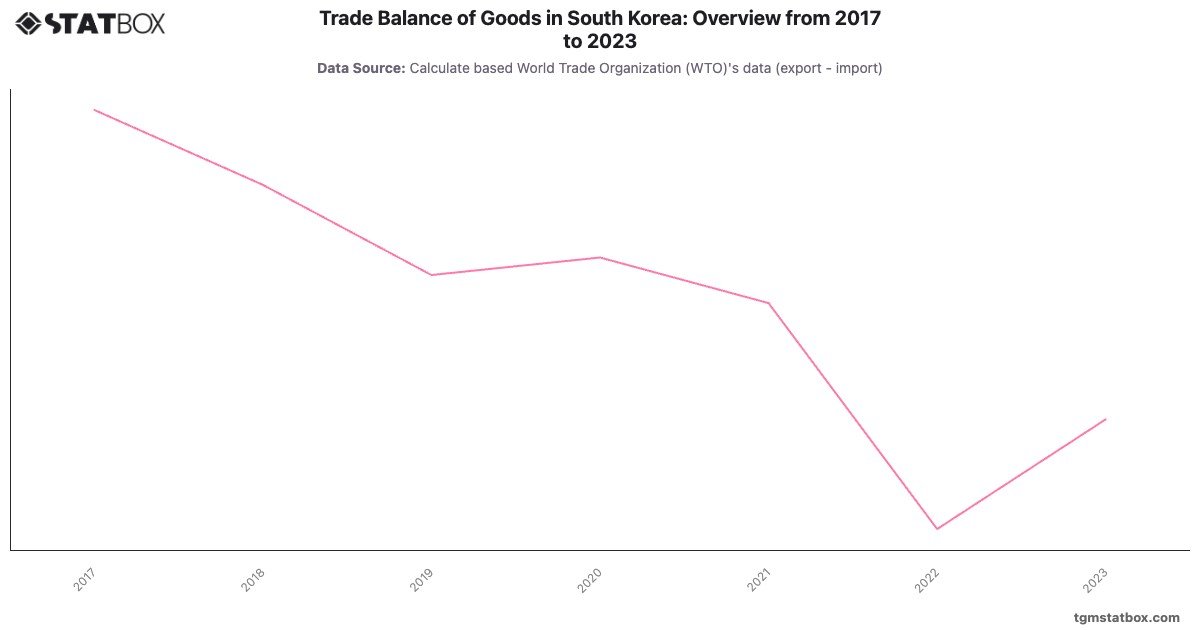
South Korea’s trade balance of goods fluctuated significantly between 2017 and 2023, shifting from a robust surplus of 95,215.7 million USD in 2017 to a rare deficit of -47,784.7 million USD in 2022. The initial surplus was driven by strong exports of semiconductors, automobiles, and electronics, but the 2022 deficit reflected surging energy import costs and weakened global demand for key exports.
In 2023, the trade balance improved slightly, narrowing to a deficit of -10,346.1 million USD, as energy prices moderated and export performance partially recovered. The trends highlight South Korea’s dependence on imported energy and raw materials, alongside its reliance on high-value export industries that are sensitive to global market conditions.
In 2023, the trade balance improved slightly, narrowing to a deficit of -10,346.1 million USD, as energy prices moderated and export performance partially recovered. The trends highlight South Korea’s dependence on imported energy and raw materials, alongside its reliance on high-value export industries that are sensitive to global market conditions.
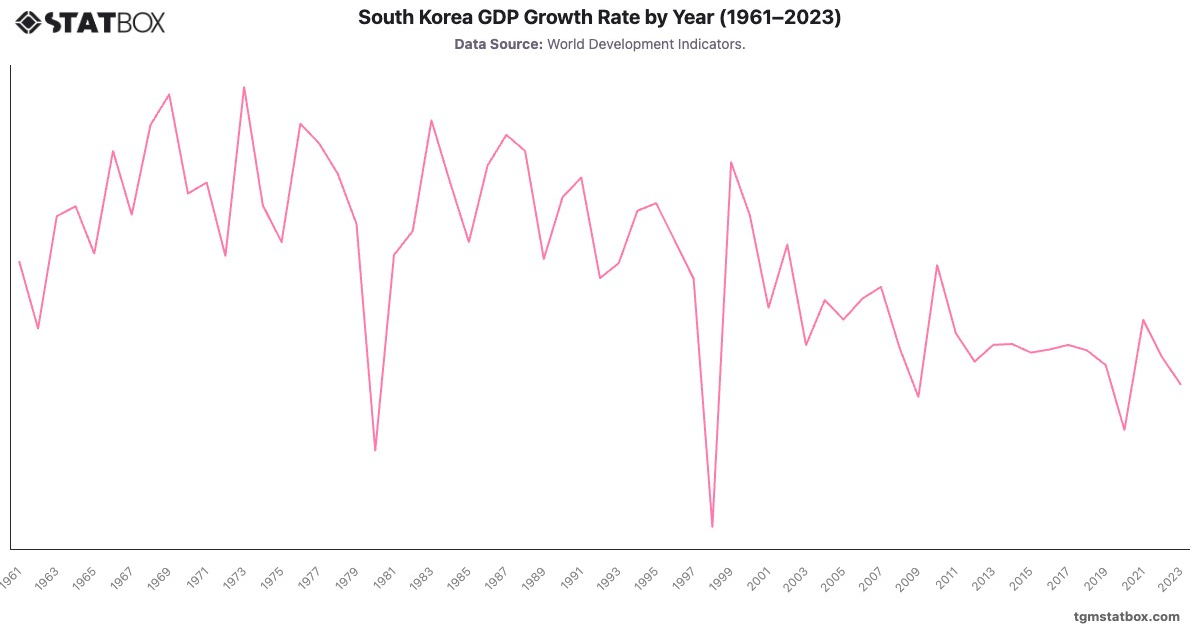
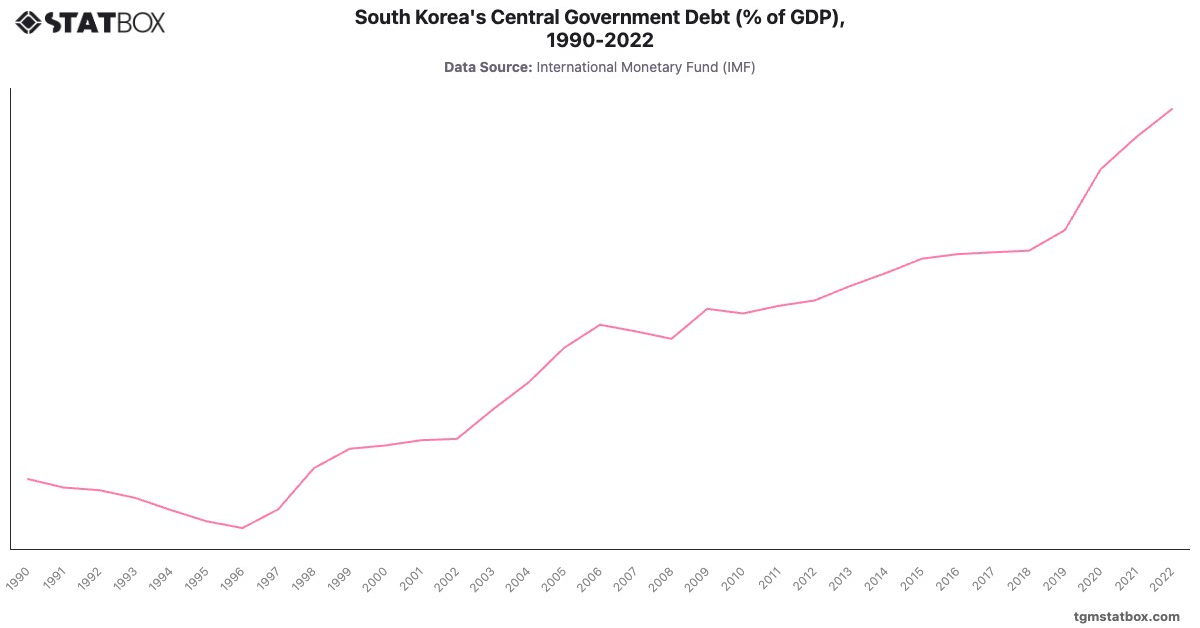
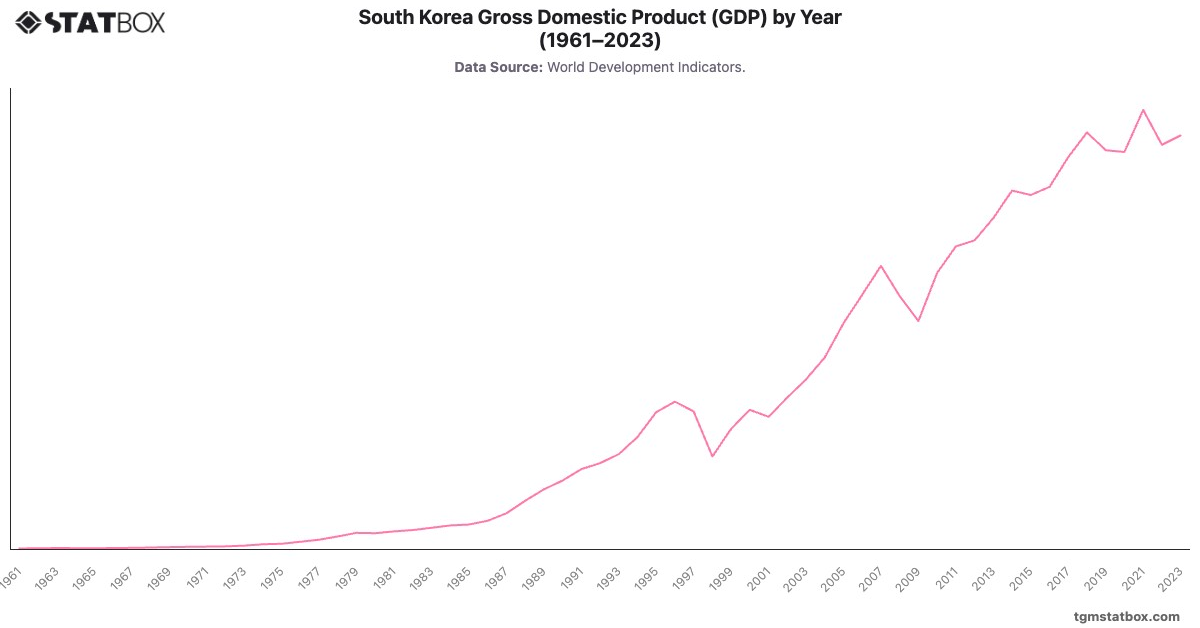
Explore related charts to gain a better understanding of South Korea’s annual GDP, South Korea’s government debt to GDP ratio, South Korea’s unemployment rate.