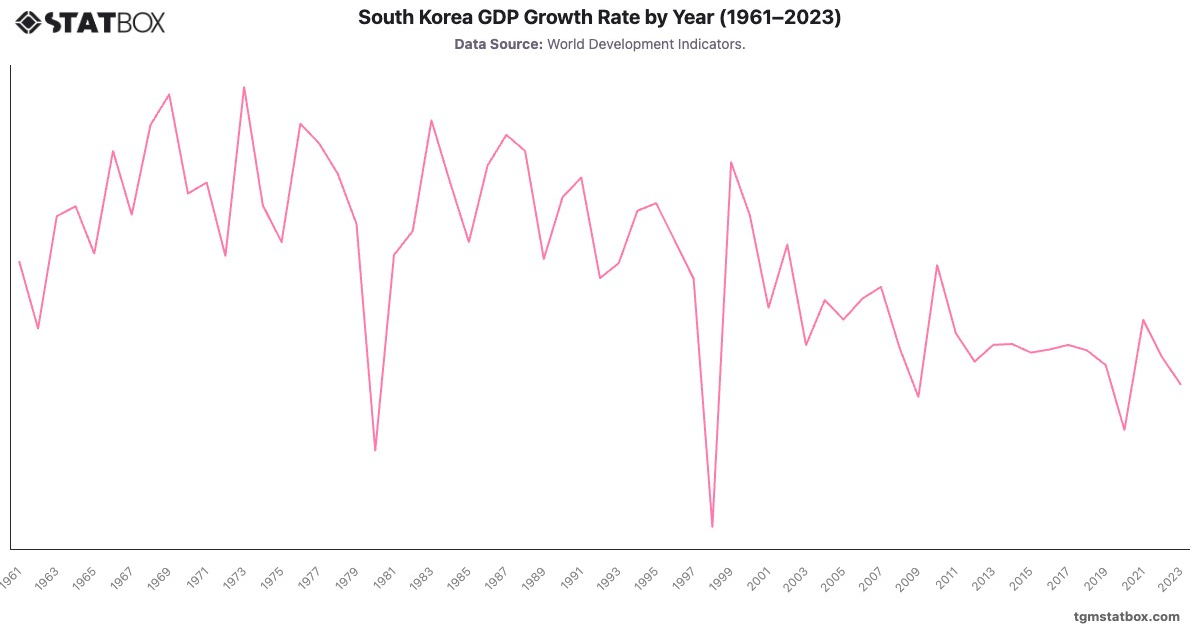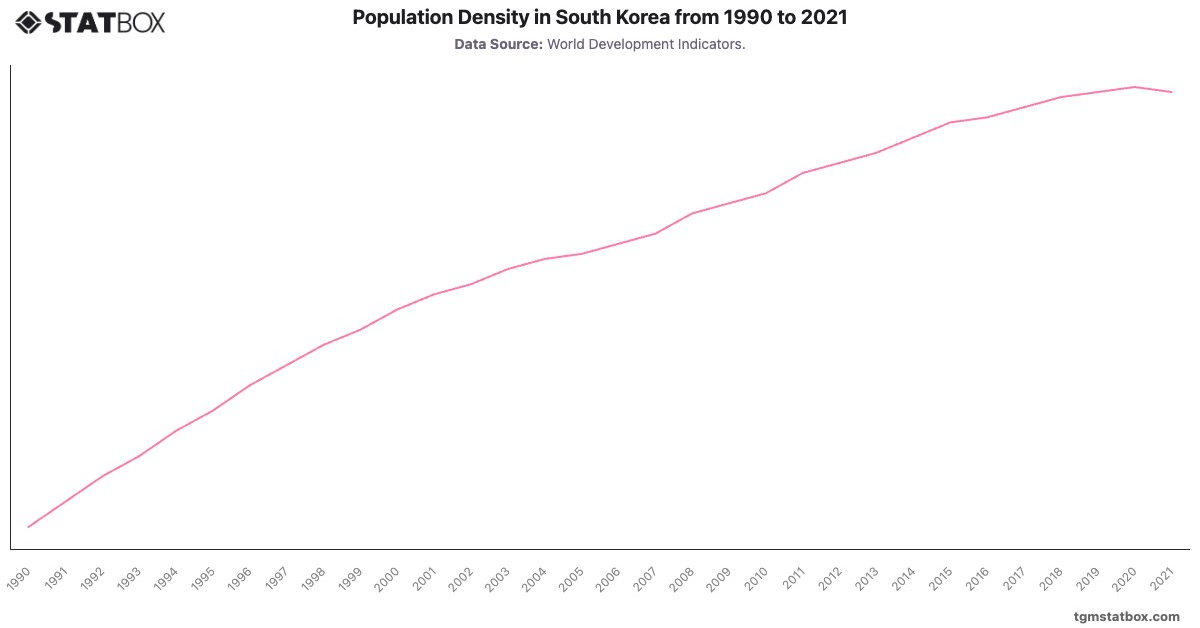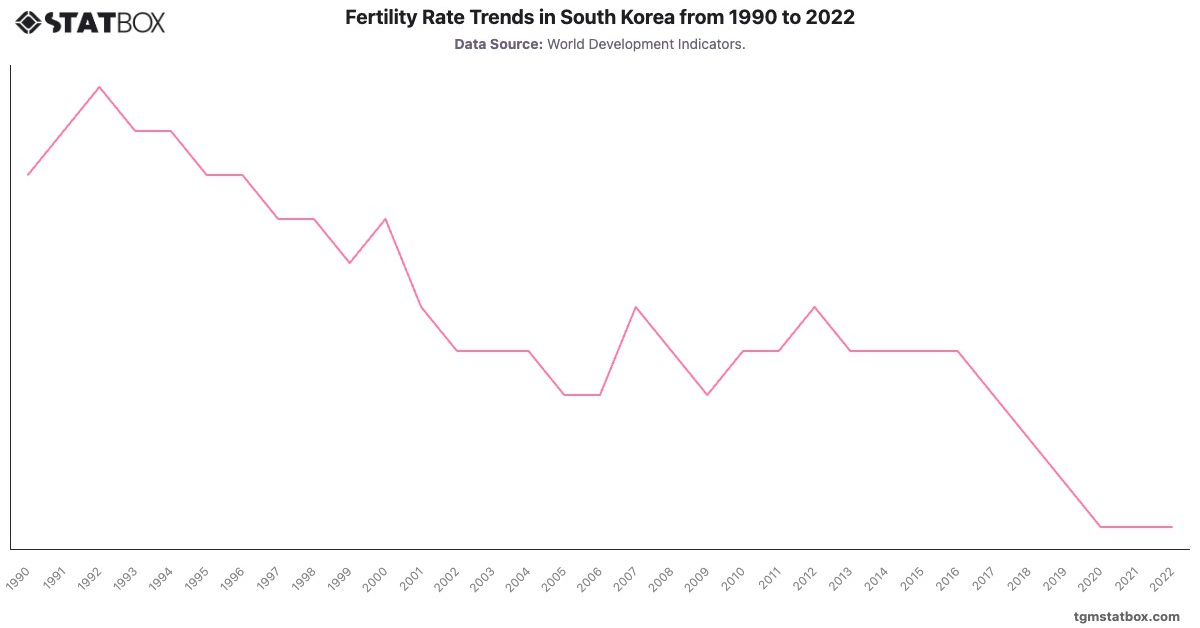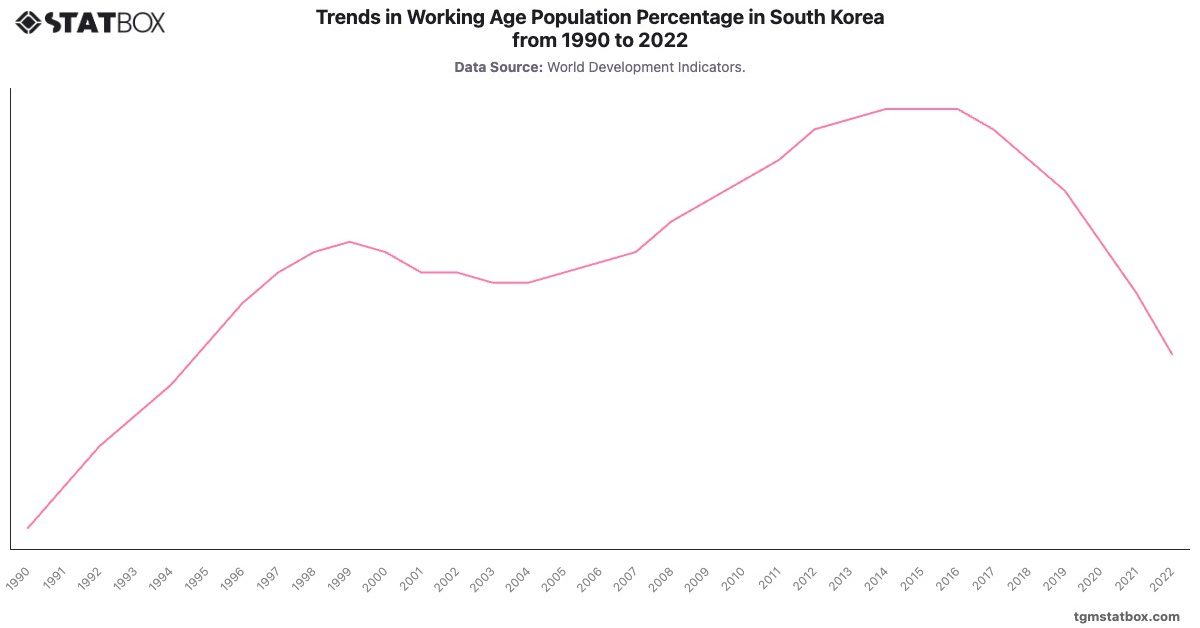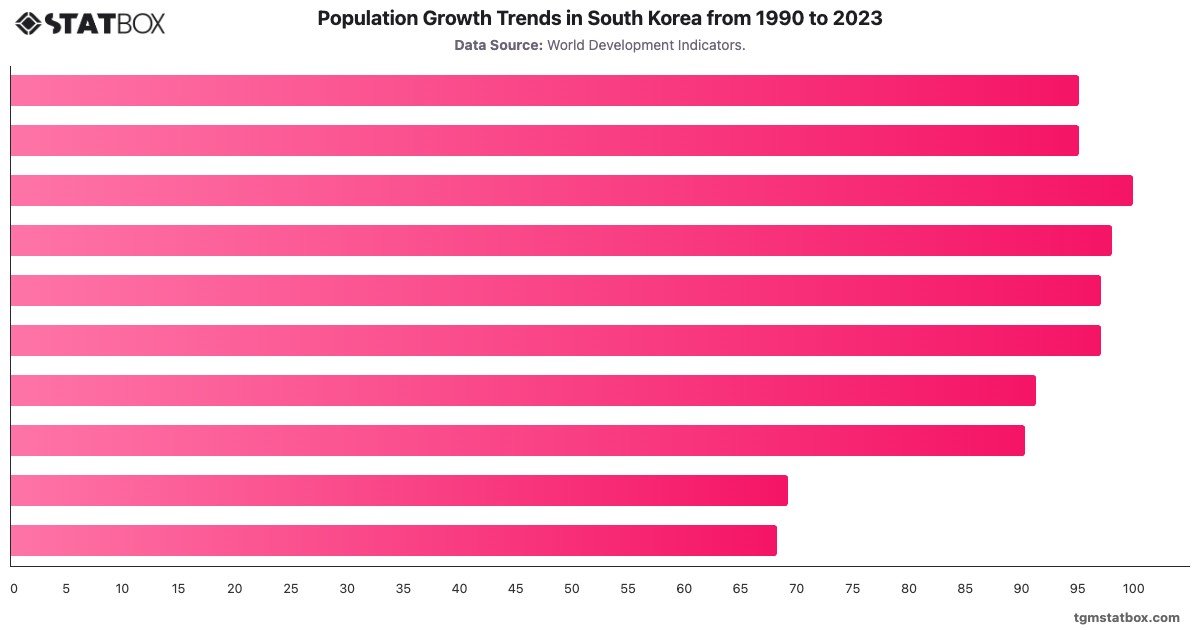
South Korea’s population growth has slowed considerably since the early 1990s, reflecting broader socio-economic transitions. Growth rates were steady at during the early 1990s but began declining by the late 1990s due to the Asian Financial Crisis, which disrupted economic stability and affected family planning trends. By 2005, growth had dropped to .
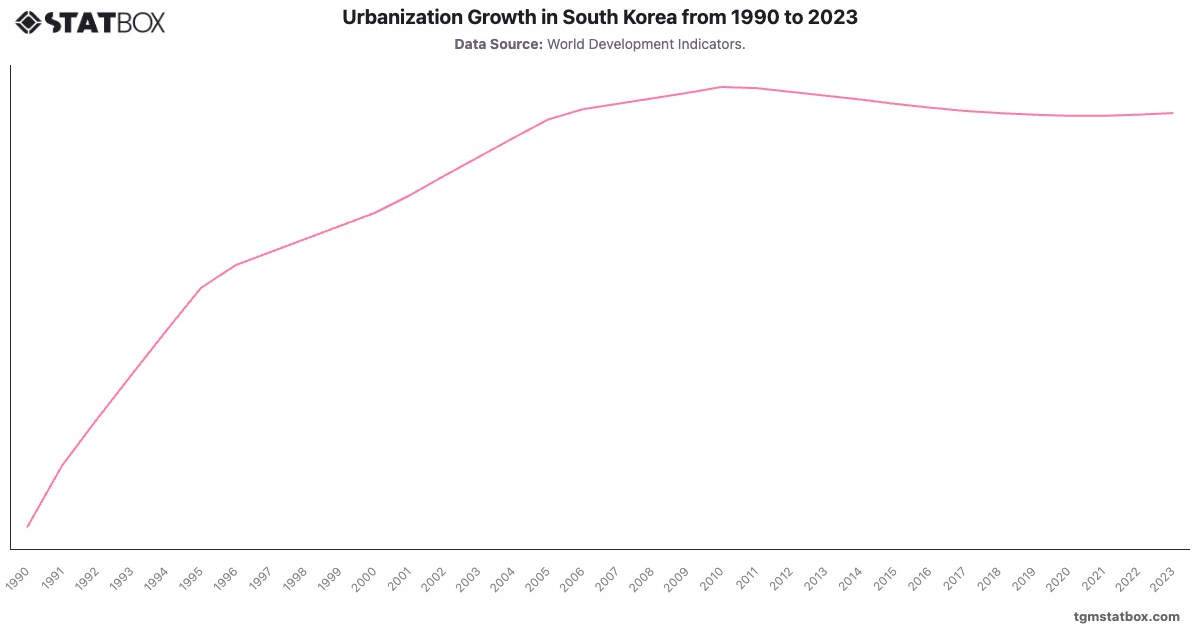
Negative growth emerged in 2021 (-), coinciding with falling fertility rates and urbanization pressures. Although a slight rebound to occurred in 2023, long-term challenges persist as South Korea faces one of the lowest birth rates globally, necessitating comprehensive strategies to address its demographic decline.
Negative growth emerged in 2021 (-), coinciding with falling fertility rates and urbanization pressures. Although a slight rebound to occurred in 2023, long-term challenges persist as South Korea faces one of the lowest birth rates globally, necessitating comprehensive strategies to address its demographic decline.
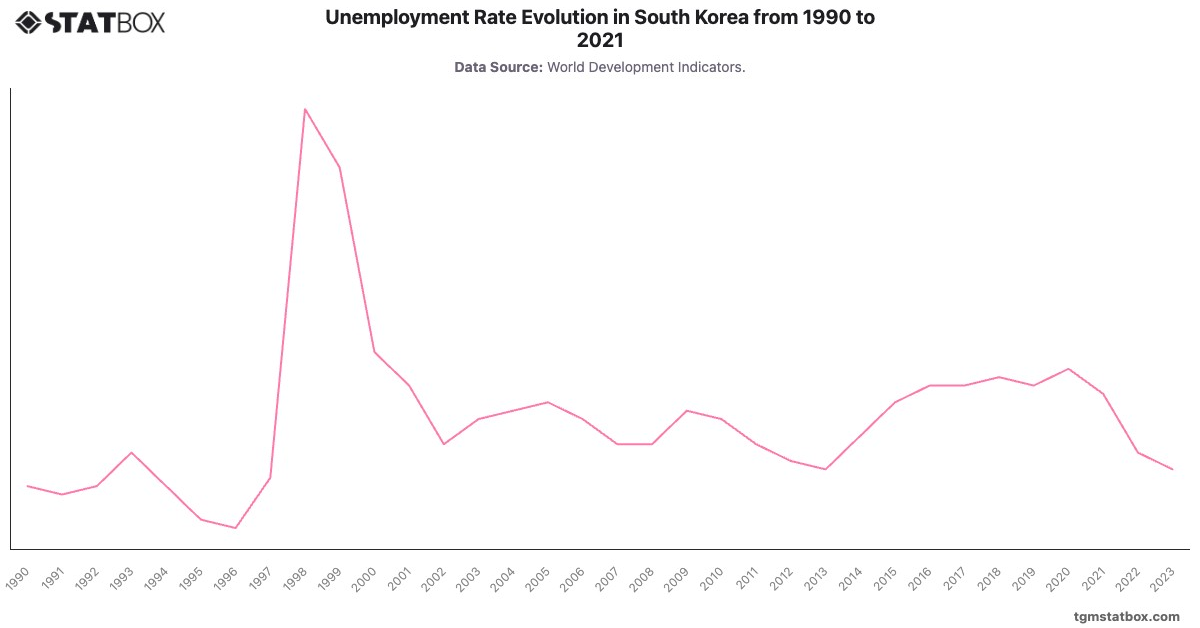
Discover additional trends and data on South Korea’s military-to-population ratio, South Korea’s unemployment rate, South Korea’s population density.