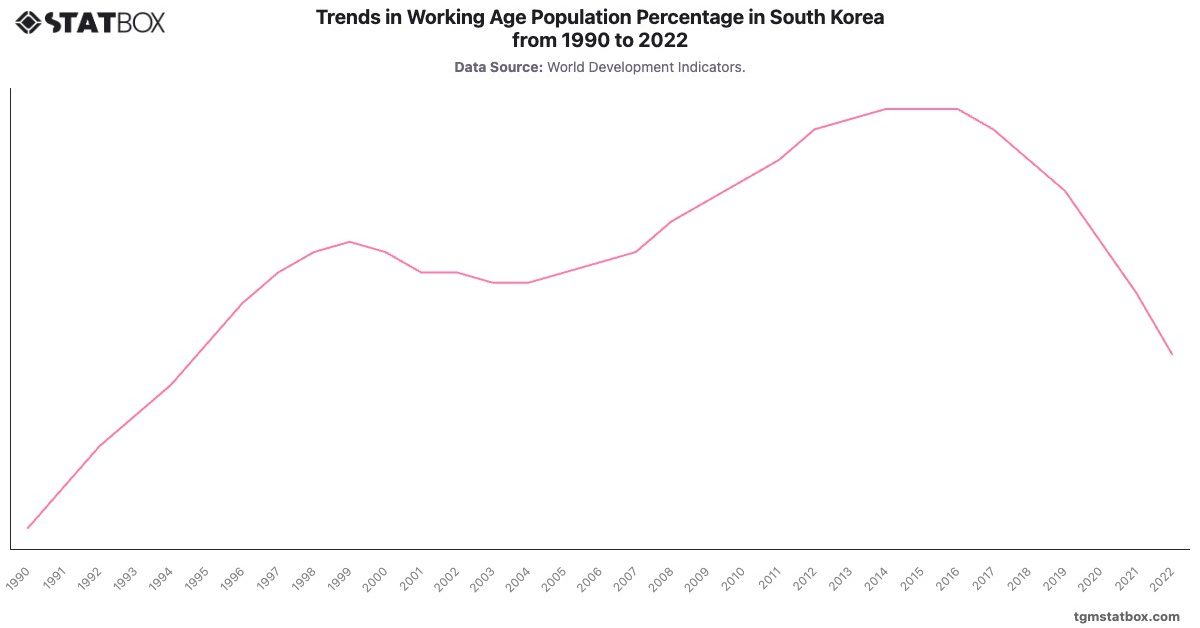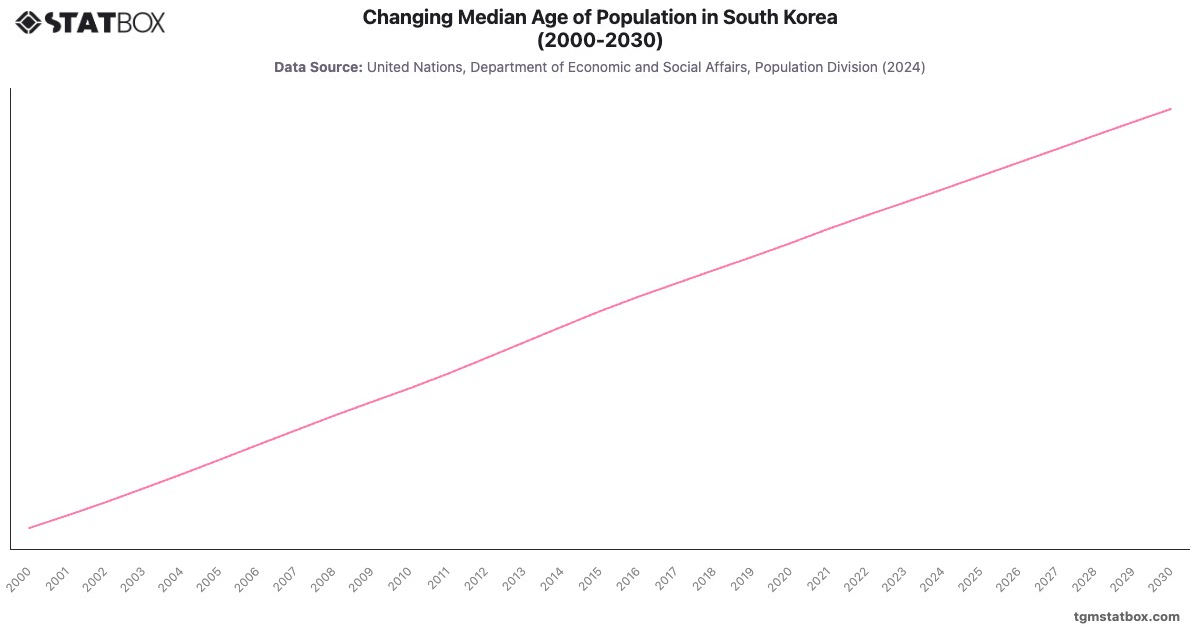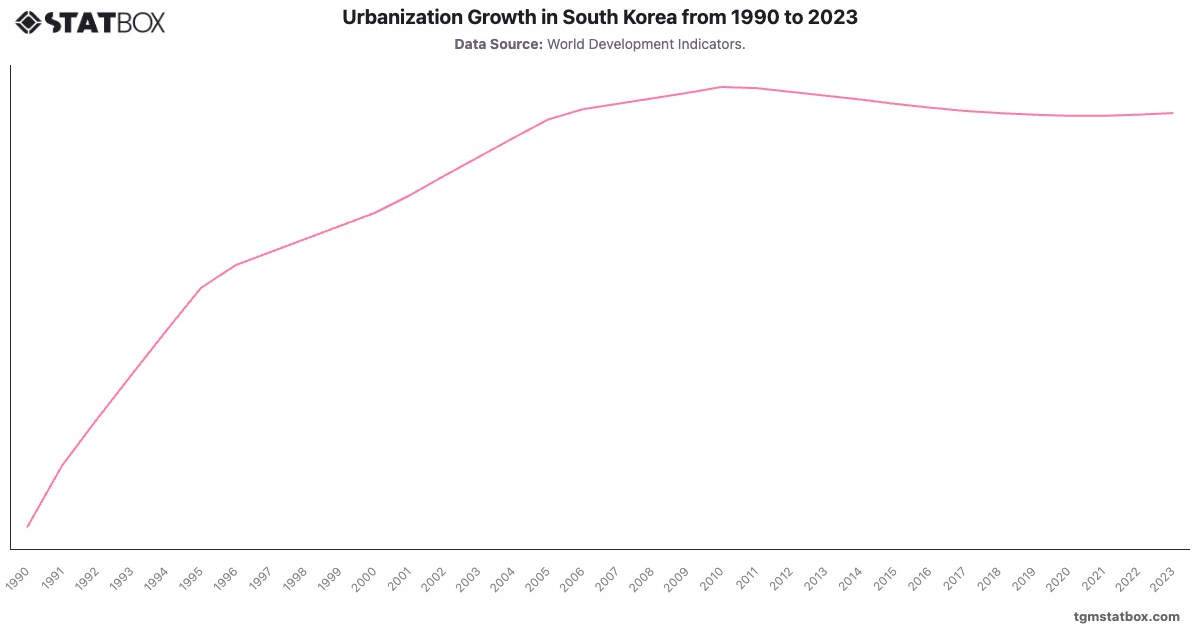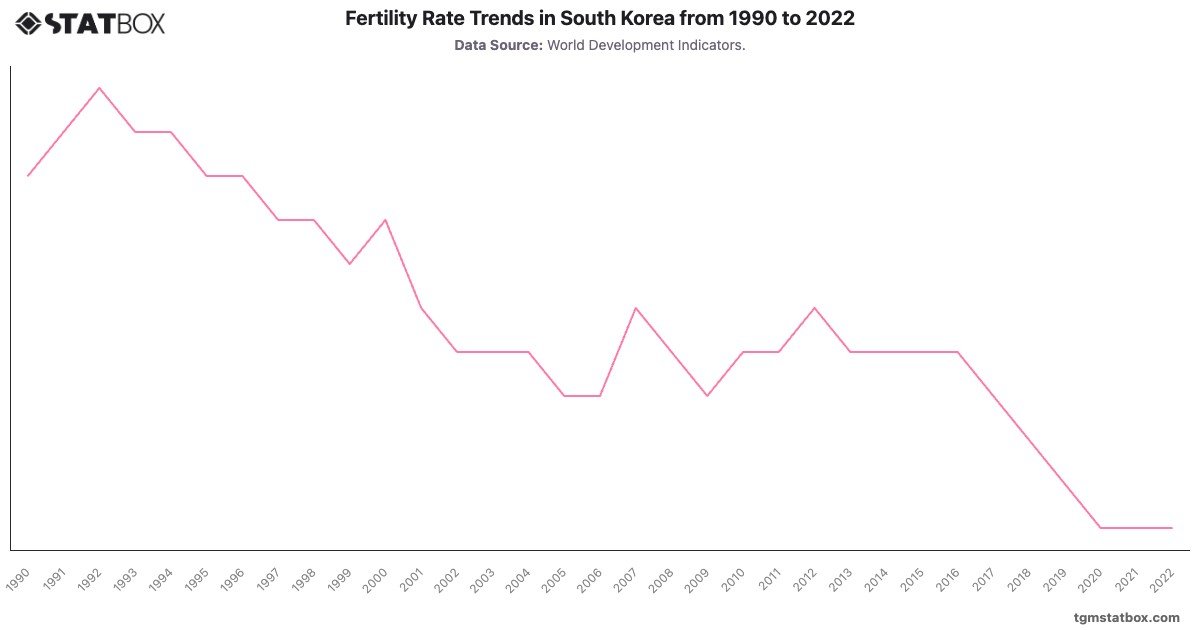
South Korea's fertility rate shows a dramatic decrease over the analyzed period, starting at 1.6 in 1990 and reaching a historic low of 0.8 by 2022. The fertility rate's decline reflects South Korea's rapid urbanization and the socioeconomic pressures on young families, such as housing costs and employment instability. While fertility rose slightly in the early 1990s, reaching 1.8 in 1992, it fell consistently thereafter, reflecting societal shifts toward later marriages and lower birth rates.
The government's pro-natalist policies introduced after 2005, including childcare subsidies and workplace reforms, briefly stabilized the fertility rate, such as the slight uptick to 1.3 in 2007. However, these measures failed to reverse the long-term trend, with the rate falling to 0.8 by 2020 as the economic and cultural barriers to childbearing remained significant.
The government's pro-natalist policies introduced after 2005, including childcare subsidies and workplace reforms, briefly stabilized the fertility rate, such as the slight uptick to 1.3 in 2007. However, these measures failed to reverse the long-term trend, with the rate falling to 0.8 by 2020 as the economic and cultural barriers to childbearing remained significant.
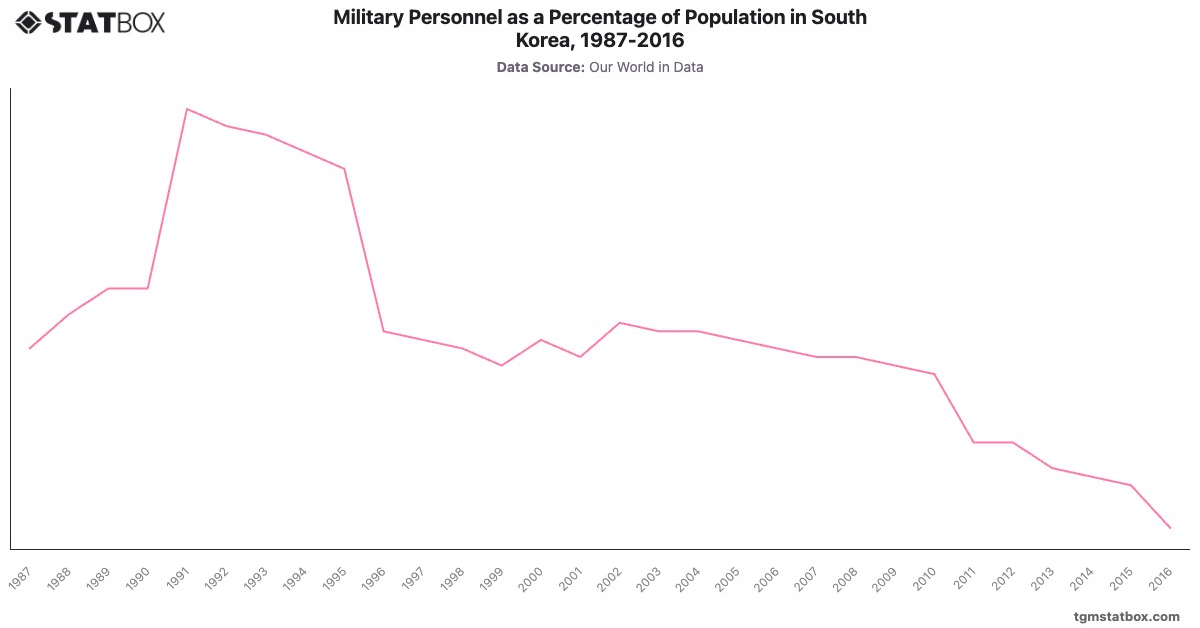
For a deeper dive into the topic, explore South Korea’s population numbers, South Korea’s military-to-population ratio, South Korea’s government debt to GDP ratio.