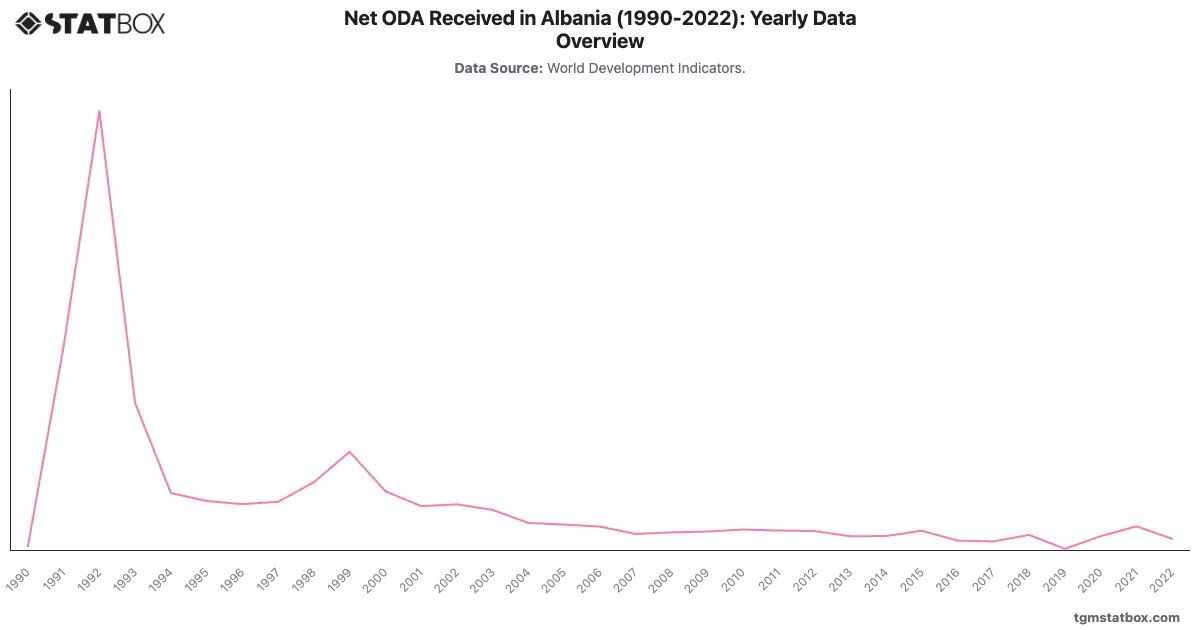
Albania's Net ODA (% of GNI) experienced dramatic shifts during the early 1990s, peaking at in 1992 due to international support for its transition from a communist regime to a market economy. This surge reflected donor efforts to stabilize the country amidst severe economic and social challenges, including high unemployment and poverty. By 1993, the ODA percentage dropped significantly to , signaling Albania's gradual stabilization and reduced dependency on external assistance.
In subsequent years, ODA levels steadily declined, reflecting Albania's economic growth and its progress towards EU integration. Notable spikes, such as in 1999, were linked to regional crises, including the Kosovo War, which prompted humanitarian aid flows. By the 2000s, Net ODA remained below , stabilizing around 2- after 2010, as Albania's increased domestic capacity and international partnerships reduced its reliance on foreign aid.
In subsequent years, ODA levels steadily declined, reflecting Albania's economic growth and its progress towards EU integration. Notable spikes, such as in 1999, were linked to regional crises, including the Kosovo War, which prompted humanitarian aid flows. By the 2000s, Net ODA remained below , stabilizing around 2- after 2010, as Albania's increased domestic capacity and international partnerships reduced its reliance on foreign aid.
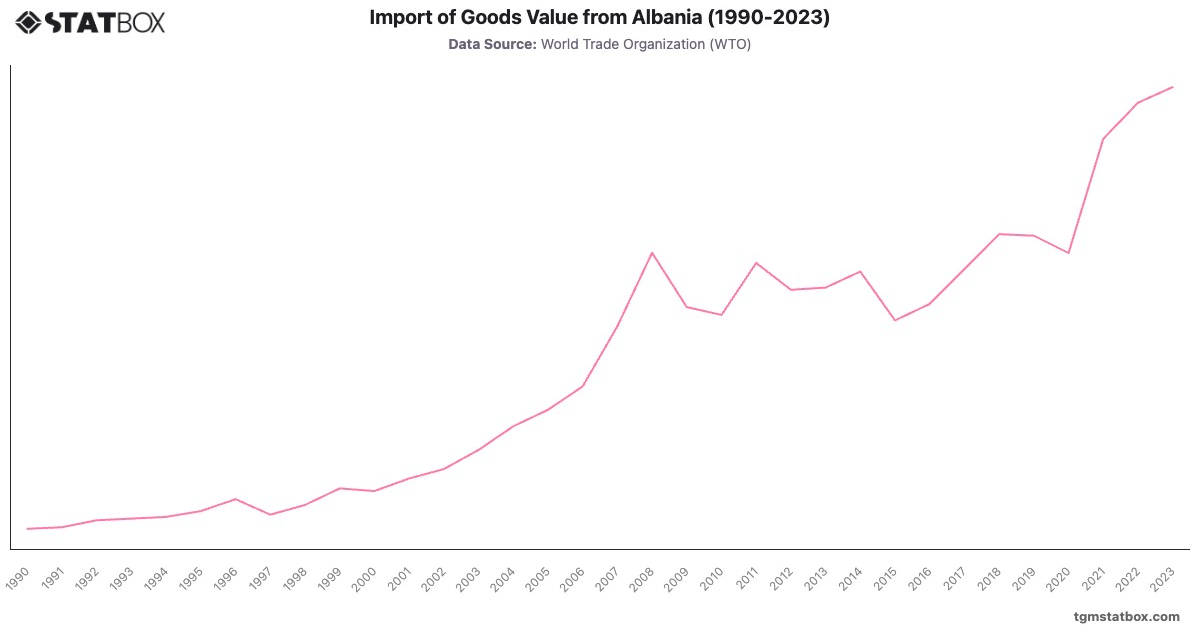
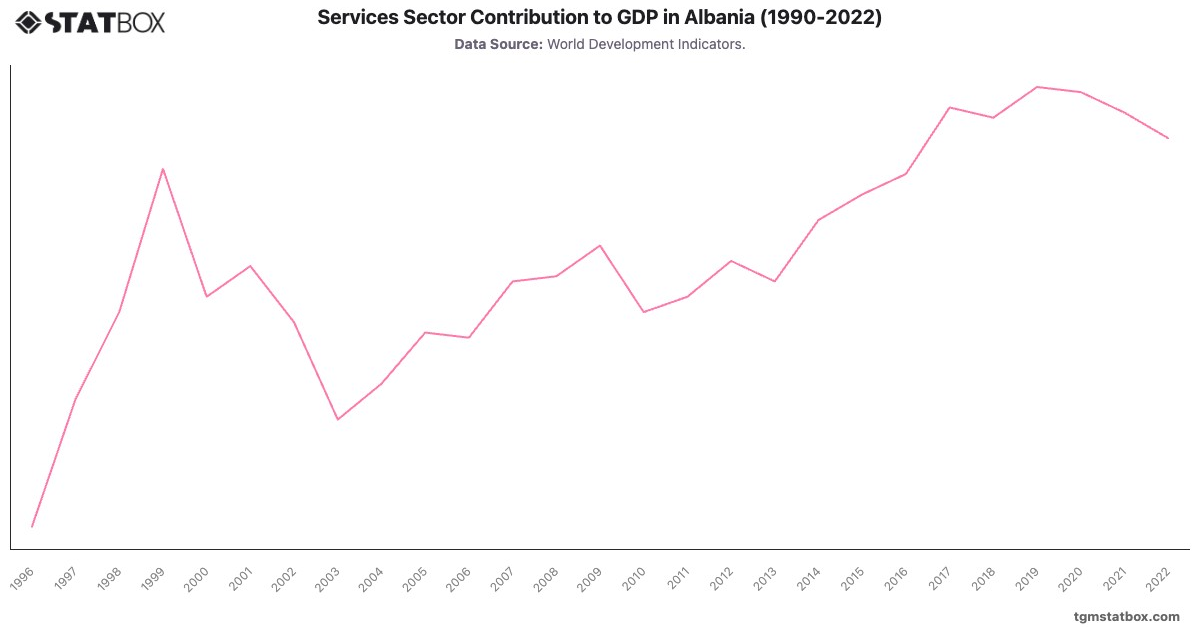
Gain a broader perspective by reviewing Albania’s export value, Albania’s services sector share in GDP, Albania’s goods import value.