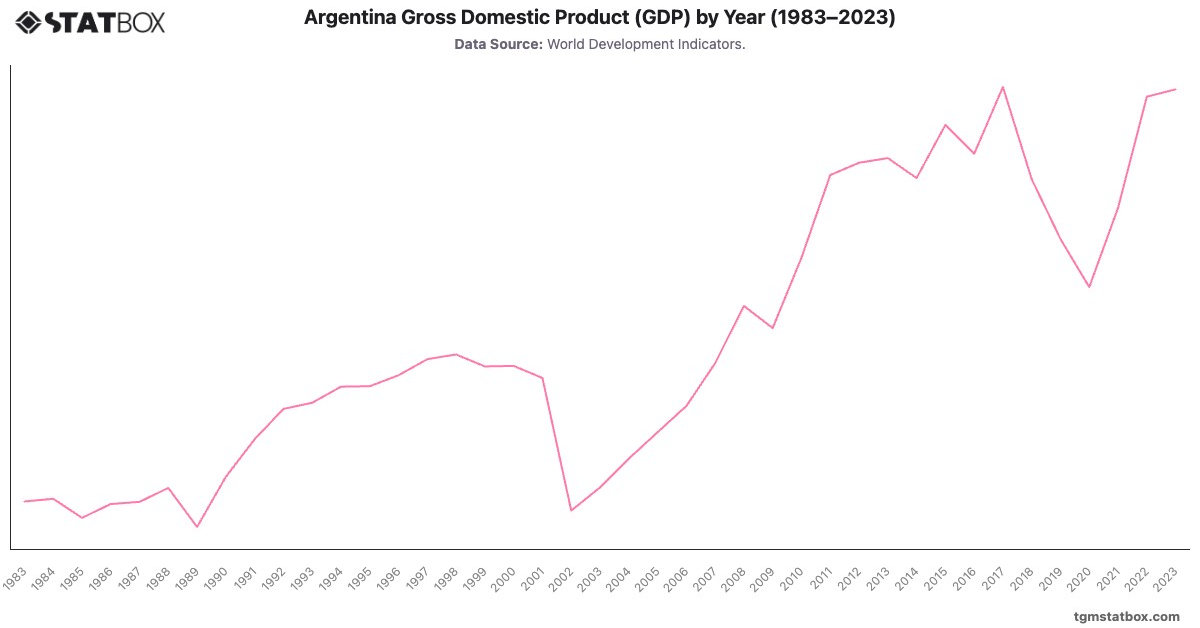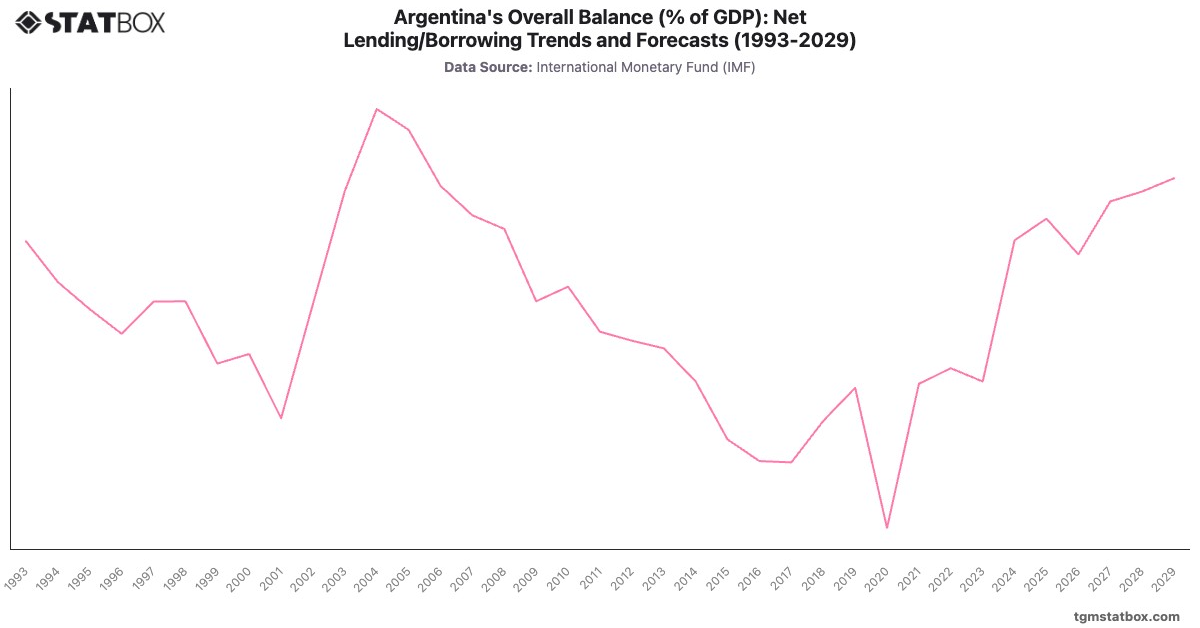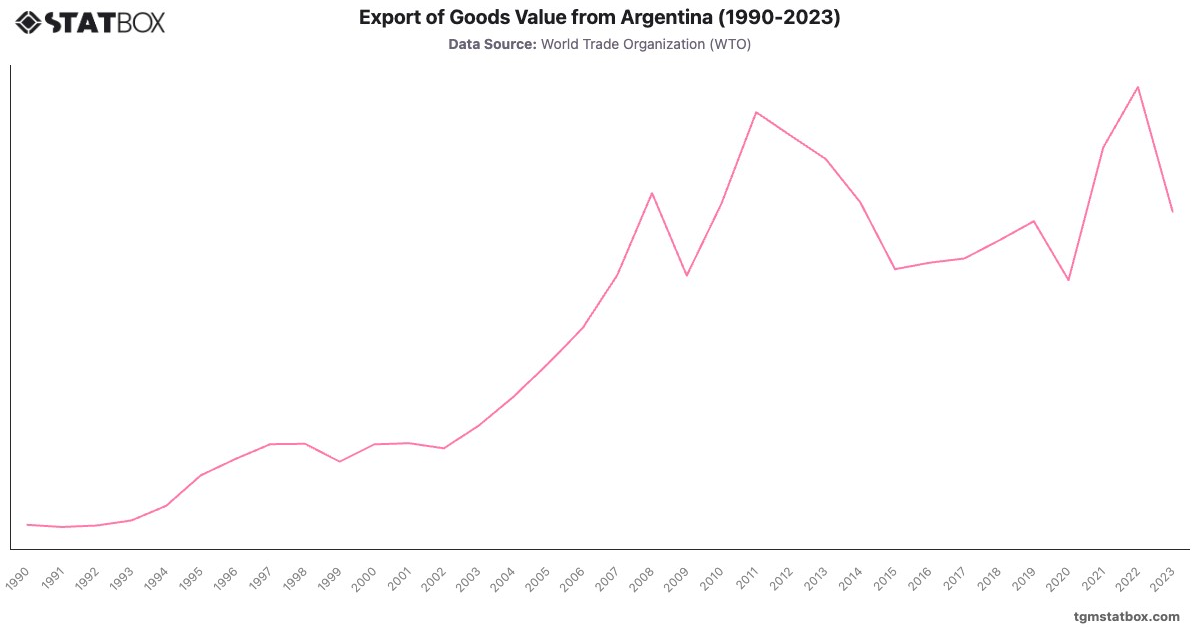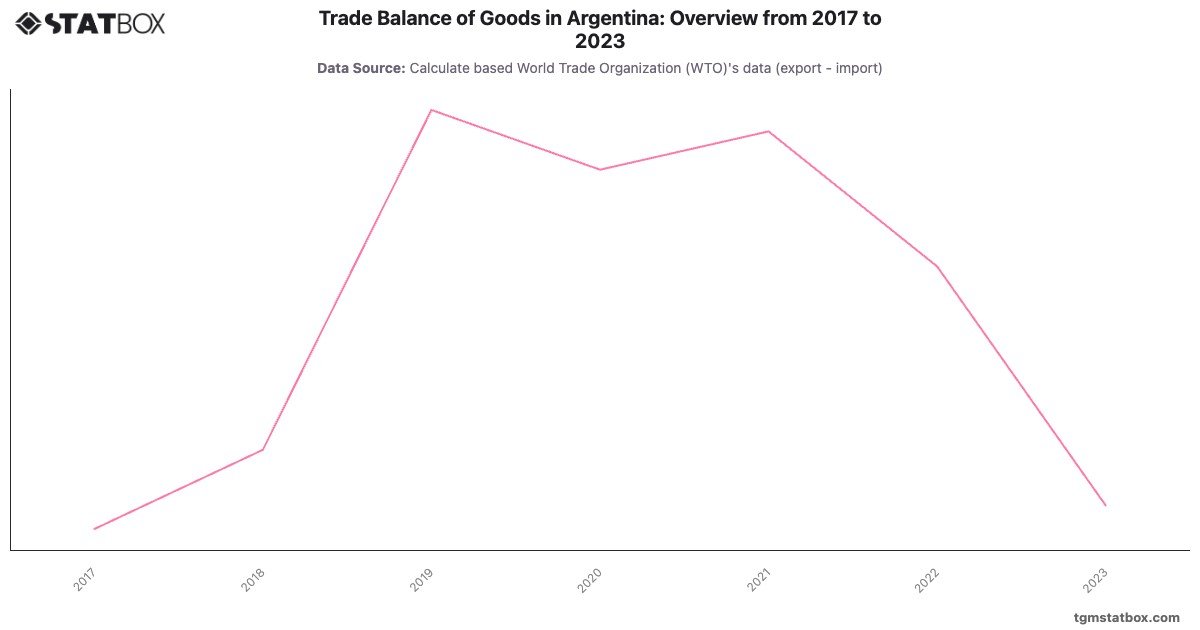
Argentina's trade balance showed significant volatility between 2017 and 2023. Following a deficit of -8,293 million USD in 2017, the balance turned to a surplus of 15,992 million USD in 2019, as a result of currency devaluation boosting exports and reducing imports. However, after reaching another surplus peak of 14,750 million USD in 2021, the trade balance deteriorated sharply to -6,928 million USD in 2023, reflecting economic challenges such as inflation, reduced agricultural exports due to drought, and rising import demand for critical goods.
The fluctuations highlight Argentina’s sensitivity to global commodity prices, as agricultural exports like soybeans play a pivotal role in the economy. The 2023 deficit underscores ongoing structural challenges, including limited export diversification and reliance on imported energy.
The fluctuations highlight Argentina’s sensitivity to global commodity prices, as agricultural exports like soybeans play a pivotal role in the economy. The 2023 deficit underscores ongoing structural challenges, including limited export diversification and reliance on imported energy.
For additional information, visit statistics on Argentina’s population figures, Argentina’s yearly GDP growth rate, Argentina’s goods import value.