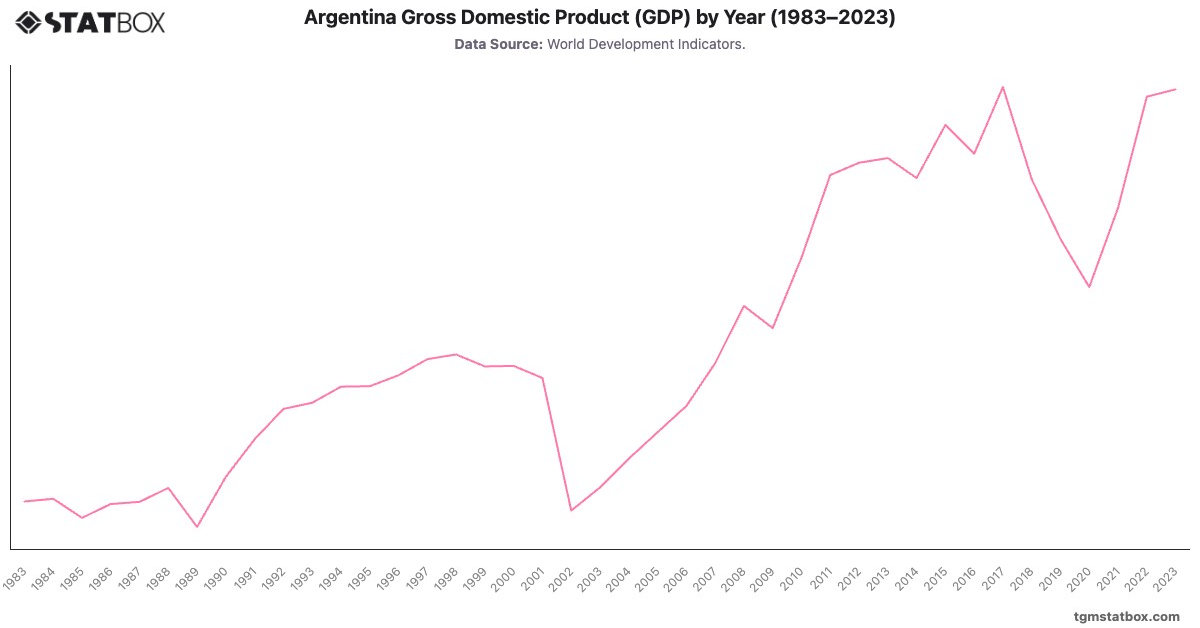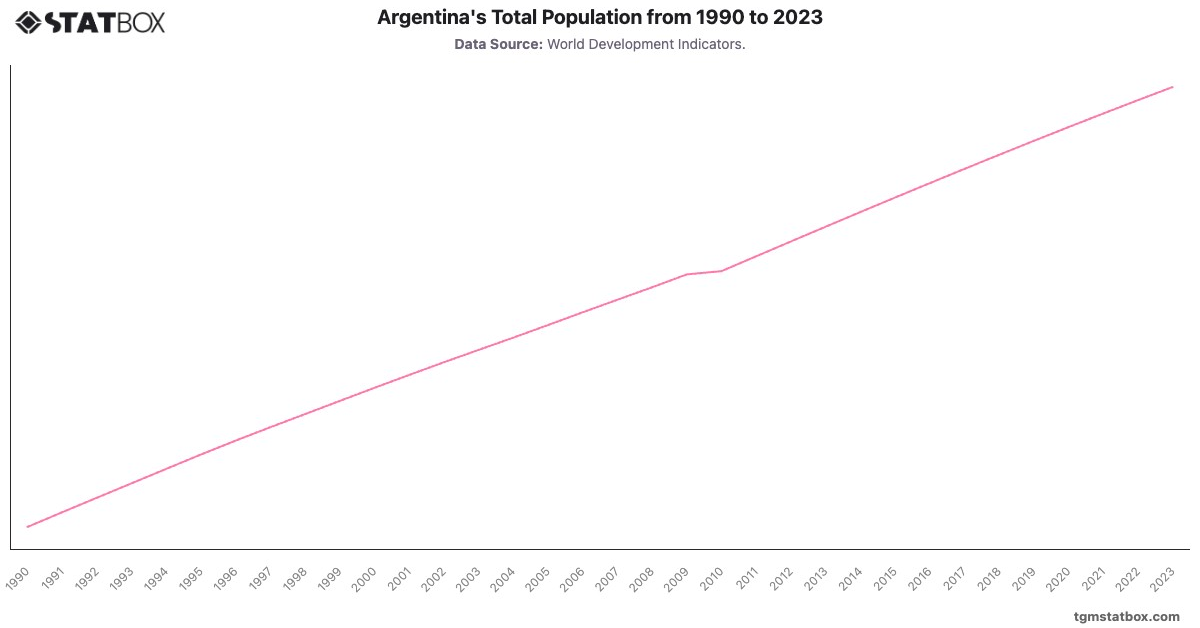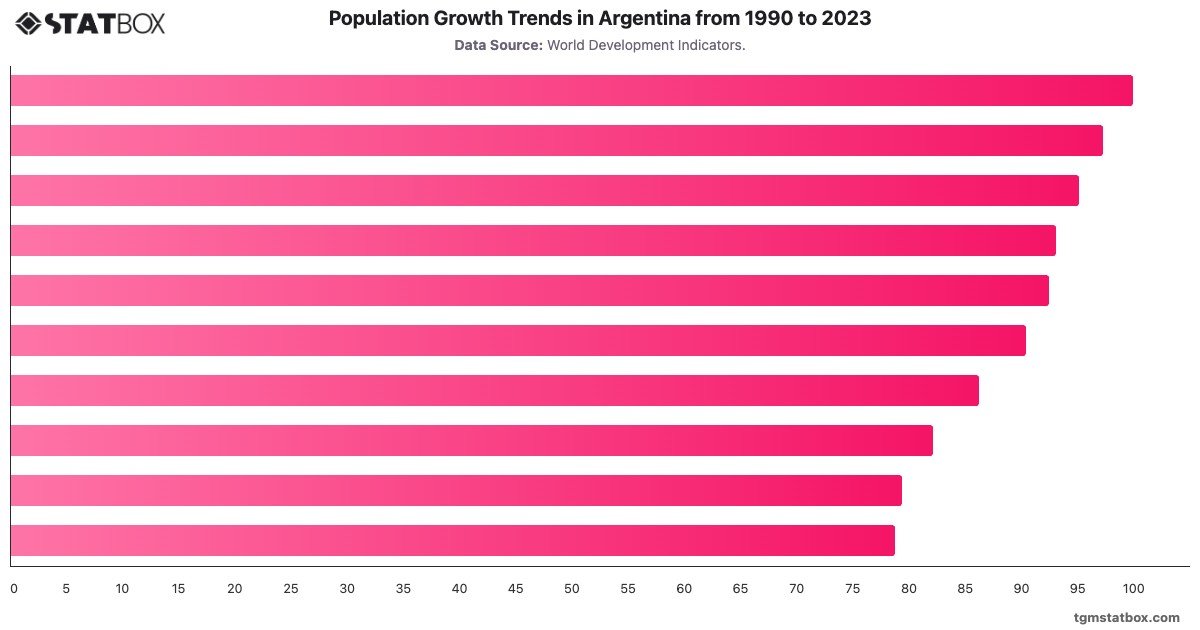
Population growth in Argentina maintained a steady pace from 1990 to the early 2000s, averaging around -. This period coincided with economic stabilization and reforms that encouraged moderate immigration and population expansion. However, the financial crisis of 2001-2002 marked a turning point, with growth rates declining to , reflecting reduced immigration and slower natural increase.
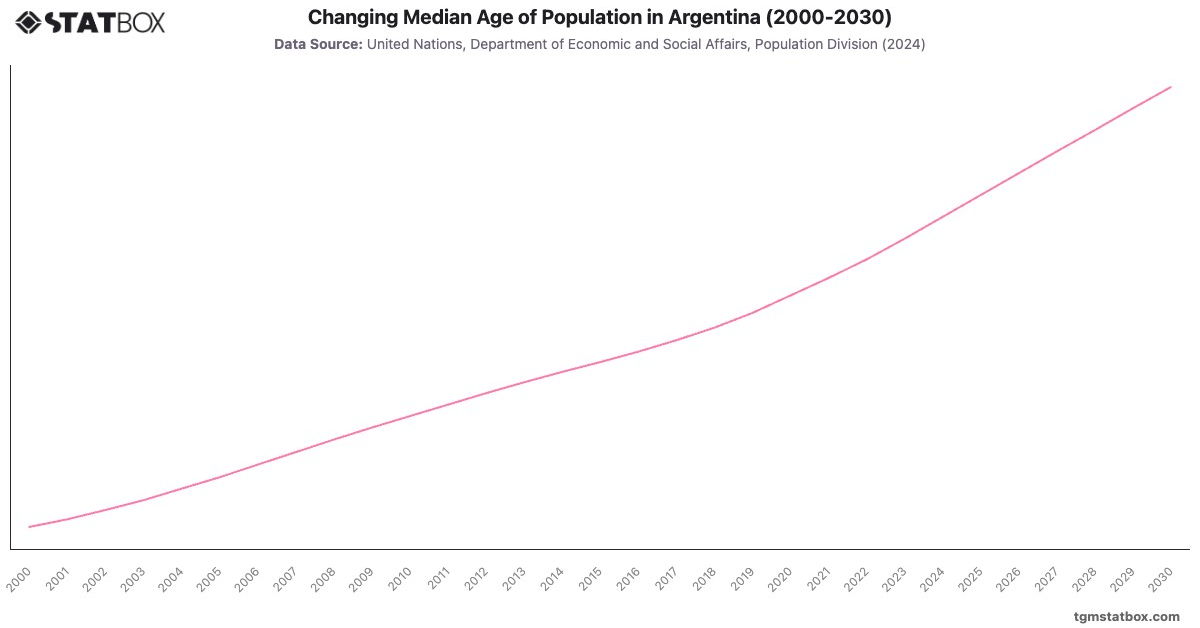
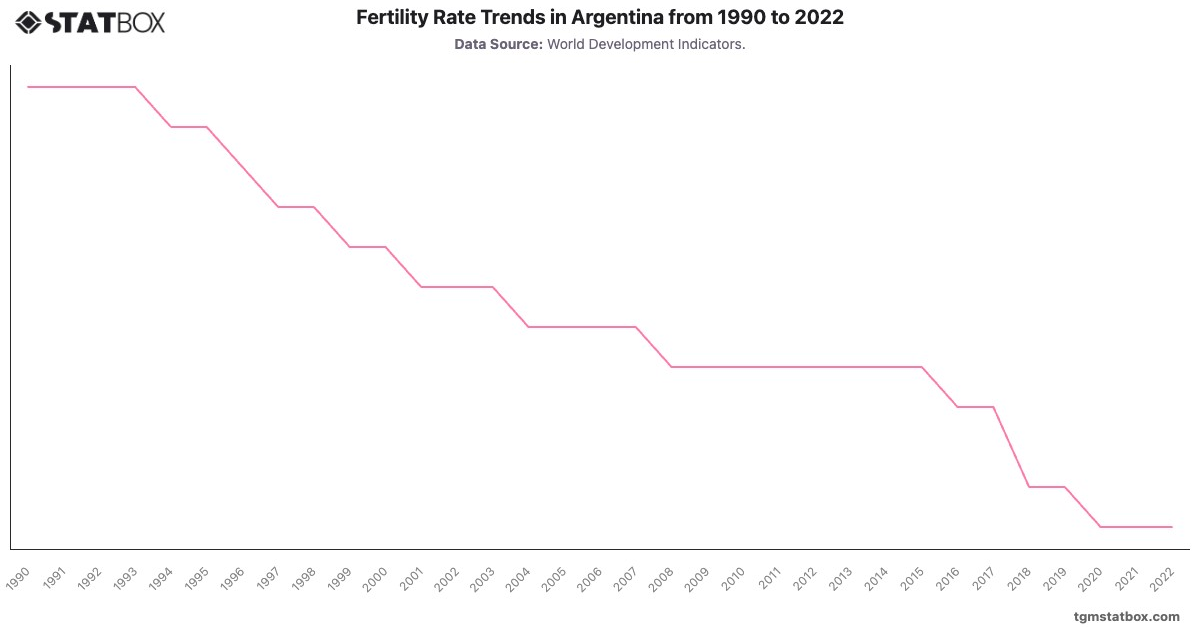
Between 2010 and 2023, growth remained relatively constant at approximately , reflecting the demographic transition characterized by lower fertility rates and an aging population. By 2023, the rate had settled at , indicative of Argentina's alignment with the demographic patterns of developed countries, where population growth is primarily driven by immigration.
Between 2010 and 2023, growth remained relatively constant at approximately , reflecting the demographic transition characterized by lower fertility rates and an aging population. By 2023, the rate had settled at , indicative of Argentina's alignment with the demographic patterns of developed countries, where population growth is primarily driven by immigration.
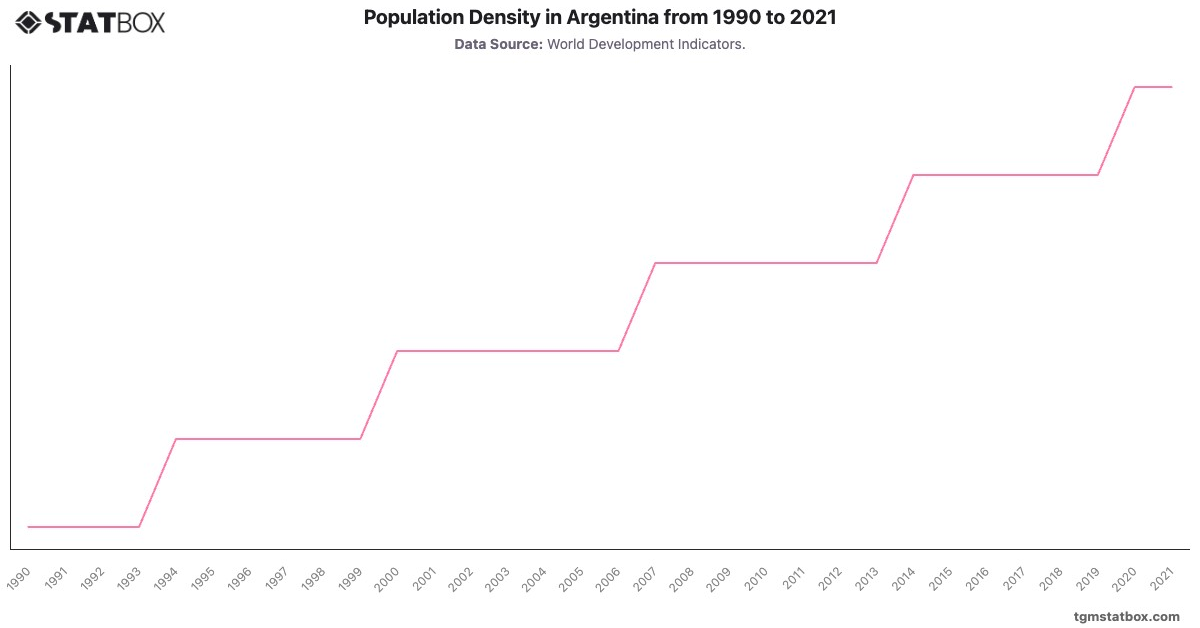
For a broader context, visit other statistics on Argentina’s yearly GDP growth rate, Argentina’s population density, Working age population share in Argentina.