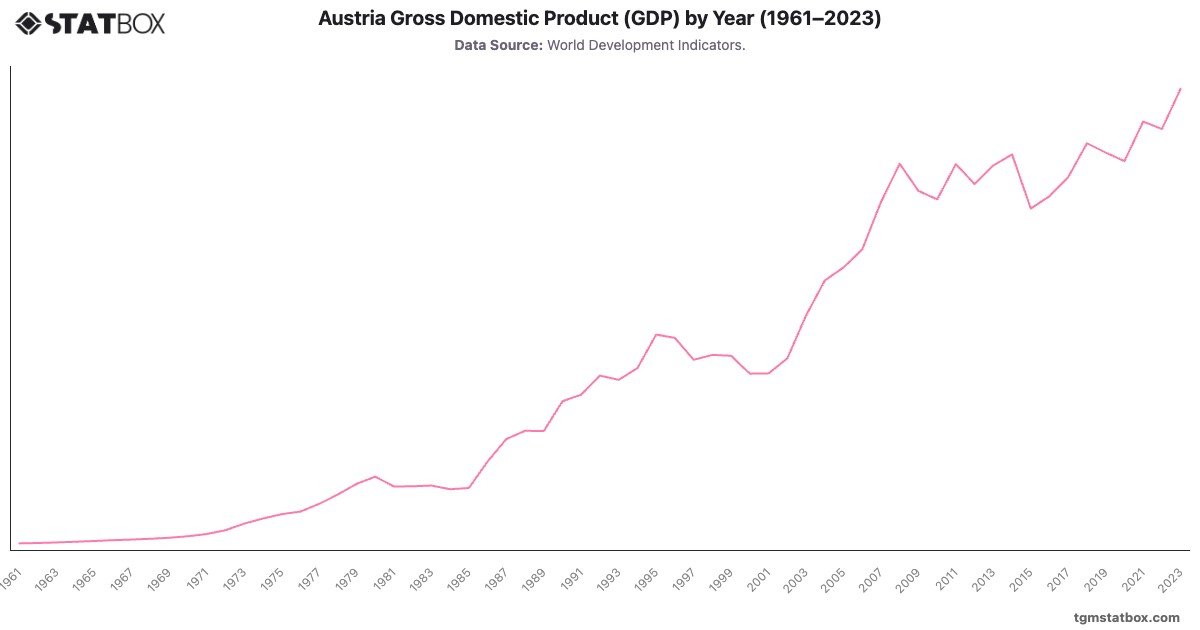
Austria's GDP displays steady growth from $7.4 billion in 1961 to over $516 billion in 2023, reflecting its transformation into a prosperous, industrialized economy. The 1960s and 1970s saw robust growth fueled by European integration and industrial development. GDP surged in 1973 to $29.5 billion, driven by global trade expansion. The oil crises of the 1970s tempered growth, but recovery in the 1980s, supported by infrastructure investments, saw GDP climb to $124.1 billion in 1987.
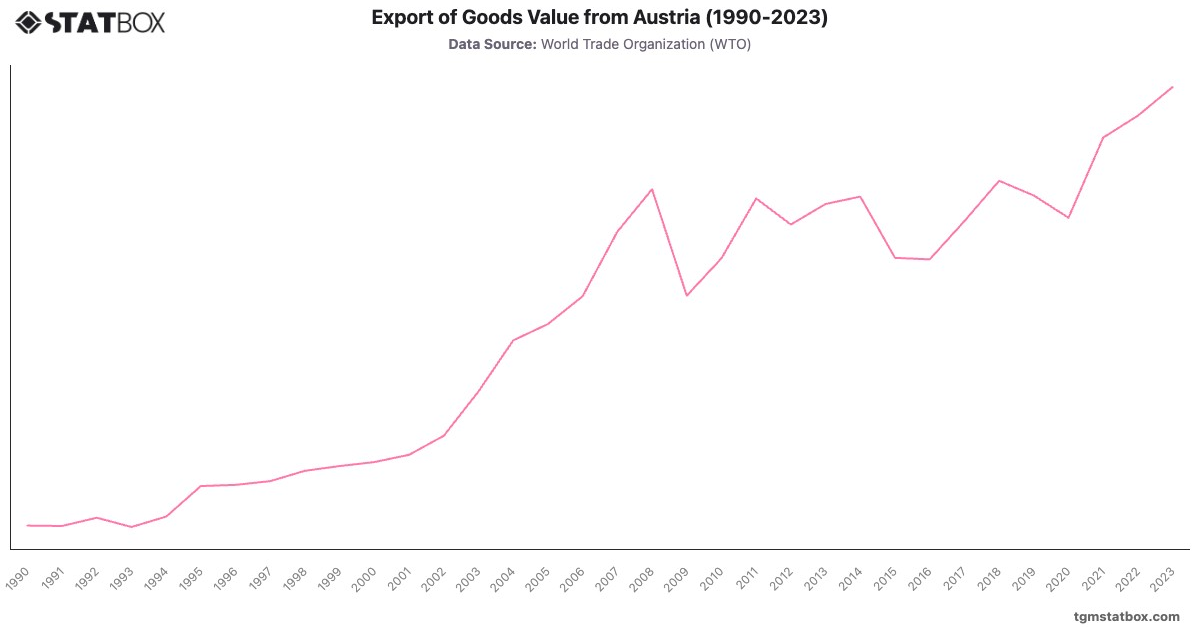
Austria’s integration into the European Union in 1995 boosted economic activity, with GDP reaching $241 billion. The global financial crisis of 2008 caused a dip to $401.7 billion in 2009. Post-2010 recovery was steady, peaking at $516 billion in 2023. Austria's resilience is attributed to its export-oriented economy and strong fiscal policies
Austria’s integration into the European Union in 1995 boosted economic activity, with GDP reaching $241 billion. The global financial crisis of 2008 caused a dip to $401.7 billion in 2009. Post-2010 recovery was steady, peaking at $516 billion in 2023. Austria's resilience is attributed to its export-oriented economy and strong fiscal policies
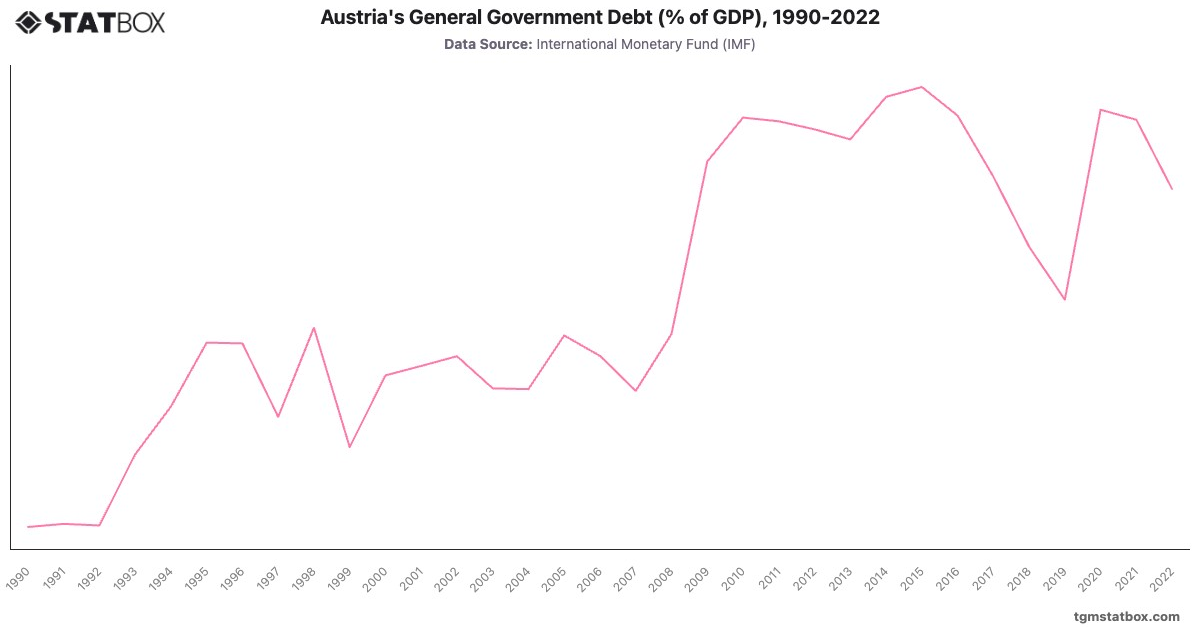
Discover additional trends and data on Austria’s government debt-to-GDP ratio, Austria’s annual GDP growth rate, Austria’s goods export value.