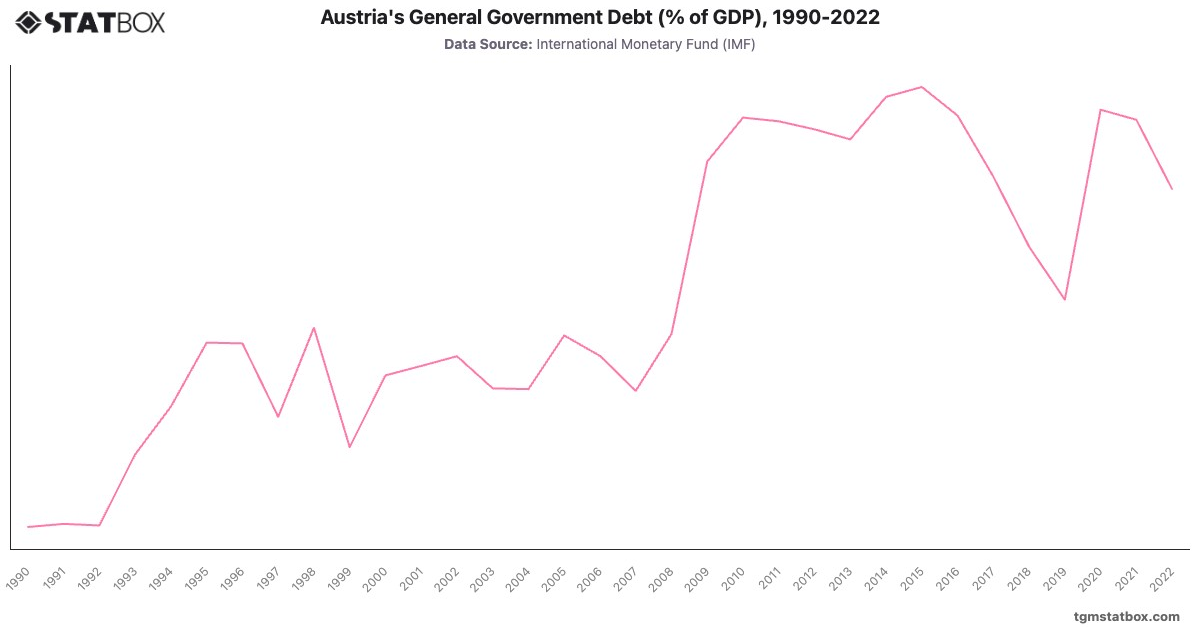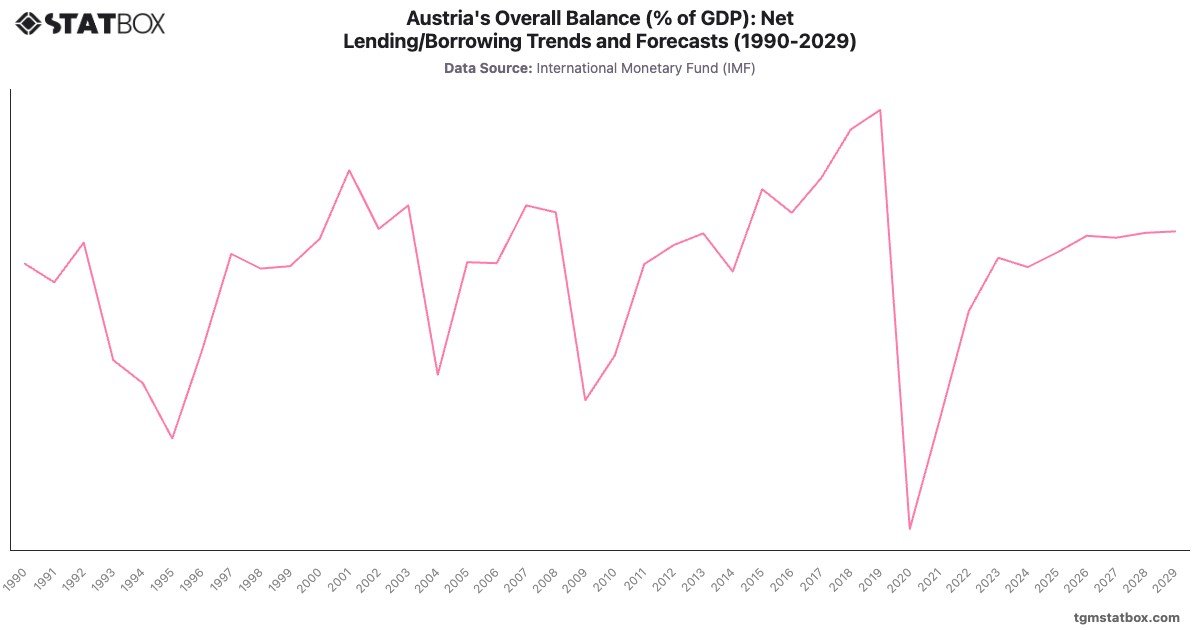
Austria’s fiscal history reflects a consistent effort toward stability despite external shocks. The early 1990s saw deep deficits due to reunification pressures and structural challenges, peaking at - in 1995. Austerity measures and EU convergence criteria helped narrow deficits, with near-balanced budgets in 2018-2019.
The pandemic caused a sharp rise in the deficit to - in 2020. Projections indicate a gradual return to stability, with the deficit expected to stabilize at - by 2029. Austria's fiscal outlook suggests resilience supported by strong institutional frameworks and economic policies.
The pandemic caused a sharp rise in the deficit to - in 2020. Projections indicate a gradual return to stability, with the deficit expected to stabilize at - by 2029. Austria's fiscal outlook suggests resilience supported by strong institutional frameworks and economic policies.
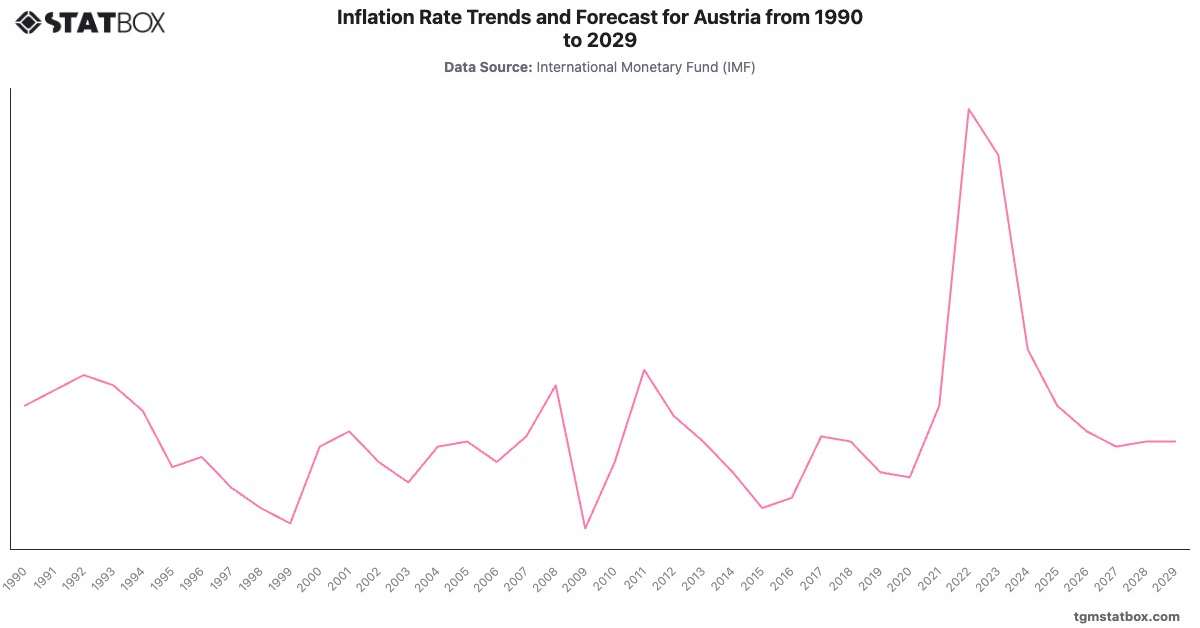
For additional information, visit statistics on Austria’s manufacturing sector GDP share, Austria’s government debt-to-GDP ratio, Austria’s inflation rate outlook.