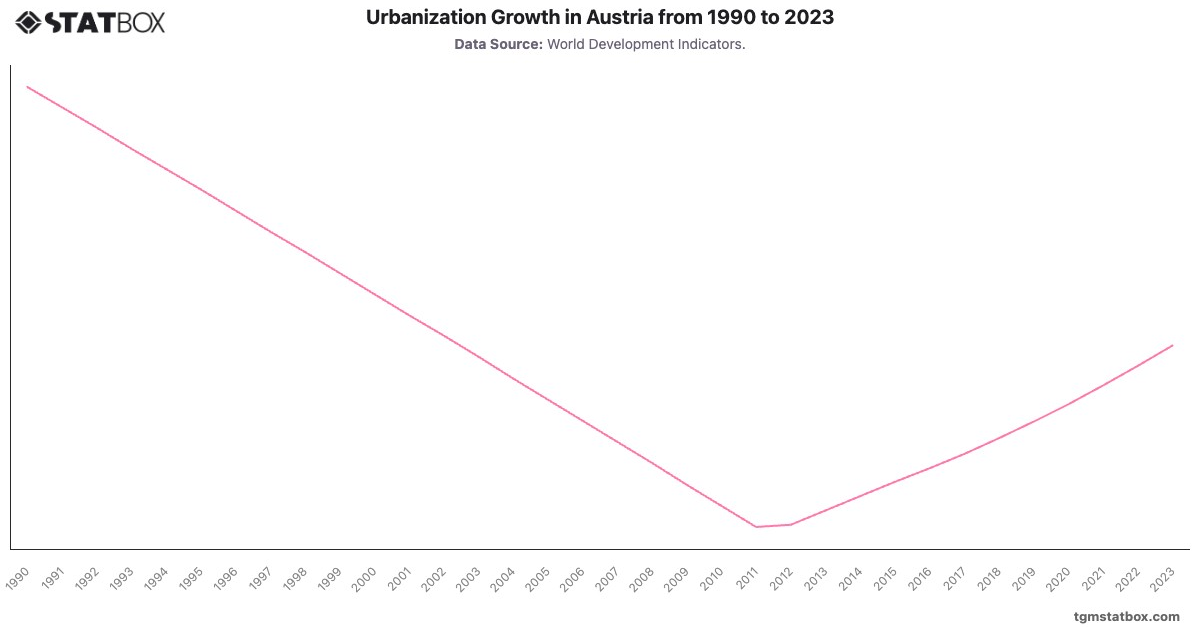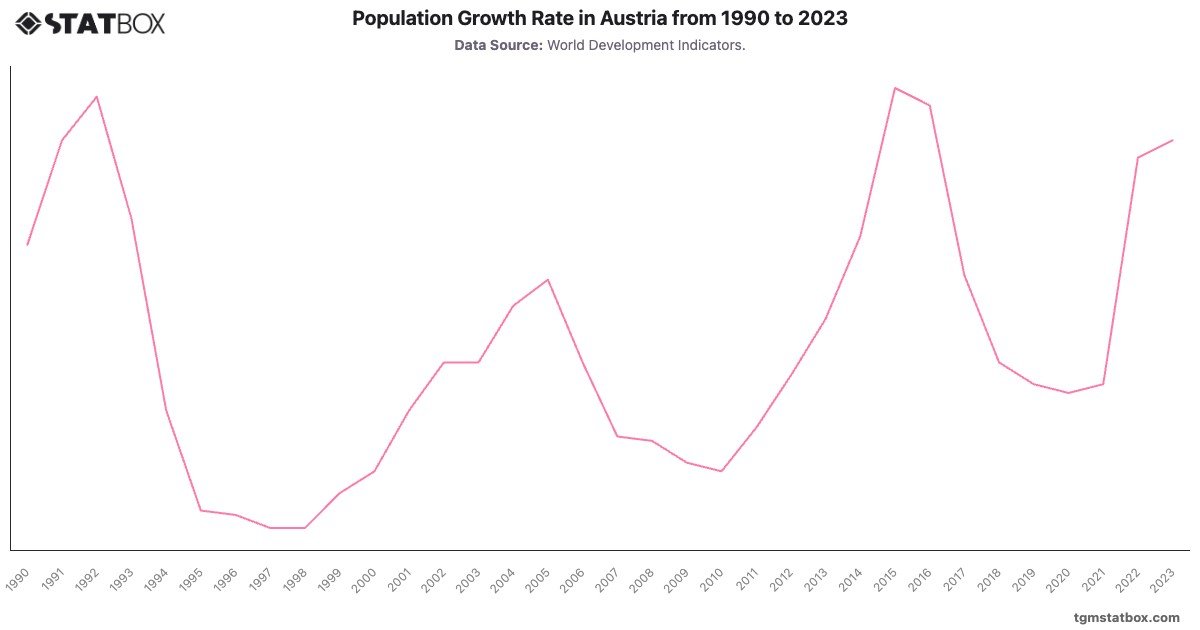
Austria's population growth slowed significantly in the 1990s, declining to just by 1996. This period was marked by low birth rates and limited immigration, reflecting broader European demographic trends. Growth began to recover in the early 2000s, supported by increased immigration and improved economic opportunities. The influx of refugees during the European migration crisis contributed to a peak of in 2015.
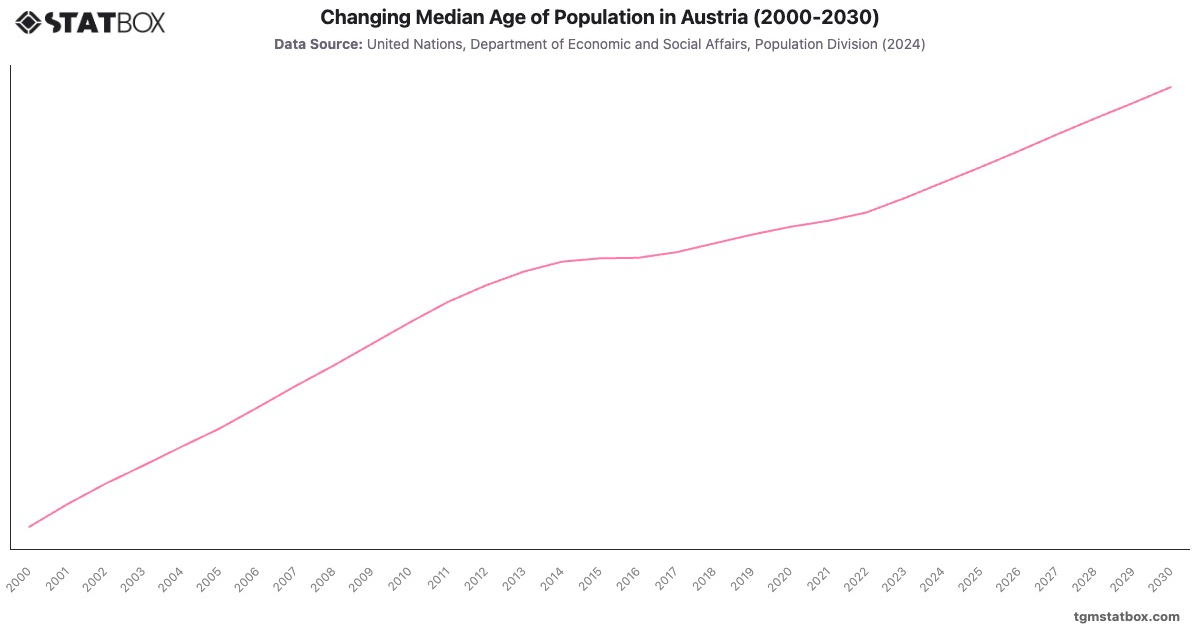
In recent years, growth has stabilized at , reflecting sustained immigration and Austria's attractiveness as a hub for skilled workers. However, the country faces long-term demographic challenges due to its aging population and declining fertility rates, which will likely impact future growth.
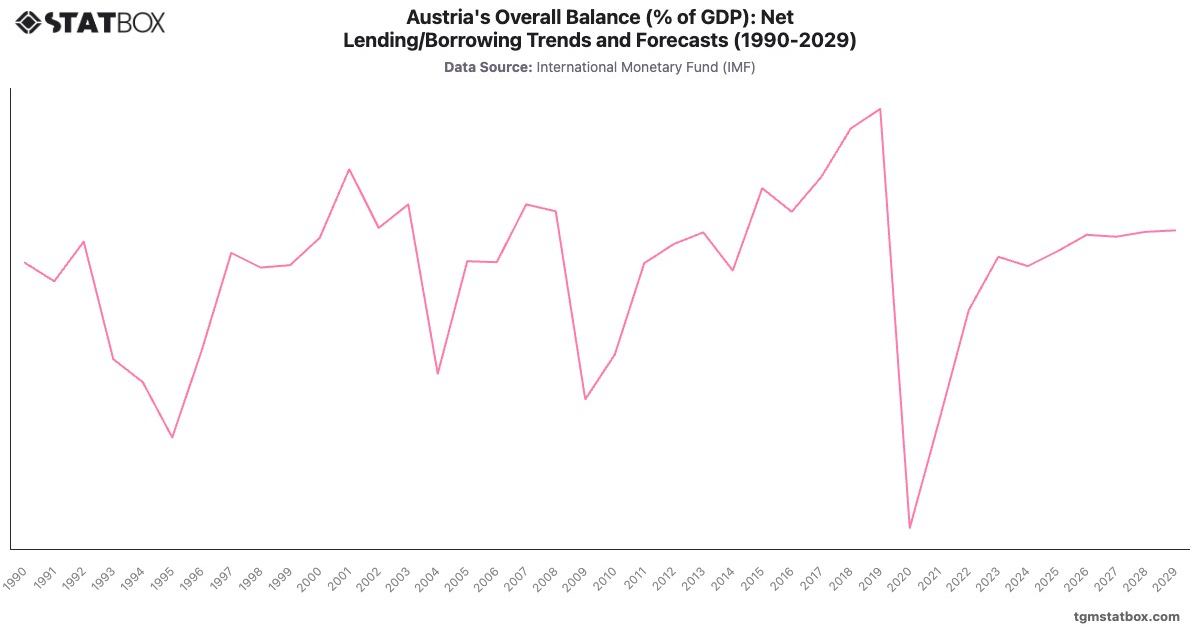
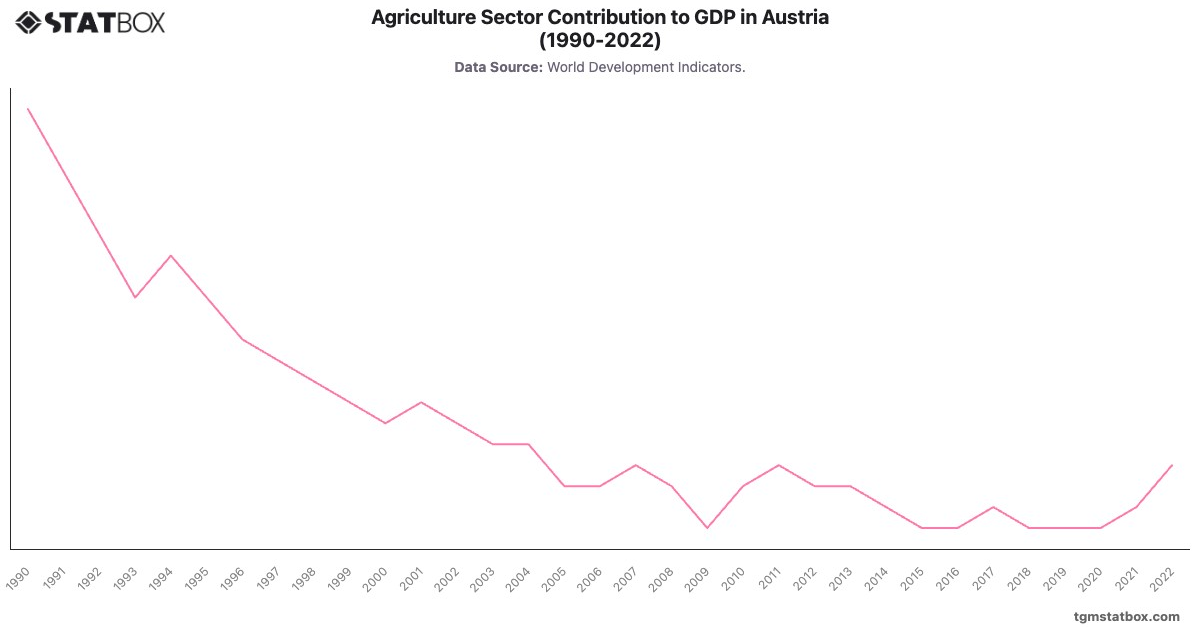
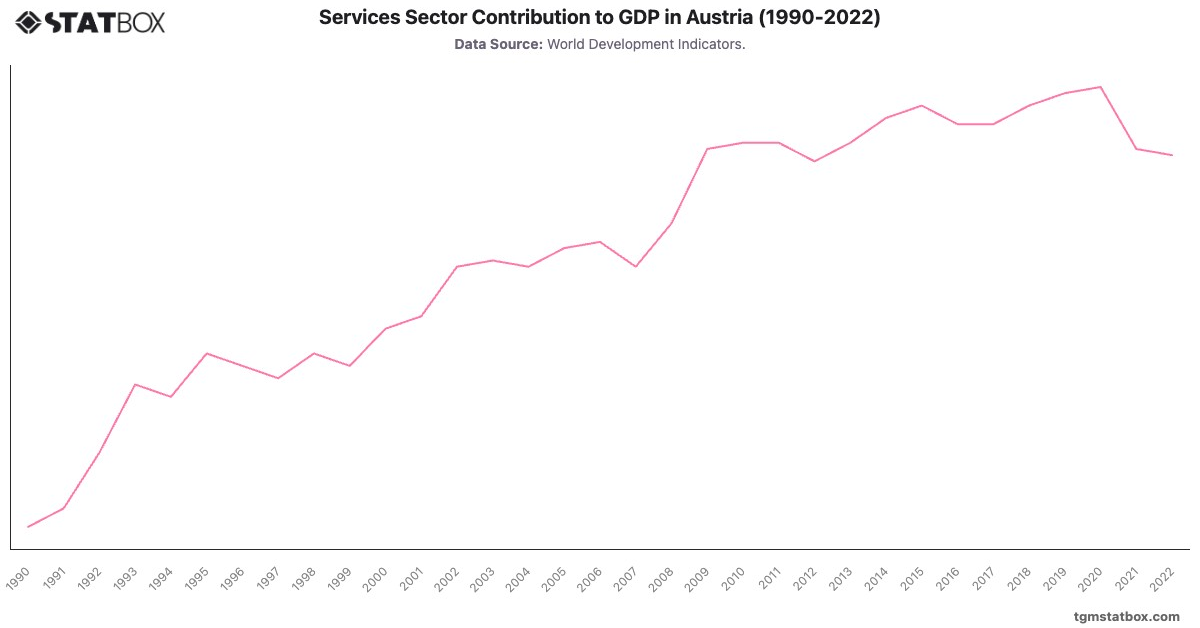
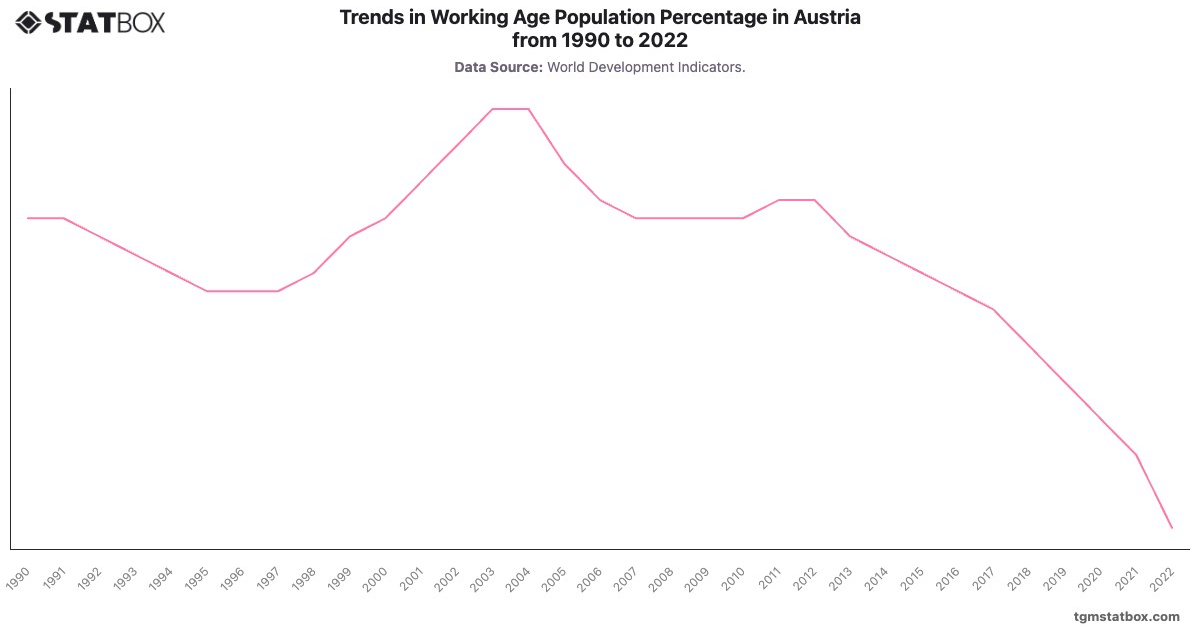
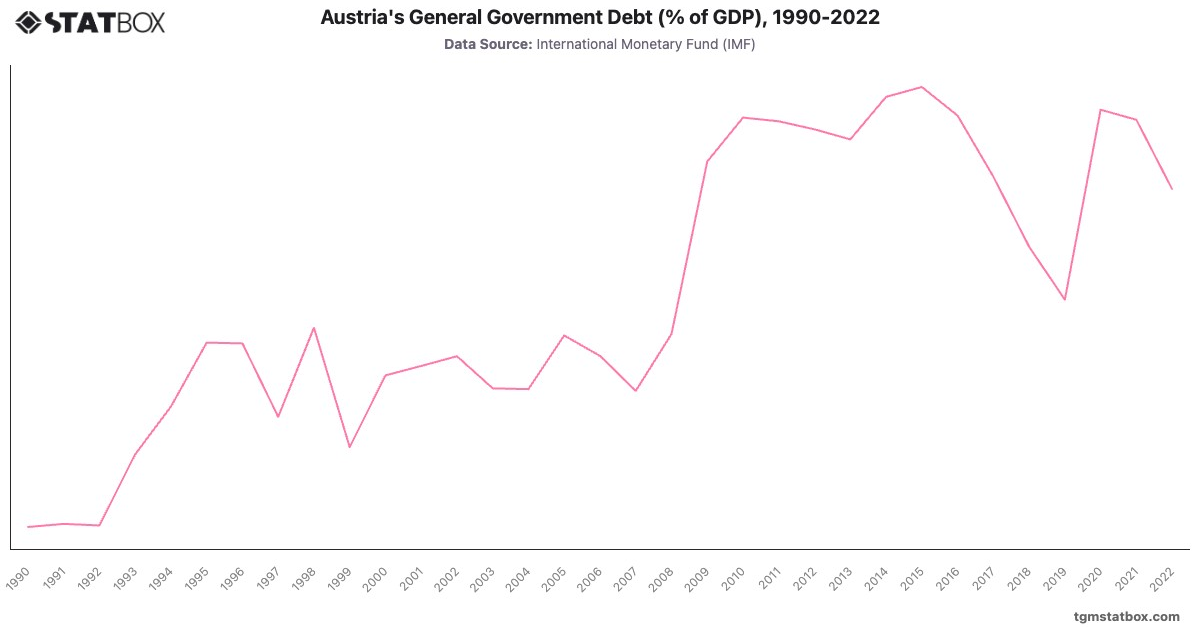
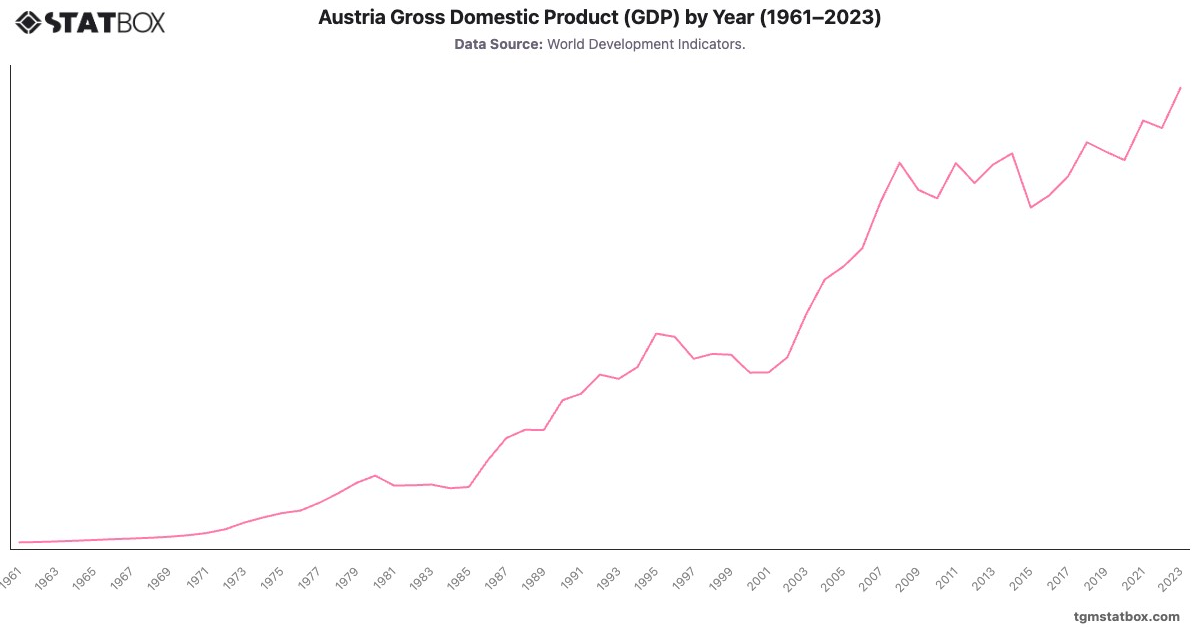
Explore related charts to gain a better understanding of Austria’s working-age demographic percentage, Austria’s government debt-to-GDP ratio, Austria’s annual GDP growth rate.