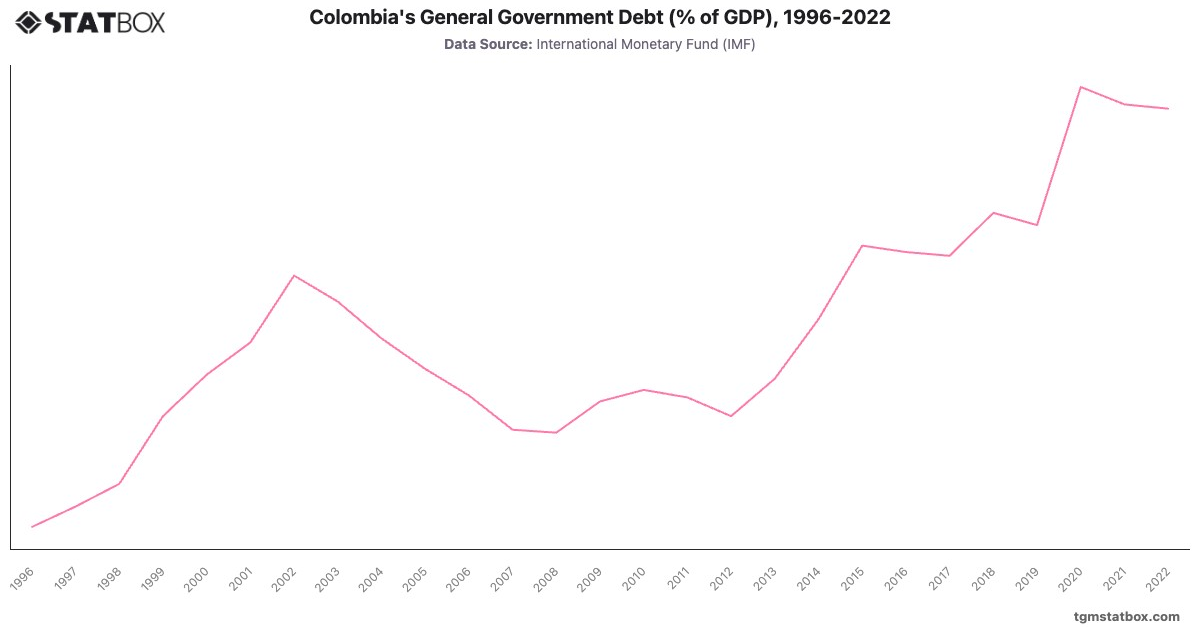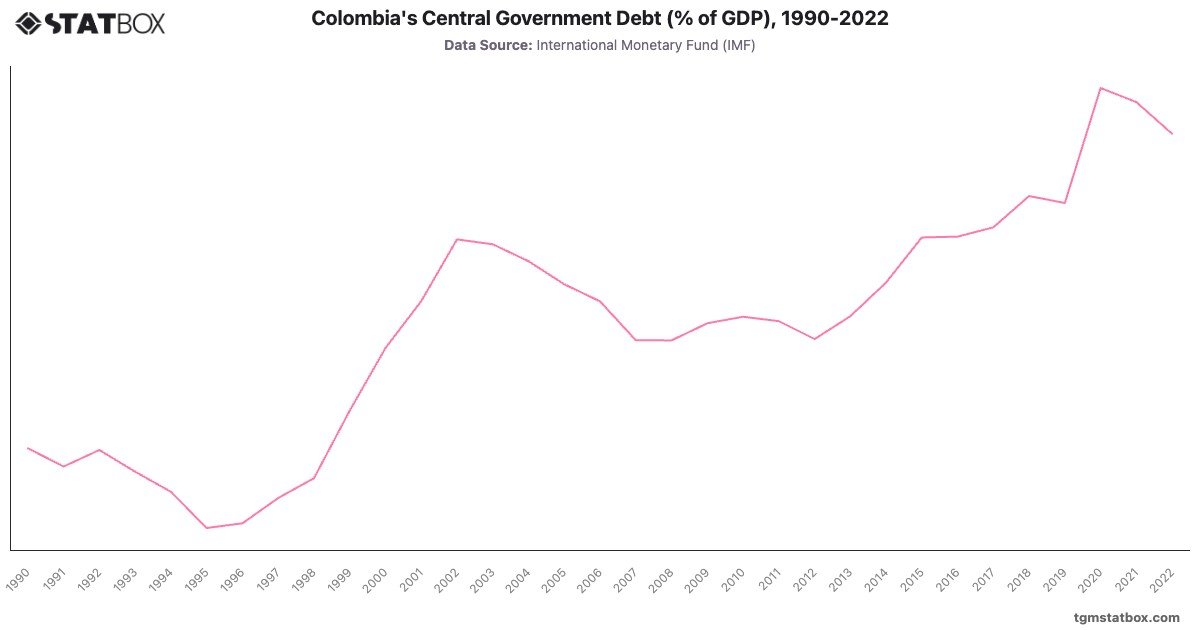
Colombia’s debt rose significantly from in 1990 to in 2002, driven by fiscal deficits and economic challenges during a period of internal conflict. Debt levels stabilized in the mid-2000s, declining to in 2008, aided by stronger economic growth and fiscal reforms.
The debt began rising again in the 2010s, peaking at in 2020 due to the economic shock of the COVID-19 pandemic and increased borrowing. By 2022, it had declined slightly to , signaling recovery efforts and fiscal adjustments. The chart underscores Colombia’s economic resilience amid external and domestic pressures.
The debt began rising again in the 2010s, peaking at in 2020 due to the economic shock of the COVID-19 pandemic and increased borrowing. By 2022, it had declined slightly to , signaling recovery efforts and fiscal adjustments. The chart underscores Colombia’s economic resilience amid external and domestic pressures.
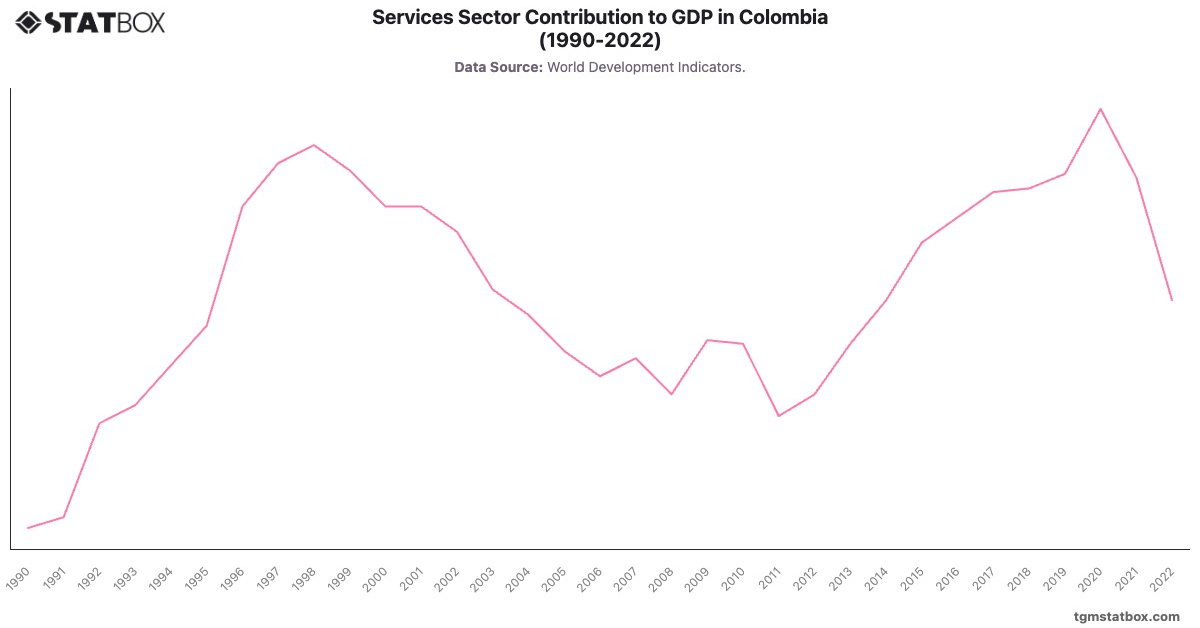
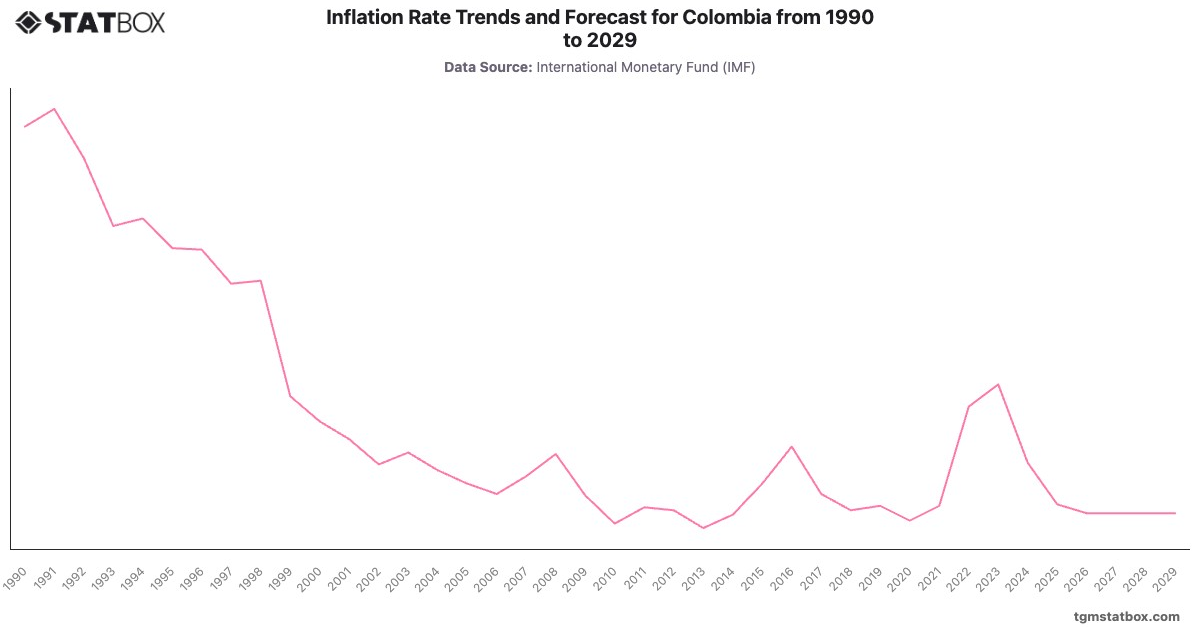
Explore related charts to gain a better understanding of Colombia’s import value, Colombia’s services sector share in GDP, Colombia’s inflation rate forecast.