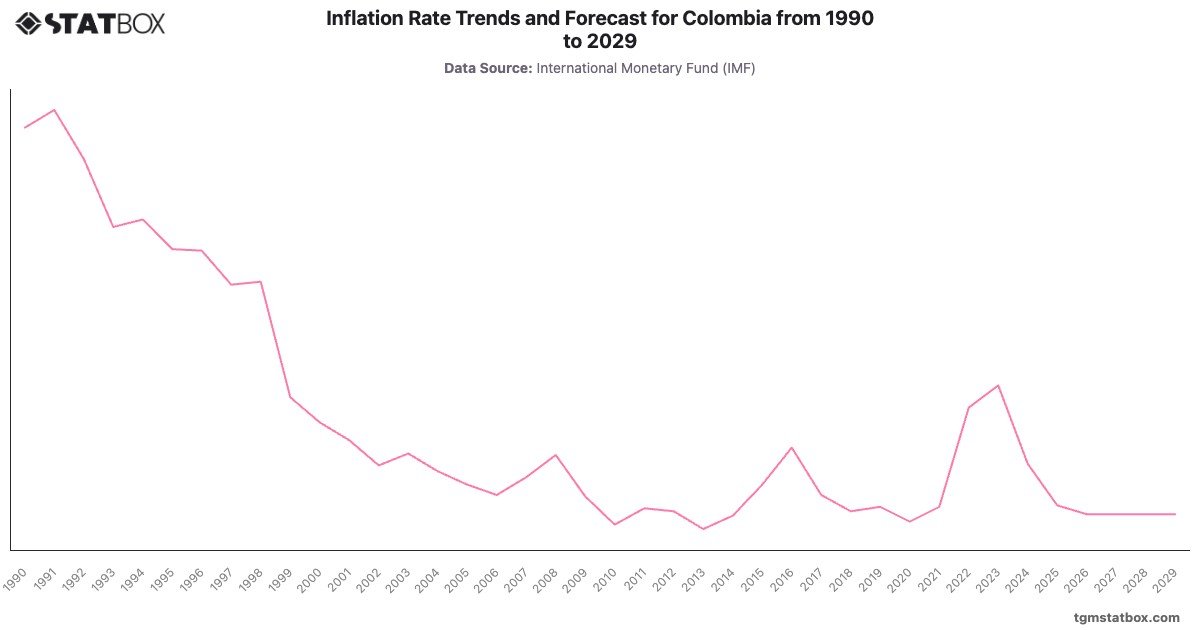
Colombia’s inflation was exceptionally high during the early 1990s, peaking at in 1991, driven by political instability, fiscal deficits, and structural economic issues. Throughout the 1990s, inflation gradually declined, reaching in 1999, as the government implemented monetary reforms and fiscal adjustments to stabilize the economy. By the early 2000s, inflation had fallen further, reaching in 2005, indicating the success of Colombia's inflation-targeting policies.
In recent years, inflation rose significantly to in 2023, primarily due to global supply chain disruptions and rising commodity prices. The forecast anticipates inflation decreasing to by 2026, as external pressures ease and economic policies stabilize. This trajectory underscores Colombia’s commitment to maintaining macroeconomic stability despite external challenges.
In recent years, inflation rose significantly to in 2023, primarily due to global supply chain disruptions and rising commodity prices. The forecast anticipates inflation decreasing to by 2026, as external pressures ease and economic policies stabilize. This trajectory underscores Colombia’s commitment to maintaining macroeconomic stability despite external challenges.
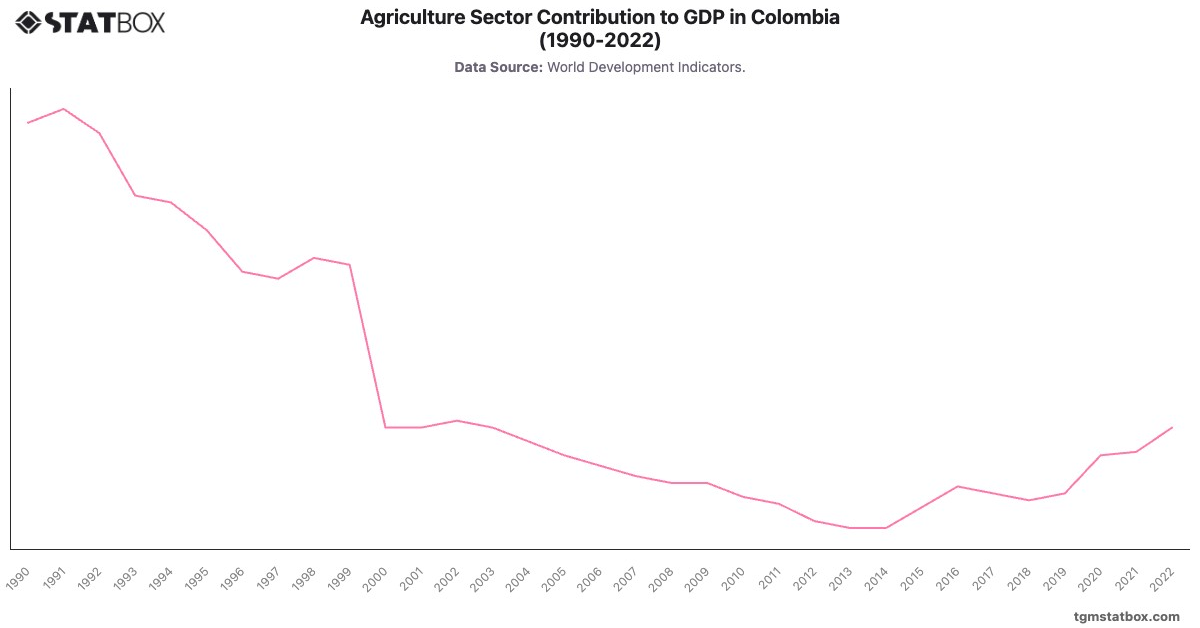
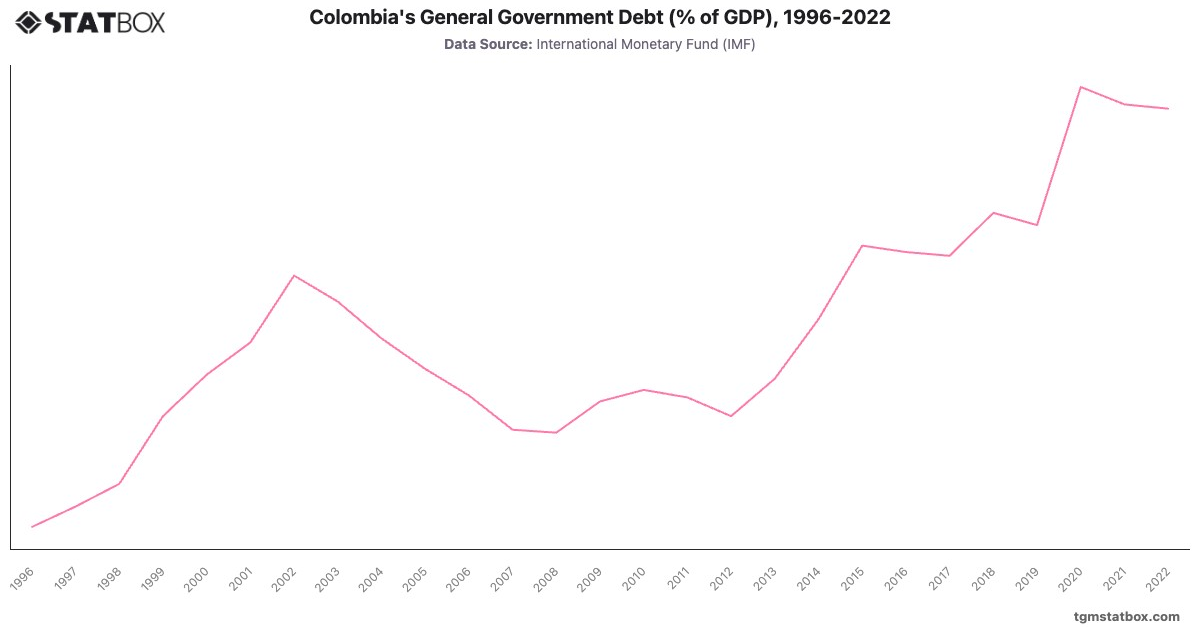
For a deeper dive into the topic, explore Colombia’s agriculture share in GDP, Colombia’s government debt ratio, Colombia’s central government debt ratio.