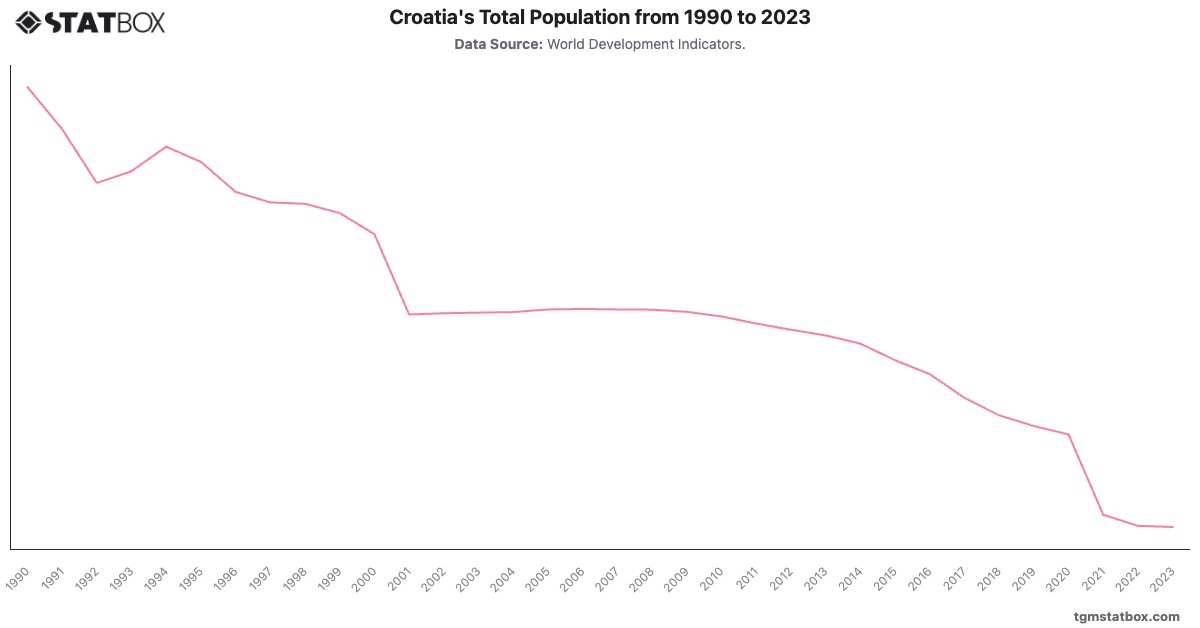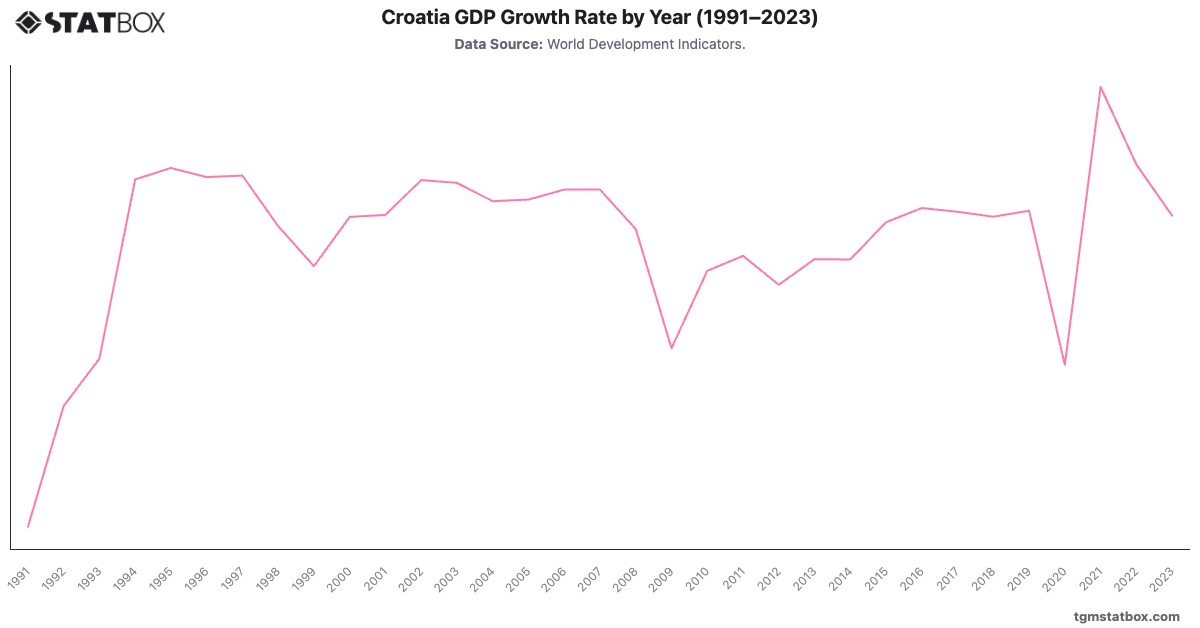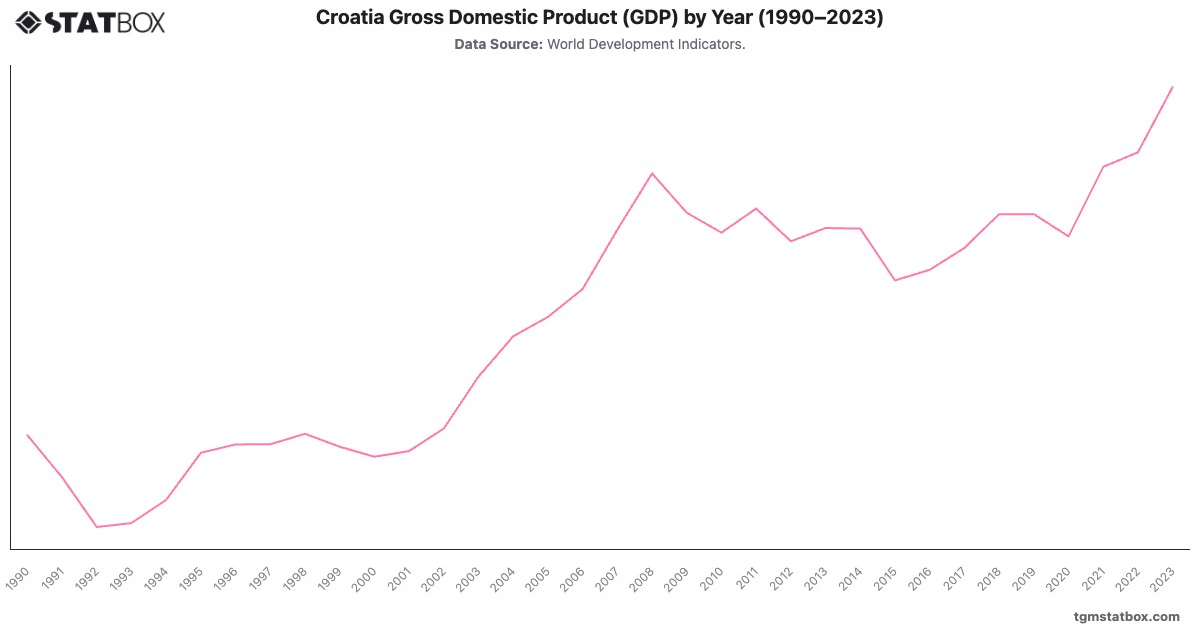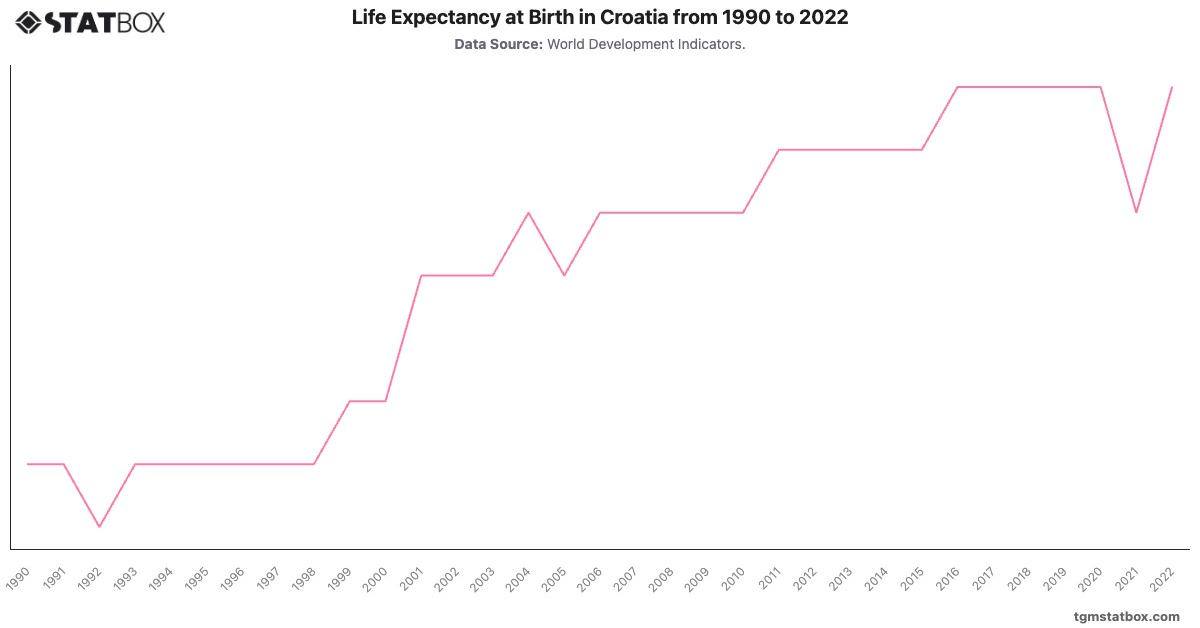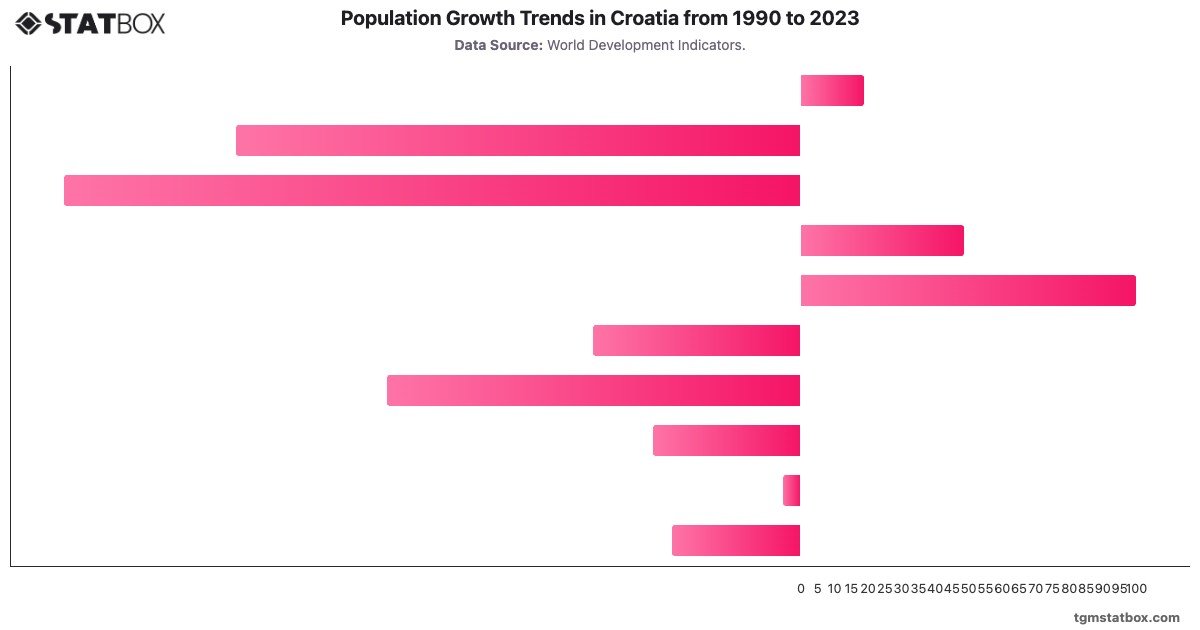
Croatia's population trends have been shaped by significant political and economic upheavals. A steep decline in 1991-1992, with growth rates plummeting to -, coincides with the Croatian War of Independence, which caused large-scale emigration and casualties. Post-war recovery saw brief growth in 1993-1994, peaking at , but subsequent years of economic hardship and emigration led to prolonged negative growth rates.
The decline deepened during the 2010s, averaging - annually, reflecting continued emigration and a low birth rate. The sharp drop to - in 2021 aligns with census adjustments and post-pandemic mortality. A gradual improvement to - in 2023 suggests stabilization efforts but highlights ongoing demographic challenges.
The decline deepened during the 2010s, averaging - annually, reflecting continued emigration and a low birth rate. The sharp drop to - in 2021 aligns with census adjustments and post-pandemic mortality. A gradual improvement to - in 2023 suggests stabilization efforts but highlights ongoing demographic challenges.
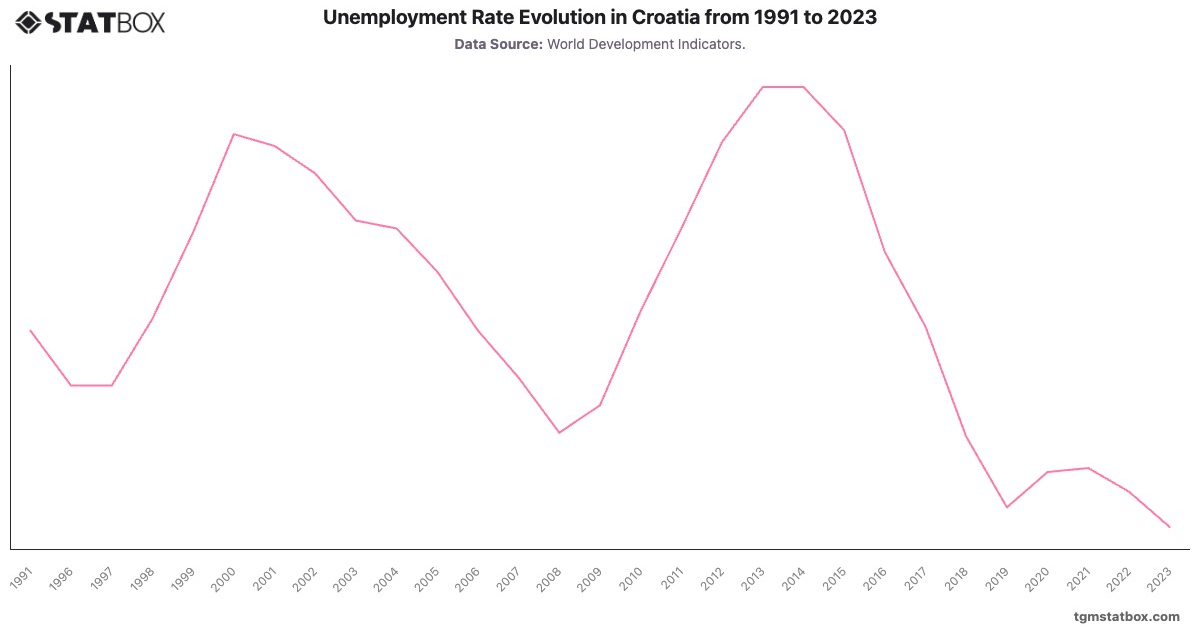
Gain a broader perspective by reviewing Croatia’s mortality rate changes, Croatia’s unemployment rate, Croatia’s annual GDP growth rate.