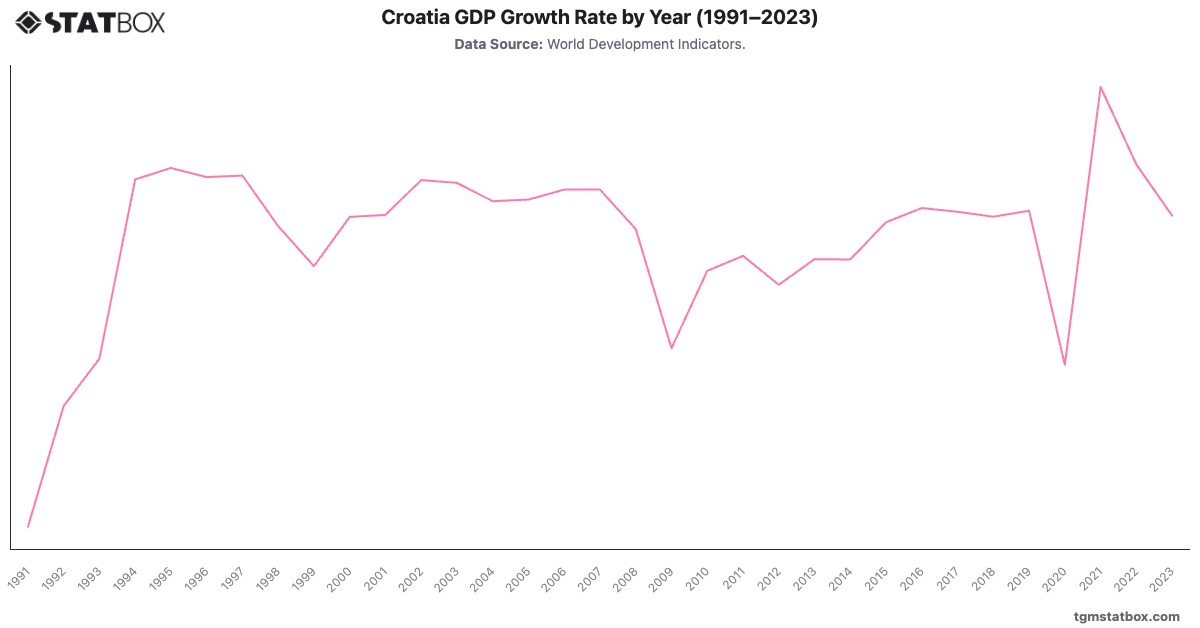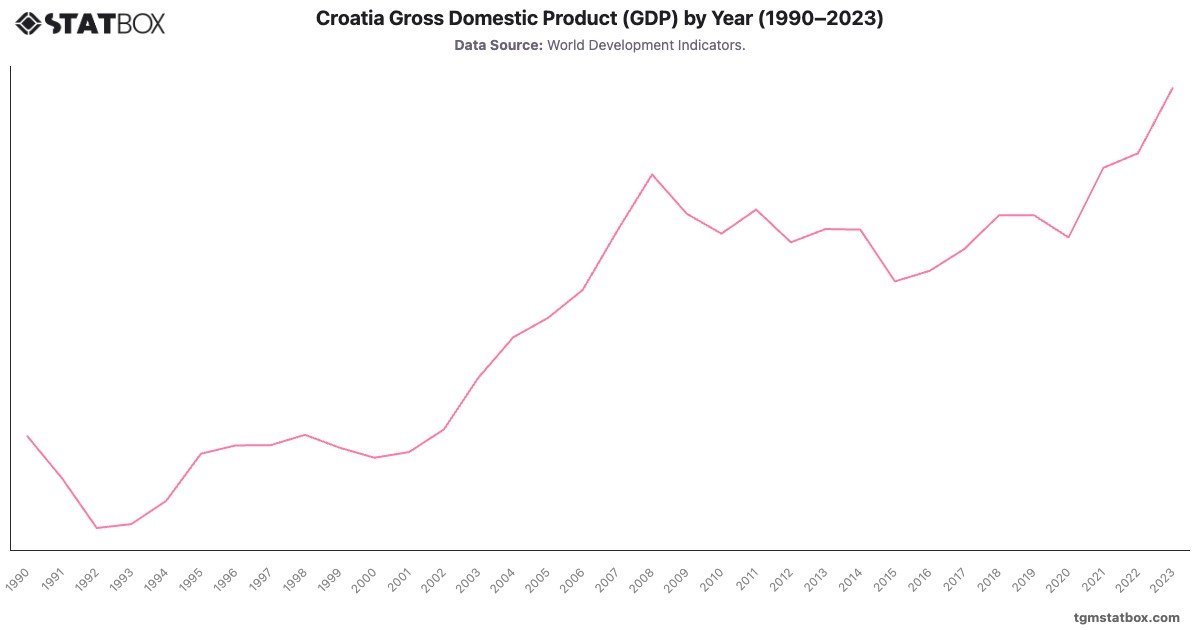
Croatia's GDP reflects a turbulent economic history marked by independence, war, and eventual EU integration. In 1990, GDP stood at $25.6 billion but plummeted to $10.6 billion in 1992 due to the Croatian War of Independence. Recovery began in the mid-1990s, with GDP reaching $24.1 billion in 1996, driven by reconstruction efforts and stabilization policies.
The 2000s saw steady growth, peaking at $68.5 billion in 2008, supported by tourism and foreign investment. However, the global financial crisis led to a sharp decline, with GDP falling to $51 billion by 2015. Croatia’s 2013 accession to the EU facilitated recovery, and GDP rose to $82.6 billion in 2023, boosted by tourism and a digital economy transformation.
The 2000s saw steady growth, peaking at $68.5 billion in 2008, supported by tourism and foreign investment. However, the global financial crisis led to a sharp decline, with GDP falling to $51 billion by 2015. Croatia’s 2013 accession to the EU facilitated recovery, and GDP rose to $82.6 billion in 2023, boosted by tourism and a digital economy transformation.
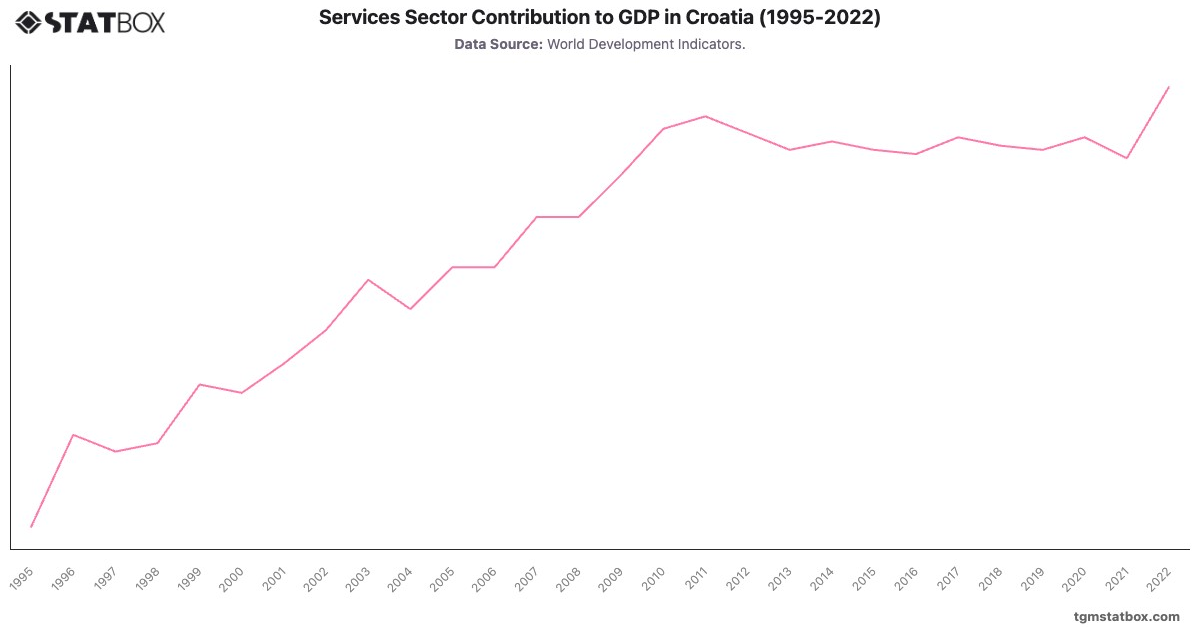
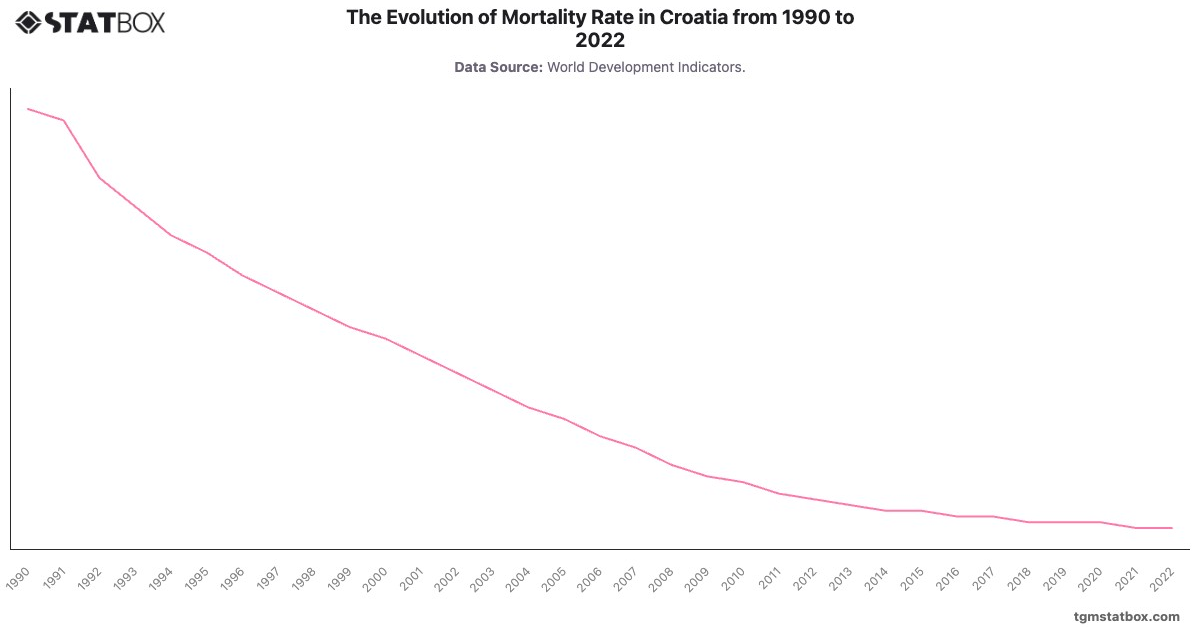
For additional information, visit statistics on Croatia’s services sector share in GDP, Croatia’s mortality rate changes, Croatia’s industry sector share in GDP.