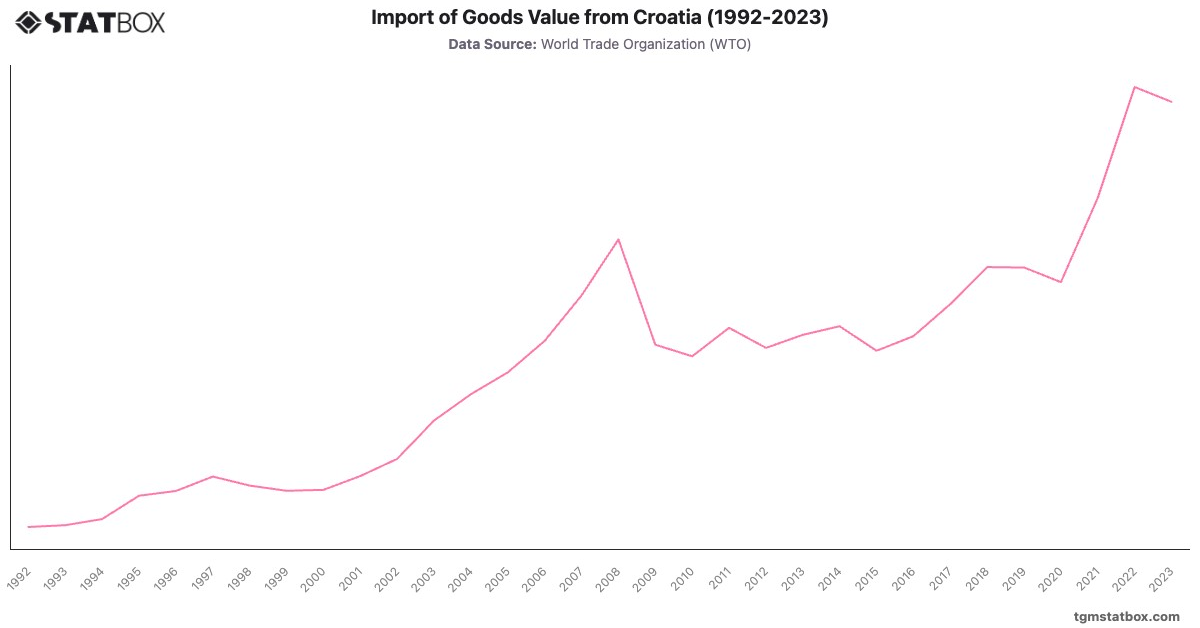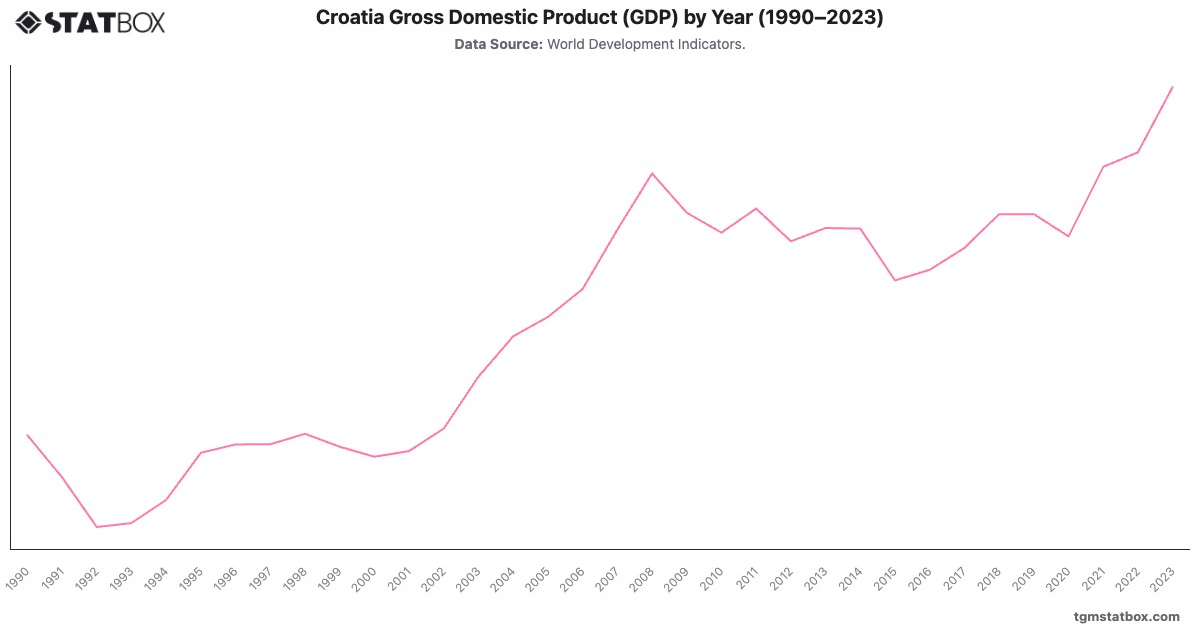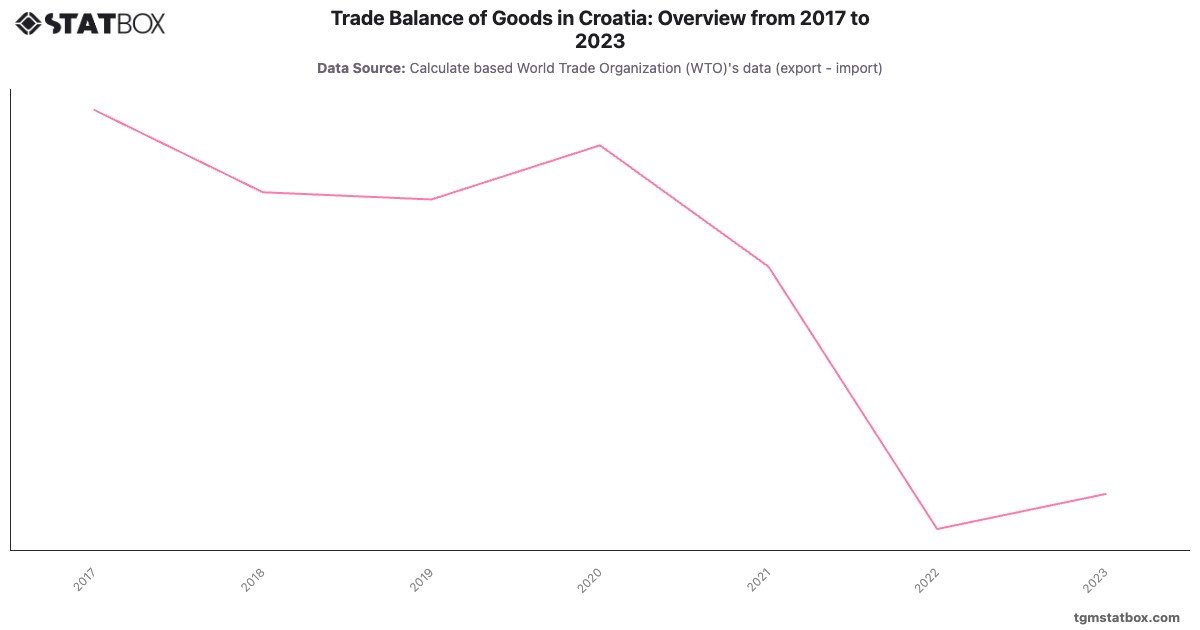
Croatia's trade balance consistently remained in deficit during the 2017–2023 period, with the deficit widening significantly from -8,759.8 million USD in 2017 to -19,156.3 million USD in 2022. The increase in the deficit was driven by rising imports of machinery, vehicles, and energy, reflecting the country’s economic growth and integration into European markets.
While the deficit slightly improved to -18,286.6 million USD in 2023, this remained one of the highest levels during the observed period, signaling ongoing challenges in balancing trade. Croatia's limited export base, heavily reliant on tourism and a few industrial goods, coupled with its dependence on imported energy, continues to exert pressure on its trade balance.
While the deficit slightly improved to -18,286.6 million USD in 2023, this remained one of the highest levels during the observed period, signaling ongoing challenges in balancing trade. Croatia's limited export base, heavily reliant on tourism and a few industrial goods, coupled with its dependence on imported energy, continues to exert pressure on its trade balance.
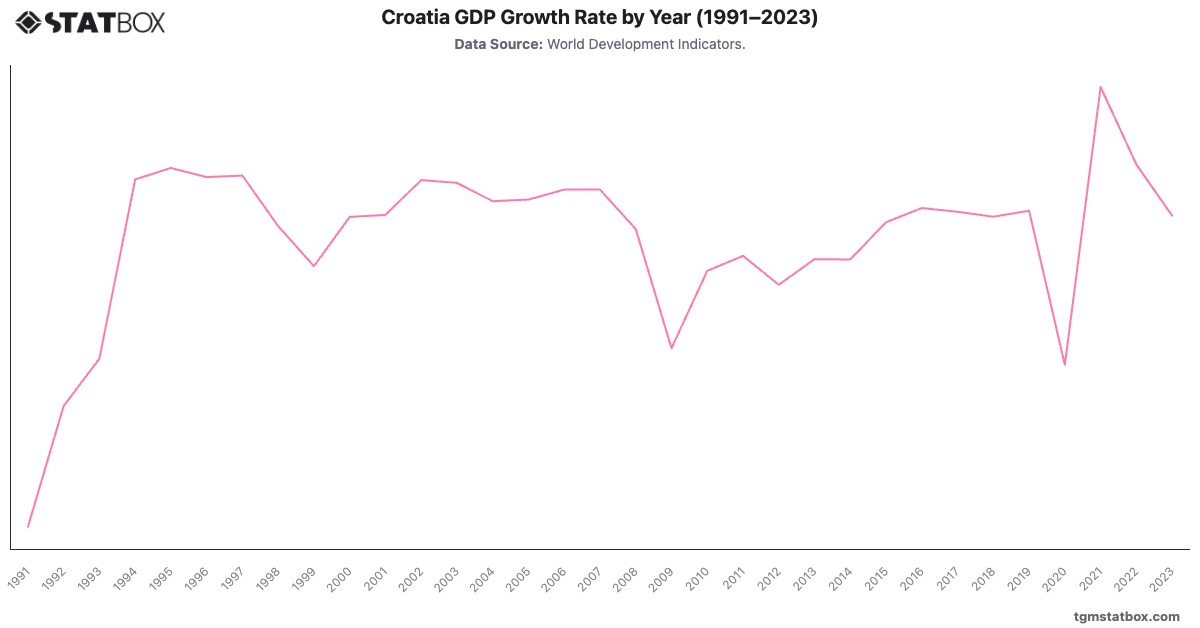
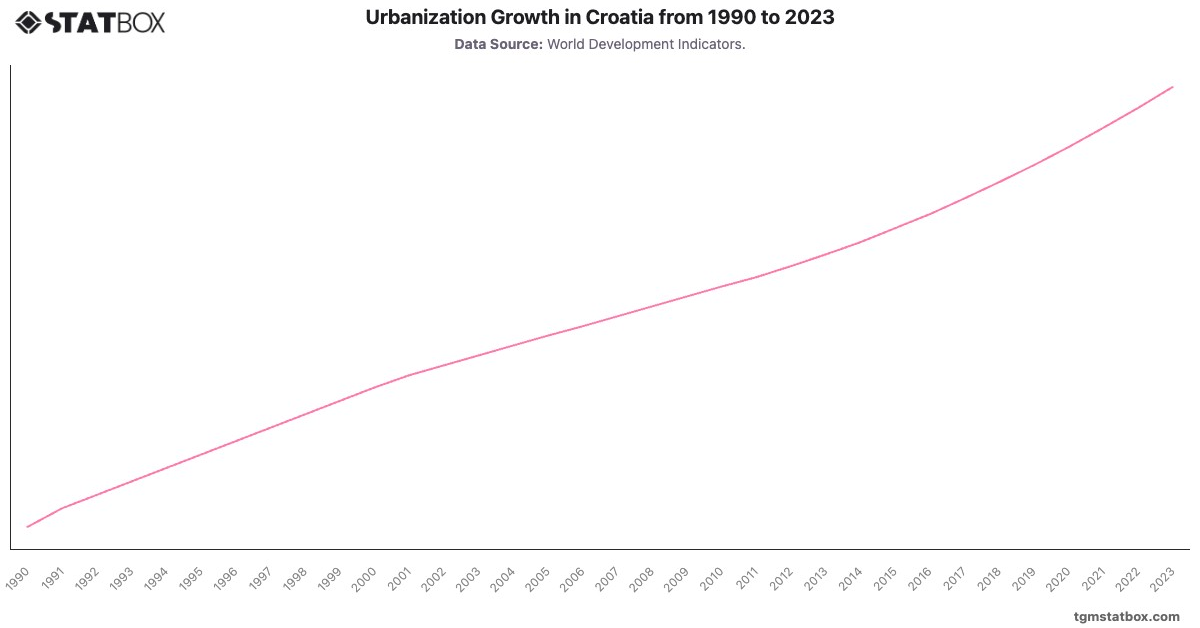
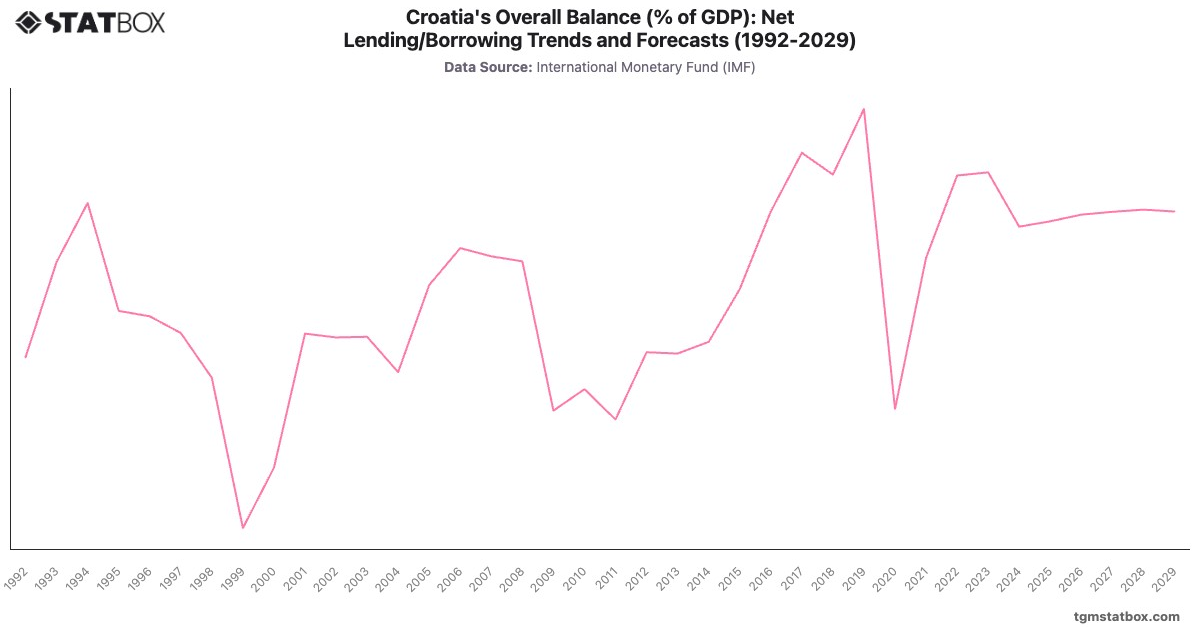
For a deeper dive into the topic, explore Croatia’s annual GDP growth rate, Croatia’s net lending/borrowing as percentage of GDP, rise in urbanization in croatia.