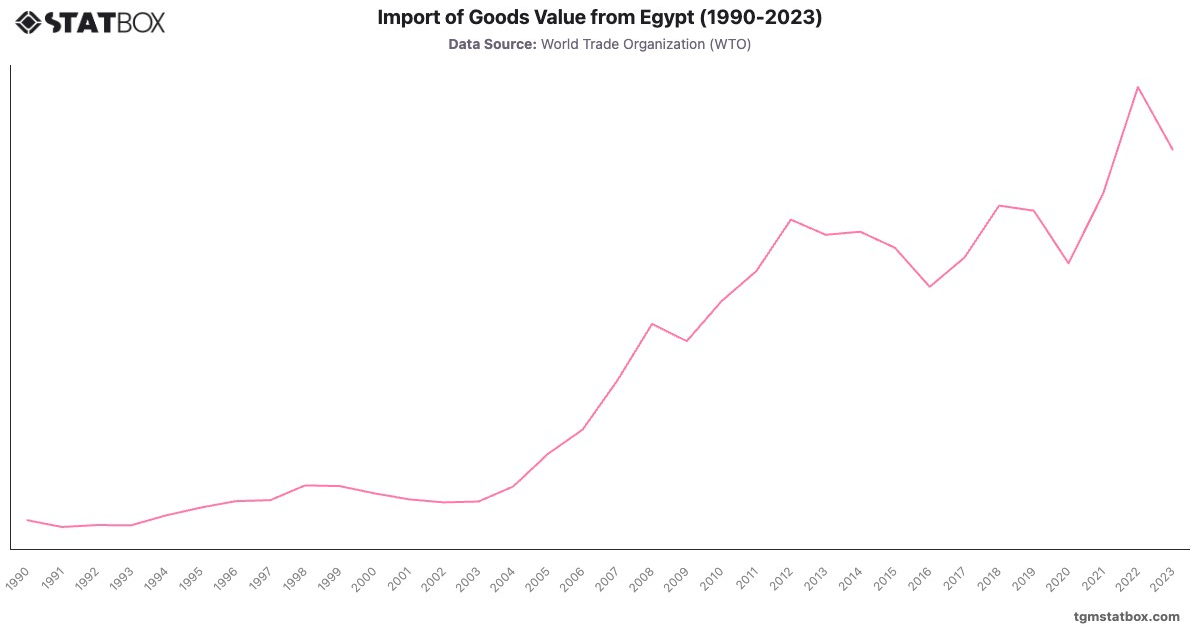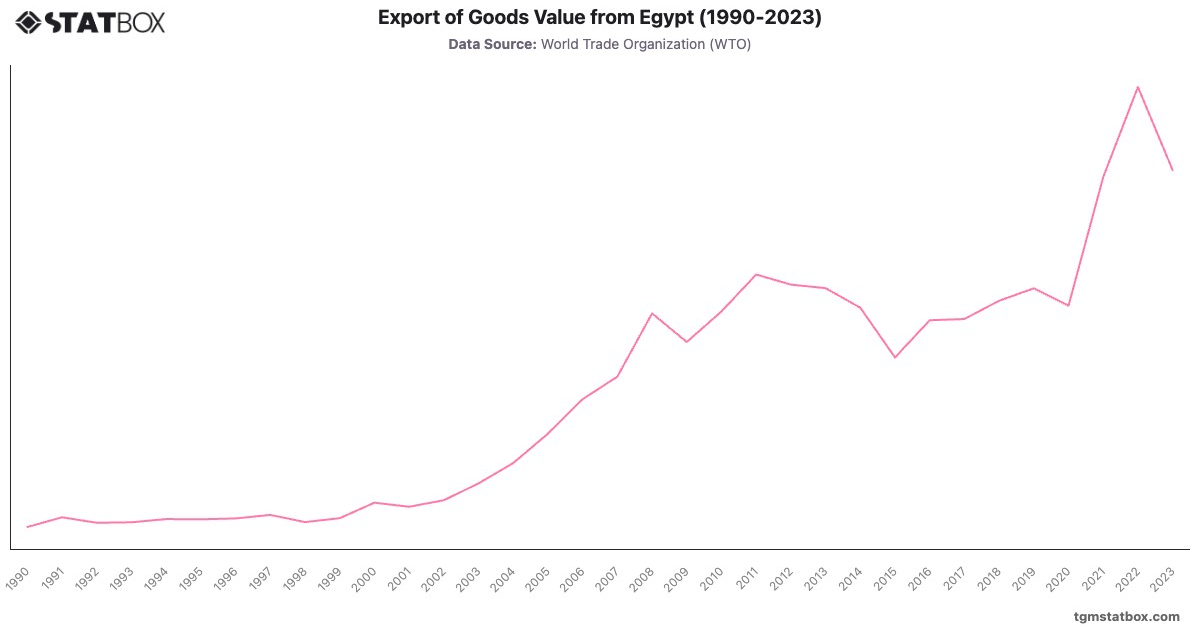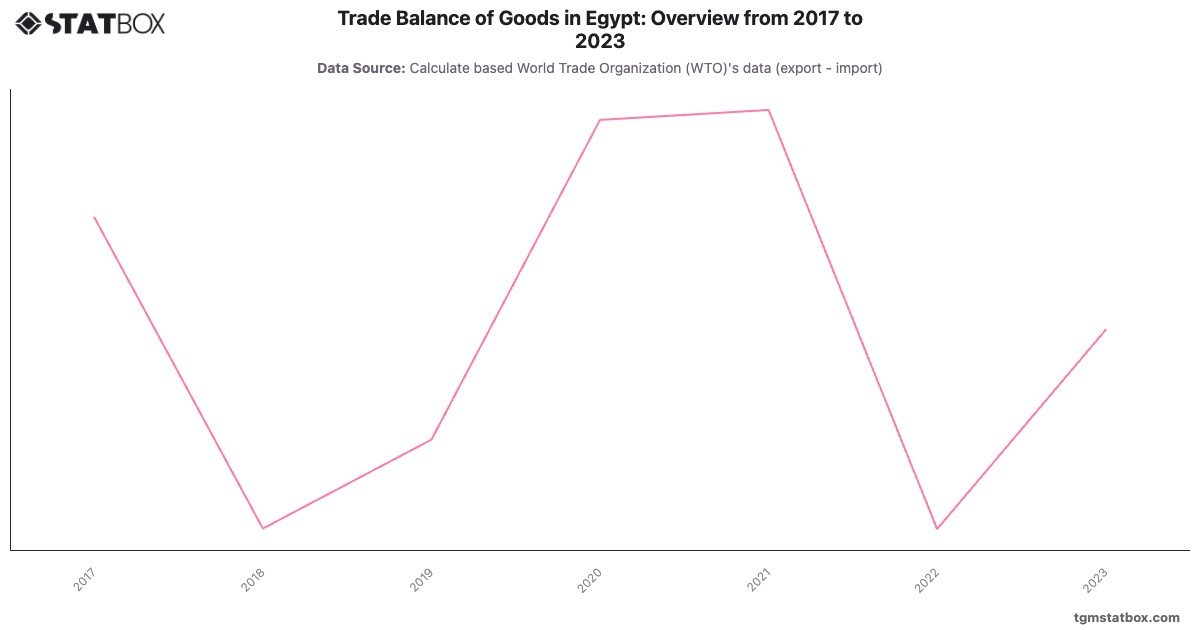
Egypt’s trade balance consistently remained in deficit between 2017 and 2023, with the gap peaking at -44,376.0 million USD in 2018 and again at -44,389.5 million USD in 2022. The persistent deficits are driven by high import dependency for energy, machinery, and consumer goods, alongside relatively stagnant export growth in sectors like textiles and agricultural products.
The deficit narrowed slightly to -39,042.1 million USD in 2023, reflecting reduced import demand amid currency depreciation and economic adjustments. However, structural issues, including limited export diversification and reliance on imported fuel and food, continue to challenge Egypt’s trade balance sustainability.
The deficit narrowed slightly to -39,042.1 million USD in 2023, reflecting reduced import demand amid currency depreciation and economic adjustments. However, structural issues, including limited export diversification and reliance on imported fuel and food, continue to challenge Egypt’s trade balance sustainability.
For a broader context, visit other statistics on Egypt’s annual GDP, Egypt’s goods export value, Egypt’s population density metric.