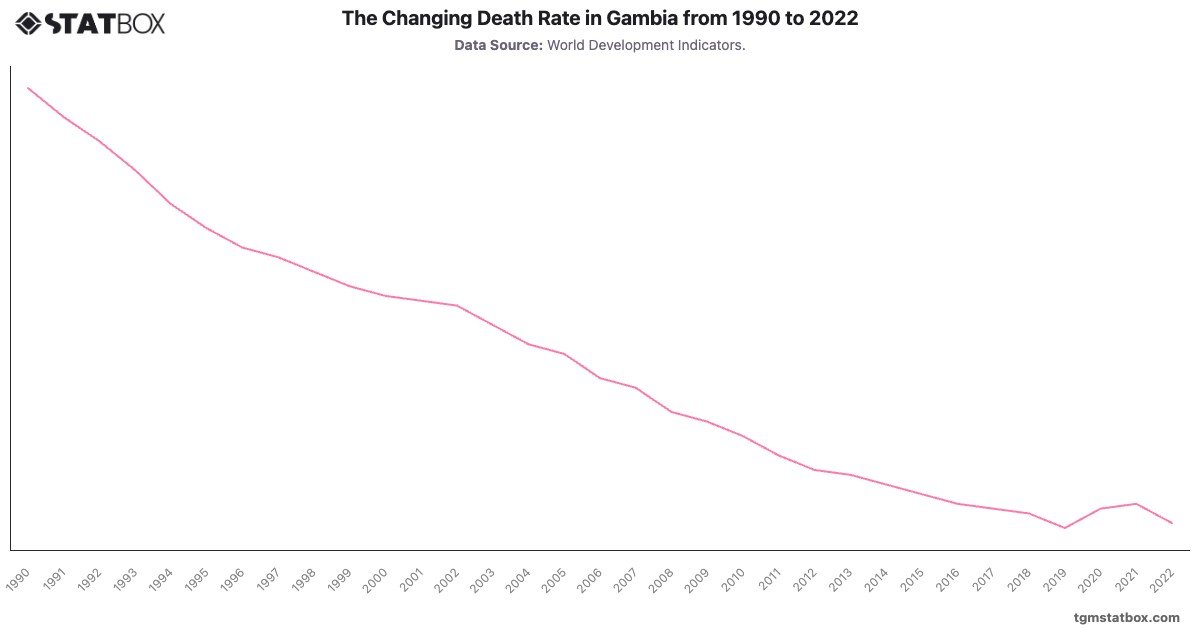
The death rate in Gambia has shown a consistent decline from 16.1 in 1990 to 7.1 in 2022. This downward trend reflects significant improvements in healthcare, nutrition, and disease prevention programs. The sharp decline in the 1990s can be attributed to initiatives targeting malaria and other infectious diseases, which historically caused high mortality. By the 2000s, better access to vaccines and maternal care played a key role in reducing child and maternal mortality rates.
However, the slight increase in 2020 and 2021 to 7.4 and 7.5, respectively, likely relates to the COVID-19 pandemic, which disrupted healthcare systems and increased mortality. Post-pandemic recovery is reflected in the 2022 drop to 7.1, emphasizing the resilience of the healthcare system and continued public health efforts.
However, the slight increase in 2020 and 2021 to 7.4 and 7.5, respectively, likely relates to the COVID-19 pandemic, which disrupted healthcare systems and increased mortality. Post-pandemic recovery is reflected in the 2022 drop to 7.1, emphasizing the resilience of the healthcare system and continued public health efforts.
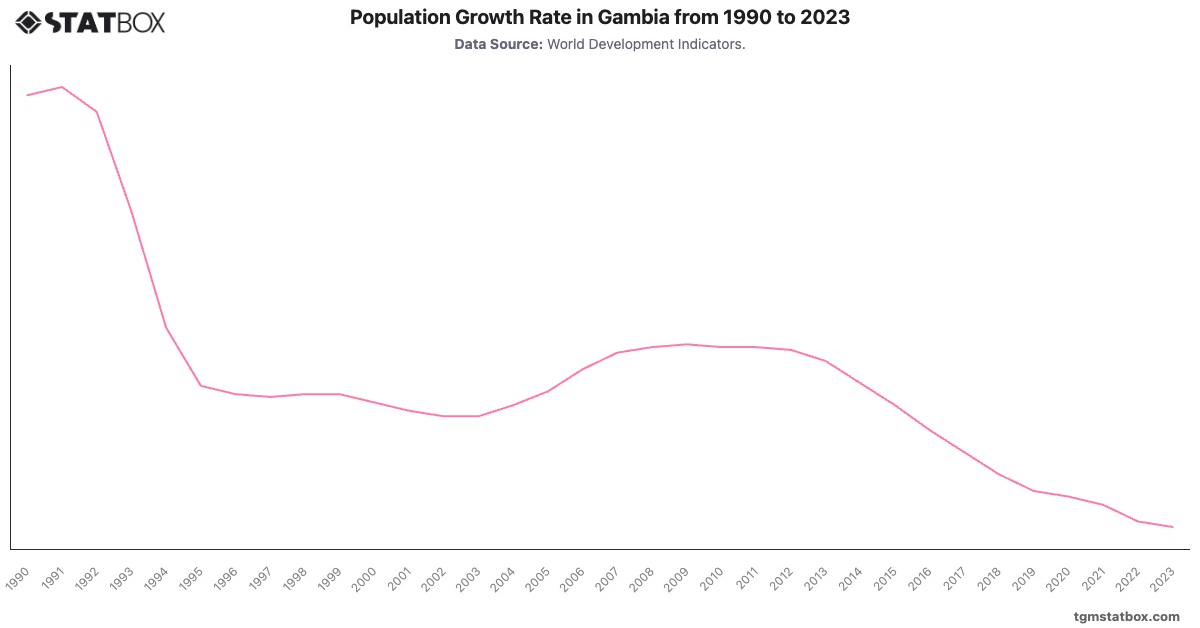
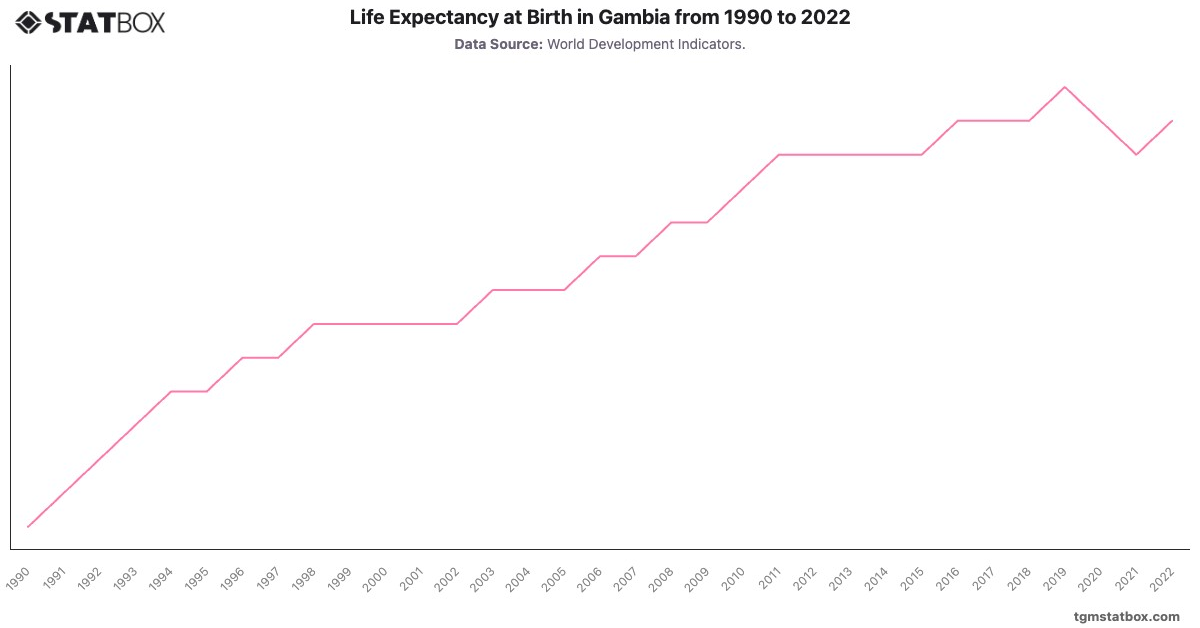
Gain a broader perspective by reviewing Gambia’s urbanization rise, Gambia’s population growth rate, Gambia’s birth life span.