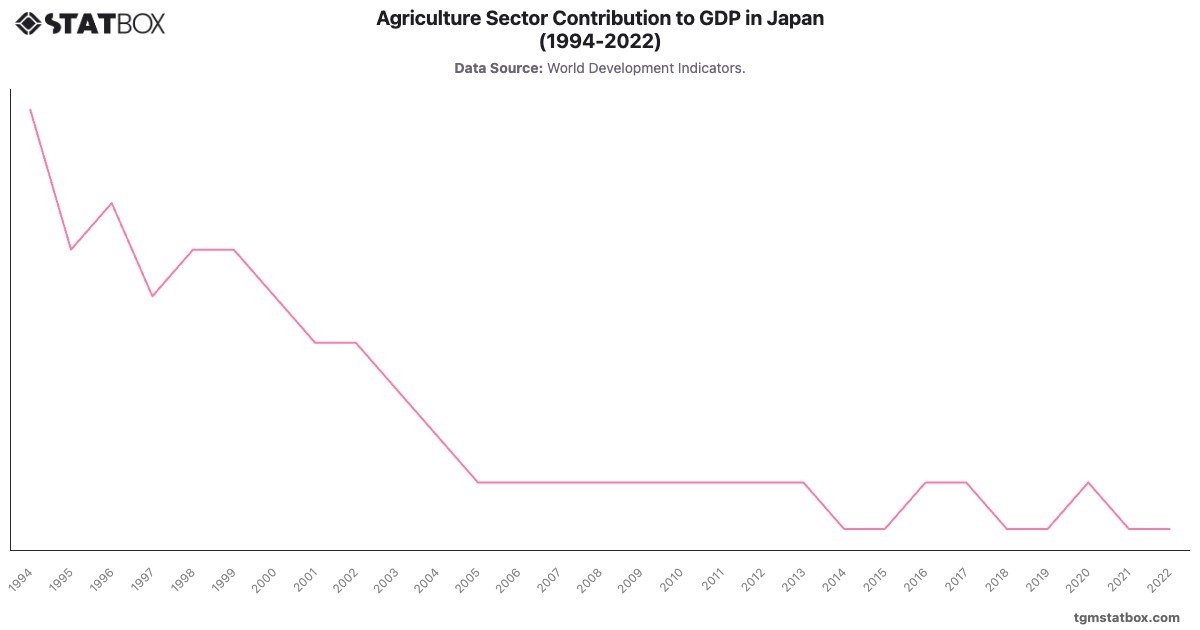
Japan’s agriculture sector’s contribution to GDP decreased from in 1994 to about by 2022, largely due to Japan's highly developed industrial and service sectors. The sector’s contribution stabilized around in the 2000s, reflecting Japan’s limited arable land and reliance on imports for food. The decline highlights the country’s shift toward high-tech manufacturing and services, with agriculture primarily serving domestic demand.
Despite its small share, agriculture remains essential for rural communities, with rice cultivation having cultural significance. Government policies continue to support domestic farming to ensure food security and rural sustainability.
Despite its small share, agriculture remains essential for rural communities, with rice cultivation having cultural significance. Government policies continue to support domestic farming to ensure food security and rural sustainability.
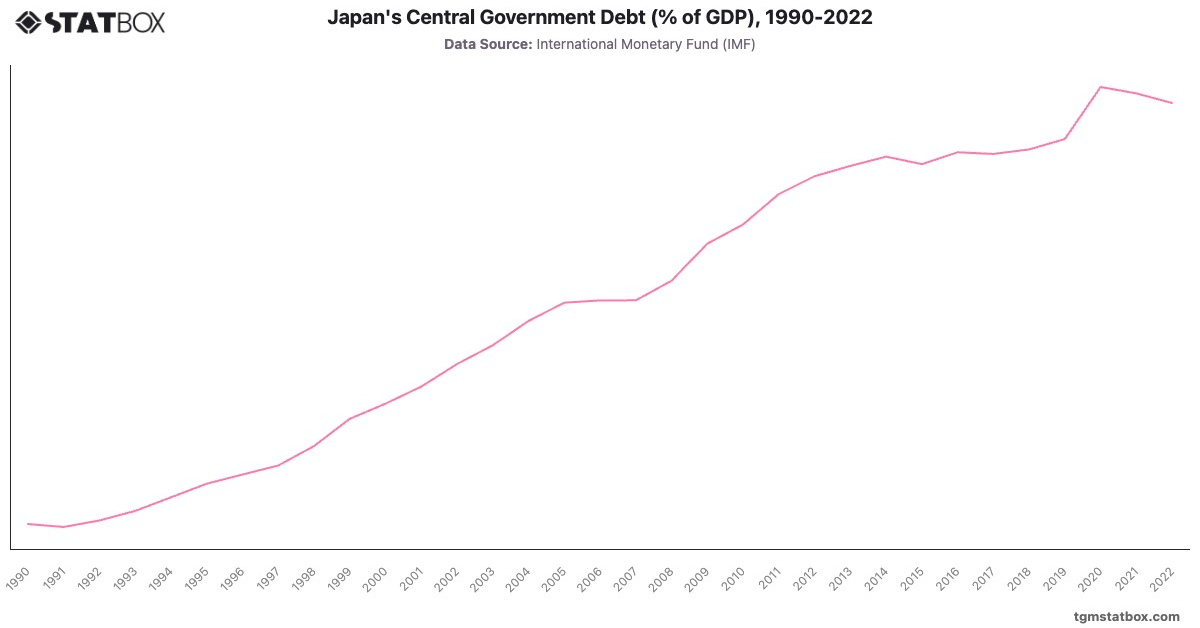
For a deeper dive into the topic, explore Japan’s urbanization trend, Japan’s central government debt-to-GDP ratio, Japan’s annual GDP figures.