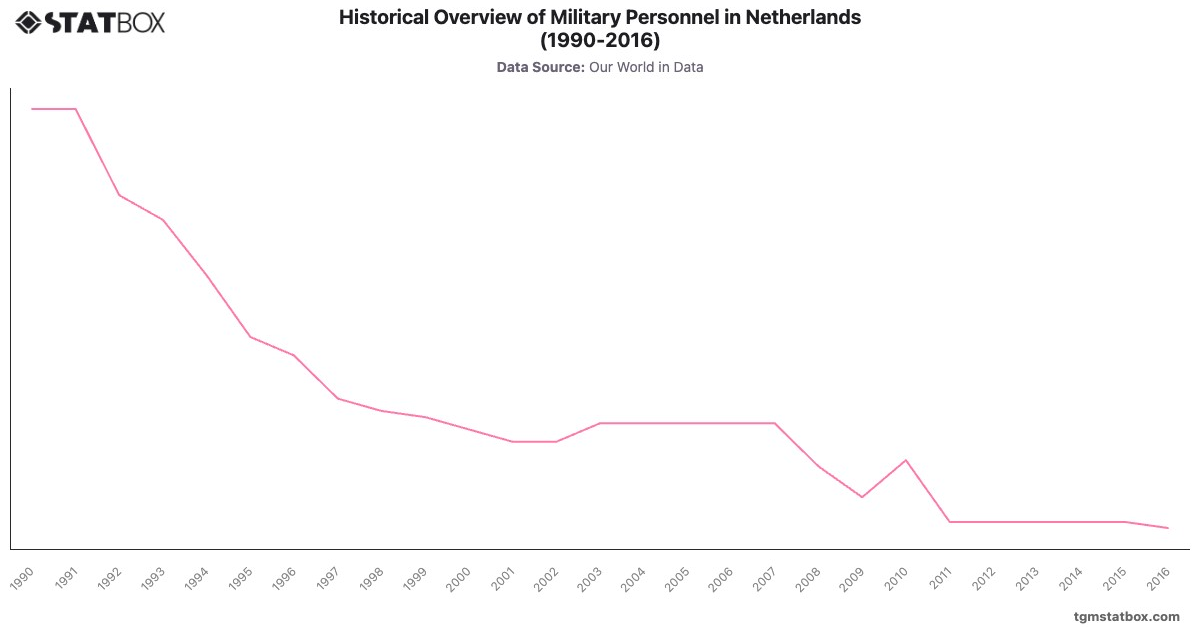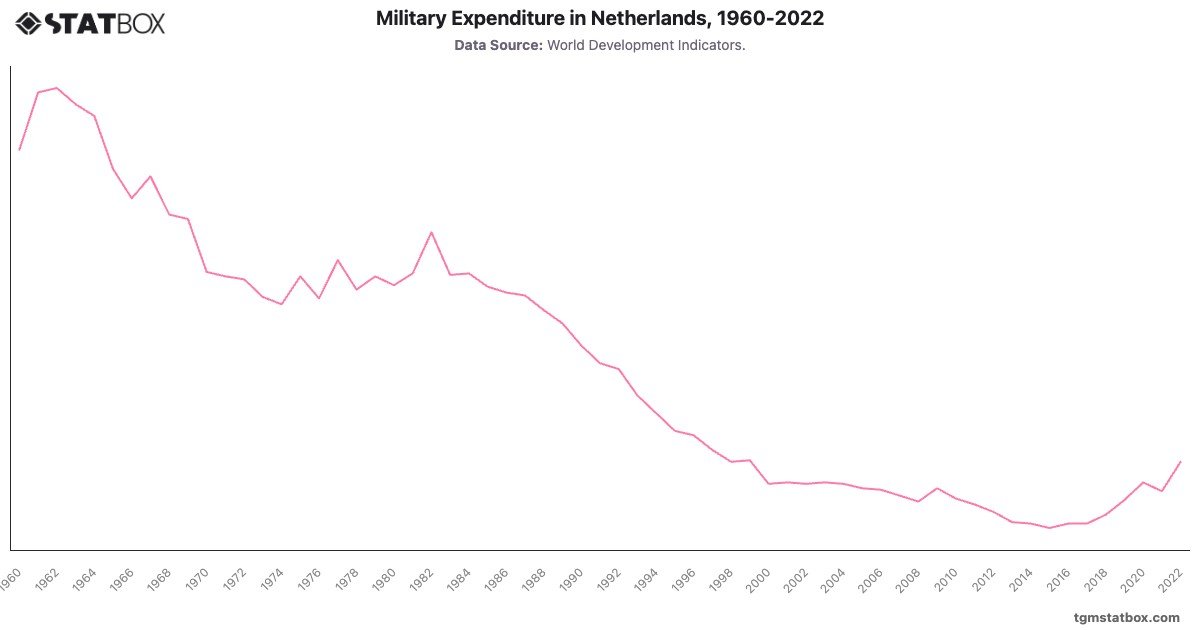
The Netherlands' military expenditure reflected its NATO commitments during the Cold War and subsequent shifts in global security dynamics. Spending peaked at of GDP in the early 1960s, as part of NATO's collective defense strategy. By the 1970s, spending gradually declined, averaging around as détente reduced immediate security concerns in Western Europe.
Post-Cold War, defense budgets decreased significantly, falling to by 2000. This reduction aligned with Europe’s broader peace dividend and the prioritization of non-military sectors. A slight resurgence in the 2020s, reaching in 2022, reflects the Netherlands’ response to renewed geopolitical tensions, including NATO's increased focus on collective security in light of conflicts like Russia's actions in Ukraine.
Post-Cold War, defense budgets decreased significantly, falling to by 2000. This reduction aligned with Europe’s broader peace dividend and the prioritization of non-military sectors. A slight resurgence in the 2020s, reaching in 2022, reflects the Netherlands’ response to renewed geopolitical tensions, including NATO's increased focus on collective security in light of conflicts like Russia's actions in Ukraine.
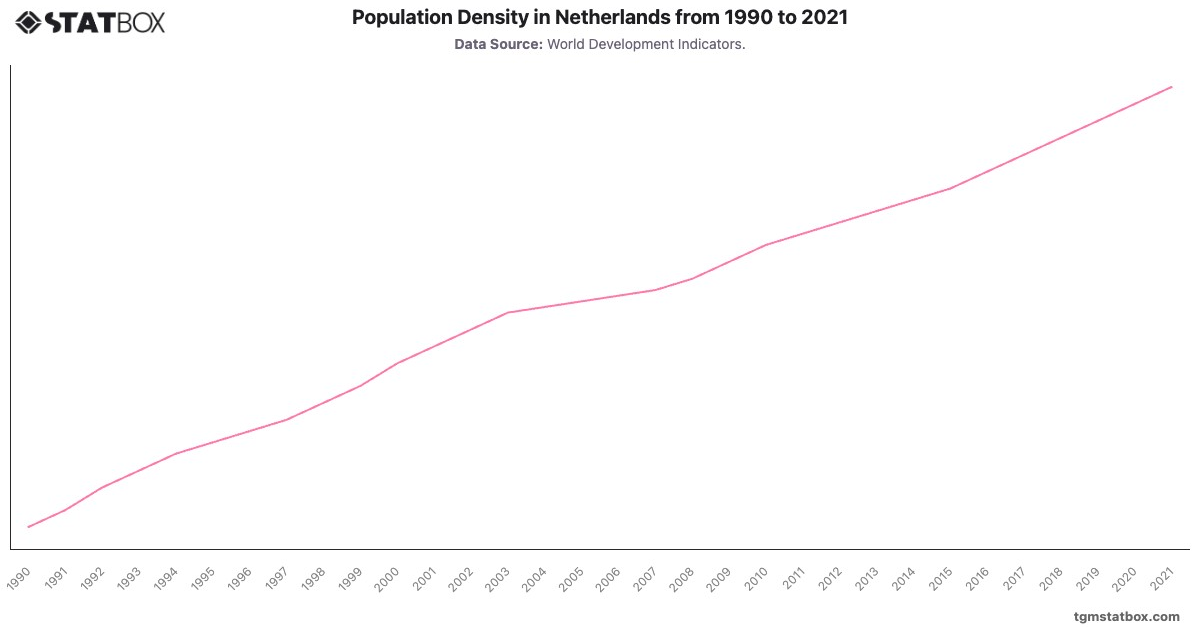
For a broader context, visit other statistics on Netherlands’ annual GDP growth rate, Netherlands’ government debt to GDP ratio, Netherlands’ population density.