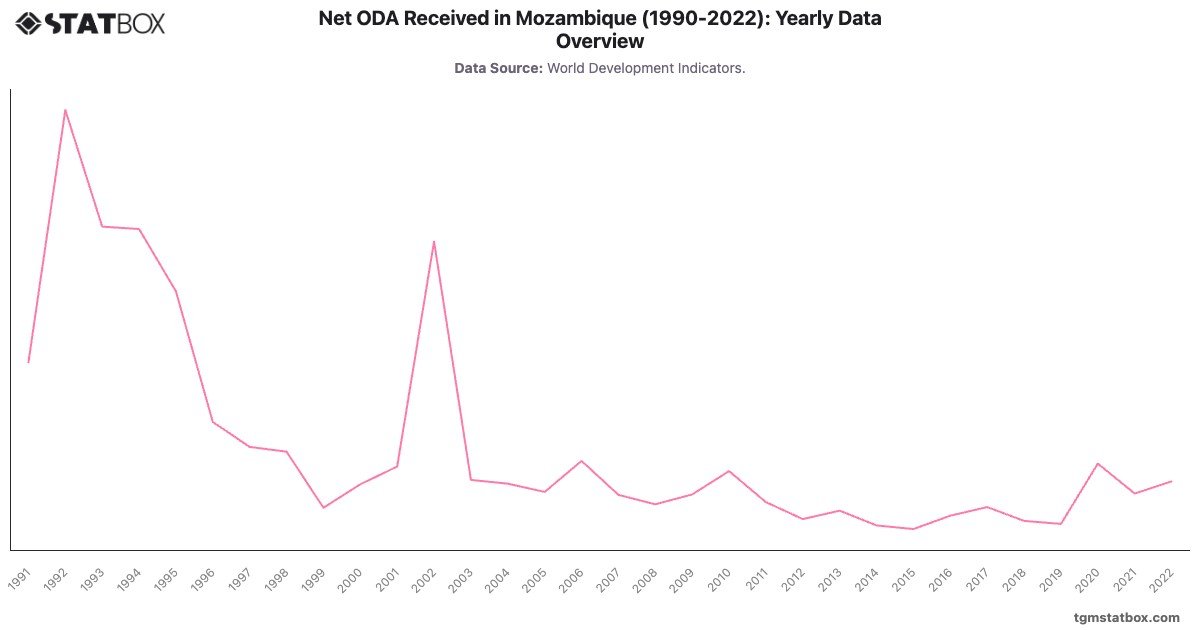
Mozambique’s Net ODA (% of GNI) peaked at an extraordinary in 1992, reflecting substantial international aid during the immediate post-civil war reconstruction period. Aid levels remained high throughout the 1990s, supporting infrastructure development and poverty alleviation. However, a gradual decline began in the 2000s, reflecting Mozambique’s improved economic stability and donor focus on long-term development strategies.
Notable spikes, such as in 2002, align with debt relief initiatives under the Heavily Indebted Poor Countries (HIPC) program. Recent fluctuations, including in 2020, were influenced by disaster recovery efforts, including cyclones and the COVID-19 pandemic. Despite declines, Mozambique remains heavily reliant on ODA for critical sectors.
Notable spikes, such as in 2002, align with debt relief initiatives under the Heavily Indebted Poor Countries (HIPC) program. Recent fluctuations, including in 2020, were influenced by disaster recovery efforts, including cyclones and the COVID-19 pandemic. Despite declines, Mozambique remains heavily reliant on ODA for critical sectors.
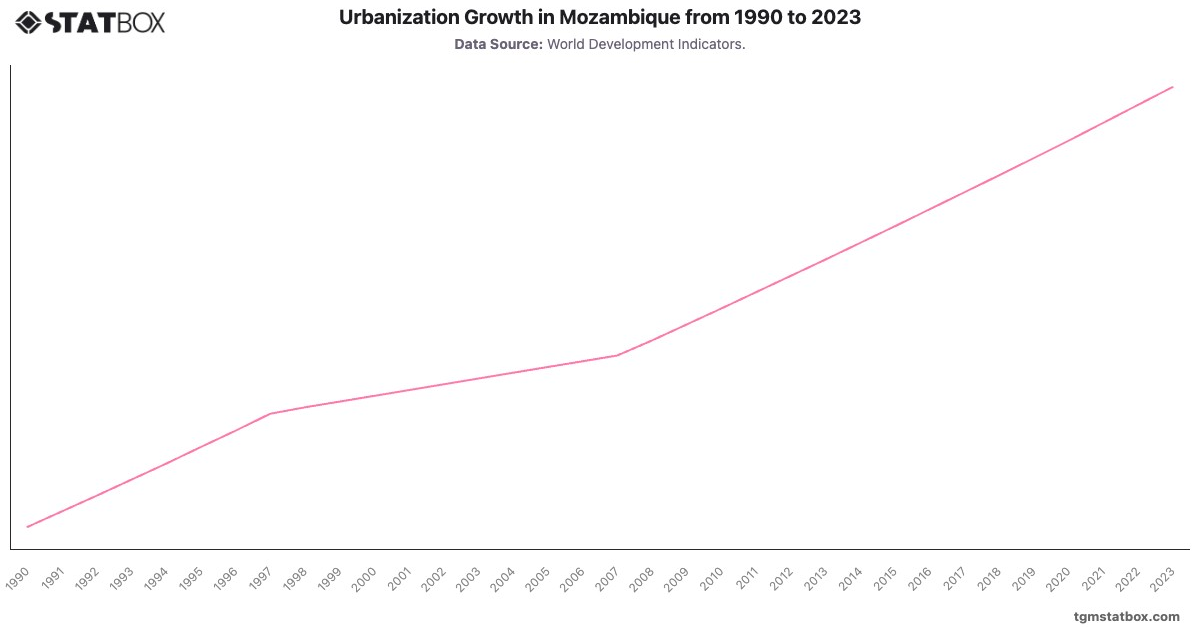
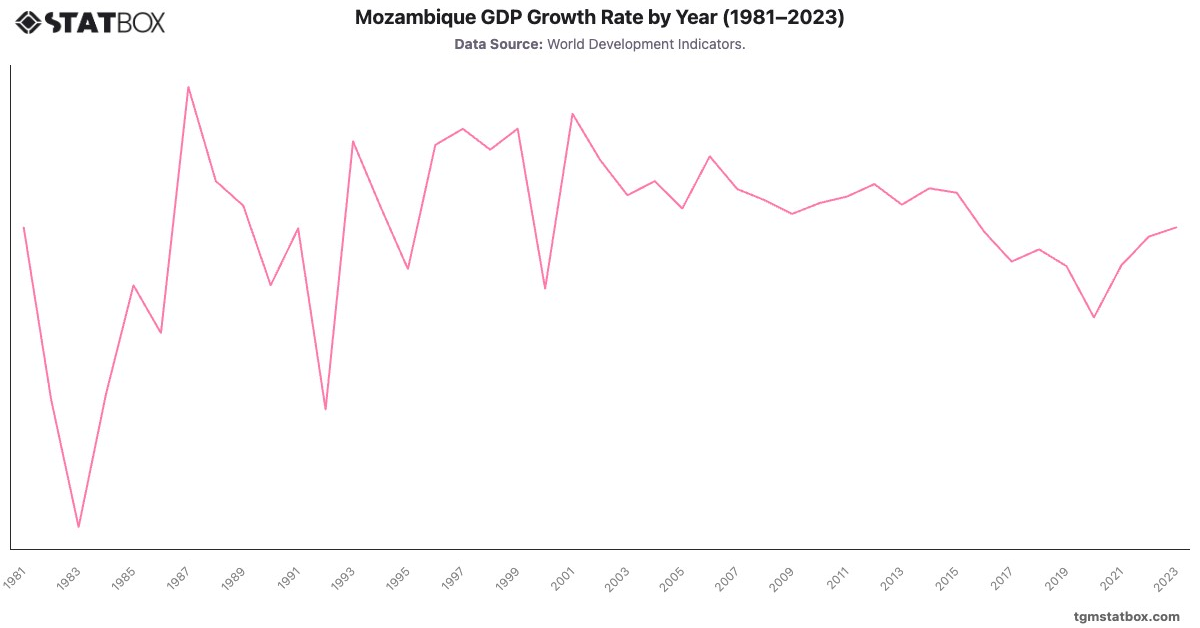
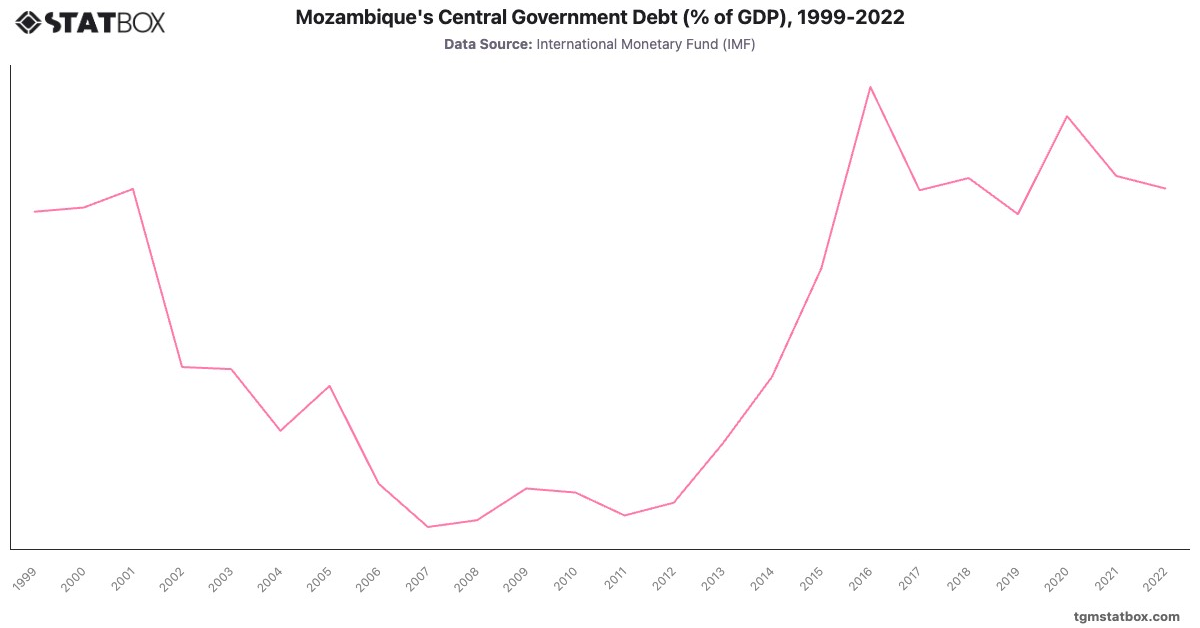
For additional information, visit statistics on Mozambique’s annual GDP data, Mozambique’s central government debt as a percentage of GDP, Urbanization rate in Mozambique.