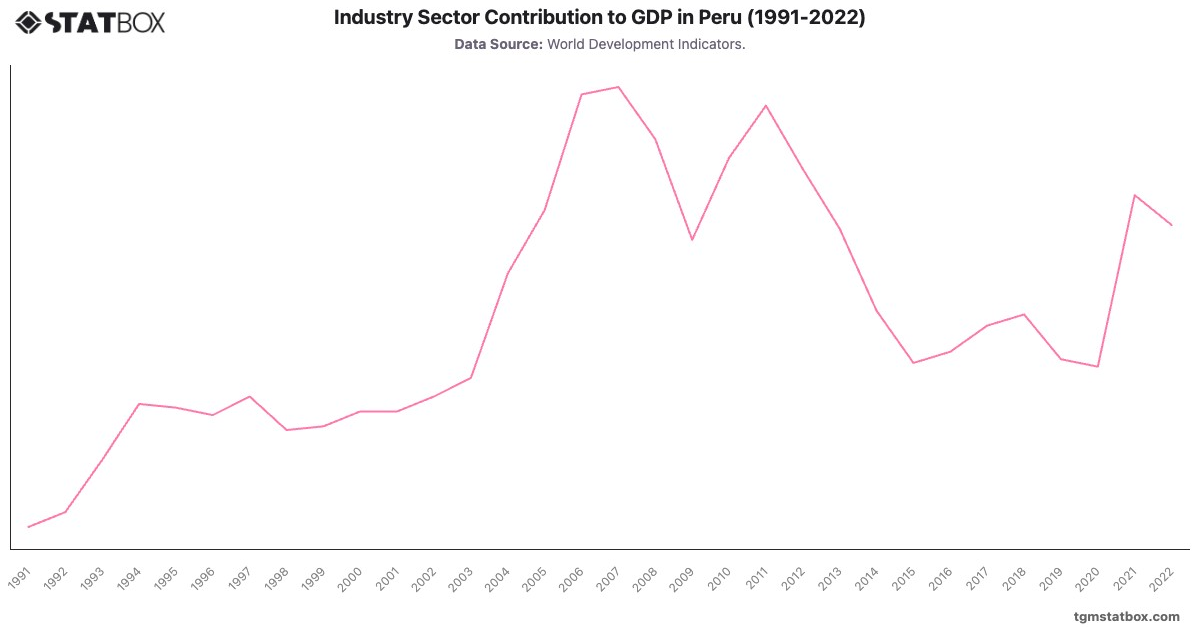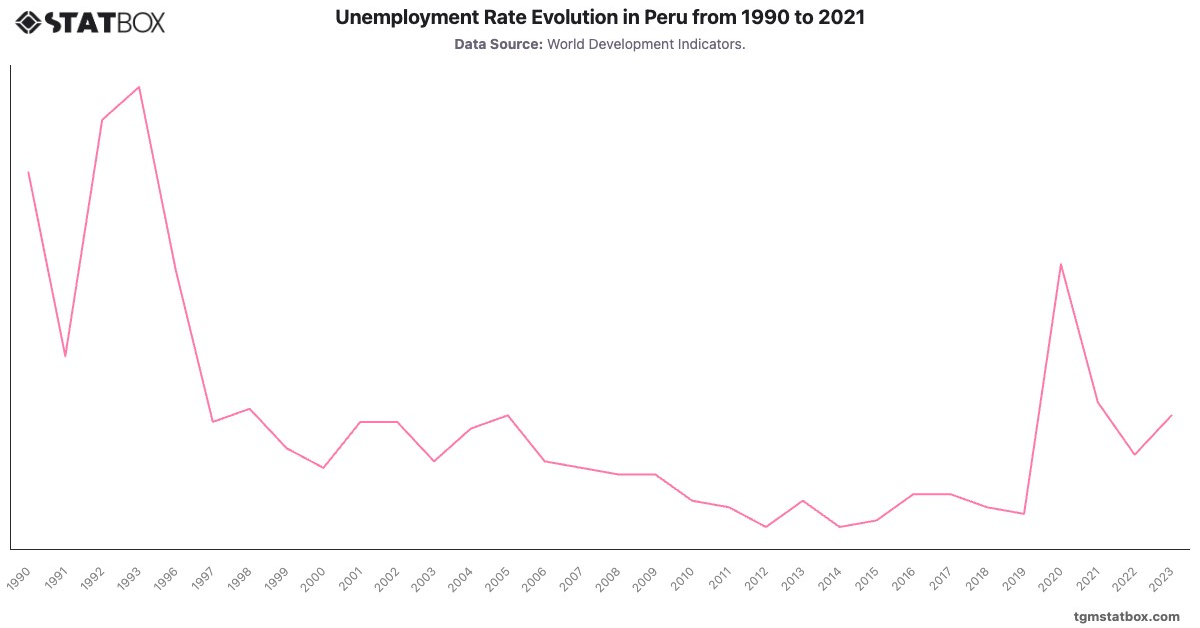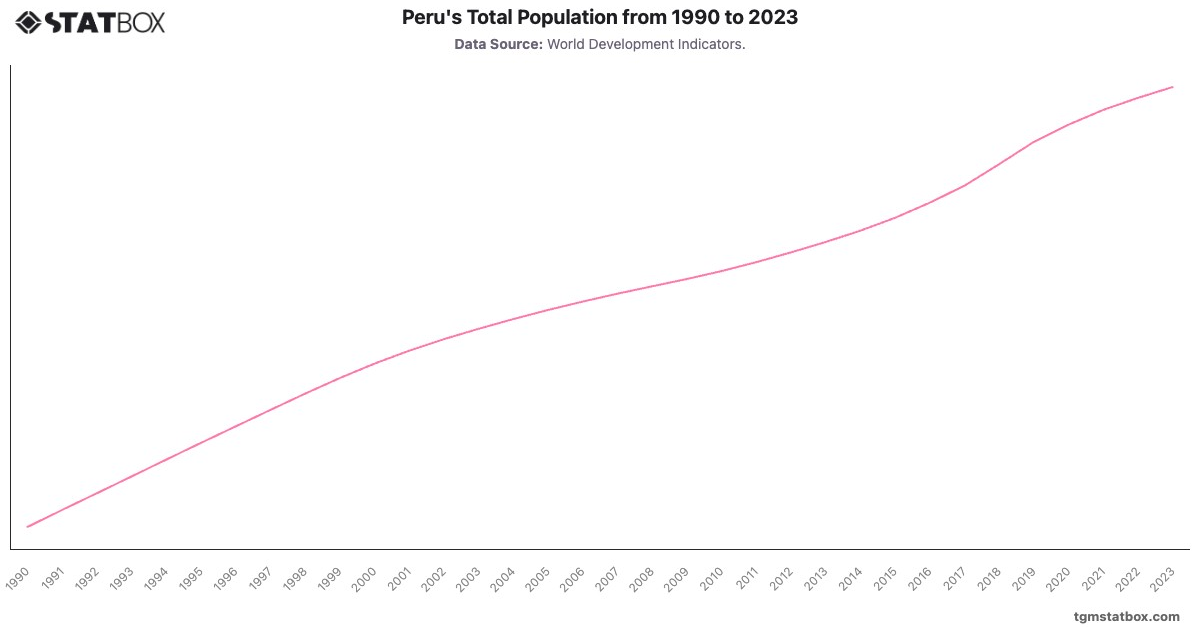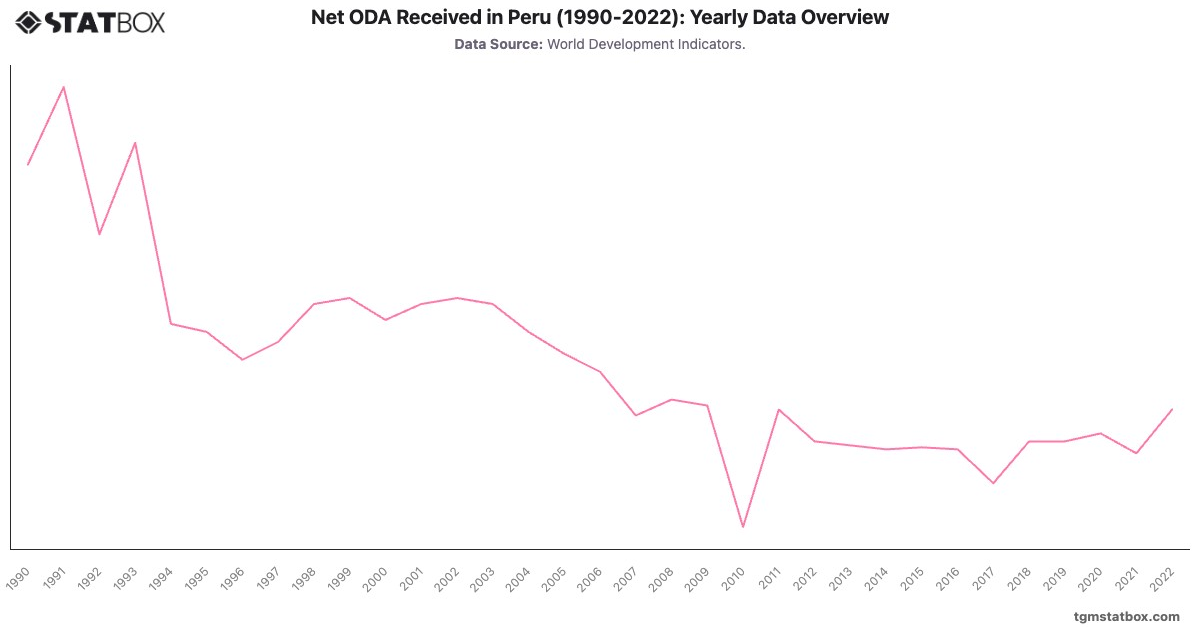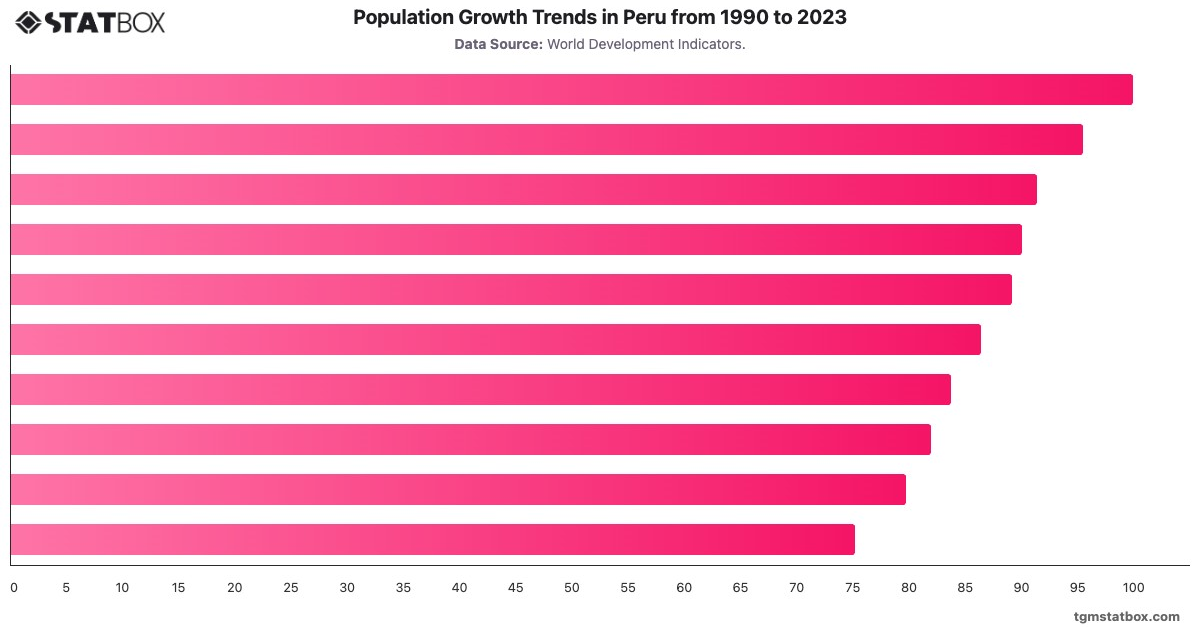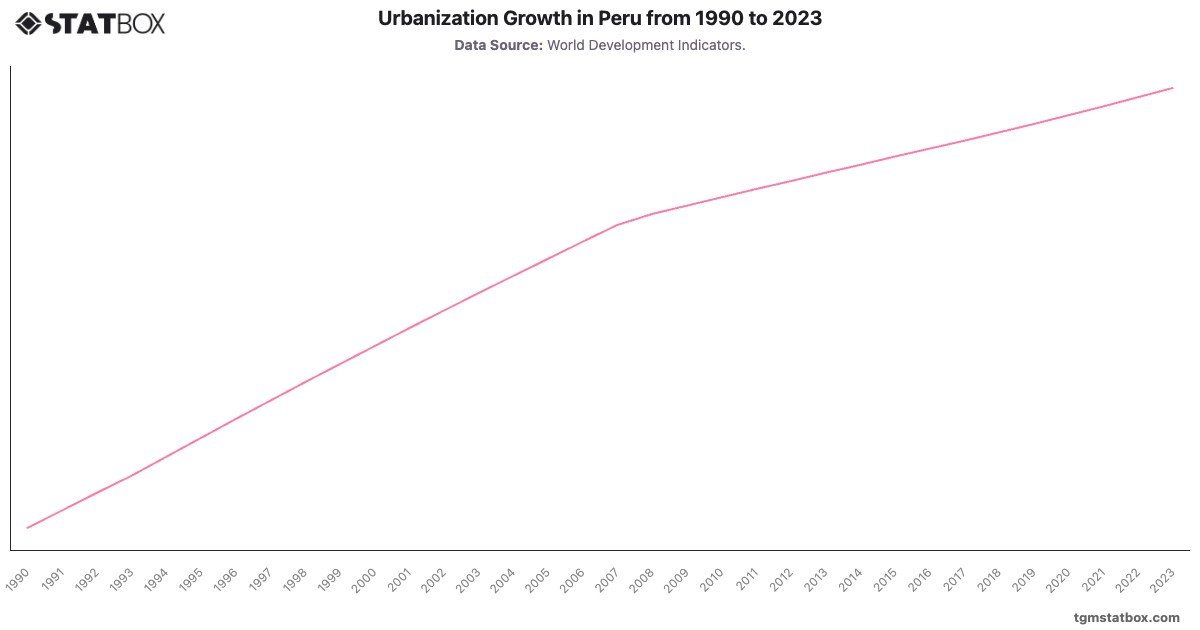
The urbanization trend in Peru has shown steady growth over the years, with an increase from in 1990 to by 2023. The early 1990s saw Peru begin this gradual upward trend, with urbanization growth fueled by both internal migration and economic factors. As the country experienced economic development, people moved from rural areas to urban centers in search of better employment opportunities, especially in cities like Lima, Arequipa, and Trujillo. By 2000, the urban population had risen to , largely due to Peru’s sustained efforts toward economic stability and growth, which attracted more people to urban areas.
The period from 2000 to 2010 marked a further increase in urbanization, climbing to approximately in 2010. During this decade, Peru experienced significant economic expansion, especially in sectors such as mining, construction, and services, which were predominantly concentrated in urban locations. The ongoing growth of these industries facilitated urban migration, reinforcing the steady rise in urbanization rates.
From 2010 onward, the urbanization rate continued its upward trajectory, albeit at a slightly slower pace. Between 2015 and 2023, urbanization growth continued as economic activities diversified and urban infrastructure improved, attracting more residents. By 2023, Peru’s urban population reached , reflecting a shift toward a more urbanized society influenced by sustained economic opportunities and infrastructure development in urban centers.
The period from 2000 to 2010 marked a further increase in urbanization, climbing to approximately in 2010. During this decade, Peru experienced significant economic expansion, especially in sectors such as mining, construction, and services, which were predominantly concentrated in urban locations. The ongoing growth of these industries facilitated urban migration, reinforcing the steady rise in urbanization rates.
From 2010 onward, the urbanization rate continued its upward trajectory, albeit at a slightly slower pace. Between 2015 and 2023, urbanization growth continued as economic activities diversified and urban infrastructure improved, attracting more residents. By 2023, Peru’s urban population reached , reflecting a shift toward a more urbanized society influenced by sustained economic opportunities and infrastructure development in urban centers.
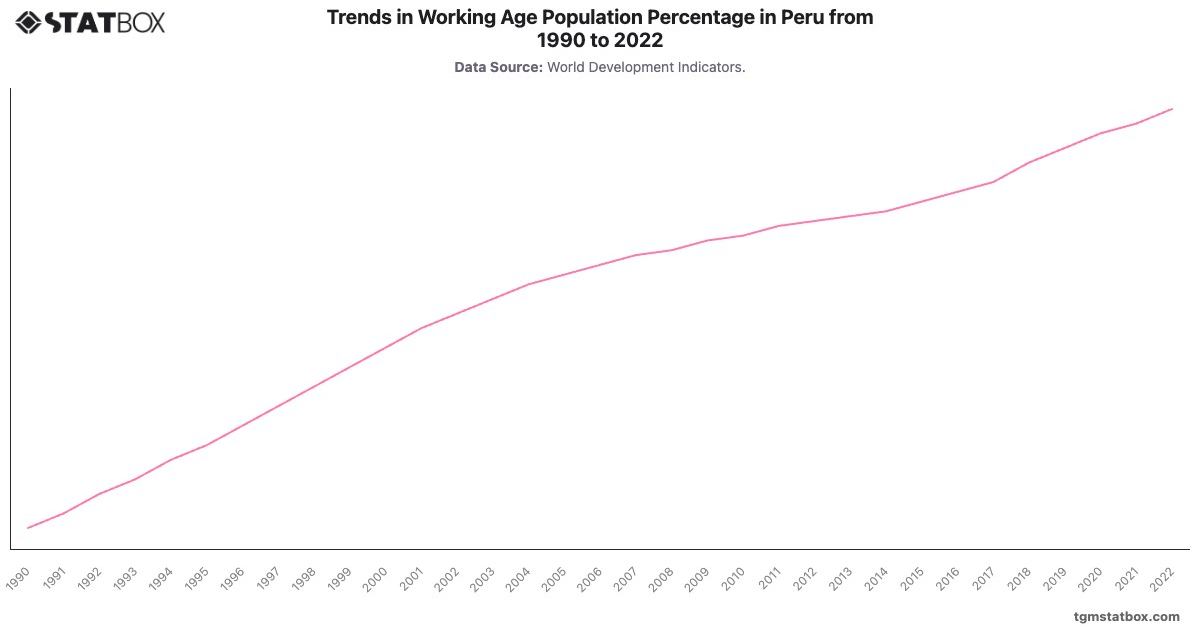
Find out more through related statistics on Peru’s unemployment rate, Percentage of working-age population in Peru, Peru’s shifting median age.