Population Growth Trends in South Korea (1990-2023)
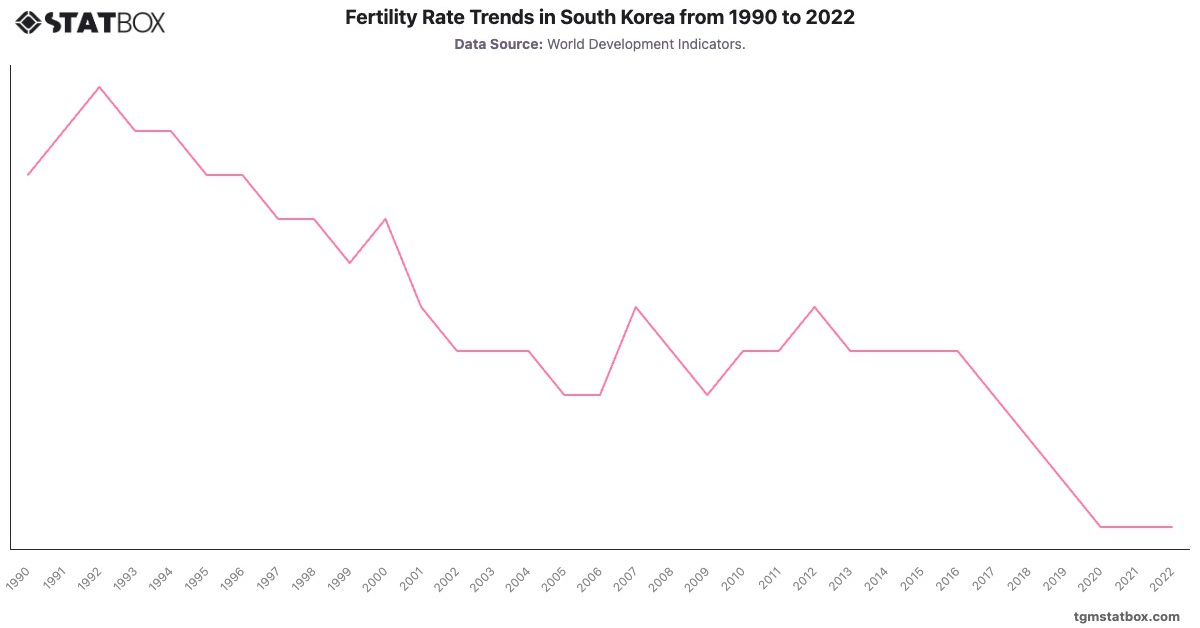
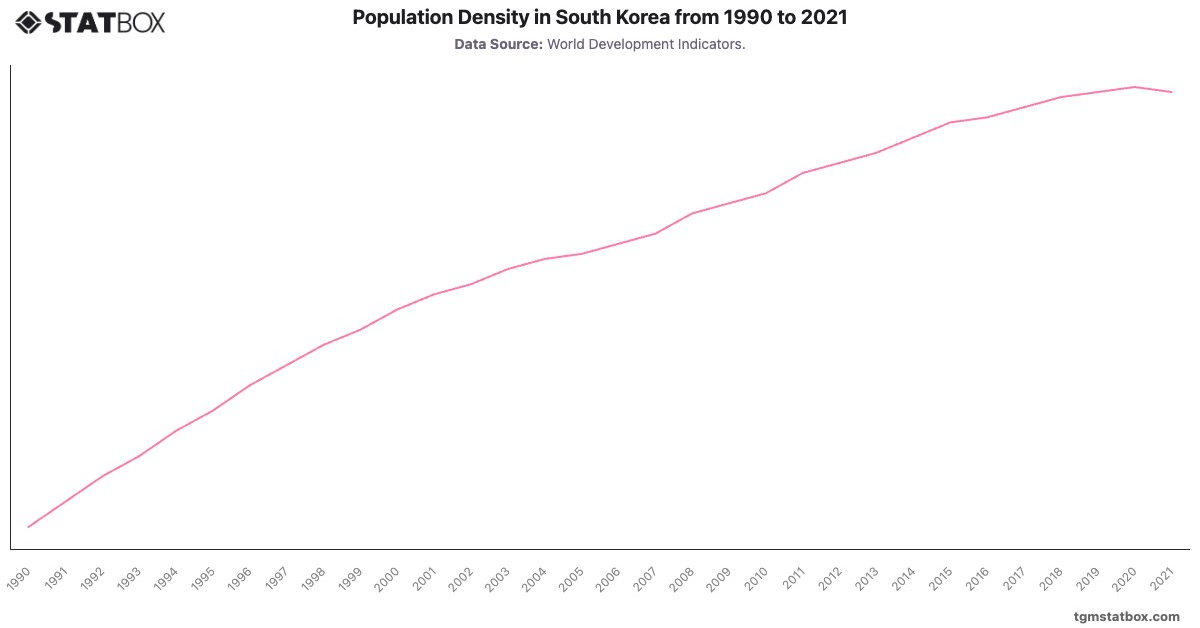
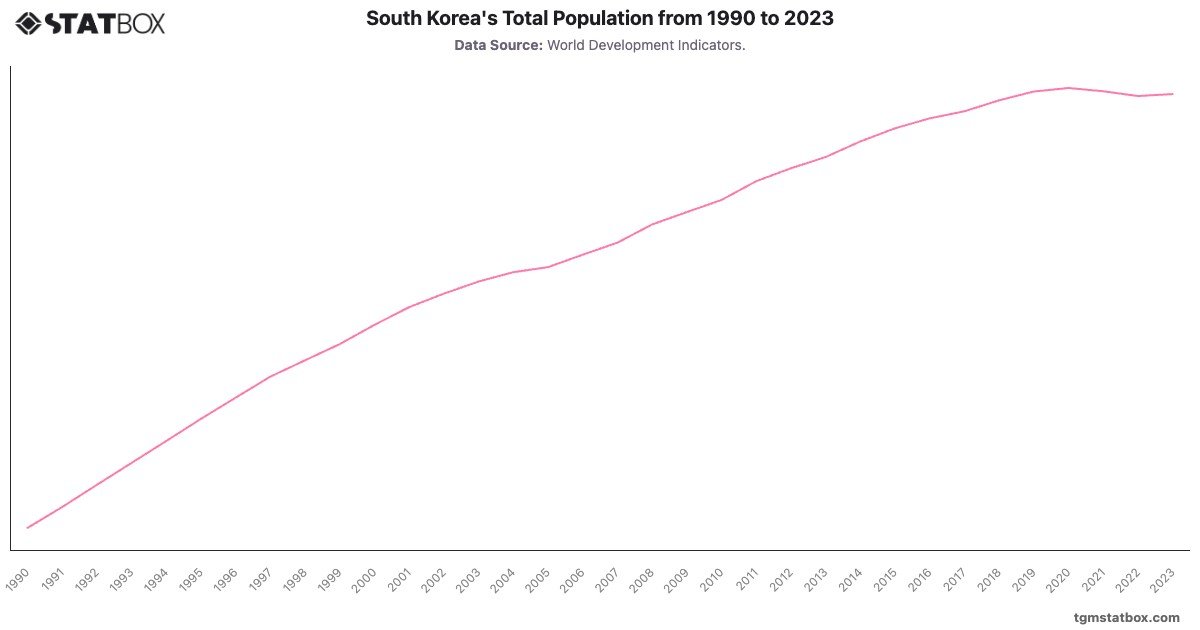
South Korea’s population grew steadily from around 42 million in 1990 to a peak of approximately 52 million in 2020, followed by a slight decline to 51.7 million by 2023. This growth was supported by economic development, urbanization, and improved healthcare, which increased life expectancy. However, South Korea has recently faced a declining birth rate, among the lowest globally, due to high living costs, housing affordability issues, and changing societal norms. Since 2020, the population has shown signs of decline, with efforts to boost birth rates through policy incentives yet to yield substantial results, indicating potential challenges for future economic and workforce stability.
South Korea’s population grew steadily from around 42 million in 1990 to a peak of approximately 52 million in 2020, followed by a slight decline to 51.7 million by 2023. This growth was supported by economic development, urbanization, and improved healthcare, which increased life expectancy. However, South Korea has recently faced a declining birth rate, among the lowest globally, due to high living costs, housing affordability issues, and changing societal norms. Since 2020, the population has shown signs of decline, with efforts to boost birth rates through policy incentives yet to yield substantial results, indicating potential challenges for future economic and workforce stability.
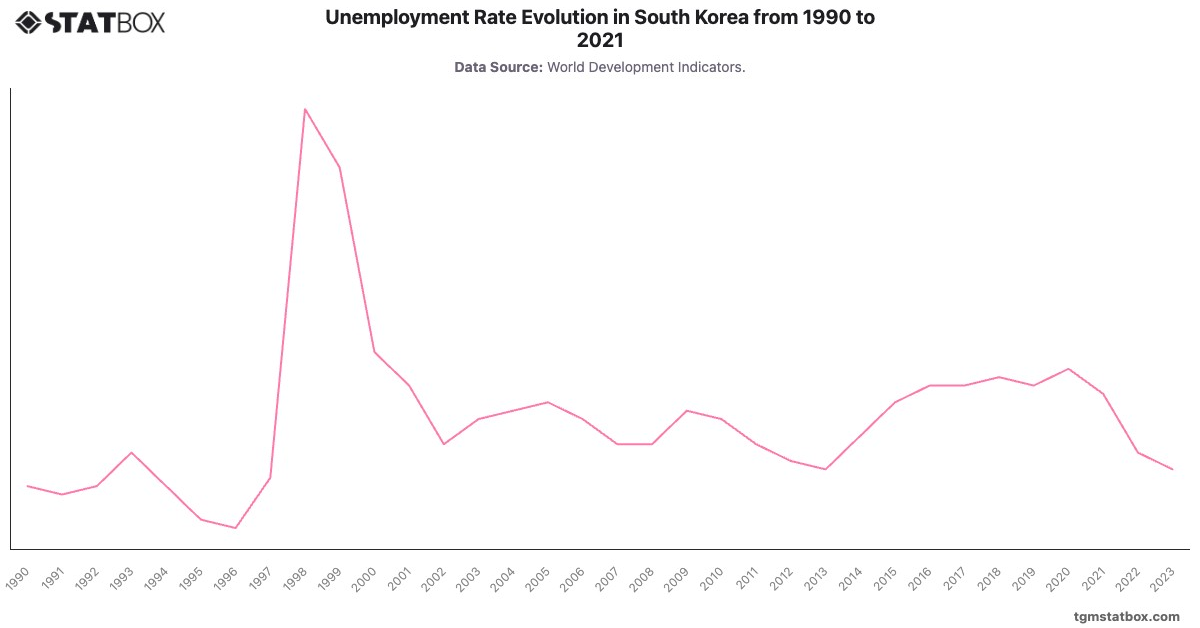
Discover additional trends and data on South Korea’s population changes, South Korea’s unemployment rate, South Korea’s birth life span.