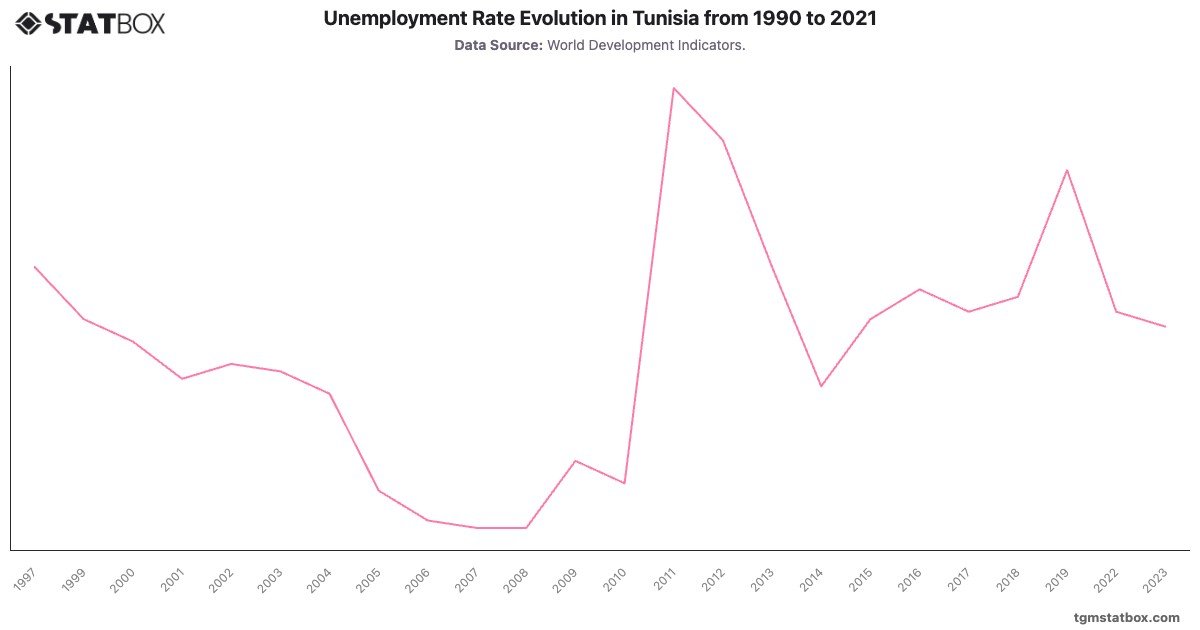
Tunisia’s unemployment rate was high in the late 1990s, fluctuating around , which is indicative of the challenges in labor market absorption despite gradual economic reforms. Efforts to diversify the economy saw a slight decline, with the rate reaching in 2008. However, the 2011 revolution brought economic disruption, leading to a sharp increase in unemployment to .
Since then, Tunisia has struggled with structural unemployment, especially among youth, and saw fluctuations around 15- from 2012 to 2019. The rate remained high due to political instability and slow economic recovery, reaching in 2023. The high unemployment underscores ongoing economic and social challenges, as well as the need for sustainable job creation.
Since then, Tunisia has struggled with structural unemployment, especially among youth, and saw fluctuations around 15- from 2012 to 2019. The rate remained high due to political instability and slow economic recovery, reaching in 2023. The high unemployment underscores ongoing economic and social challenges, as well as the need for sustainable job creation.
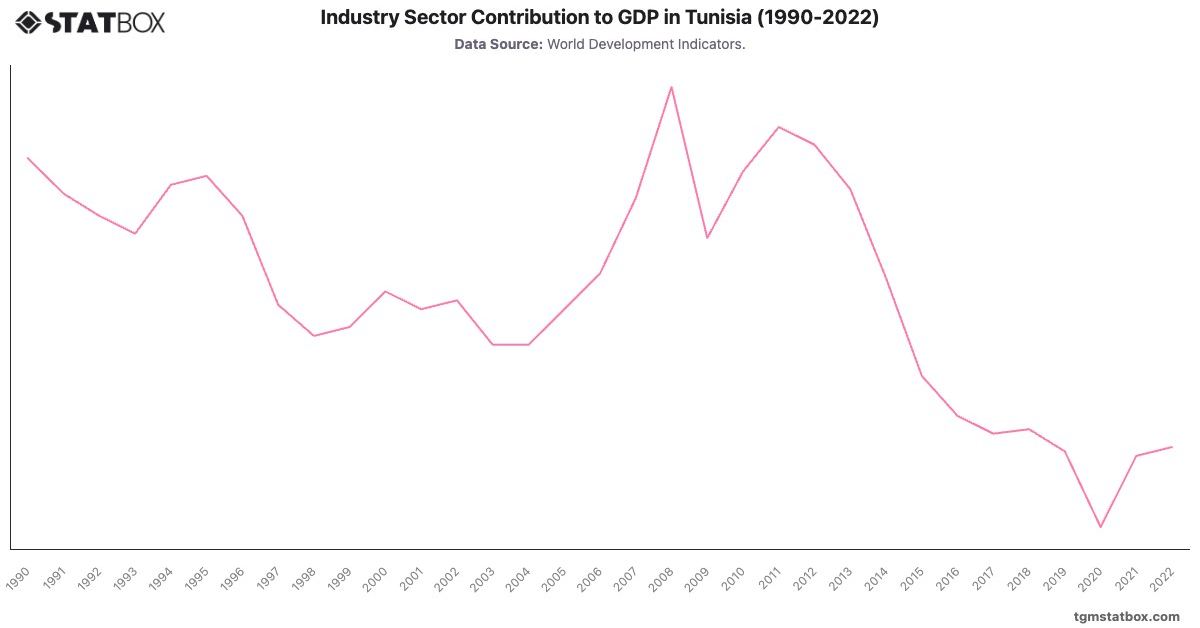
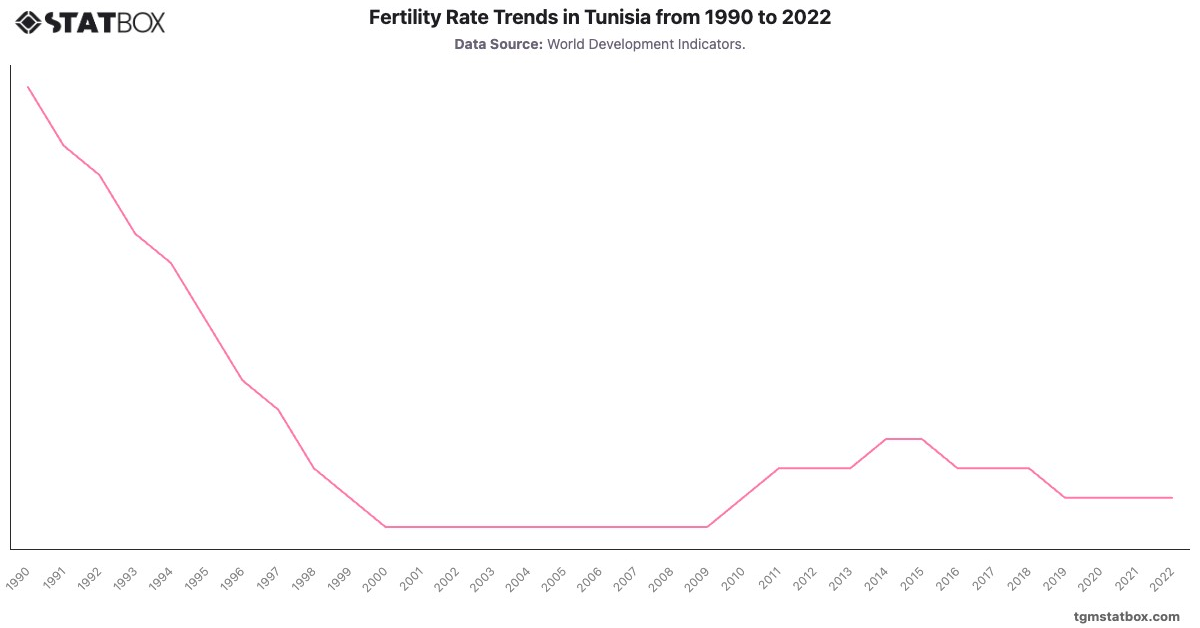
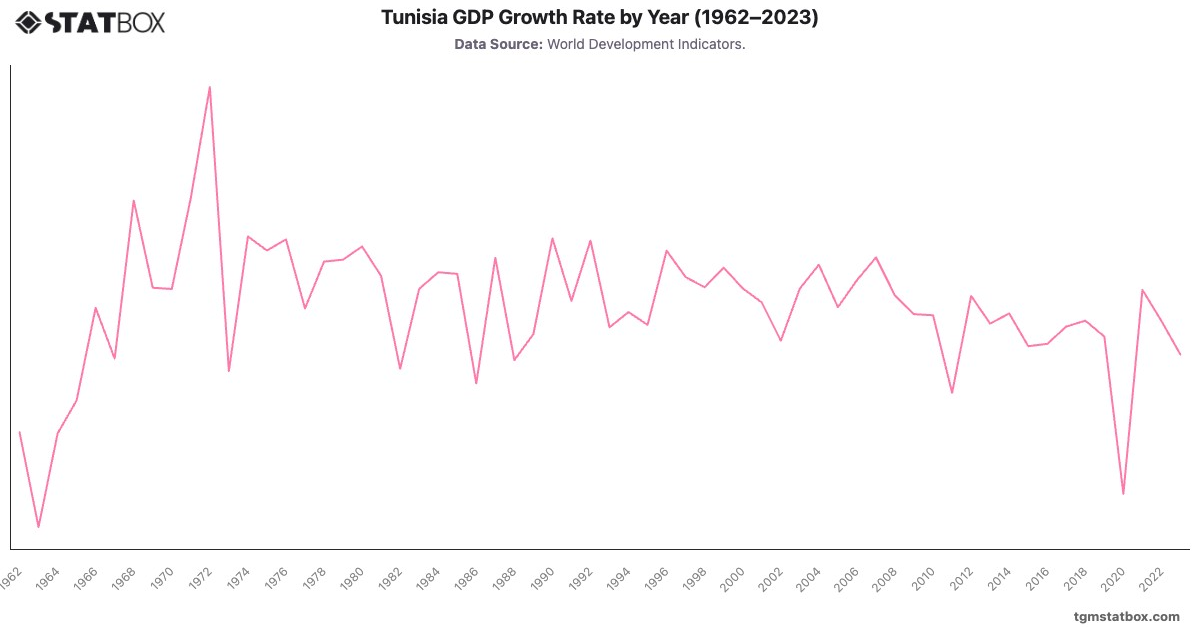
Find out more through related statistics on Tunisia’s annual GDP growth rate, Tunisia’s fertility rate pattern, Tunisia’s manufacturing sector share in GDP.