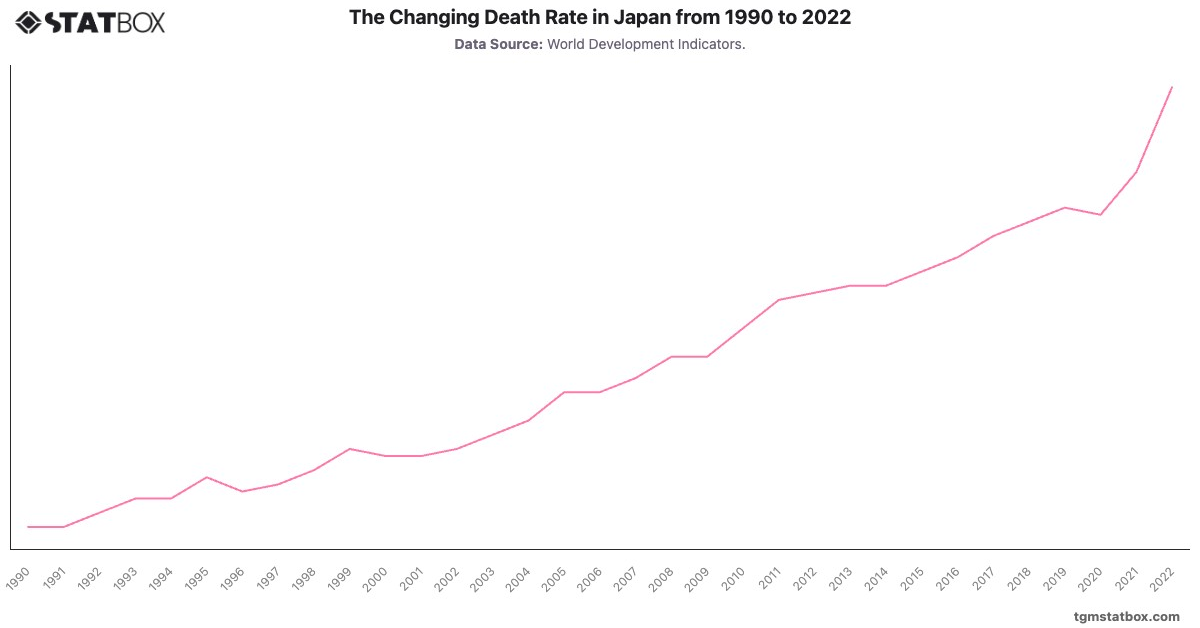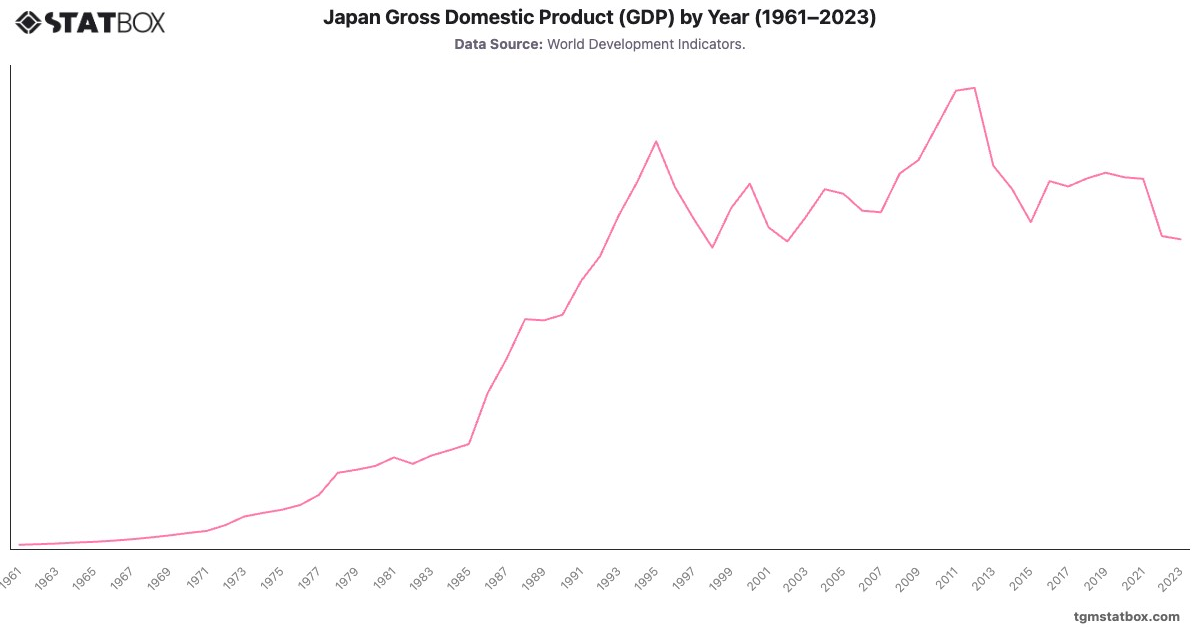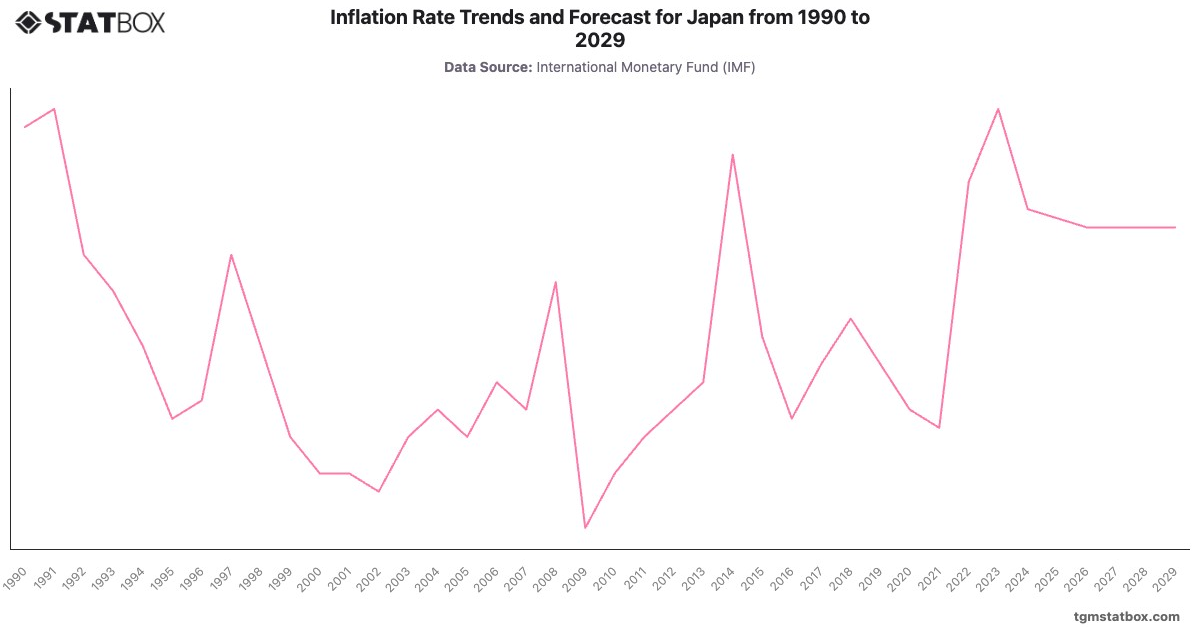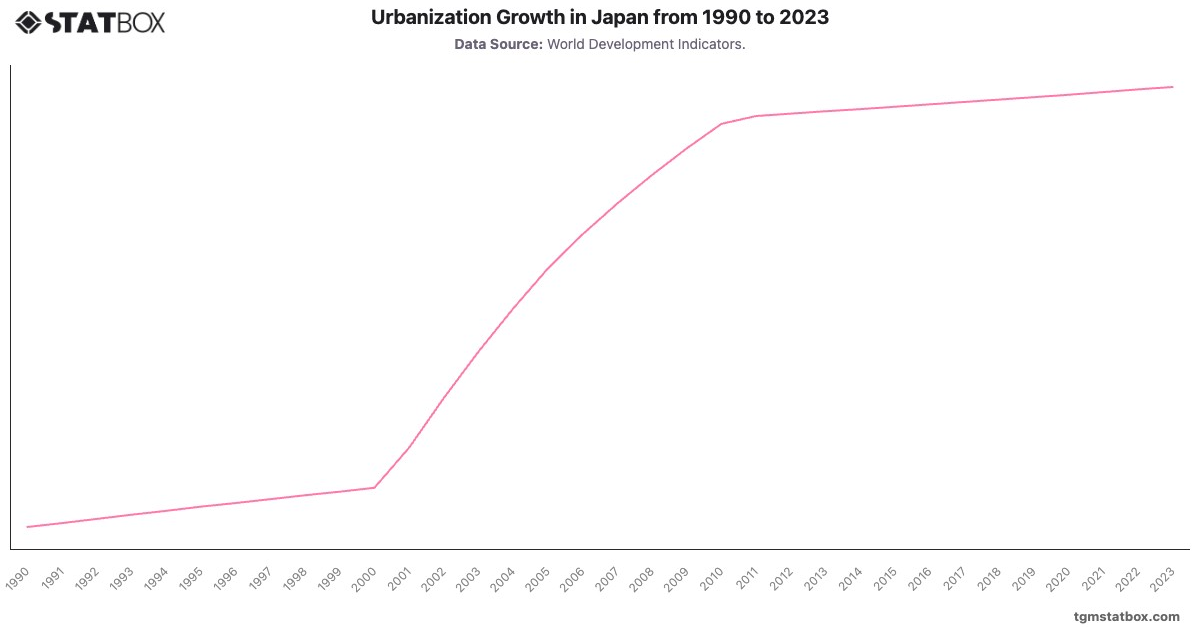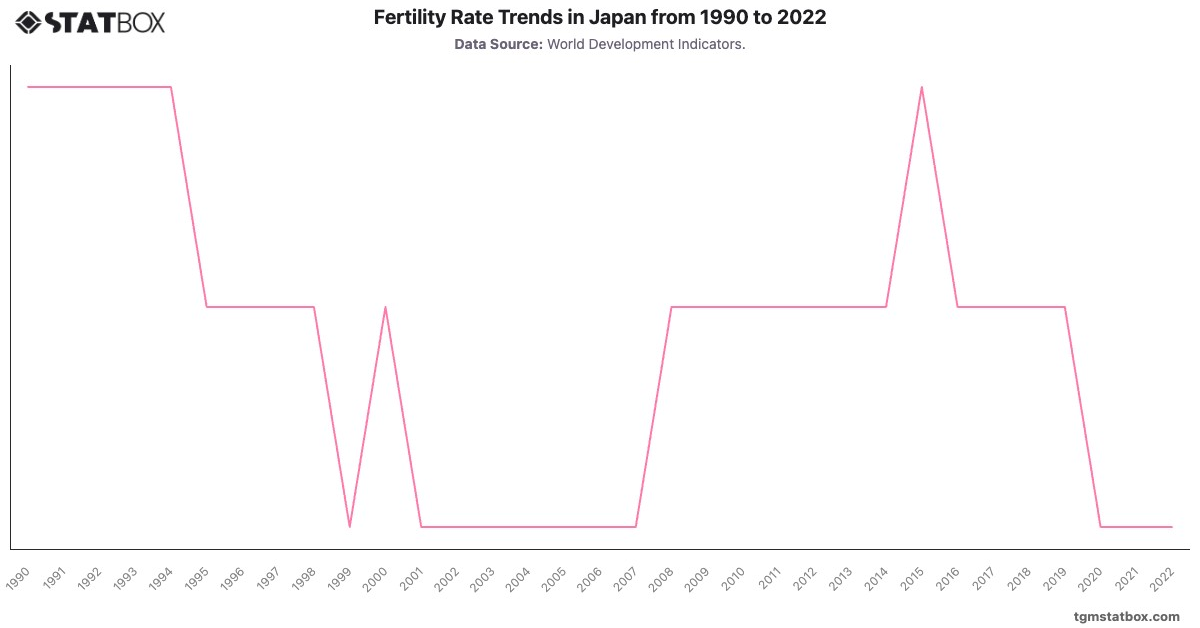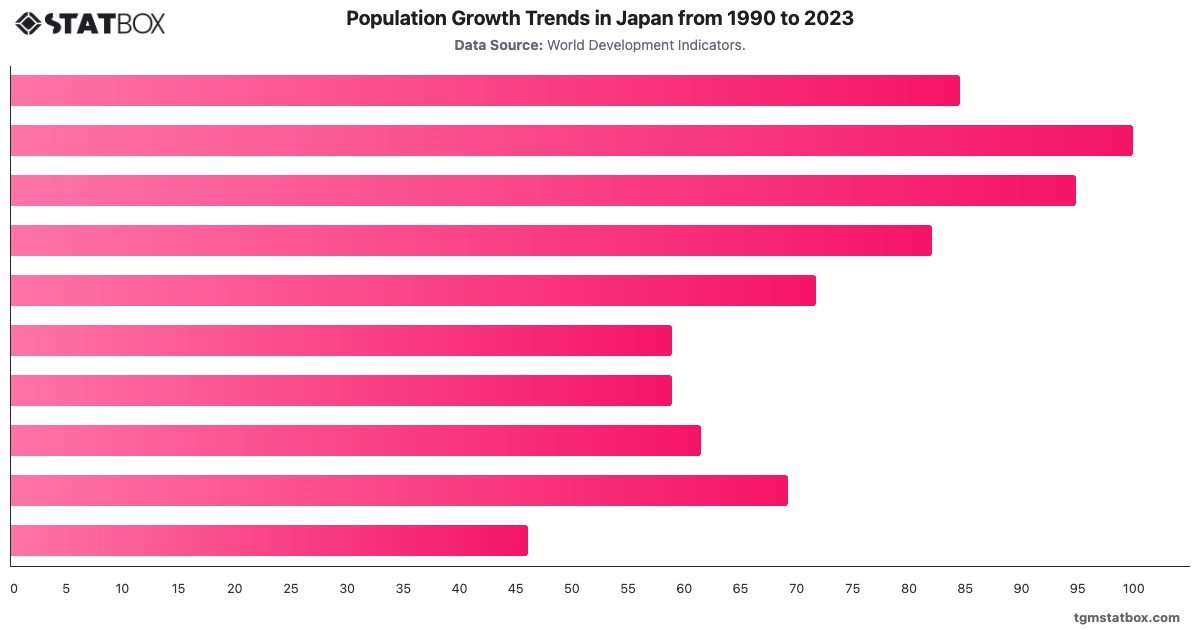
Japan's population growth has consistently declined over the past three decades. Growth rates were positive but marginal at in 1990 and gradually tapered to by the mid-2000s. This decline is attributed to Japan's aging population, low fertility rates, and limited immigration policies. Negative growth began in 2011 (-), compounded by the aftermath of the Tōhoku earthquake and a declining working-age population.
In recent years, the population contraction has intensified, with rates reaching - in 2021 and 2023, despite government initiatives to encourage higher birth rates and immigration. Japan's demographic trends remain a critical economic challenge, highlighting the urgency for policy innovation.
In recent years, the population contraction has intensified, with rates reaching - in 2021 and 2023, despite government initiatives to encourage higher birth rates and immigration. Japan's demographic trends remain a critical economic challenge, highlighting the urgency for policy innovation.
For a broader context, visit other statistics on Japan’s working-age population share, Japan’s population density estimate, Japan’s annual GDP growth rate.