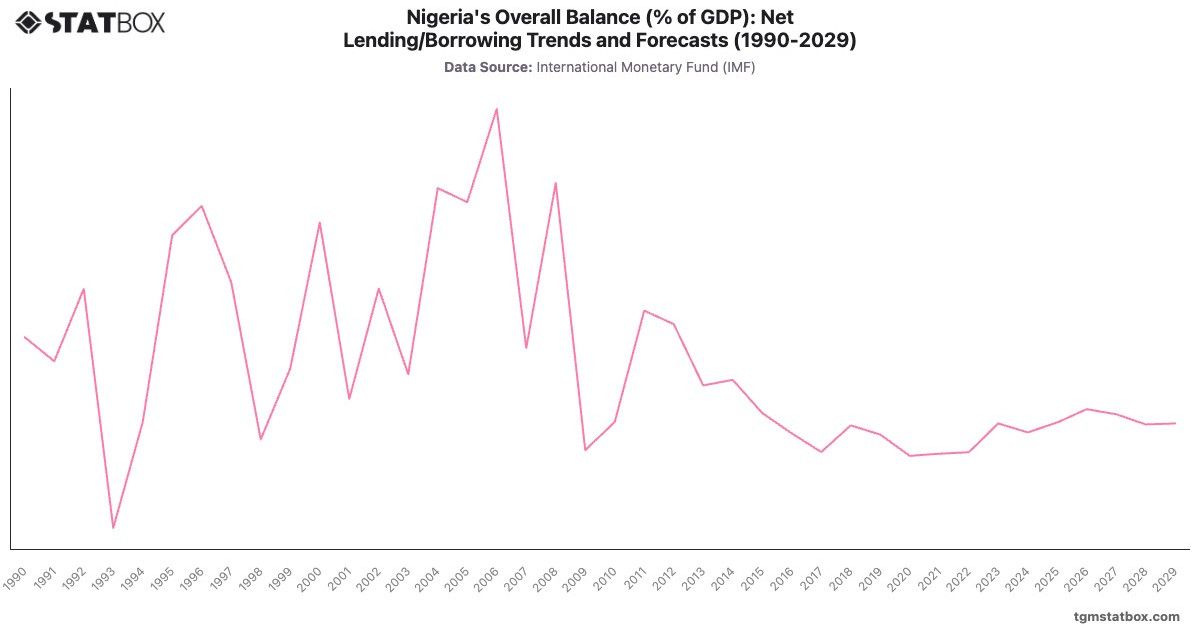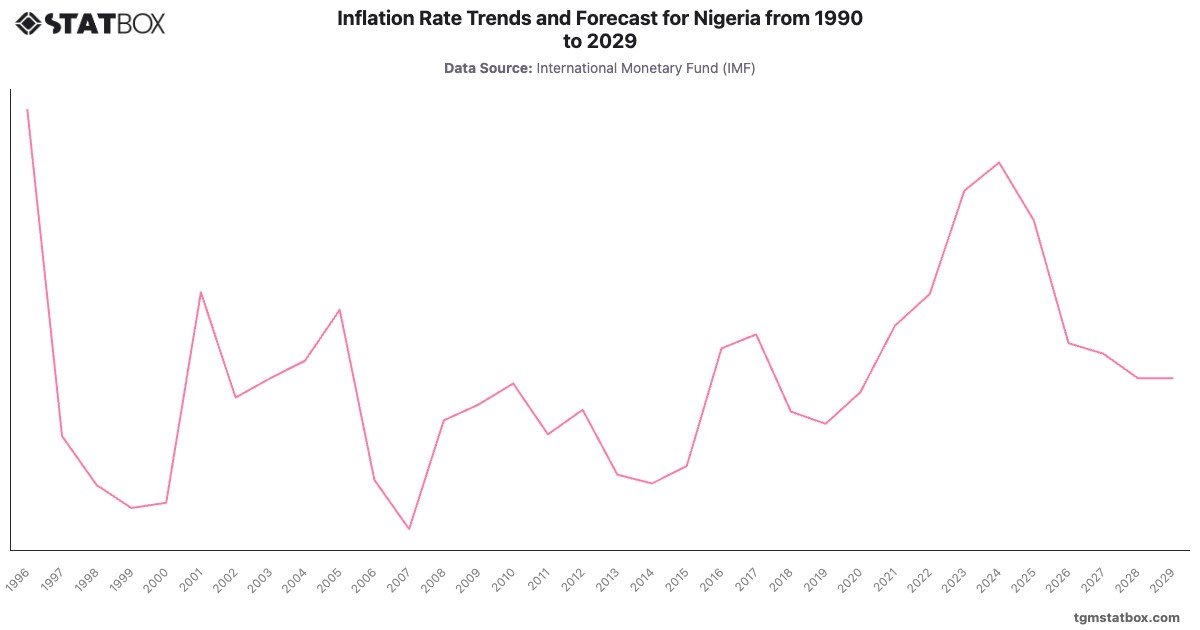
Nigeria's inflation has fluctuated significantly, with peaks such as in 1996 due to fiscal imbalances and structural economic challenges. Inflation decreased to in 2007 but rose sharply to in 2023, driven by currency devaluation, supply chain disruptions, and high energy prices.
Projections suggest a gradual decline to by 2028, reflecting the anticipated effects of fiscal reforms and improved monetary policy measures.
Projections suggest a gradual decline to by 2028, reflecting the anticipated effects of fiscal reforms and improved monetary policy measures.
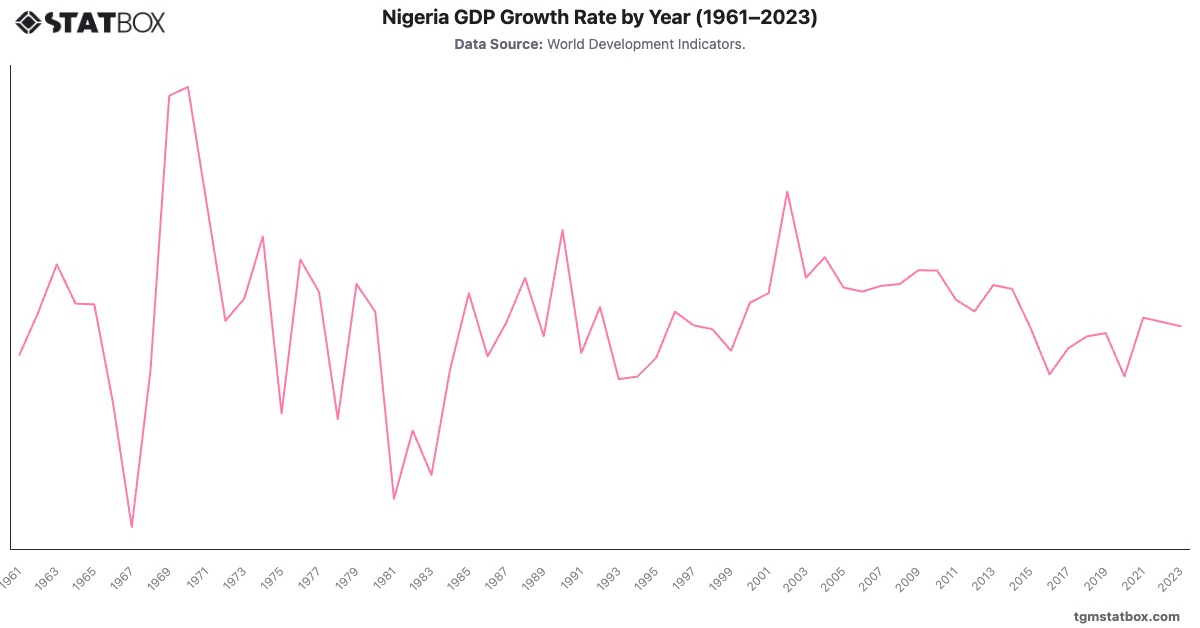
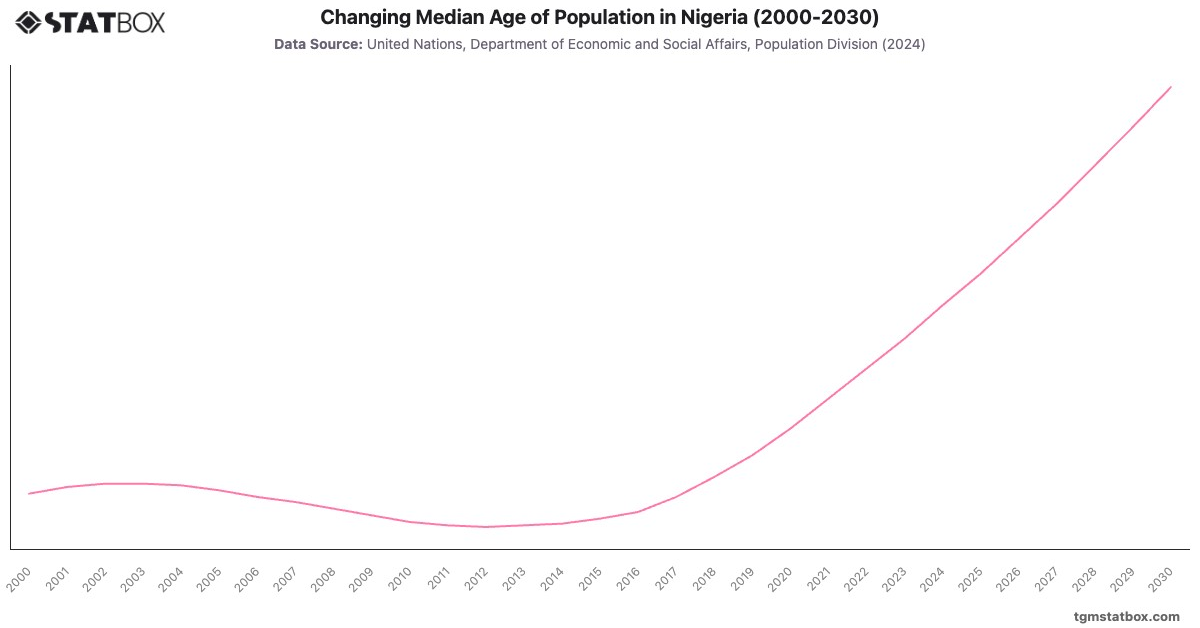
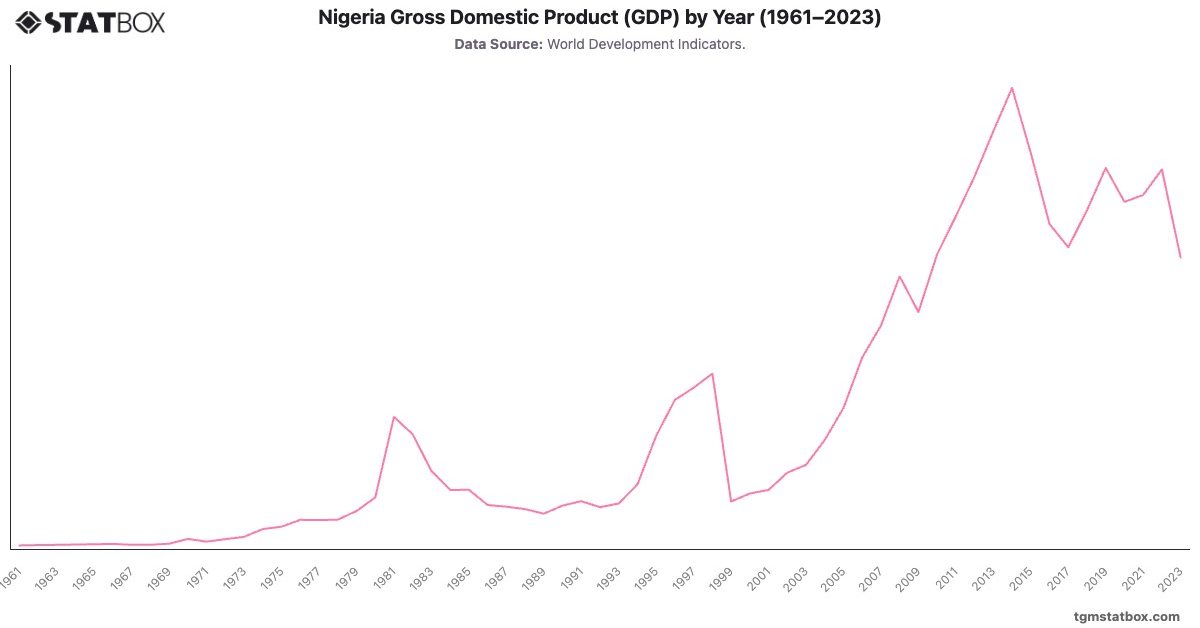
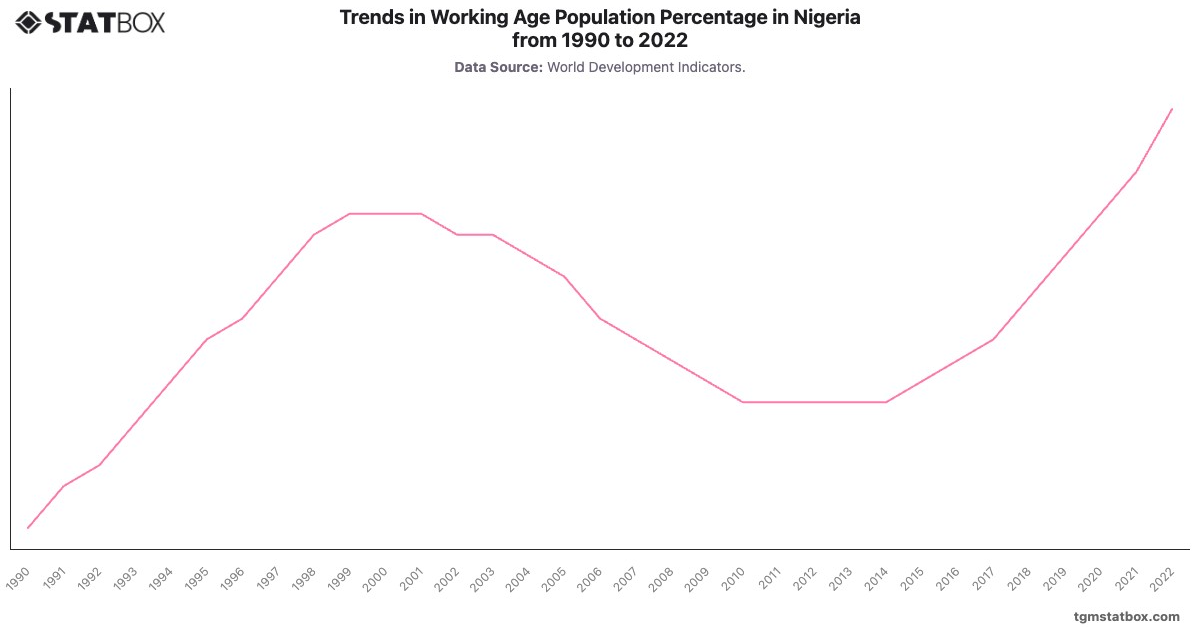
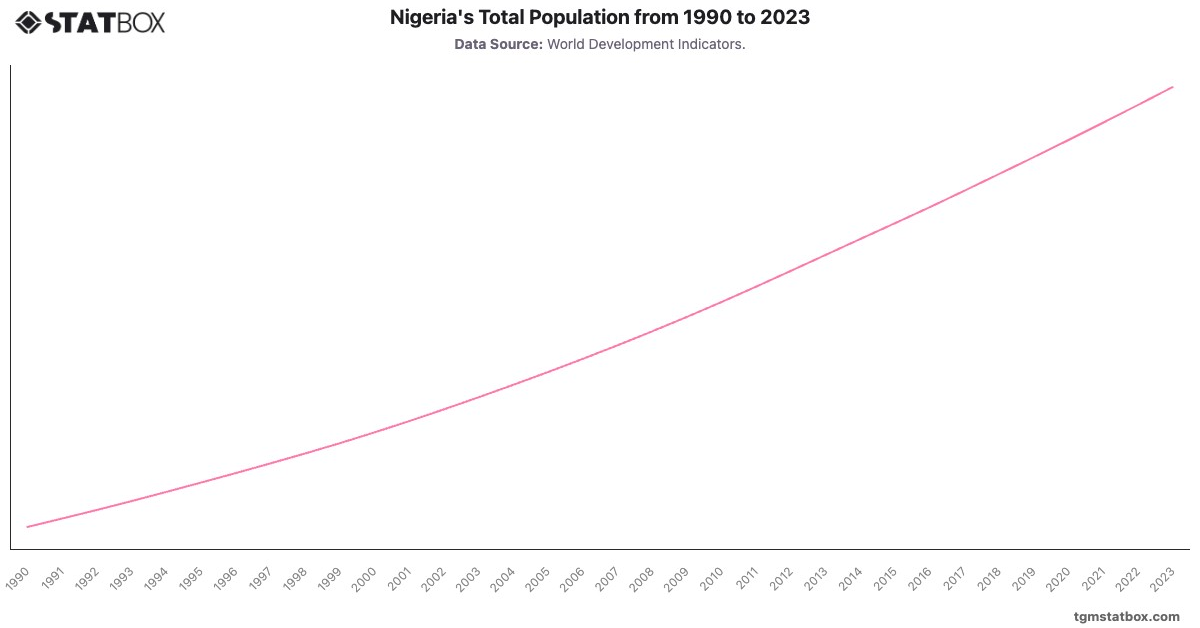
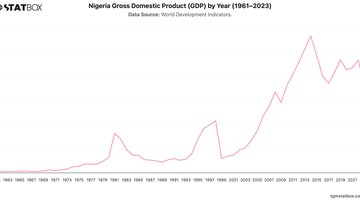
Find out more through related statistics on Nigeria’s annual GDP, Nigeria’s working-age population proportion, Nigeria’s population numbers.