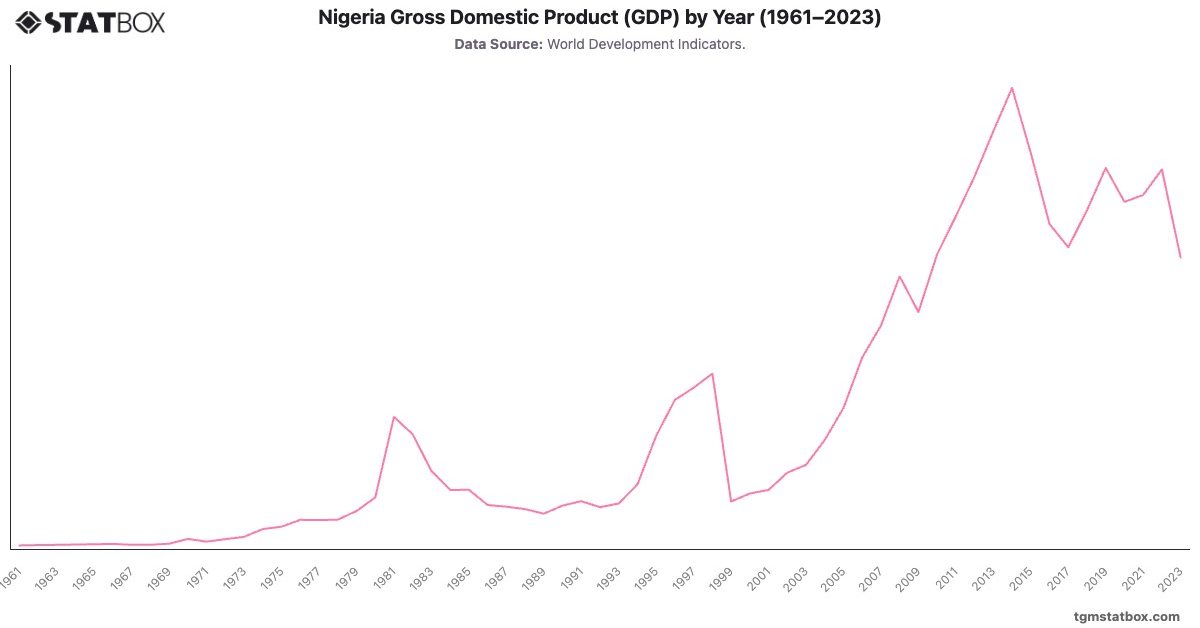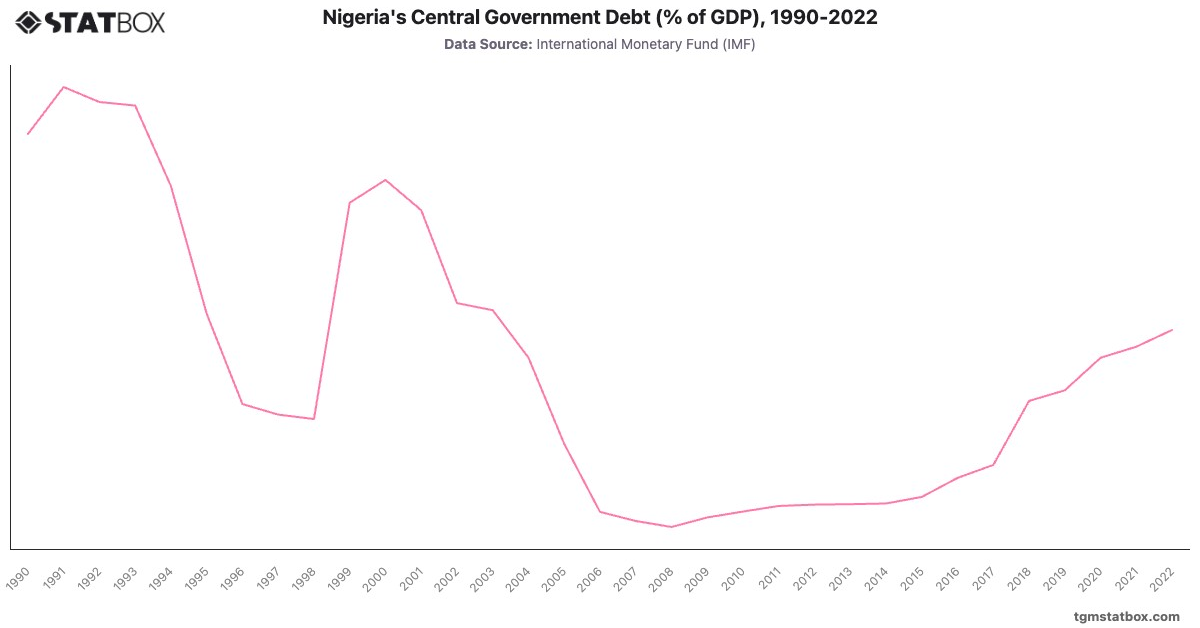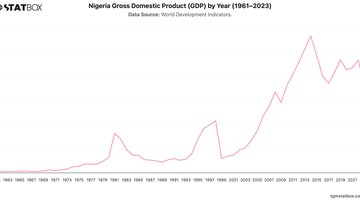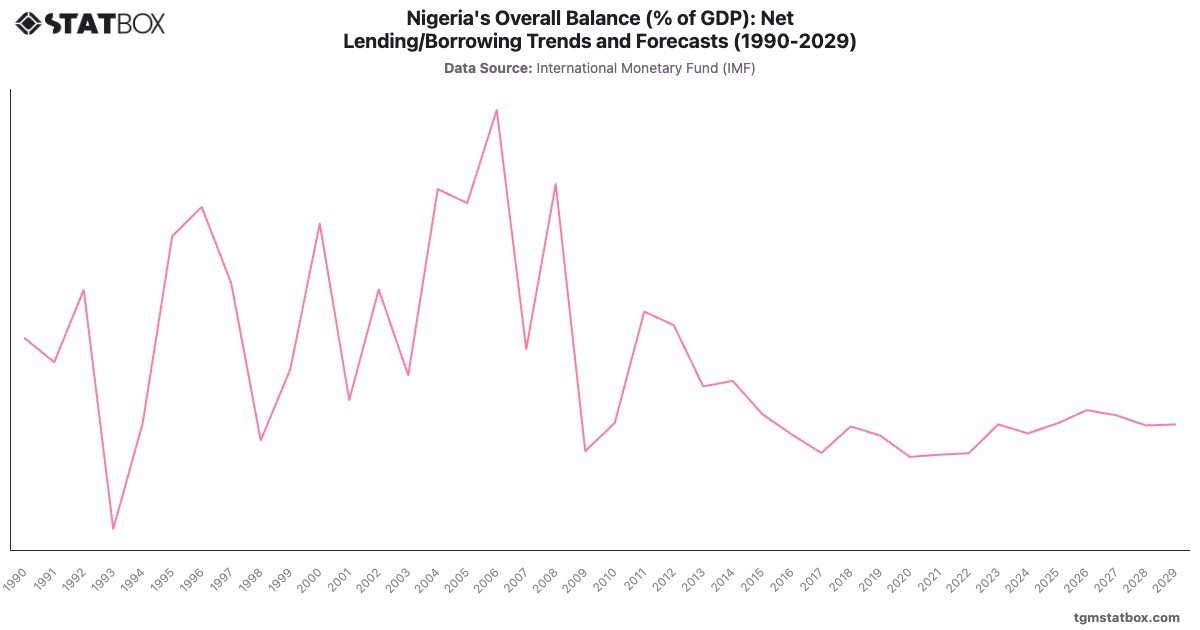
Nigeria’s fiscal performance has been closely tied to oil price fluctuations. Surpluses, such as in 2006, occurred during periods of high oil prices, while downturns, including - in 1993 and - in 2020, reflected economic and revenue shocks.
Recent years have seen persistent deficits averaging -, exacerbated by pandemic-related challenges. Projections for 2029 indicate a modest deficit of -, emphasizing the need for economic diversification and revenue reforms to stabilize fiscal health.
Recent years have seen persistent deficits averaging -, exacerbated by pandemic-related challenges. Projections for 2029 indicate a modest deficit of -, emphasizing the need for economic diversification and revenue reforms to stabilize fiscal health.
For a deeper dive into the topic, explore Nigeria’s urbanization growth, Nigeria’s industry sector GDP contribution, Nigeria’s annual GDP.