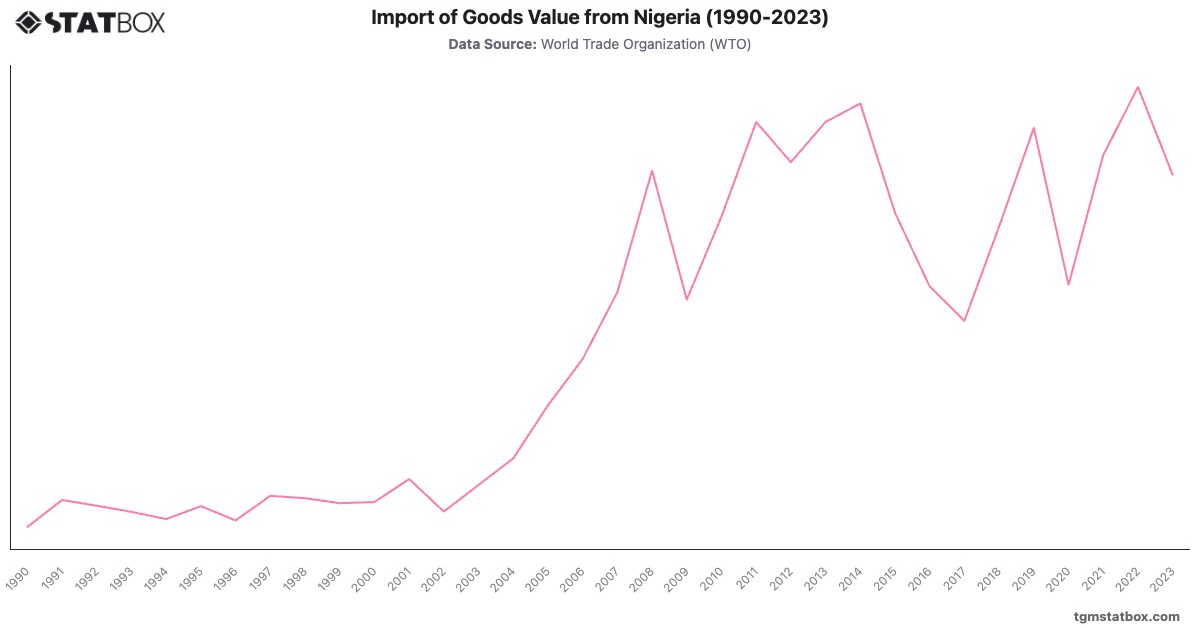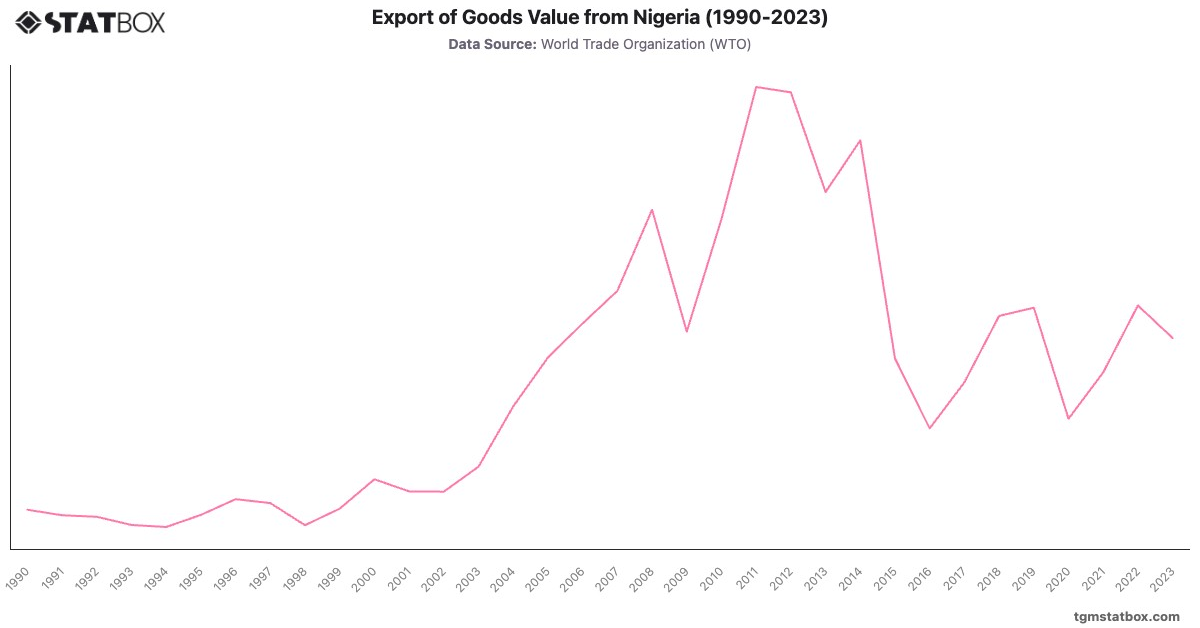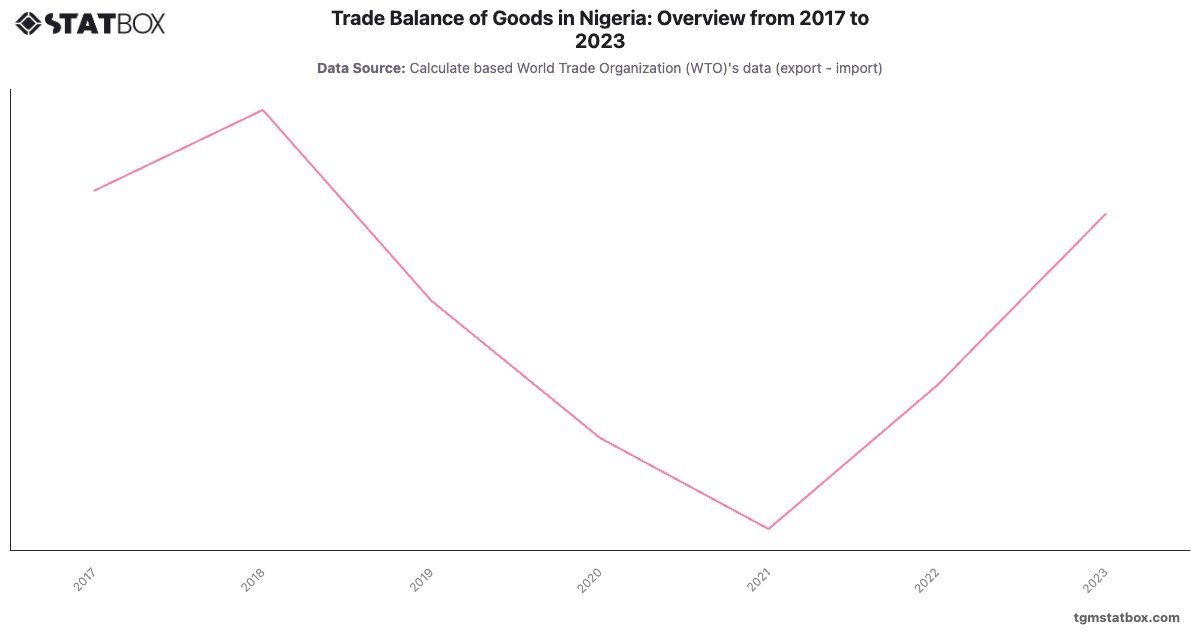
Nigeria’s trade balance fluctuated significantly over the 2017–2023 period, moving from a surplus of 13,195.2 million USD in 2017 to a deficit of -5,009.2 million USD in 2021 before recovering to a surplus of 11,943.6 million USD in 2023. This variability highlights Nigeria’s dependency on crude oil exports, which are sensitive to global price and demand fluctuations.
The surplus in 2023 reflects increased global oil prices and export volumes, alongside efforts to boost non-oil exports such as agricultural products. However, the deficit in earlier years underscores vulnerabilities stemming from high import dependency for refined petroleum and industrial goods, as well as fluctuations in oil revenues.
The surplus in 2023 reflects increased global oil prices and export volumes, alongside efforts to boost non-oil exports such as agricultural products. However, the deficit in earlier years underscores vulnerabilities stemming from high import dependency for refined petroleum and industrial goods, as well as fluctuations in oil revenues.
For a deeper dive into the topic, explore Nigeria’s net lending/borrowing (% of GDP), Nigeria’s annual GDP growth rate, Nigeria's goods export value.