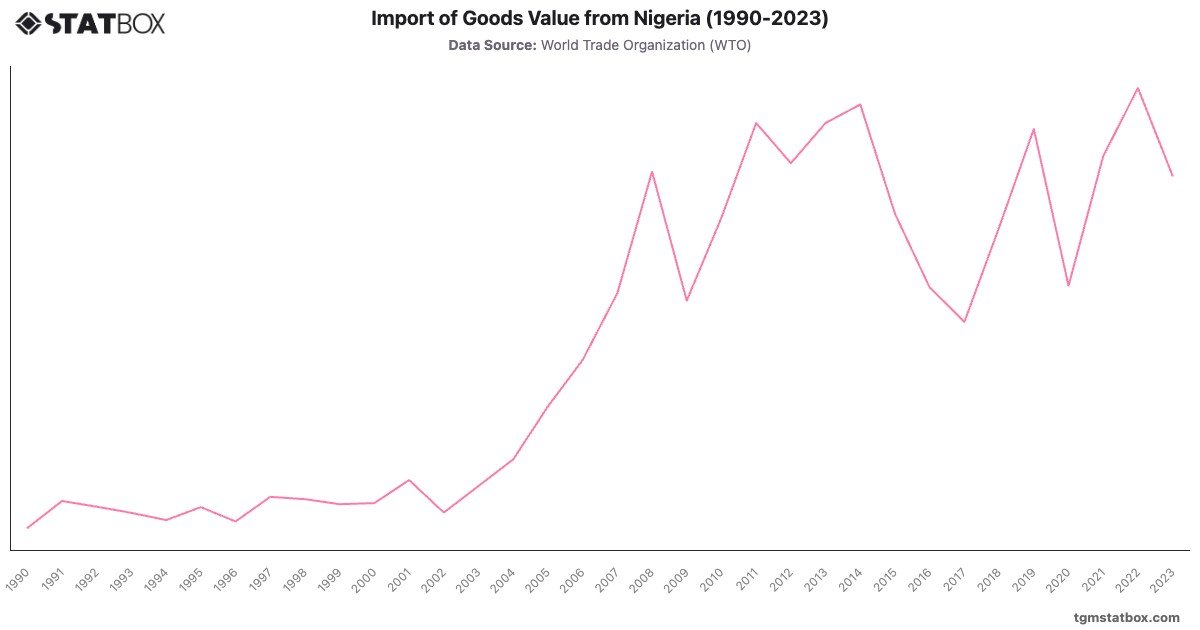
Nigeria's imports rose from $5.6B in 1990 to $60.3B in 2022, highlighting its growing reliance on foreign goods to meet domestic demand. Key growth occurred between 2005 and 2008, with imports jumping from $20.7B to $49.9B, driven by rising energy investments and consumer demand.
The 2016 economic recession caused imports to dip to $35.5B, but recovery brought imports to $60.3B in 2022, driven by rising fuel and industrial goods demand. The decline to $49.4B in 2023 reflects ongoing economic pressures and currency fluctuations. Nigeria’s trade trends underscore its dependency on imports to fuel industrialization and consumer needs.
The 2016 economic recession caused imports to dip to $35.5B, but recovery brought imports to $60.3B in 2022, driven by rising fuel and industrial goods demand. The decline to $49.4B in 2023 reflects ongoing economic pressures and currency fluctuations. Nigeria’s trade trends underscore its dependency on imports to fuel industrialization and consumer needs.
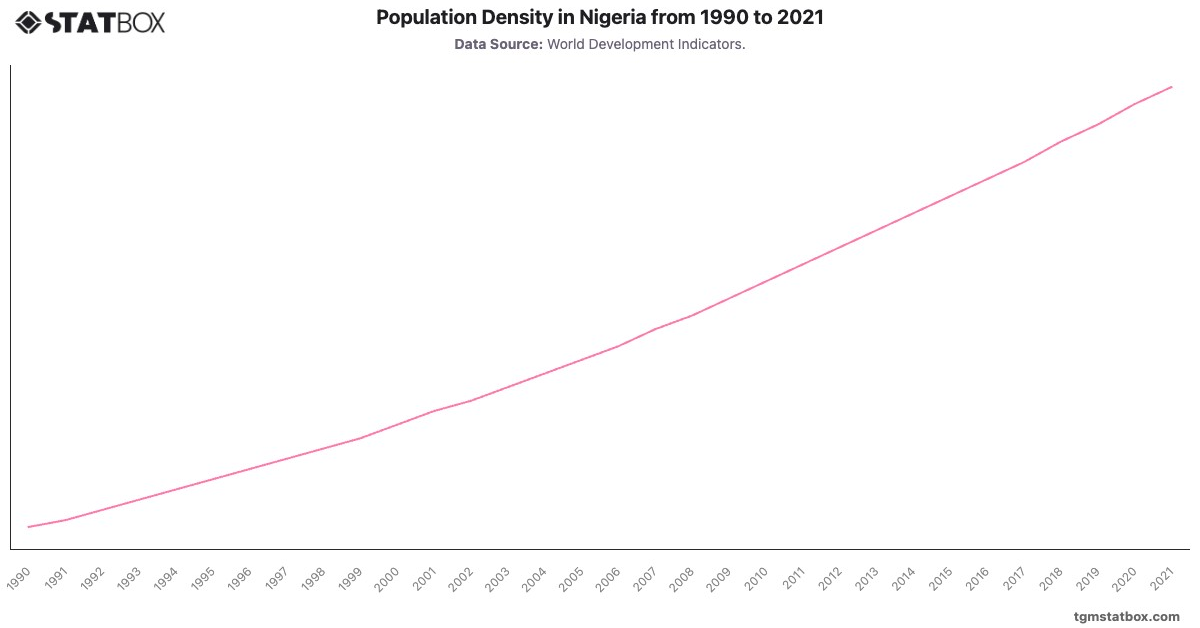
Find out more through related statistics on Nigeria’s population growth rate, Nigeria’s working-age population proportion, Nigeria’s population density data.