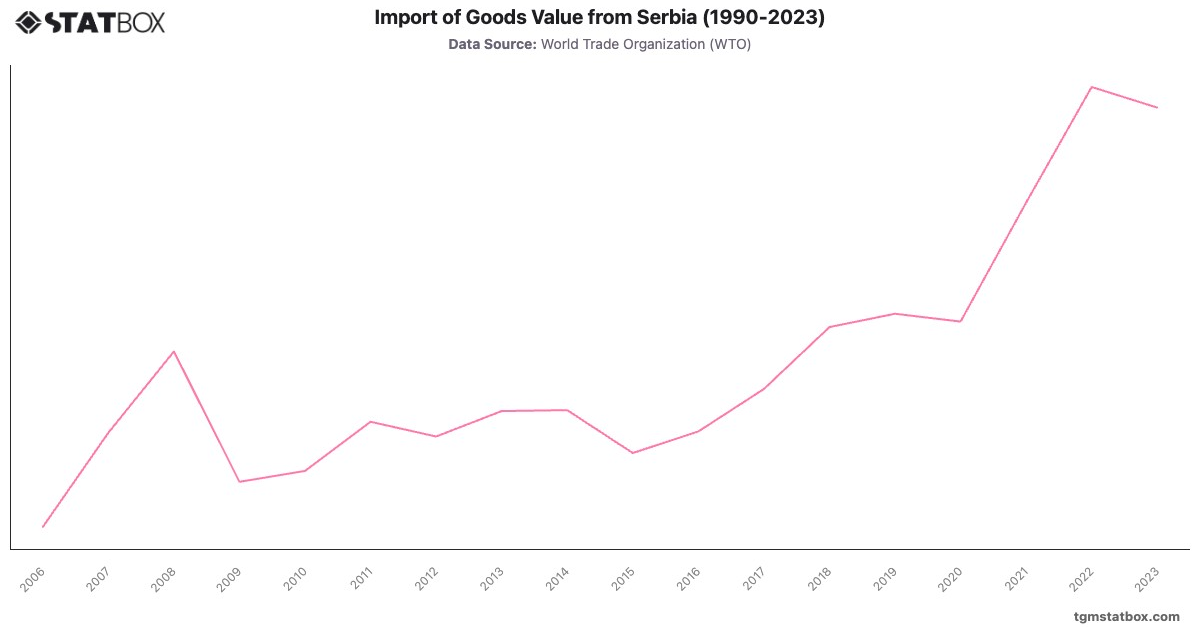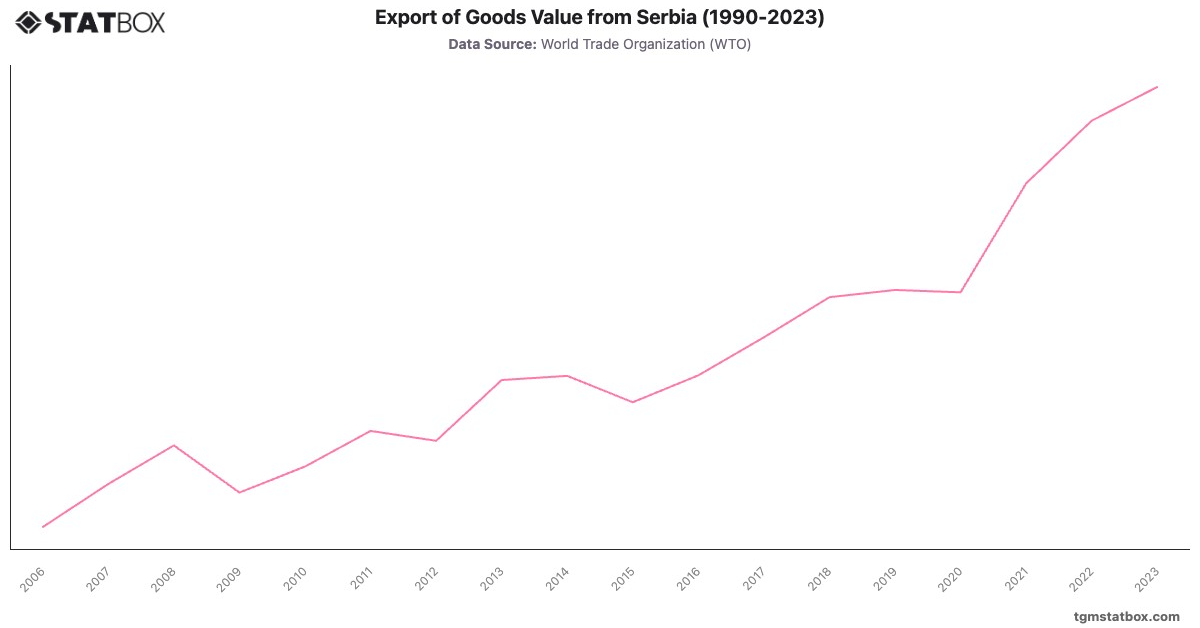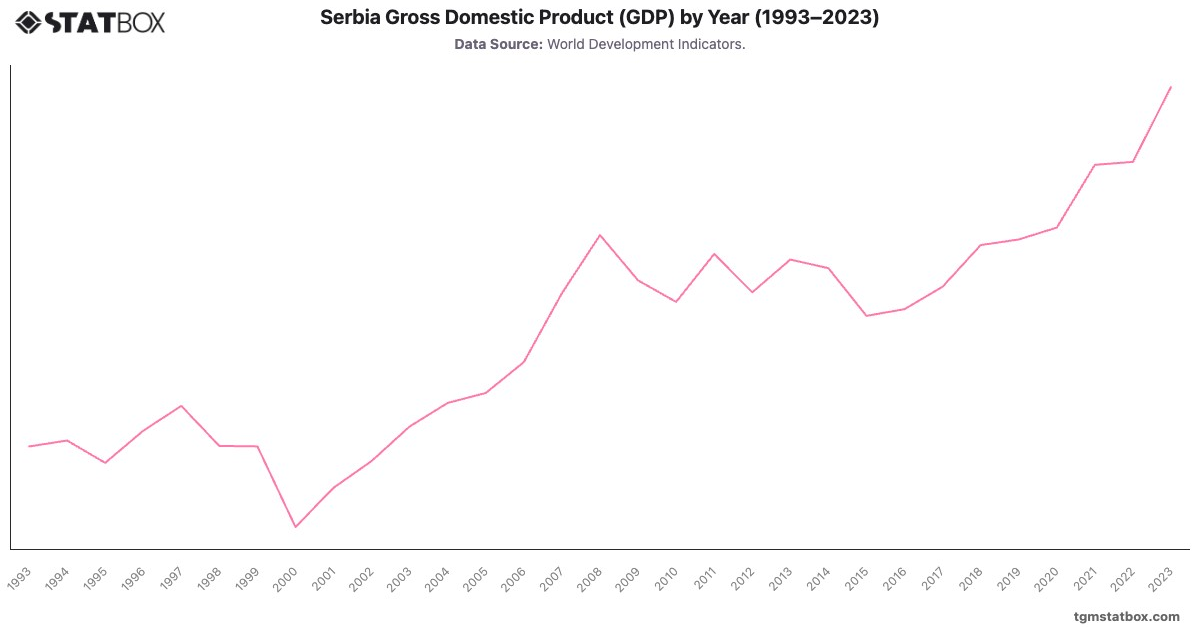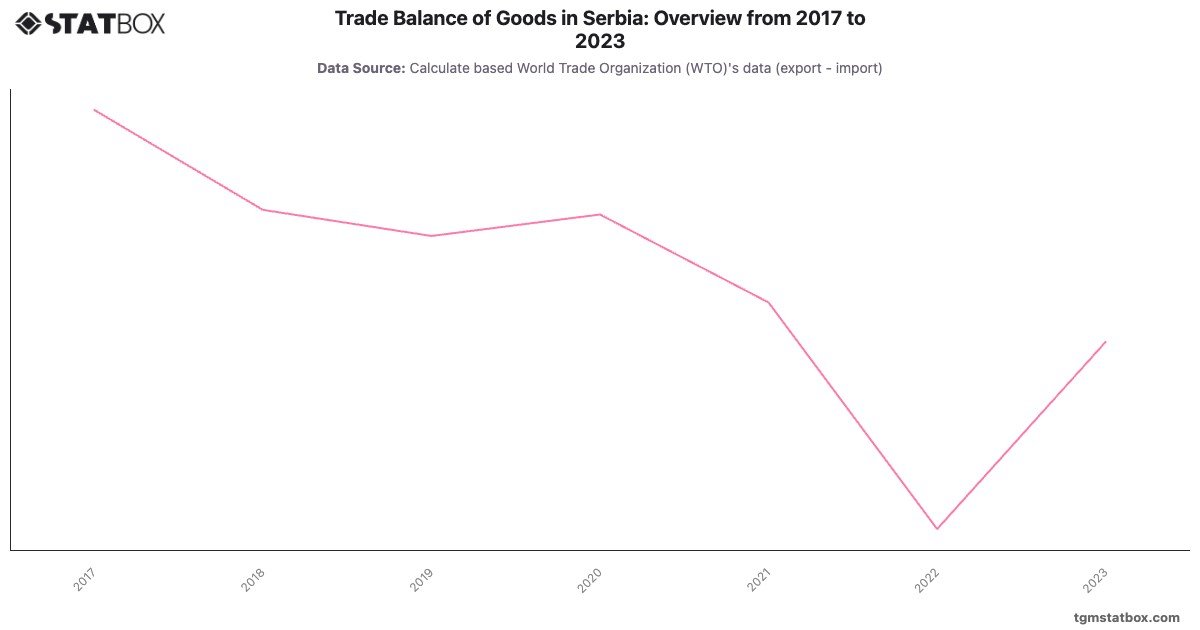
Serbia’s trade balance of goods recorded consistent deficits over the 2017–2023 period, with the gap widening from -4,954.7 million USD in 2017 to -12,090.5 million USD in 2022. The increase reflects rising imports of machinery, energy, and consumer goods, driven by economic growth and modernization efforts.
By 2023, the deficit narrowed to -8,902.7 million USD, as energy import costs moderated and exports of agricultural and industrial goods strengthened. Serbia’s trade dynamics highlight its reliance on imported energy and manufactured goods, underscoring the importance of export diversification and local production to reduce trade imbalances.
By 2023, the deficit narrowed to -8,902.7 million USD, as energy import costs moderated and exports of agricultural and industrial goods strengthened. Serbia’s trade dynamics highlight its reliance on imported energy and manufactured goods, underscoring the importance of export diversification and local production to reduce trade imbalances.
Find out more through related statistics on Serbia’s net ODA received, Serbia’s manufacturing share in GDP, urbanization trend in Serbia.