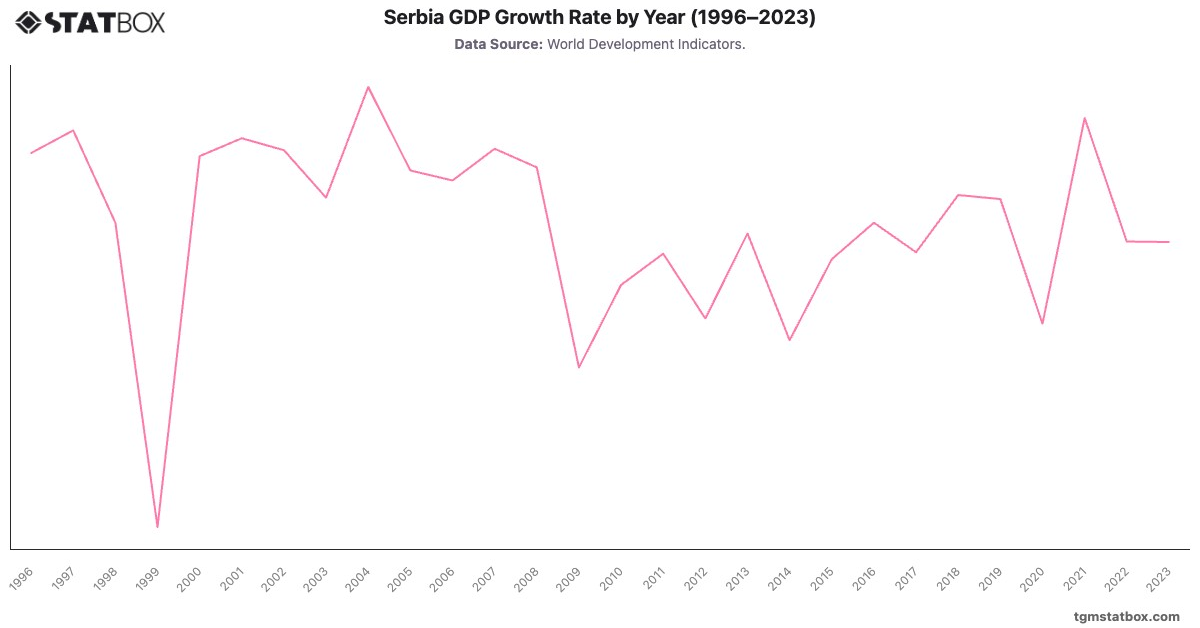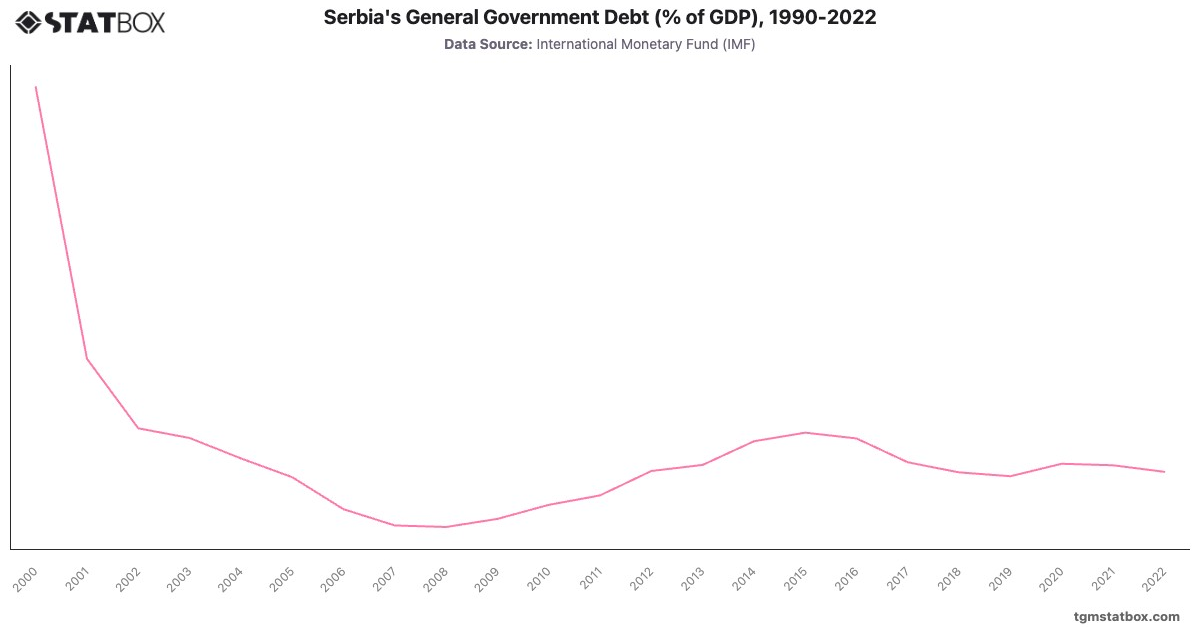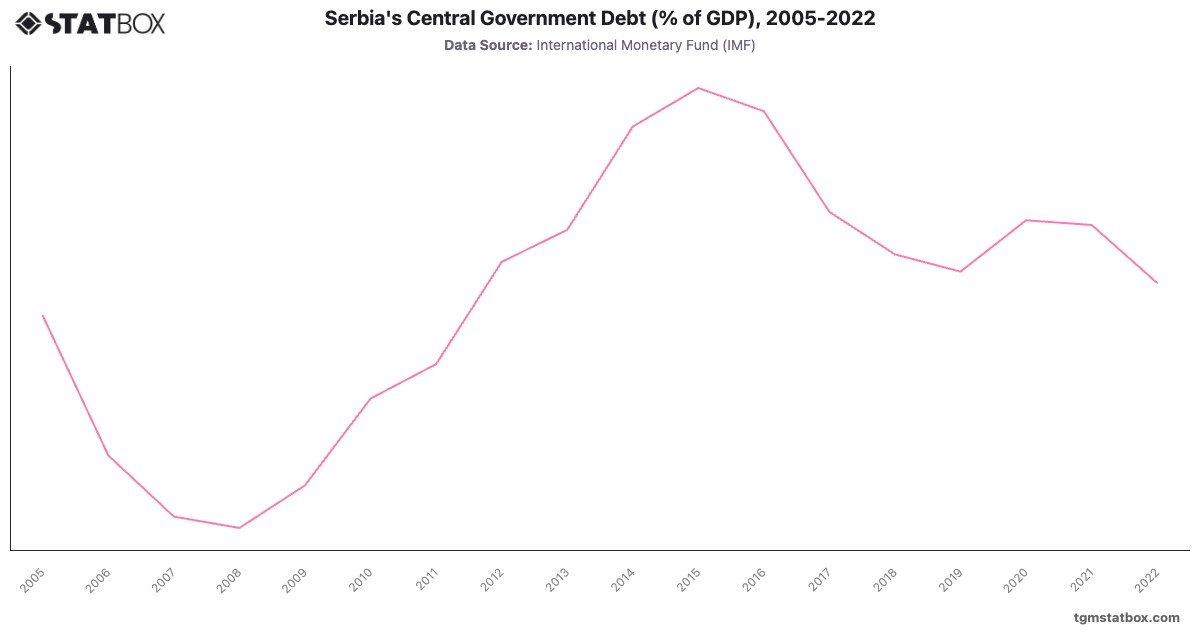
Serbia's central government debt has mirrored the country's economic and political challenges since 2005. Starting at of GDP, debt decreased sharply to by 2008, buoyed by economic growth and privatization revenues. However, the 2009 global financial crisis reversed this trend, with debt peaking at in 2015 due to slower growth and rising fiscal deficits.
Following fiscal consolidation and structural reforms, debt began a downward trend, falling to by 2019. The COVID-19 pandemic disrupted this progress, raising the debt ratio to in 2020. Recovery efforts stabilized debt at in 2022, reflecting improved fiscal management amid ongoing economic challenges.
Following fiscal consolidation and structural reforms, debt began a downward trend, falling to by 2019. The COVID-19 pandemic disrupted this progress, raising the debt ratio to in 2020. Recovery efforts stabilized debt at in 2022, reflecting improved fiscal management amid ongoing economic challenges.
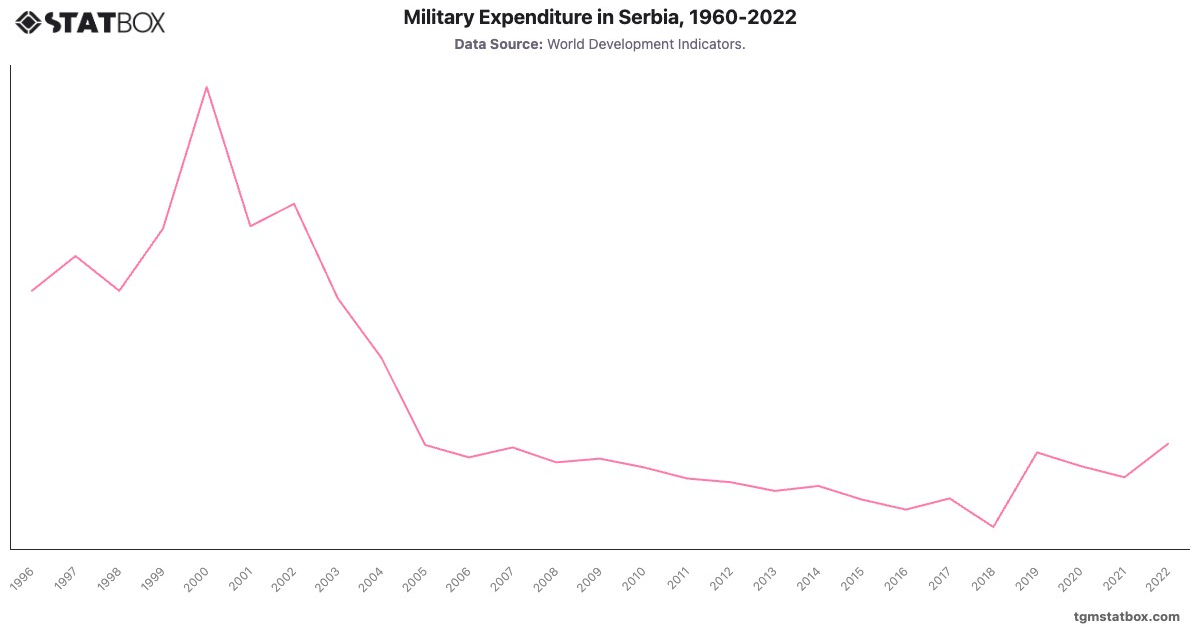
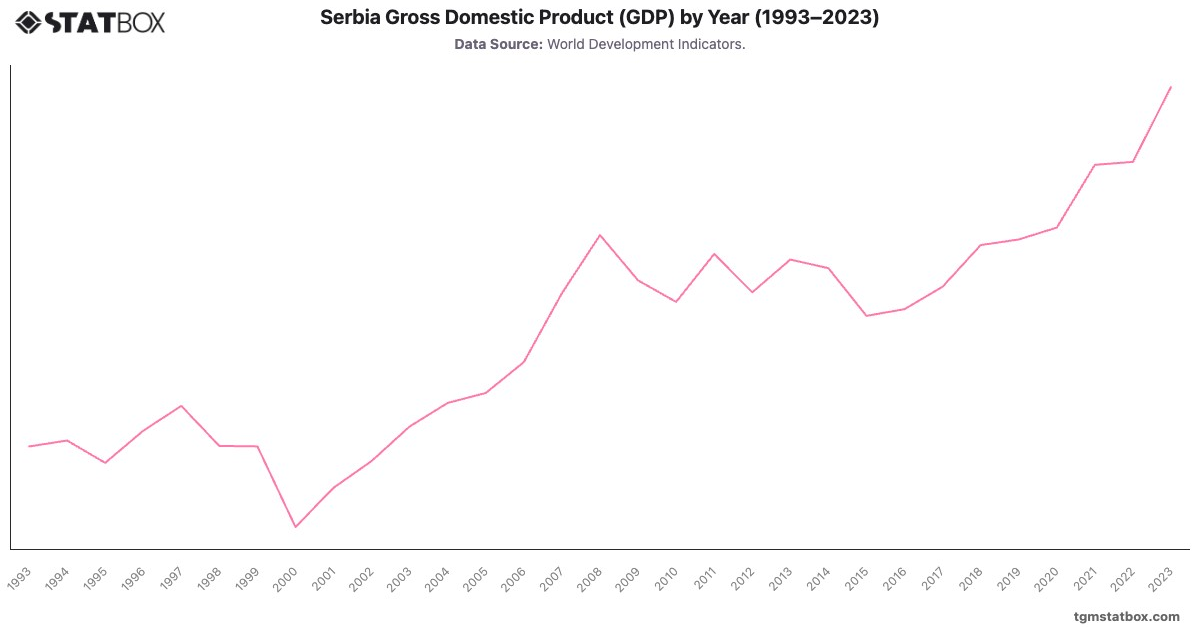
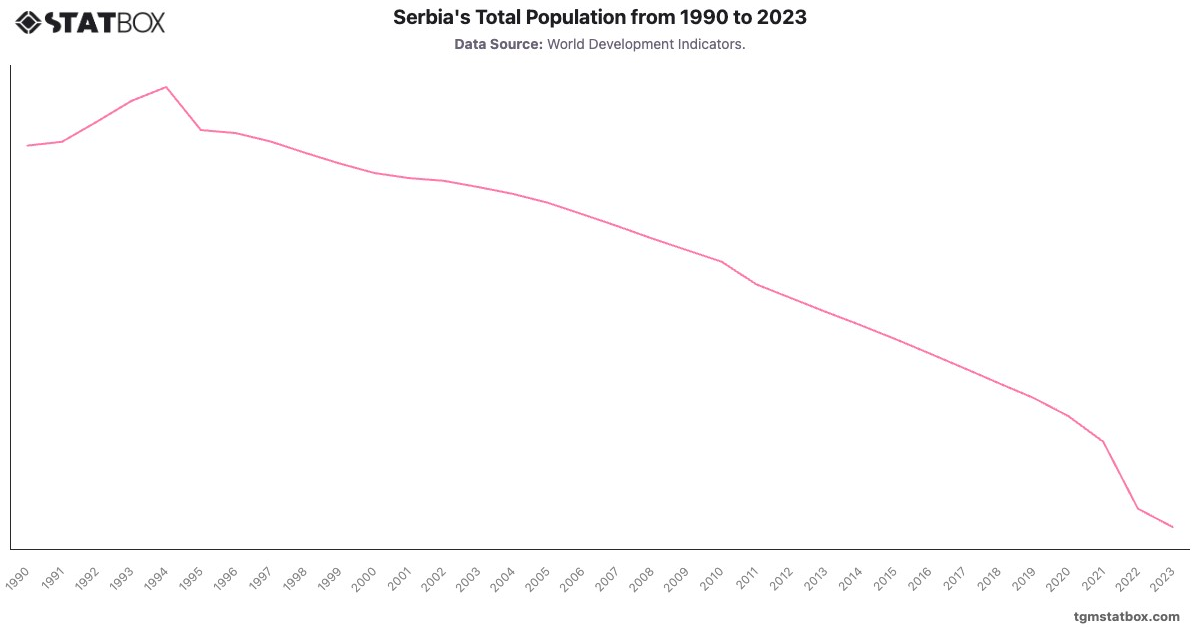
Gain a broader perspective by reviewing Serbia’s military spending, Serbia’s population growth data, Serbia’s unemployment rate.