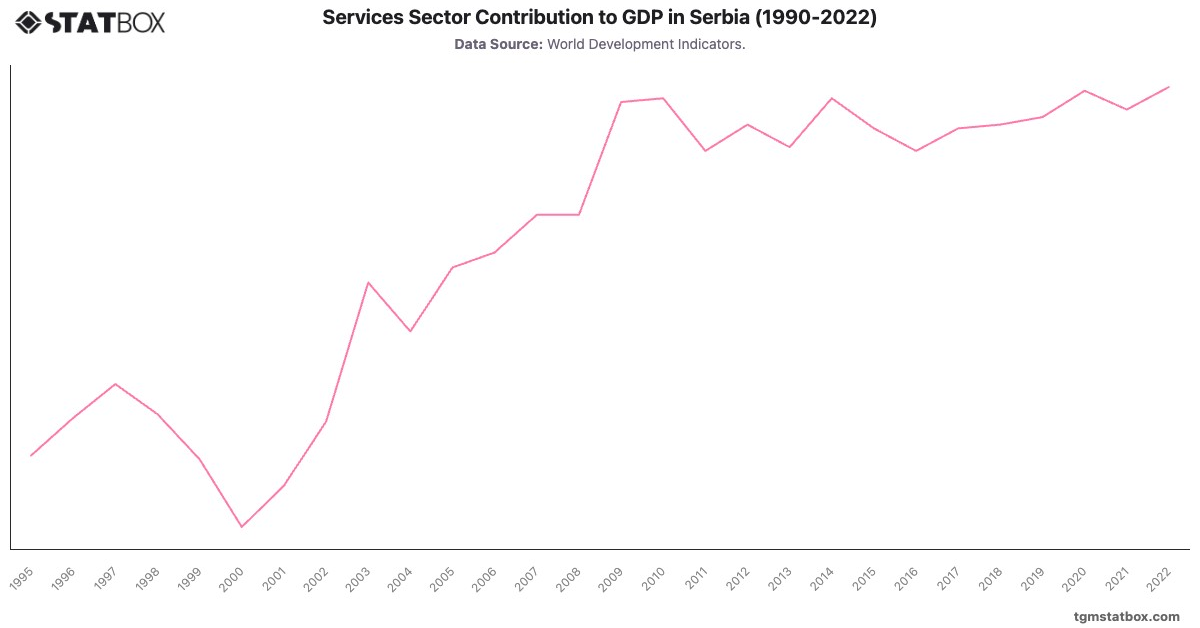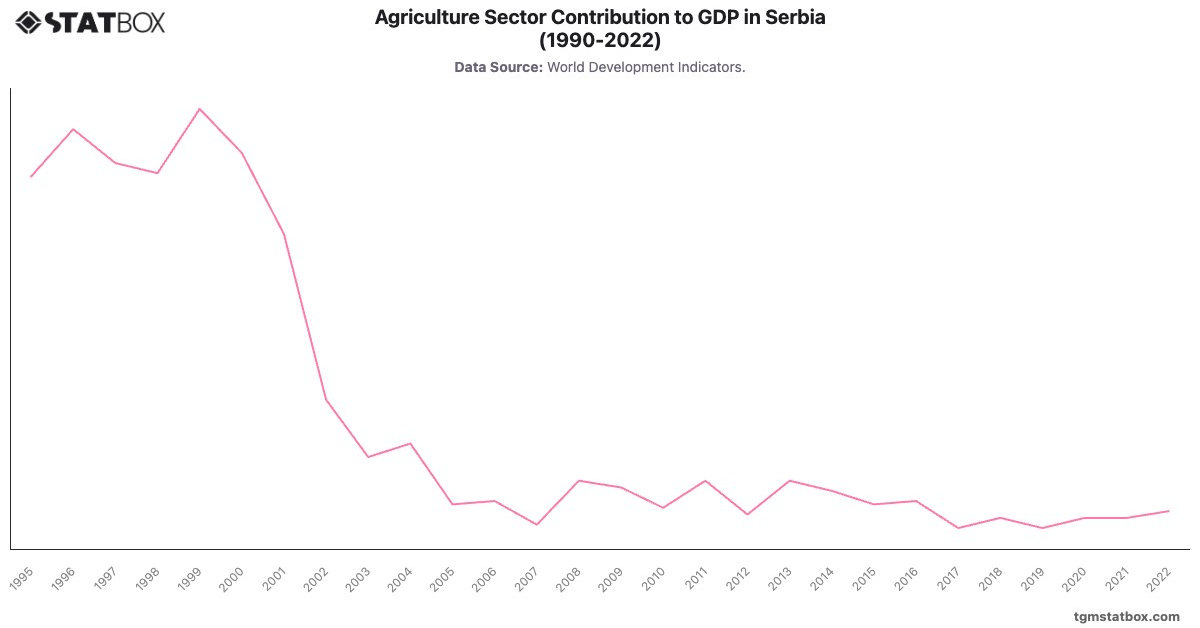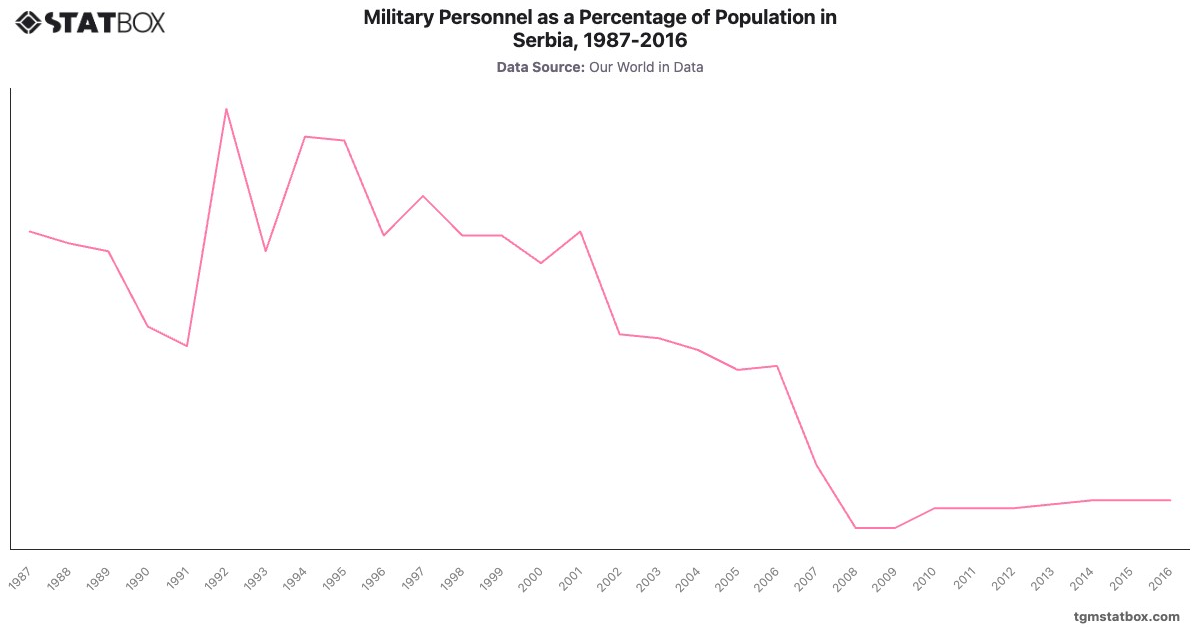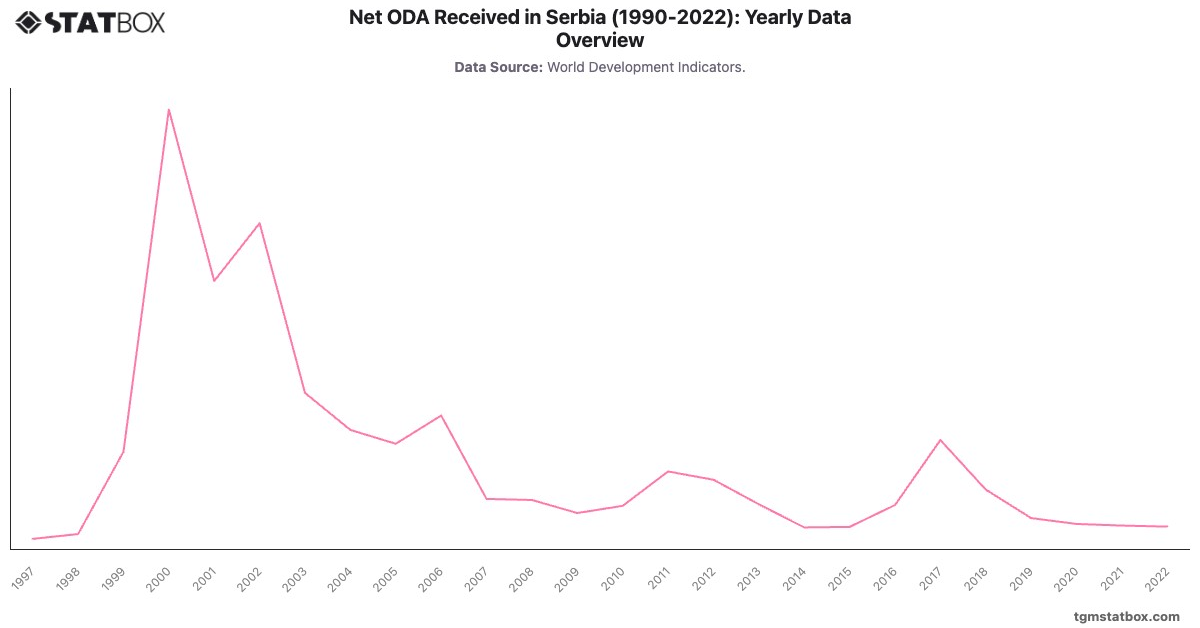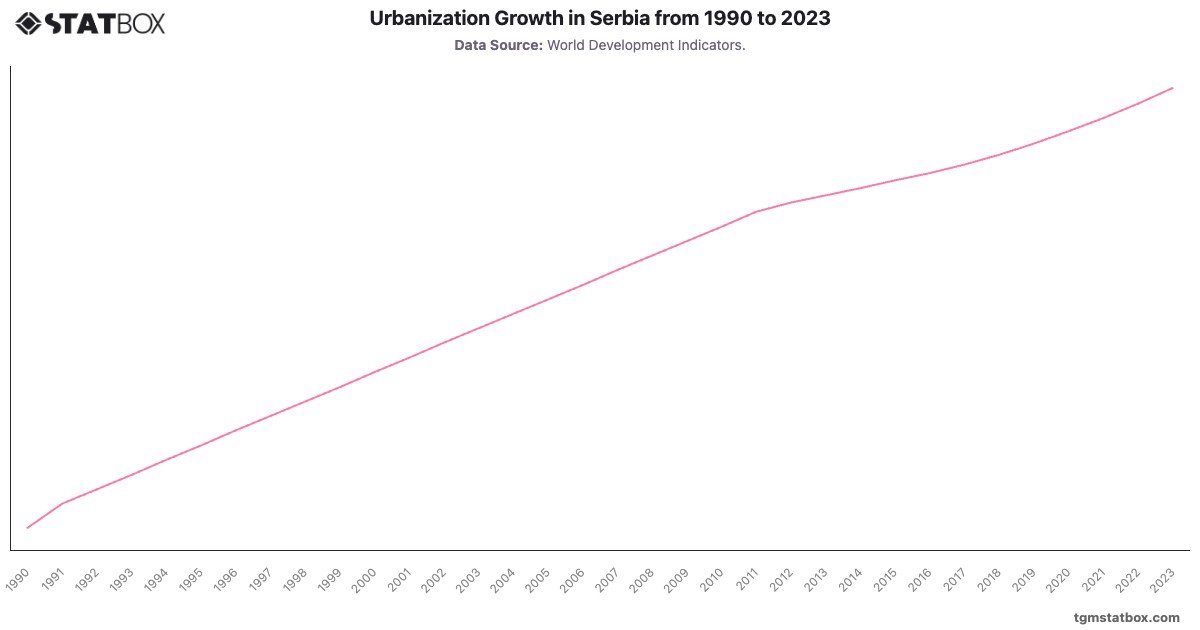
In Serbia, urbanization grew gradually from in 1990 to in 2023, highlighting a steady rural-to-urban migration influenced by social and economic factors. The early 1990s saw limited growth due to political instability and the dissolution of Yugoslavia, which led to a slowdown in economic activity. However, from the late 1990s onward, urbanization increased as people moved to cities seeking better employment and education opportunities. This trend persisted into the 2000s, aided by economic reforms and EU-focused development efforts that improved urban infrastructure. The rate reached by 2023 as Serbia's cities became increasingly important hubs for commerce and culture. As more residents pursued urban living to access modern amenities and job markets, urbanization became central to Serbia's development trajectory.
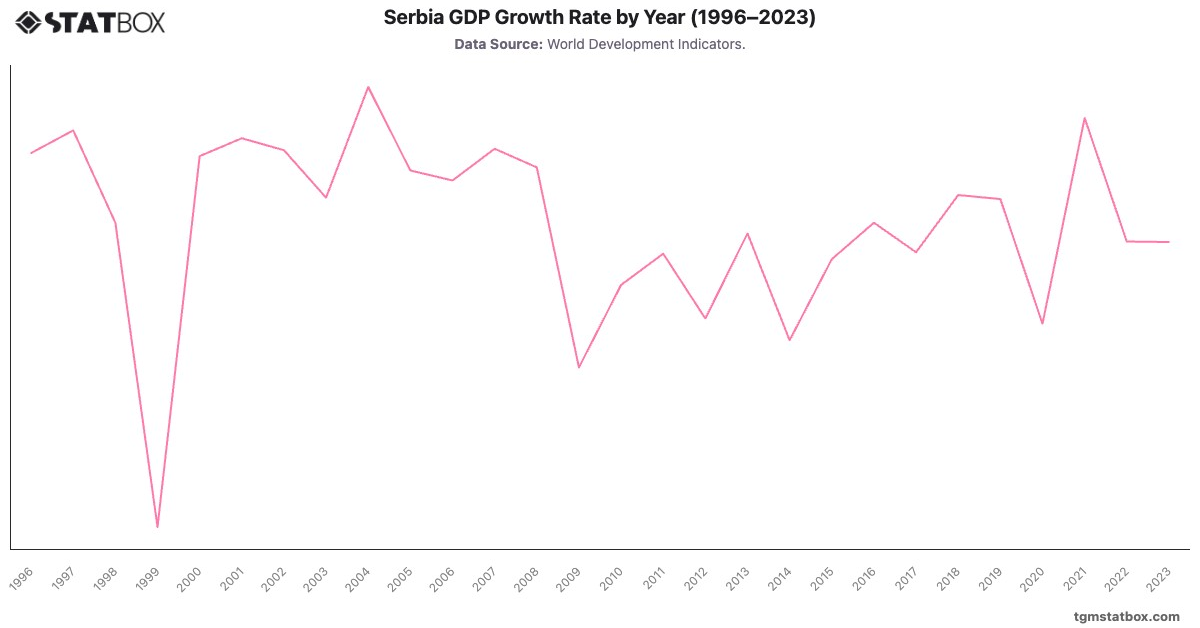
Gain a broader perspective by reviewing Serbia’s net lending/borrowing as a share of GDP, Serbia’s annual GDP growth rate, Serbia’s median age shift.