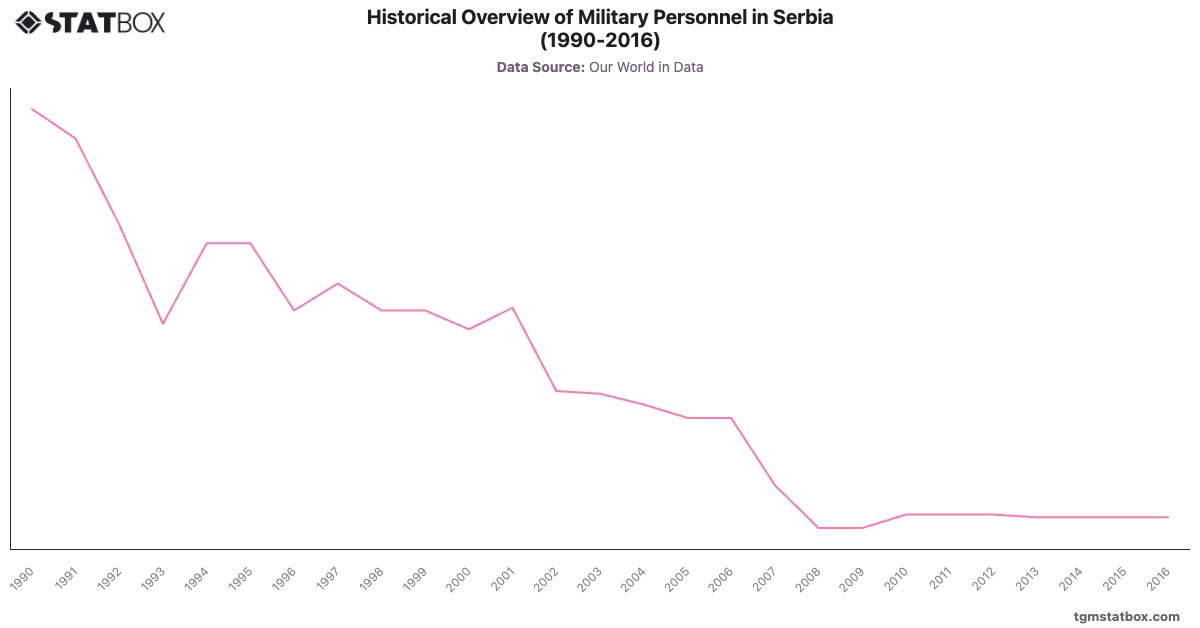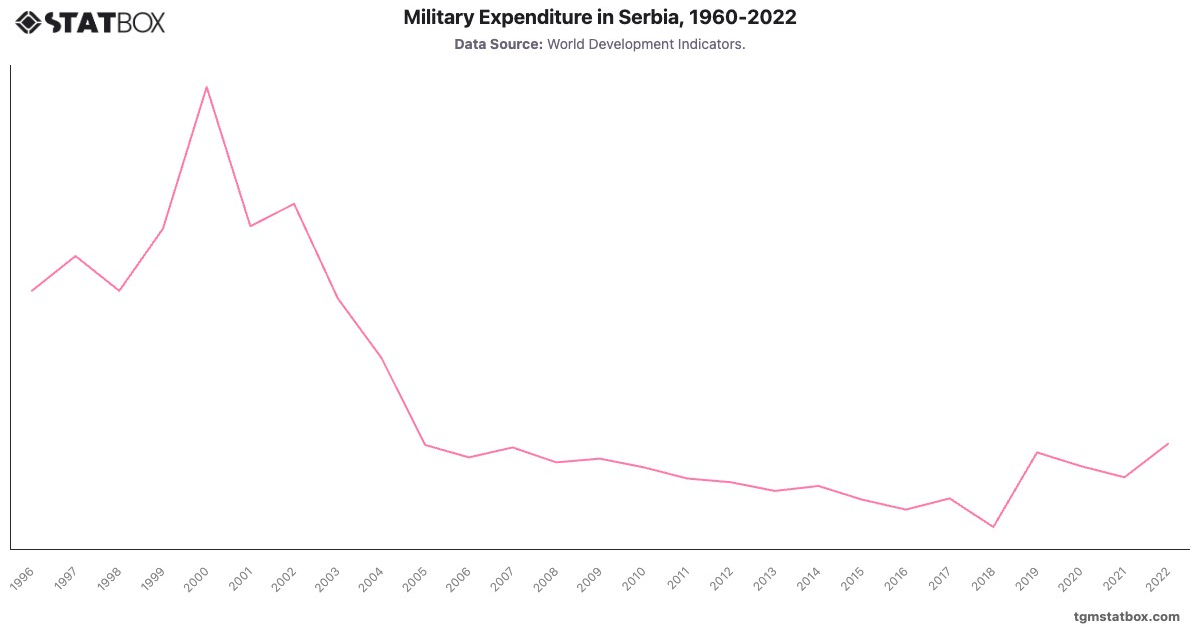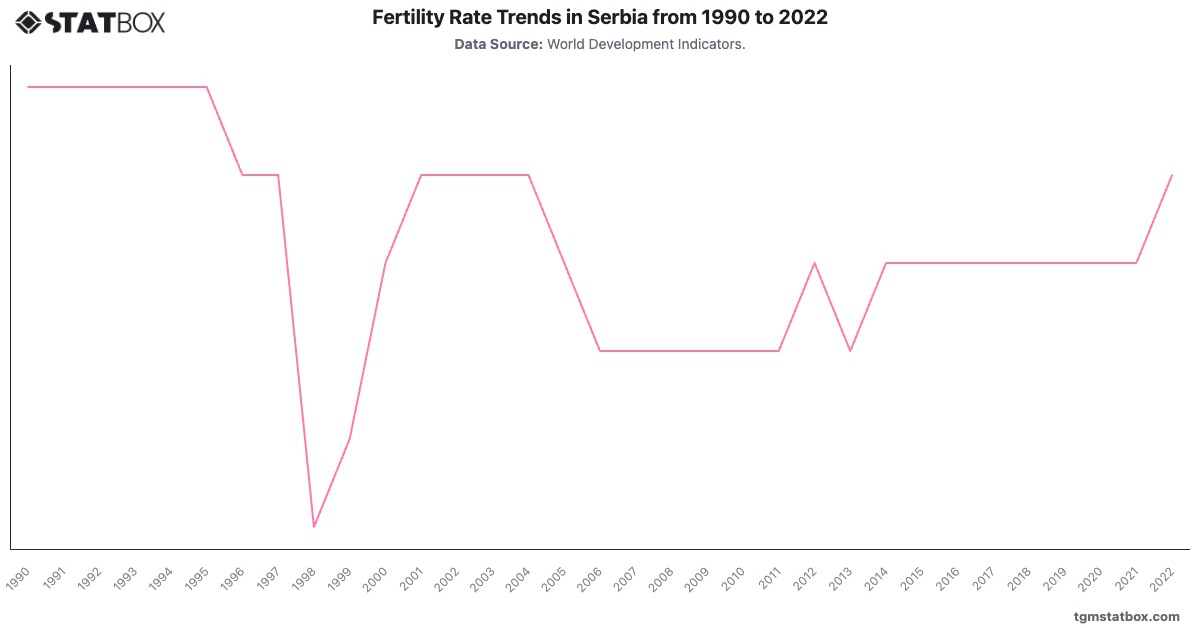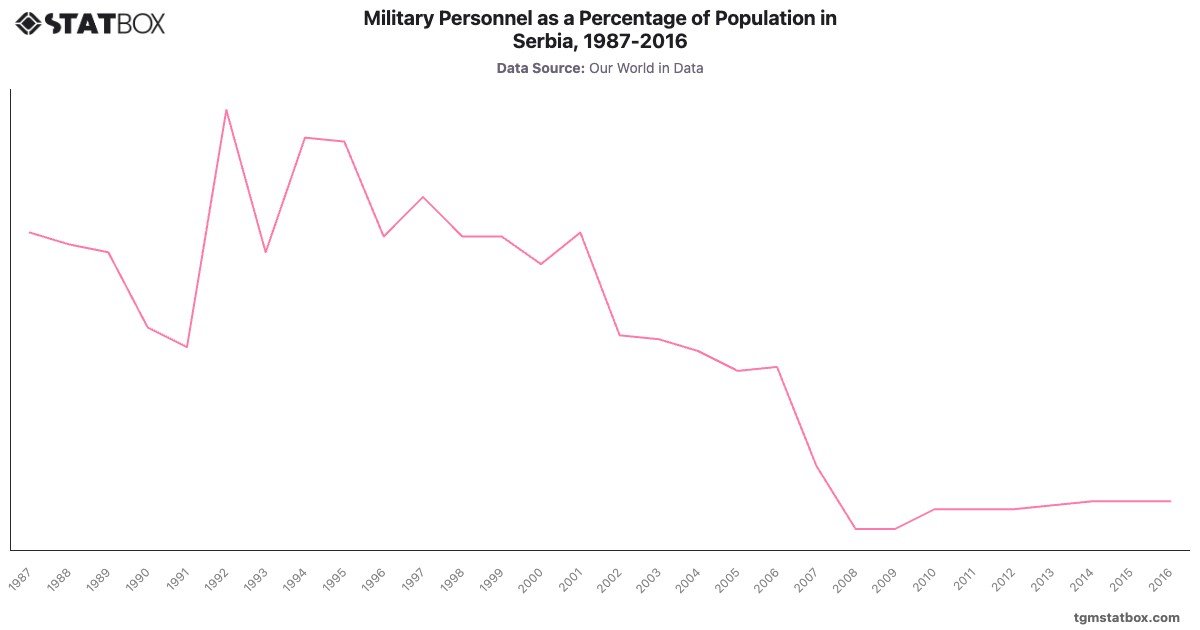
Serbia’s military personnel percentage began at in 1987, slightly fluctuating during the Balkan conflicts of the early 1990s, peaking at in 1992. The dissolution of Yugoslavia and subsequent conflicts led to heightened military mobilization. From 1994 onwards, the rate settled at around , reflecting the continuation of regional instability and Serbia’s national defense priorities during a tumultuous period.
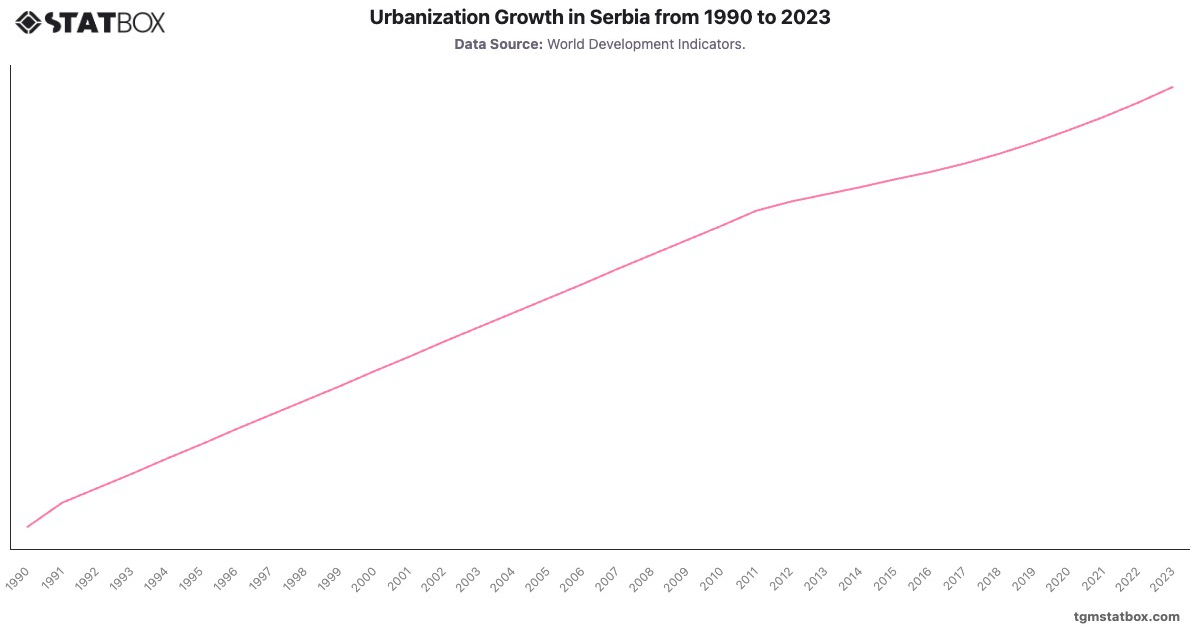
Post-2000, Serbia underwent military restructuring as peace took hold, with personnel levels dropping to by 2003, and further to by 2008, aligning with significant urban growth in Belgrade and economic reforms aimed at reducing reliance on military spending. The urbanization trend continued, and by 2016, military personnel as a percentage of population stabilized at , signaling Serbia’s alignment with European norms on military downsizing in favor of urban and economic development.
Post-2000, Serbia underwent military restructuring as peace took hold, with personnel levels dropping to by 2003, and further to by 2008, aligning with significant urban growth in Belgrade and economic reforms aimed at reducing reliance on military spending. The urbanization trend continued, and by 2016, military personnel as a percentage of population stabilized at , signaling Serbia’s alignment with European norms on military downsizing in favor of urban and economic development.
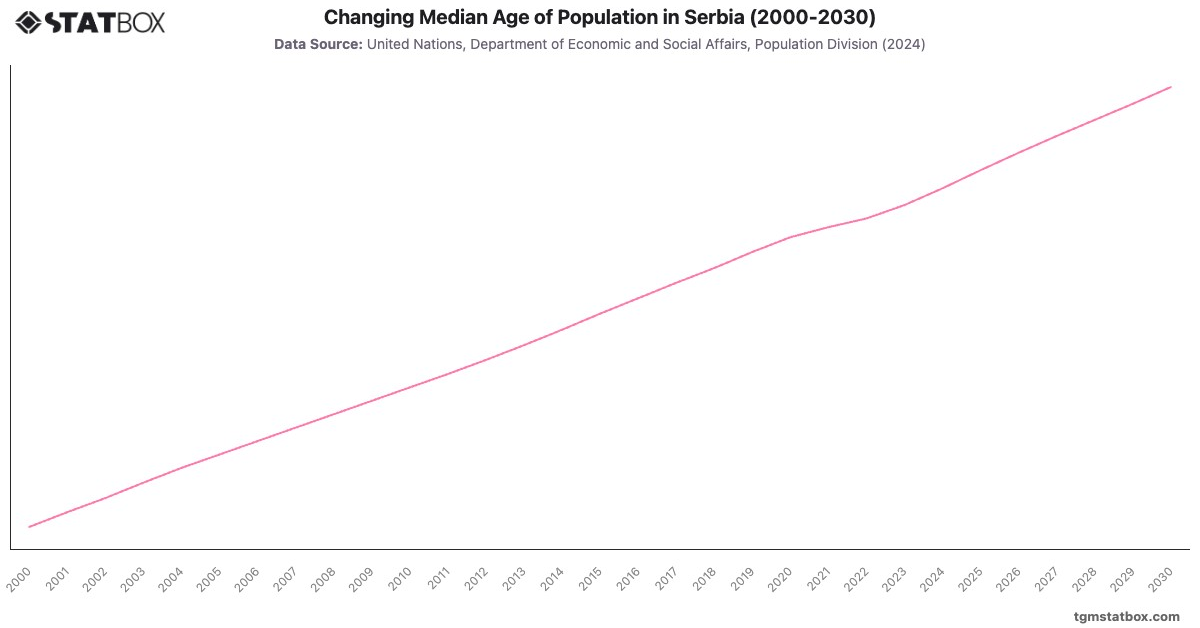
For a broader context, visit other statistics on Serbia’s median age shift, urbanization trend in Serbia, Serbia’s population growth data.