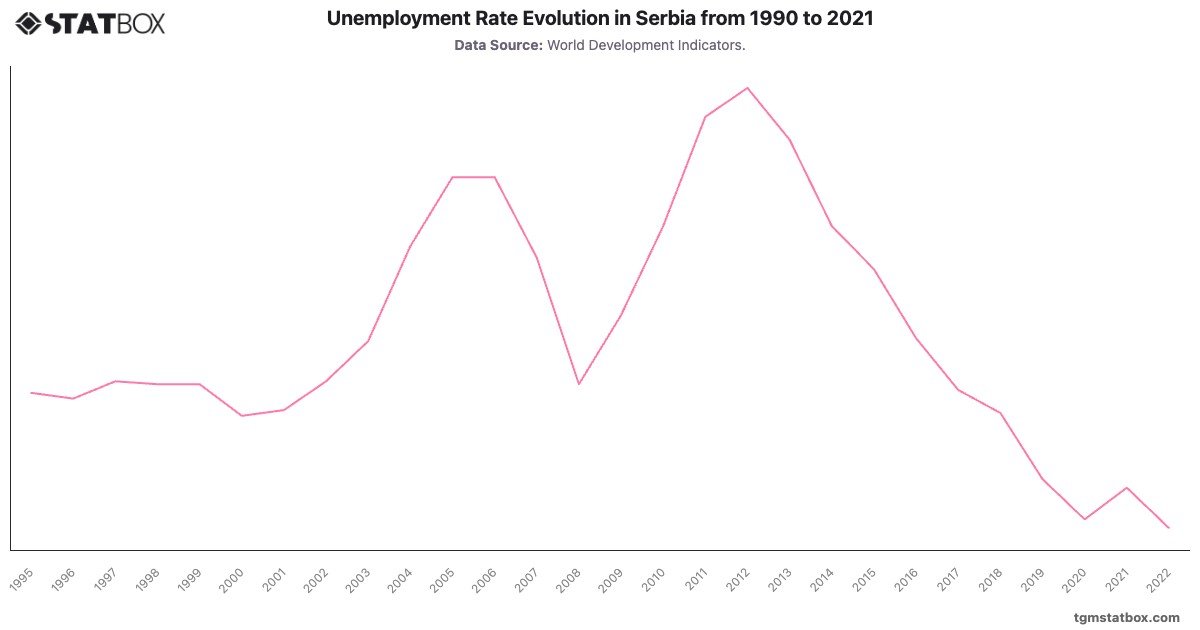
Serbia experienced persistently high unemployment throughout the 1990s, with rates around due to the economic impacts of the Yugoslav Wars and sanctions. The early 2000s saw an upward trend, peaking at in 2012 as the global economic crisis hit Serbia hard. High unemployment in this period reflected structural issues, including the need for significant labor market reforms and industrial restructuring.
By 2019, unemployment had decreased to , a result of gradual economic stabilization, increased foreign investment, and improved labor policies. The COVID-19 pandemic briefly disrupted this recovery, with the unemployment rate rising to in 2021, but efforts to support the economy helped stabilize the job market, bringing the rate down again in subsequent years.
By 2019, unemployment had decreased to , a result of gradual economic stabilization, increased foreign investment, and improved labor policies. The COVID-19 pandemic briefly disrupted this recovery, with the unemployment rate rising to in 2021, but efforts to support the economy helped stabilize the job market, bringing the rate down again in subsequent years.
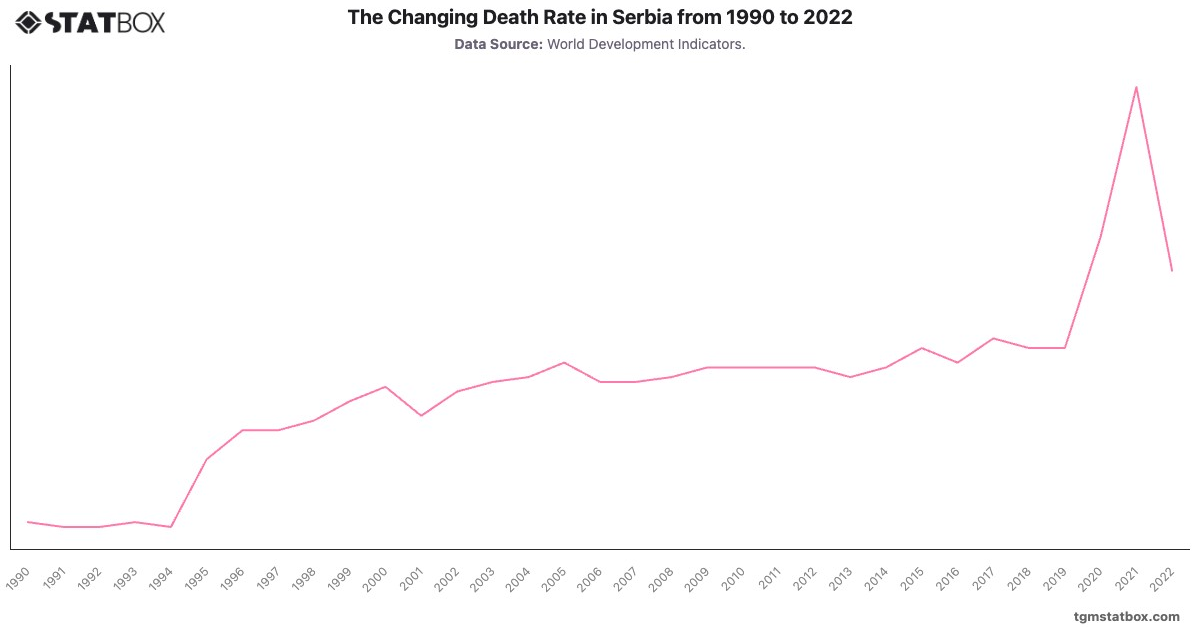
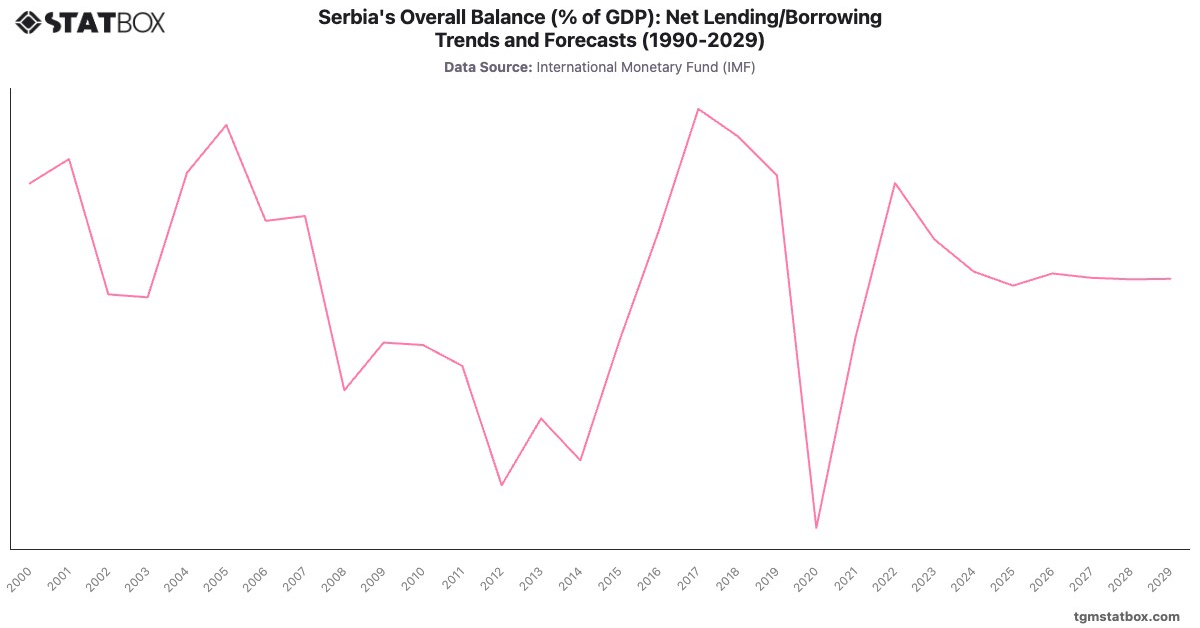
Discover additional trends and data on Serbia’s mortality rate trend, Changes in Serbia’s death rate, Serbia’s net lending/borrowing as a share of GDP.