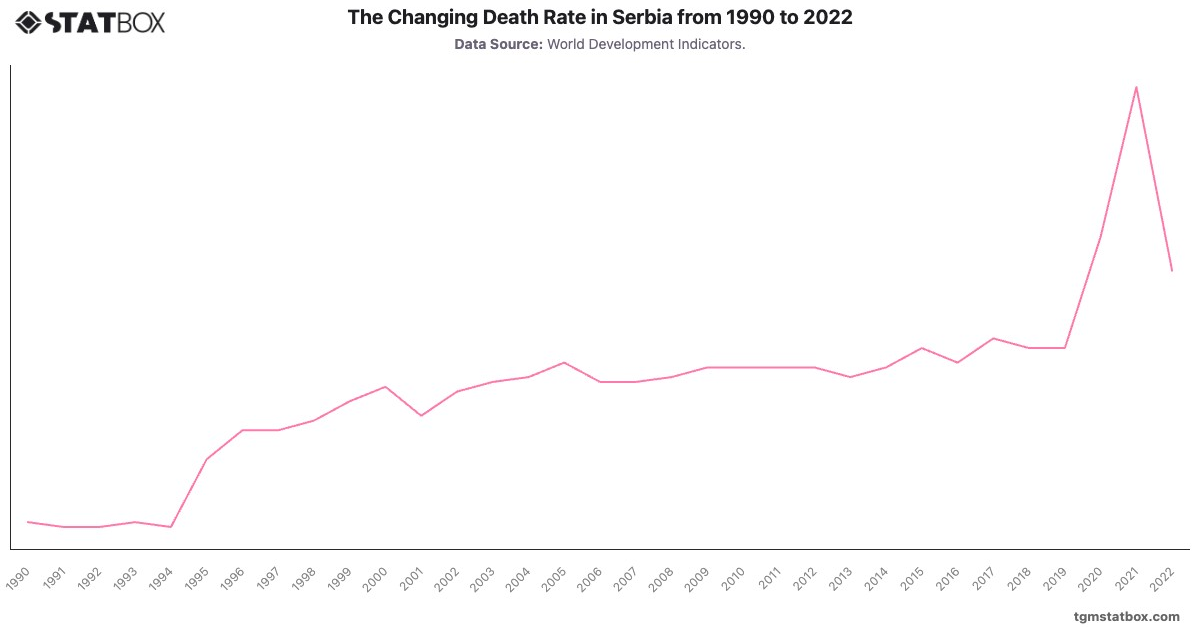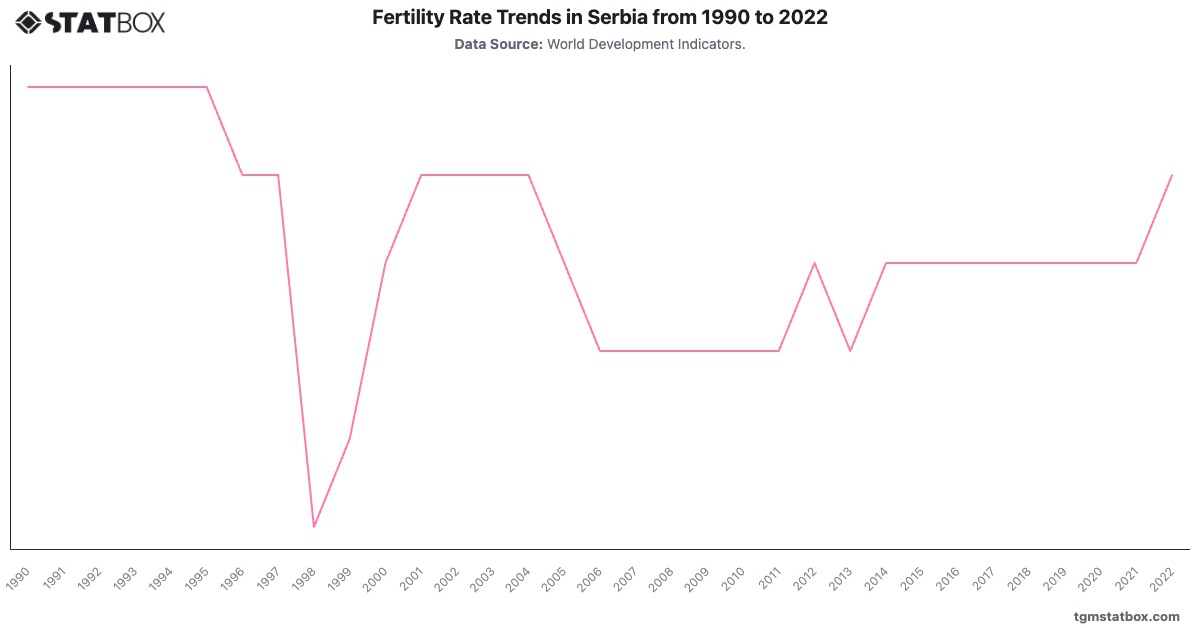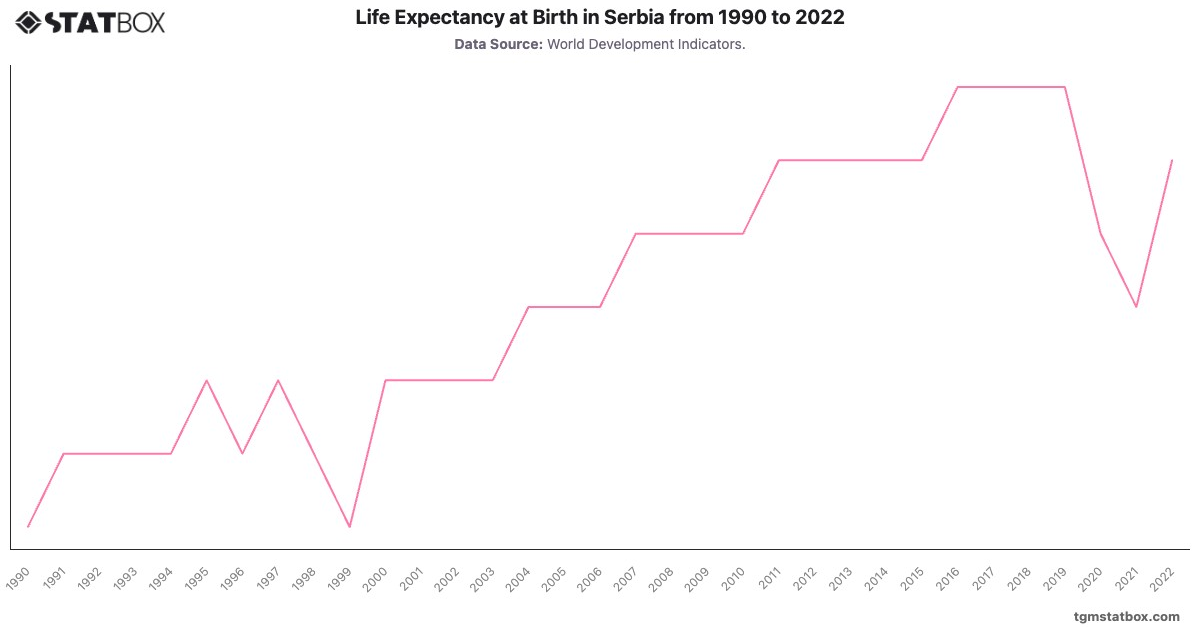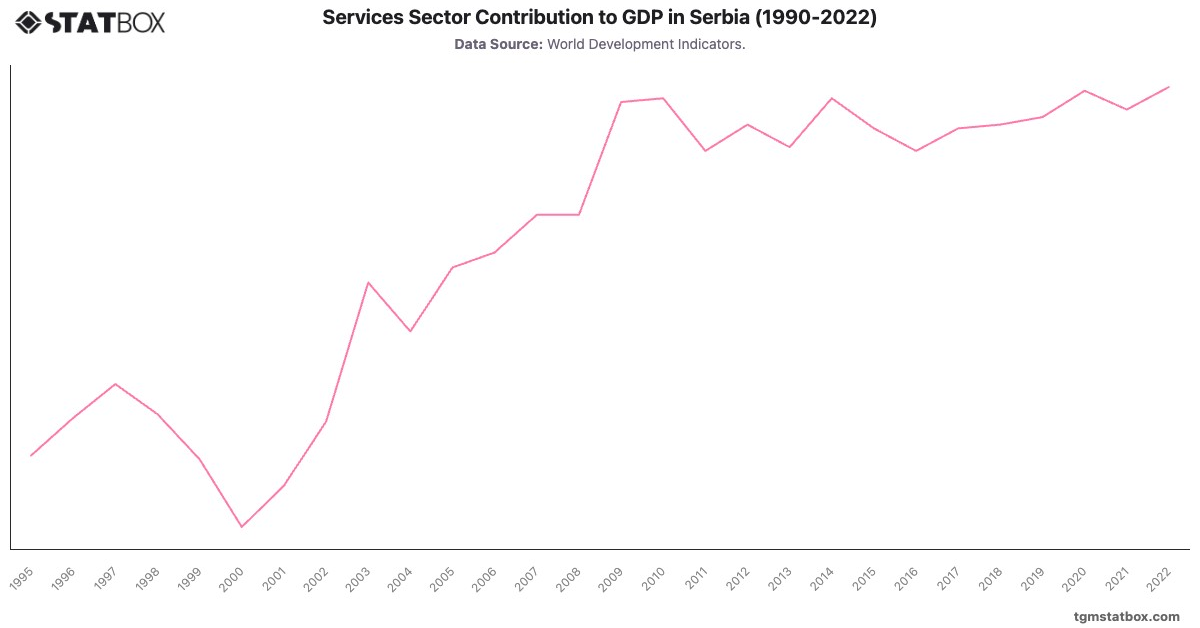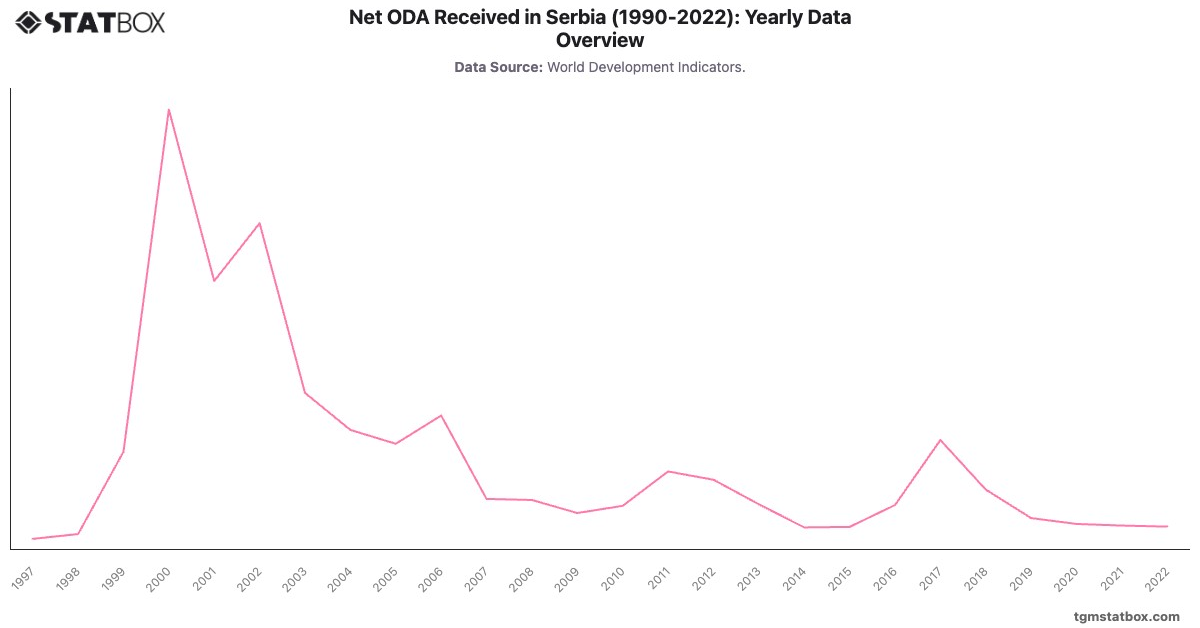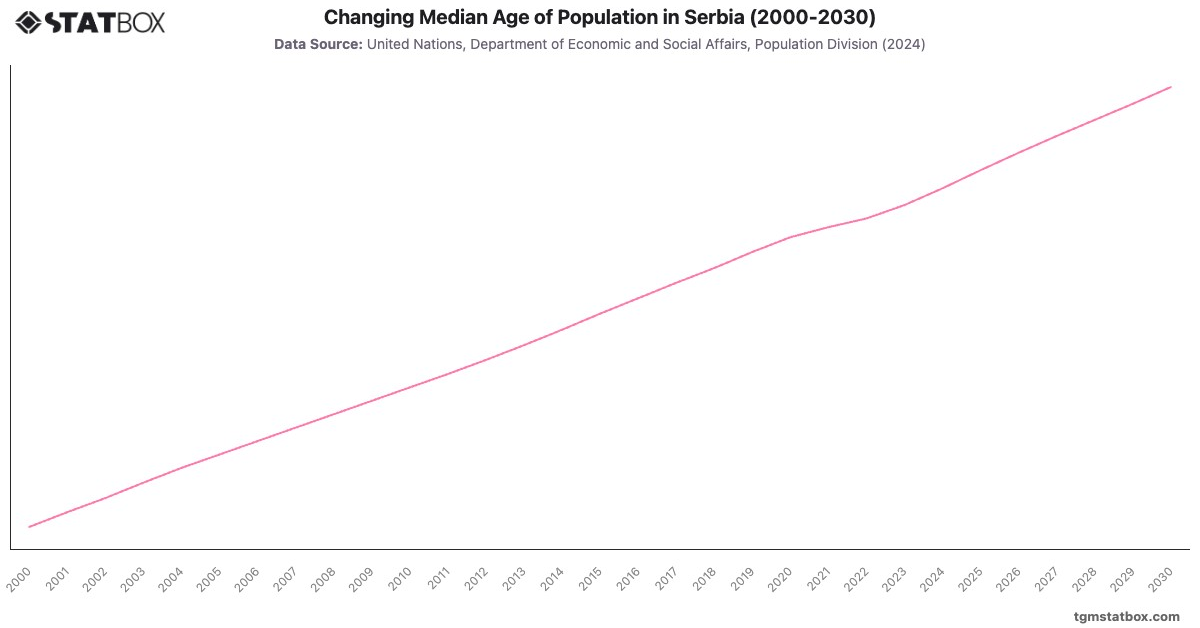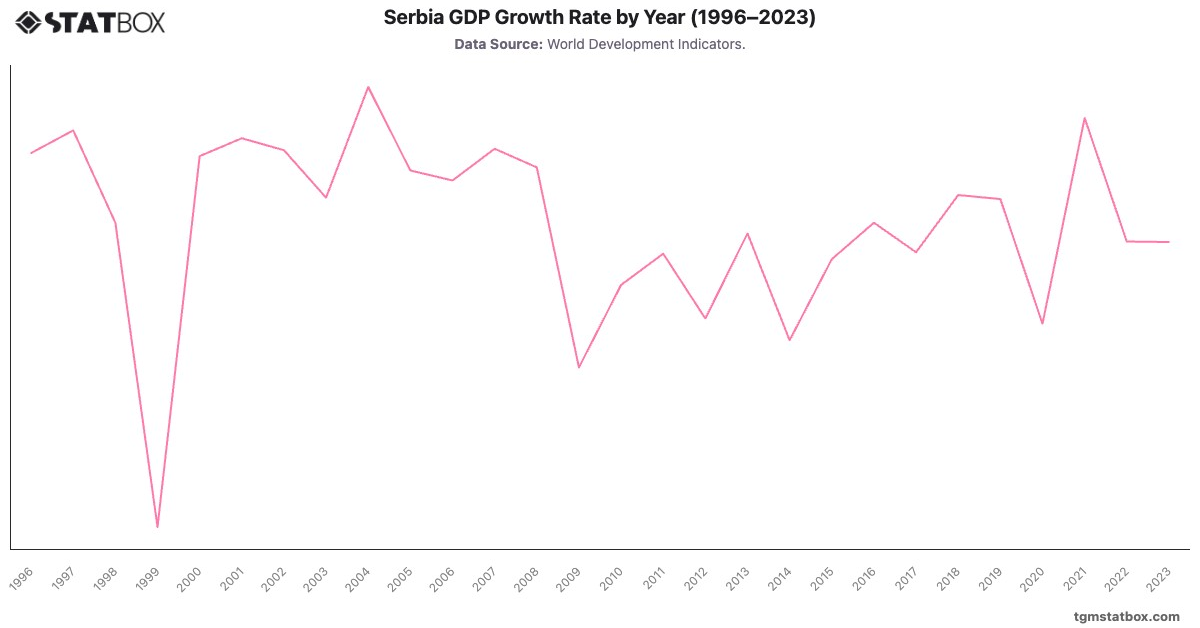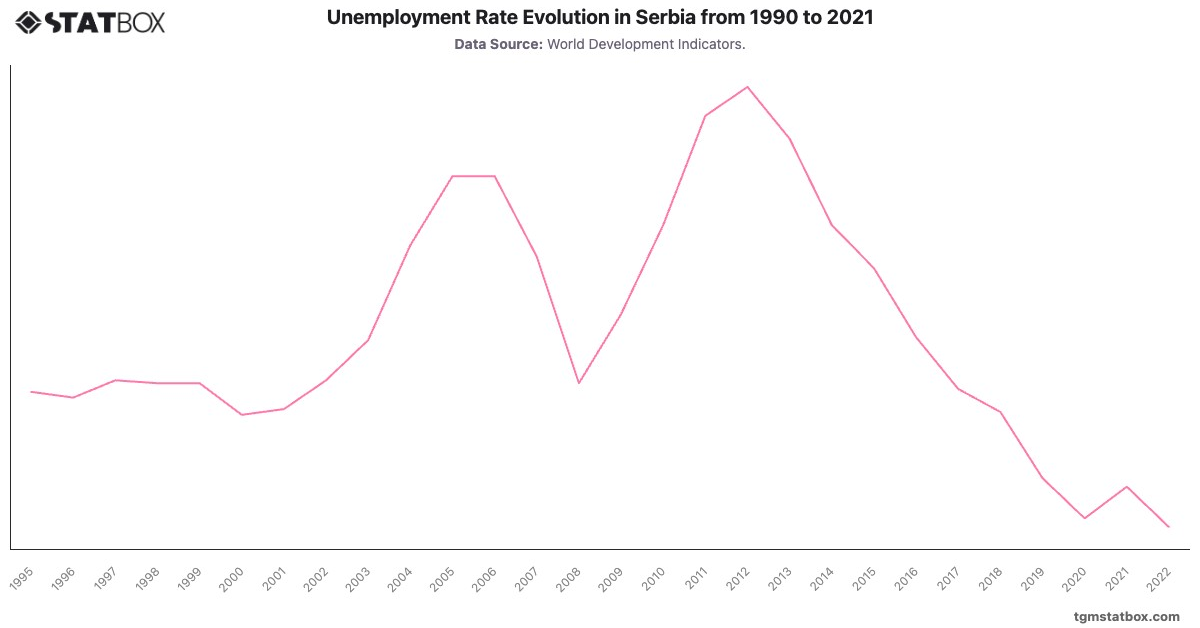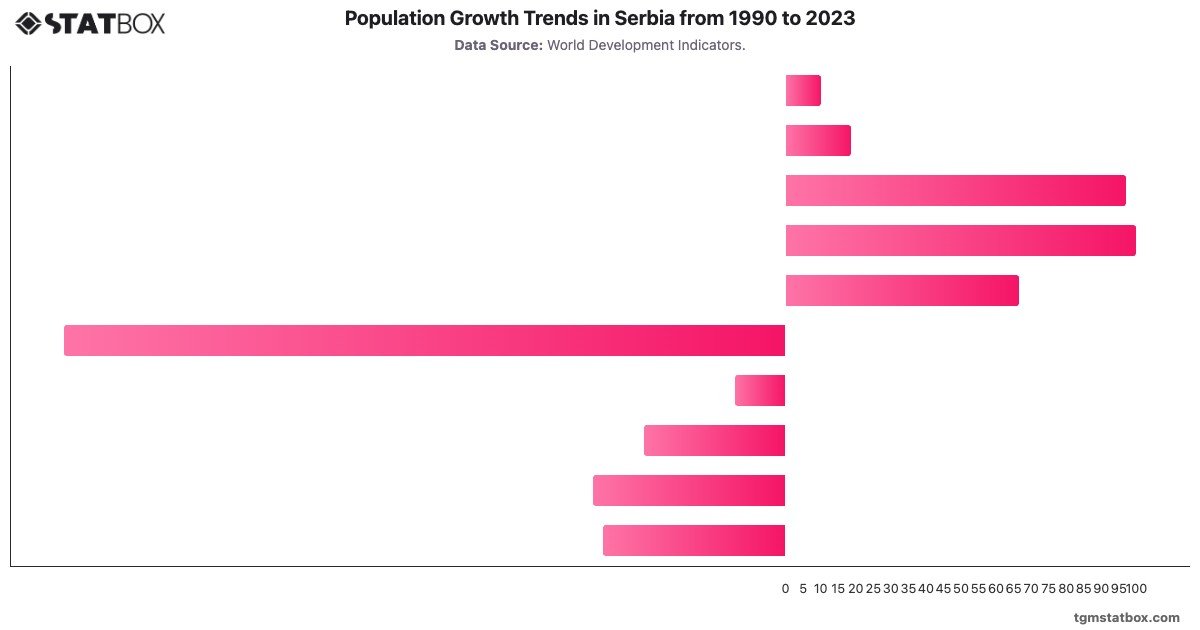
Serbia's population growth rate has experienced significant fluctuations over the decades, reflecting the country’s political and economic transitions. In the early 1990s, growth remained positive at but surged to during 1992-1993, likely influenced by the influx of displaced persons due to regional conflicts in the Balkans. However, by 1995, the growth rate sharply declined to -, marking the beginning of a period of sustained population decrease. This trend reflects the combined impact of emigration, economic instability, and declining birth rates.
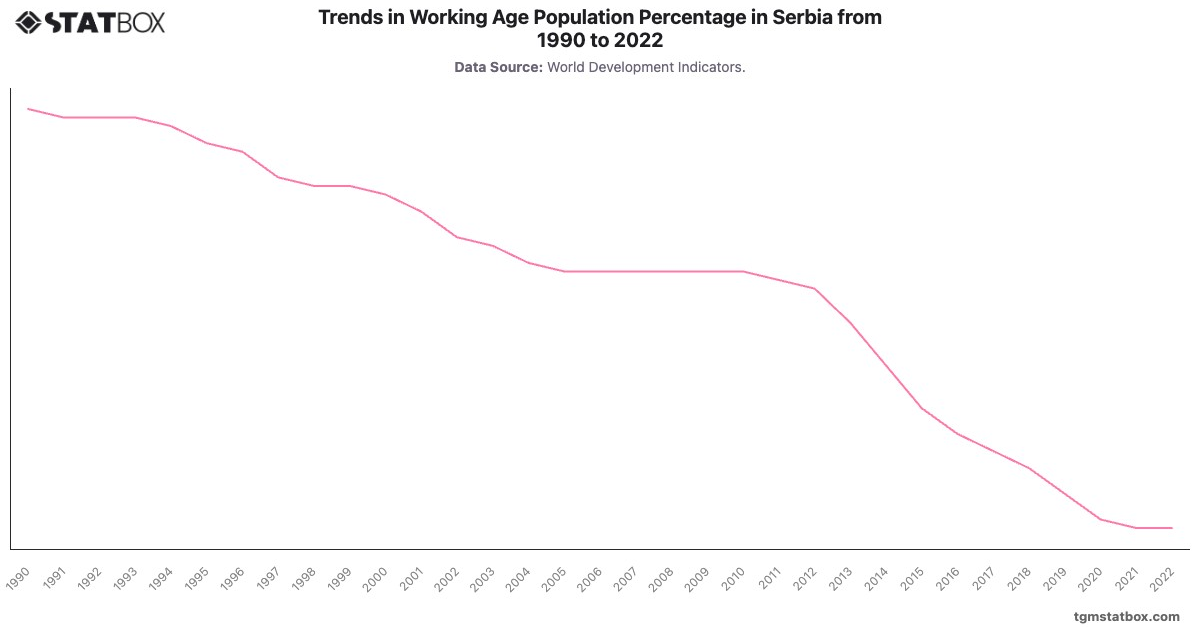
From 1996 onwards, Serbia's population continued to shrink gradually, with minor fluctuations. By the 2010s, growth stabilized around -, indicative of a low fertility rate and continued outward migration. The negative peak of - in 2022 highlights the compounded effects of the COVID-19 pandemic and a shrinking working-age population. The slight recovery to - in 2023 suggests stabilization efforts, but demographic challenges remain persistent.
From 1996 onwards, Serbia's population continued to shrink gradually, with minor fluctuations. By the 2010s, growth stabilized around -, indicative of a low fertility rate and continued outward migration. The negative peak of - in 2022 highlights the compounded effects of the COVID-19 pandemic and a shrinking working-age population. The slight recovery to - in 2023 suggests stabilization efforts, but demographic challenges remain persistent.
For a deeper dive into the topic, explore Serbia’s annual GDP growth rate, percentage of military personnel in Serbia, Serbia’s military spending.